

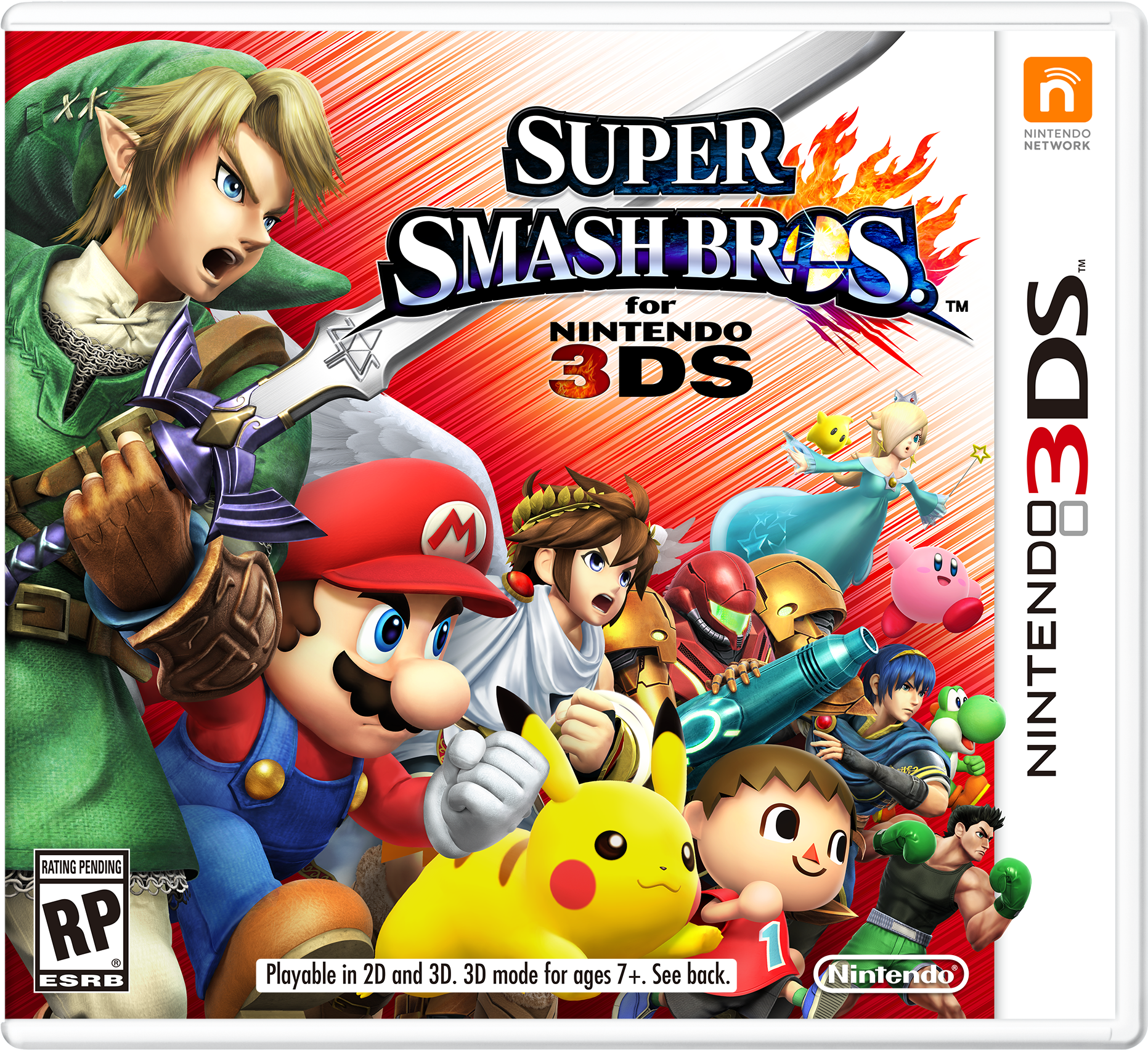
Super Smash Bros. for Wii U & 3DS
Nintendo’s biggest crossover fighter yet — released simultaneously on two very different platforms, with 58 fighters, landmark DLC, and a roster that made the whole internet argue for months.
Overview
Super Smash Bros. for Wii U and Super Smash Bros. for Nintendo 3DS were the fourth entries in Nintendo’s crossover fighting series, developed by Masahiro Sakurai’s Sora Ltd. alongside Bandai Namco. Released within weeks of each other in autumn 2014, they represented an ambitious dual-platform project — same roster, same core gameplay, but genuinely different experiences tuned for each platform.
The project was the first time a mainline Smash game had been developed for a handheld. It was also the first Smash to sell DLC characters post-launch — a decision that kept the community buzzing well into 2016. Between the two versions, the game reached more players than ever before, and laid the groundwork for Super Smash Bros. Ultimate’s enormous roster.
For Mario fans specifically, the Wii U version is packed with content. Stages based on Mario Galaxy, Mushroom Kingdom, Mario Circuit, Pyrosphere (Ridley’s lair) and more give familiar characters a spectacular backdrop. Every veteran Mario series fighter returned, and Rosalina & Luma joined as a genuinely distinctive newcomer with a unique puppet-fighter mechanic.


“Developing Smash for two platforms simultaneously was genuinely unprecedented in scope. The goal was always to make each version feel native to its hardware — not just a port — while sharing the same core game engine and complete roster.”
Wii U vs. 3DS — What’s Different
Both versions share the same 51-fighter roster and core gameplay, but are genuinely different games in terms of modes, stages and features. The Wii U version is the definitive full home console experience; the 3DS version is compact and portable-focused, and launched first: about seven weeks earlier in North America and Europe, and nearly three months earlier in Japan.
- 8-Player Smash — up to 8 local players simultaneously
- Smash Tour — board game mode with stock battles
- Event Mode — ~100 scenario challenges with unique rules
- Master Orders & Crazy Orders risk/reward modes
- Stage Builder with GamePad touch screen
- Full Masterpieces (NES/SNES playable demos)
- HD visuals at 1080p/60fps
- GameCube Controller Adapter support
- amiibo Figure Player system
- Launched first — Sep 2014 (JP) / Oct 2014 (NA/EU)
- Smash Run — dungeon-crawl power-up mode before battles
- Stages themed on handheld Nintendo games
- Find Mii / Nintendogs / Spirit Train / Prism Tower stages
- Can be used as controller for Wii U version
- Transfer custom fighters between versions via 3DS
Smash Run — the 3DS exclusive mode where players explore a dungeon for 5 minutes collecting power-ups before battling — has never returned in any subsequent Smash game.
Full Roster — 51 Base + 7 DLC
51 characters at launch — the largest base Smash roster up to that point. Both versions share the identical roster; no version-exclusive playable fighters. Every Brawl veteran returned at launch except Snake, Wolf, Lucas (later added as DLC), the Ice Climbers (cut due to 3DS hardware constraints) and Pokémon Trainer’s Squirtle and Ivysaur, alongside strong newcomers including Rosalina & Luma, Little Mac, Villager, Mega Man, Pac-Man and Greninja, the Ninja Pokémon from Pokémon X & Y. The 7 DLC fighters post-launch were the series’ first paid characters, capped by Bayonetta winning the Smash Ballot.


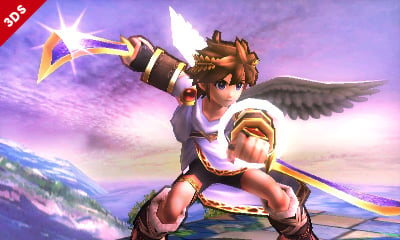


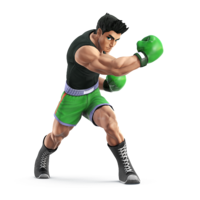


Bowser Jr. is particularly notable — he can be played as any of the seven Koopalings (Larry, Morton, Wendy, Iggy, Roy, Lemmy, Ludwig) as costume variants, each with a different clown car colour. Robin brings a unique mechanic where tomes and the Levin Sword have limited uses before breaking. Rosalina & Luma plays as a puppet fighter where Luma acts semi-independently, making it one of the most complex characters in the game.
DLC Fighters — 7 Characters
Smash 4 was the first game in the series to sell DLC fighters, and the lineup was sensational. The DLC kept the community engaged well into 2016 — over a year after the game’s launch — and set the template for Smash Ultimate’s enormous DLC programme.
Bayonetta deserves a special mention — she was announced as the winner of the Smash Ballot, a worldwide public vote for which fighter fans most wanted to see. She topped the results in Europe and placed highly in North America. Her inclusion as a “Mature” character in an E10+ game raised eyebrows, but Sakurai’s team gave her a moveset that’s simultaneously true to the source material and perfectly balanced for competitive play. She became arguably the most dominant character in top-level competitive Smash 4 by the end of the game’s lifespan.
Cloud’s announcement in November 2015 was probably the single biggest character reveal in Smash history up to that point — Final Fantasy VII had never been on a Nintendo platform, and Cloud showing up in Smash felt genuinely shocking.
Game Modes
The Wii U version is far more mode-rich than its 3DS counterpart. Several major modes are Wii U-exclusive, including 8-Player Smash and Smash Tour. The overall package is one of the most content-heavy fighting games ever released.

Smash 4 vs. Brawl — What Changed
Smash Bros. Brawl was controversial in the competitive community for its slower pace, floatier physics, and the randomness introduced by tripping. Smash 4 addressed nearly every complaint. Here’s how the two compare:
| Feature | Brawl (2008) | Smash 4 Wii U (2014) |
|---|---|---|
| Tripping mechanic | ✗ Random trips added unpredictability | ✓ Removed entirely |
| Game speed | ✗ Slower, floatier feel | ✓ Faster, snappier — between Melee and Brawl |
| Online play | ✗ Friend codes, poor netcode | ✓ For Fun / For Glory, Nintendo Network |
| Max local players | ✗ 4 players | ✓ 8 players (Wii U version only) |
| DLC fighters | ✗ None | ✓ 7 DLC fighters post-launch |
| Roster size | 39 fighters | ✓ 51 base (58 with DLC) |
| Subspace Emissary | ✓ Full adventure mode | ✗ Removed (Classic/All-Star only) |
| Snake / Ice Climbers | ✓ Both playable | ✗ Both cut |
| Stage Morph | ✗ Not available | ✗ Not yet (added in Ultimate) |
| amiibo support | ✗ None | ✓ Full Figure Player system |
| GameCube controller | ✗ No official adapter | ✓ Official adapter released with game |
| Custom moves | ✗ None | ✓ 3 variants per move per character |
The removal of Subspace Emissary is the one genuine loss — Brawl’s adventure mode was a major single-player draw. Sakurai explained that it was cut because detailed cutscenes had been uploaded online before the game’s launch, spoiling everything. He felt there was no point repeating that. The replacement — Classic and All-Star — is solid but obviously not the same scope.
Reception
Both versions were critically acclaimed. The Wii U version earned Metacritic 92 and sold 5.38 million copies. The 3DS version scored 85 and sold around 9.64 million — one of the best-selling 3DS games ever. Between both versions, Smash 4 outsold every previous Smash entry before Ultimate.
The game also won multiple awards including Best Fighting Game at The Game Awards 2014. Its competitive scene grew into one of the most active in the world through 2015–2018, running alongside Melee at major tournaments and producing legendary players like ZeRo, who went on an almost unprecedented 56-tournament win streak in 2015.
Trivia & Facts
- The 3DS version came first: Japan on 13 September 2014, North America and Europe on 3 October and Australia on 4 October. The Wii U version followed in North America on 21 November, Europe on 28 November and Japan on 6 December.
- Ice Climbers were cut because the 3DS hardware couldn’t render two full character models with separate AI at 60fps. Since both versions needed the same roster, they were removed from both — one of the most controversial cuts in Smash history.
- The 3DS version can be used as a controller for the Wii U version — genuine cross-platform functionality requiring both versions and both systems.
- The game was co-developed by Sora Ltd. and Bandai Namco Studios, with staff from Bandai Namco’s Tekken and Soulcalibur teams assisting Sakurai.
- The Smash Ballot ran from 1 April to 3 October 2015. Bayonetta was announced as the winner in December 2015 and arrived alongside Corrin on 3 February 2016 in North America (a day later in Europe and Japan).
- Cloud was revealed in November 2015 — FFVII had never appeared on Nintendo hardware before.
- Smash Run (3DS exclusive) has never returned in any later Smash game. Fans have been requesting it for Ultimate since that game’s reveal.
- Ryu was the first Smash character with fighting game-style directional input commands — a deliberate nod to Street Fighter’s origins.
- Both versions together outsold every previous Smash entry — not beaten until Super Smash Bros. Ultimate.
- The GameCube Controller Adapter sold out at virtually every retailer within hours of launch. Nintendo massively underestimated demand and had to rush production of additional units.
- Masahiro Sakurai directed the game while suffering from calcific tendinitis in his right arm — in a 2013 column he wrote that the pain was restricting both his work and his daily life.
- Mewtwo was the first DLC character and was offered free to anyone who registered both the 3DS and Wii U versions via Club Nintendo before a set deadline.
- The Stage Builder mode uses the Wii U GamePad’s touch screen exclusively — you draw platforms, set backgrounds and choose music entirely by touch, making it one of the better uses of the GamePad’s unique features.
- ZeRo (Gonzalo Barrios) won 56 consecutive Smash 4 Wii U tournaments in 2015 — a competitive streak considered one of the most dominant in any fighting game’s history.
- The game’s “For Glory” online mode was the first Smash mode explicitly designed for competitive online play — Final Destination variants only, no items — a direct response to the competitive community’s requests.
- The Wii U version has one of the largest soundtracks of any fighting game, with many classic Nintendo themes remixed by well-known composers. The 3DS version carries less music.
Videos
Reference & Guides
Sources
- Wikipedia: Super Smash Bros. for Nintendo 3DS and Wii U
- Super Mario Wiki: Super Smash Bros. for Nintendo 3DS
- SmashWiki: Music (SSB4-3DS)
- Anime News Network: Smash Bros. Developer Sakurai Stymied by Arm Injury