
Retro Super Mario Magazine Scans
Previews, reviews and features on Mario games, scanned from the games magazines of the 90s and early 2000s. Nine articles from six magazines take you from a 1992 news item about a Mario film that was still being made to a 2001 review of Mario’s first Game Boy Advance game, by way of the 1993 Super Mario Bros. movie, the Super NES at its height and the year Super Mario 64 reached British shops.
Overview

Remember the 90’s and early 2000’s when the shelves of your local store were rammed with videogame magazines? And how magical it was to flick through these mags looking for features on your favourite games? Well I used to do that with Mario: I’d flick through looking for the latest previews of upcoming Mario titles, reviews of the ones which just came out, and of course the tips and secrets to find stuff like the back door into Bowser’s Castle in Super Mario World.
The aim of this section is to feature scanned Super Mario series articles from many different retro videogame magazines from around the world. I’ve curated a massive collection of these magazines from Planet GB, SNES Force, nRevolution, GBX UK, Nintendo Gamer, GBA World, N64 Magazine and a whole lot more.
Those days have long since passed. As the internet became more and more user friendly and accessible in the late 90’s we saw the rise of gaming fansites, and even some big international videogame news sites who made reporting on videogames their business. It was inevitable that many of these classic magazines would die out, and they did. Few remain these days, and they aren’t as warm, colourful and packed with secrets as they once were. Many of the old magazines and their amazing content have been confined to the history books, that is, until now.
Perhaps you’re a new Mario fan who’s too young to remember those times and have always got your gaming info off the internet? Here’s your chance to take a look at how things were back then in terms of videogame coverage.
No mention of Nintendo Power? Not in this section, no. There was so much Super Mario series coverage in Nintendo Power Magazine that it has its own standalone section, so be sure to check that out too.
SLB’s scans run in date order and fall into four chapters. The first is the 1993 Super Mario Bros. movie, followed from a news item in GB Action’s fourth issue (September 1992), while the film was still being made, to full previews in Flicks and the launch issue of SNES Force the following summer. The second is the Super NES in its prime, with SNES Force previewing Yoshi’s Safari. The third is 1997, the year Super Mario 64 reached British shelves, told through 64 Extreme’s players’ guide and its Mario Kart 64 pages. The last belongs to the colour handhelds: Planet GB on Super Mario Bros. Deluxe and GBX on Super Mario Advance.
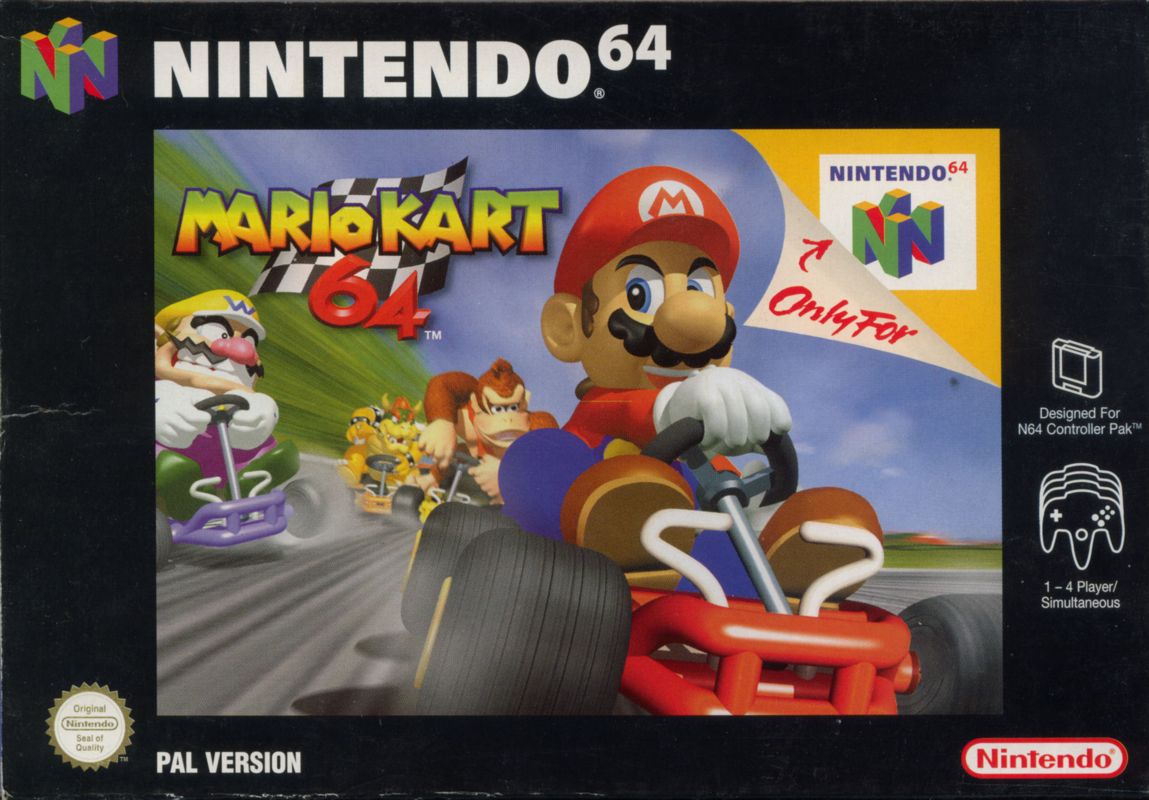
The scans show what that coverage looked like in practice. N64 Magazine reviewed an import copy of Mario Kart 64 in its first issue, cover-dated April 1997, when the European release was still more than two months away. Secrets that are now a quick search away filled whole sections: 64 Extreme handed 17 of its 84 pages in May 1997 to the concluding part of a Super Mario 64 guide. And the review scores are a snapshot of how each Mario game went down when it was brand new, which is not always how we remember it today.
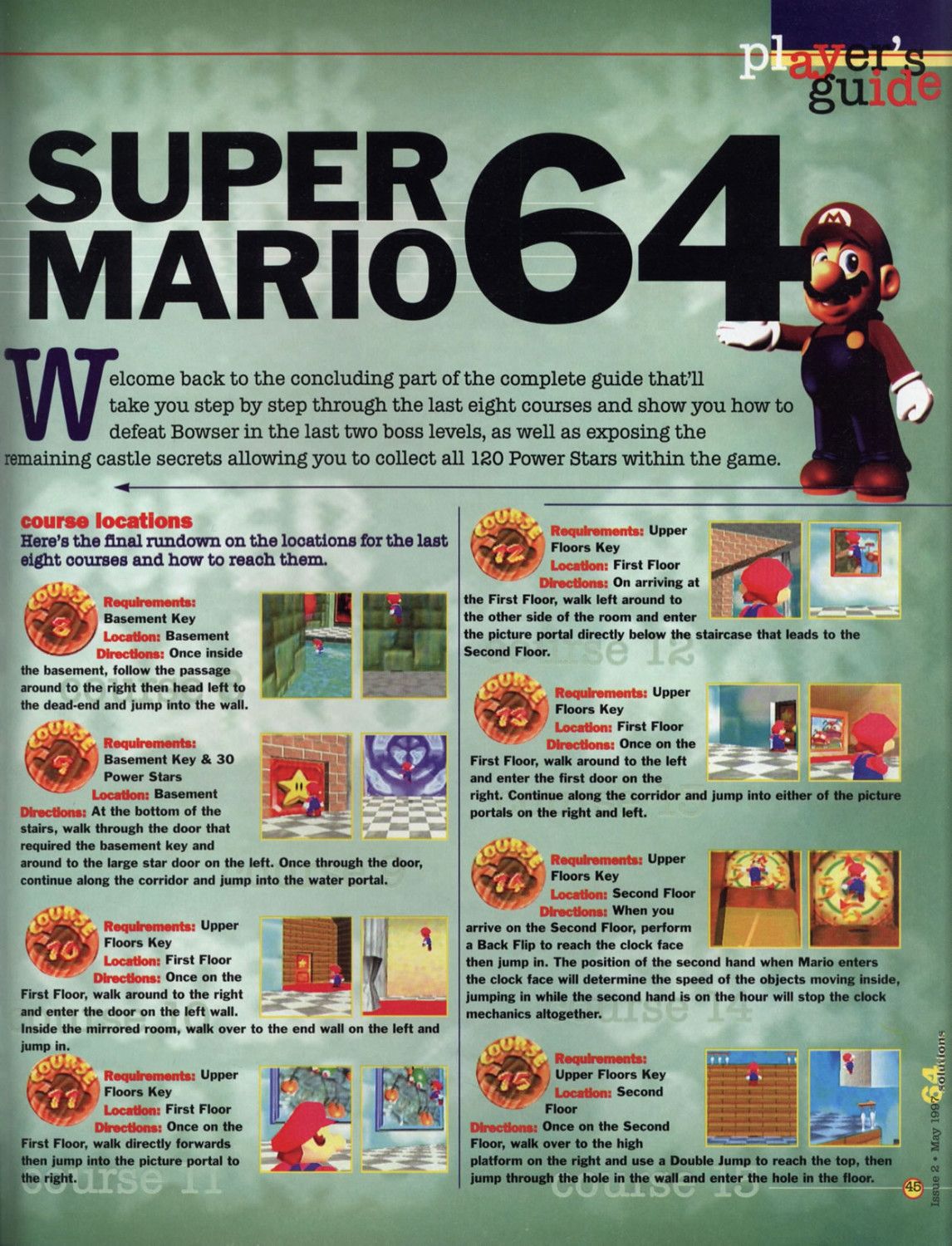
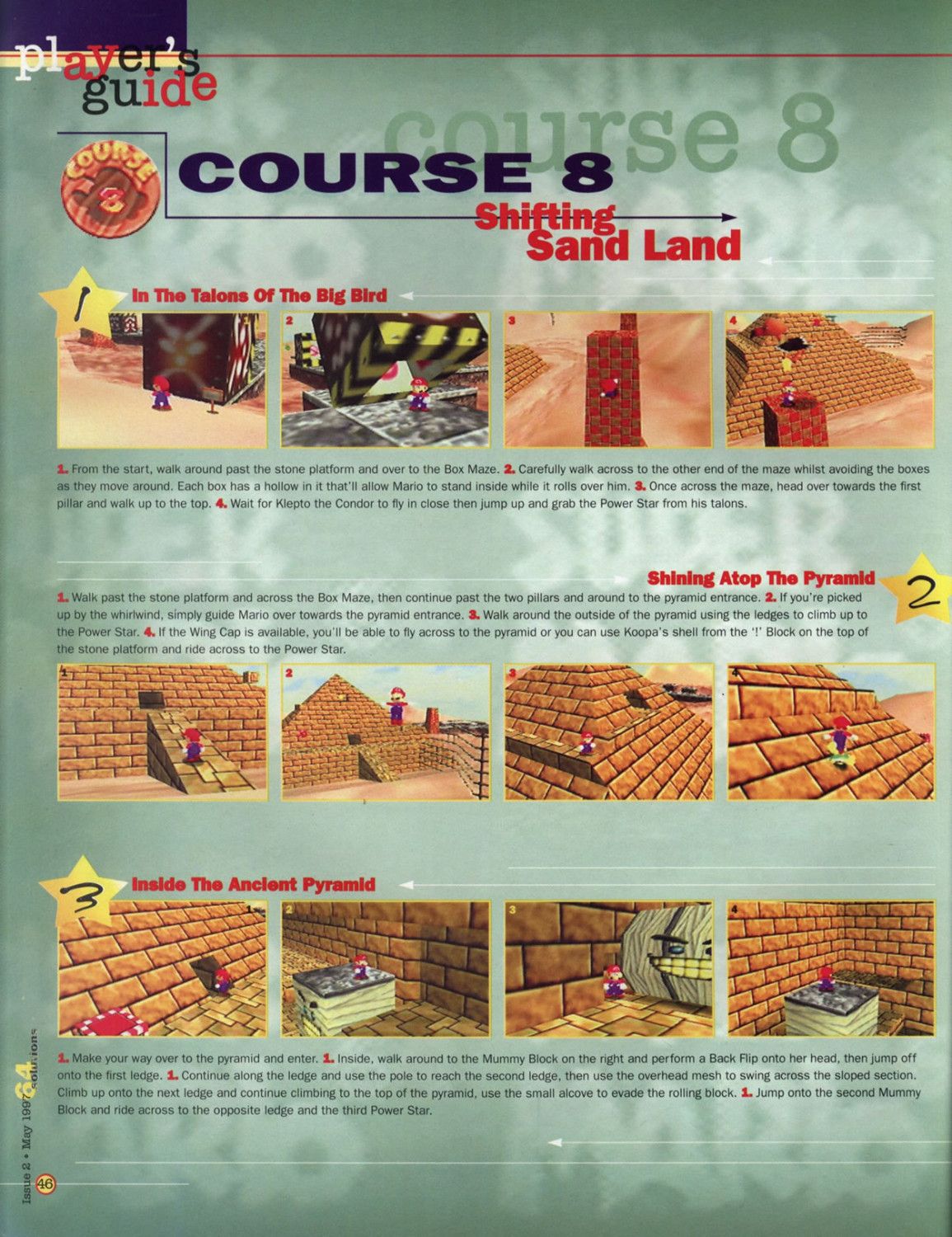
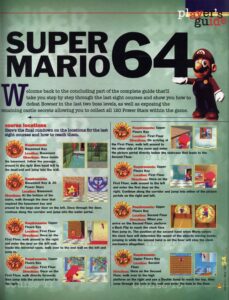
- Super Mario 64 players’ guide – 17 pages from 64 Extreme on the final eight courses, the Bowser battles and every one of the 120 Power Stars.
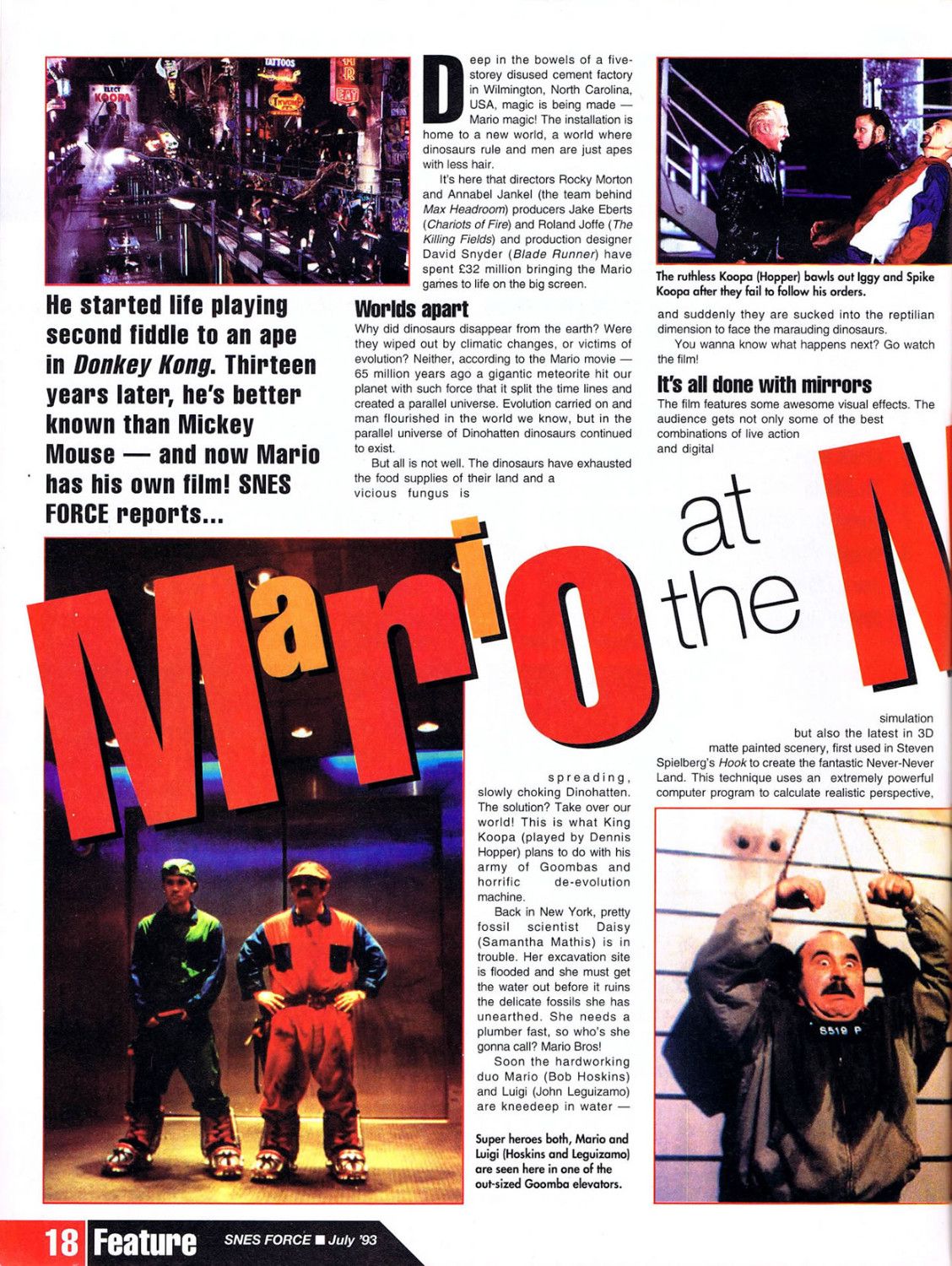
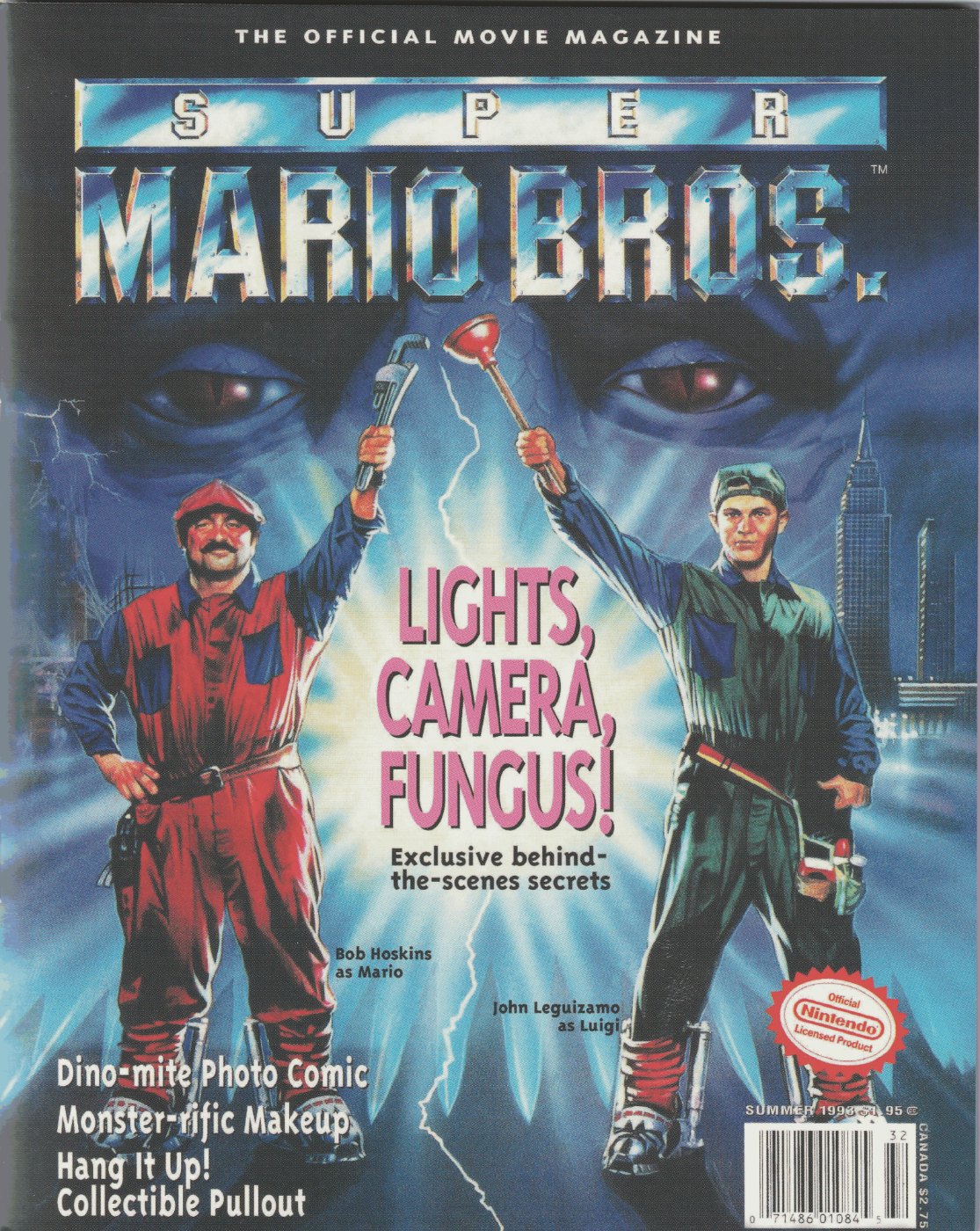
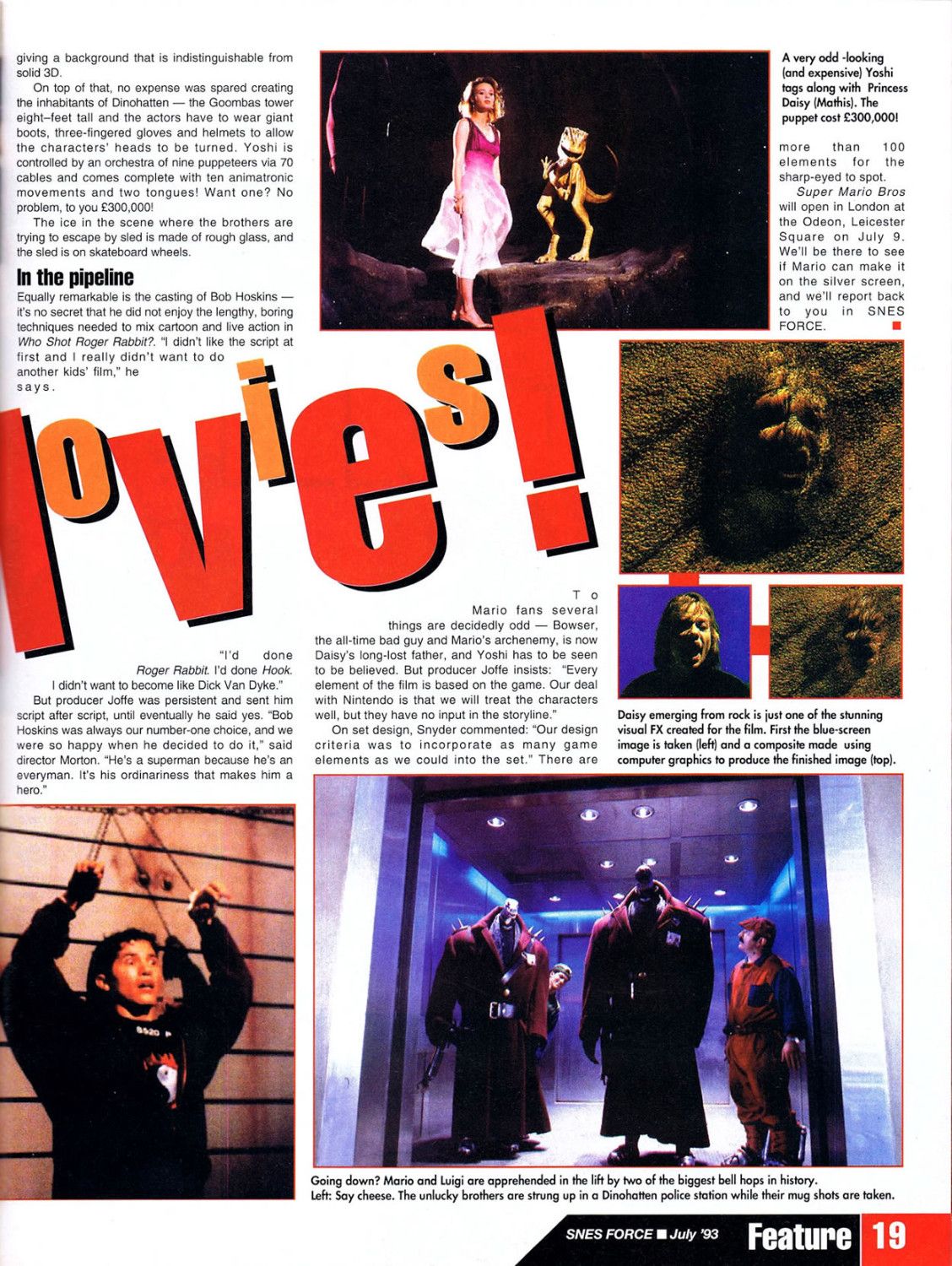
- Mario Bros. The Movie preview – two pages from the very first SNES Force, July 1993.
- Super Mario Bros. movie feature – Flicks magazine’s June 1993 preview, cover and all.
- Mario Kart 64 advert poster – the full-size advert from 64 Extreme issue 4, July 1997.
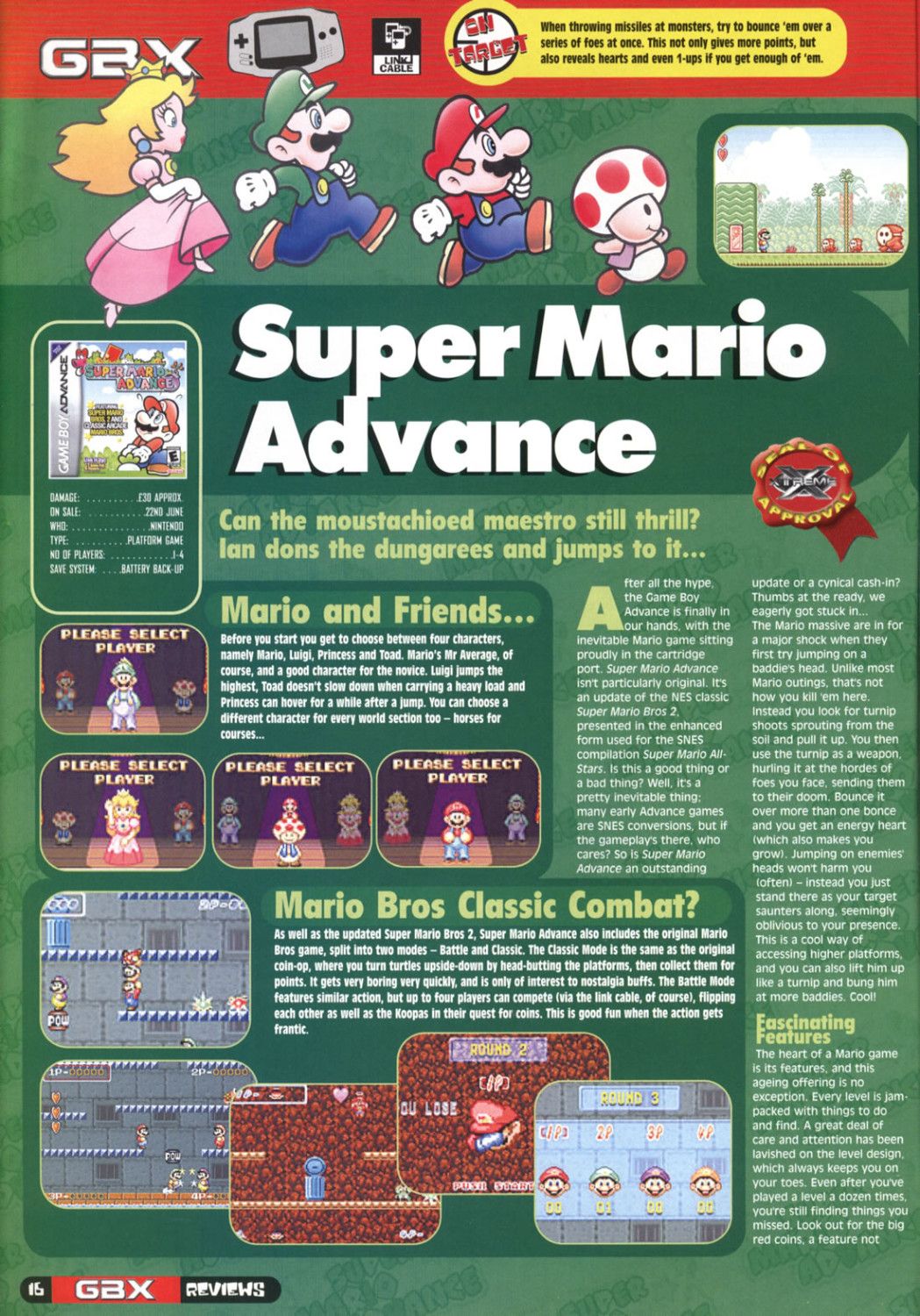
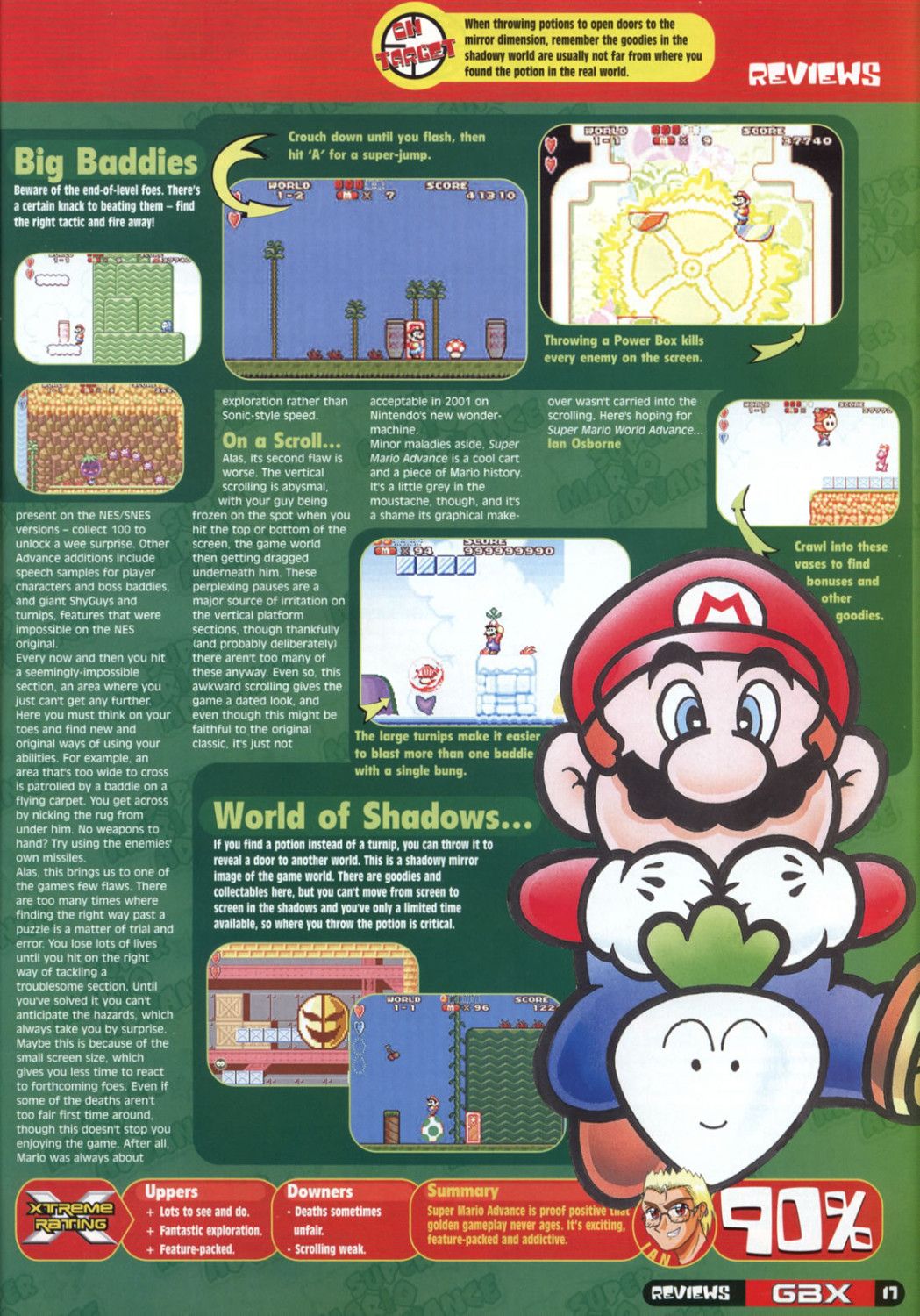
- Super Mario Advance review – a new magazine’s first issue meets the Game Boy Advance’s launch Mario.

Quick Answers
The questions people ask most about Mario in the old games magazines, answered from the scans and the history behind them.
Which magazines are in the Super Luigi Bros magazine scans archive?
Six so far: GB Action, Flicks, SNES Force, 64 Extreme, Planet GB and GBX. Between them they supply nine Mario articles dated from September 1992 to July 2001, from a single-page news item to a 17-page players’ guide. More →
When did the Super Mario Bros. movie come out?
It opened in American cinemas on 28 May 1993 and in Britain on 9 July 1993. That gap is why British magazines were still printing previews in June and July, weeks after American audiences had seen it. Bob Hoskins played Mario, John Leguizamo was Luigi and Dennis Hopper played President Koopa. More →
What was GB Action magazine?
A British magazine devoted to the Game Boy, published by Europress from June 1992, when the first issue cost 99p, to August 1995. It ran to 41 issues and billed itself as the first and only Game Boy magazine in the world. Its fourth issue carried an early news item on the Mario film. More →
What did N64 Magazine score Super Mario 64?
96%, in its first issue (cover-dated April 1997), which also gave an import copy of Mario Kart 64 91%. Total! went further and awarded Super Mario 64 a perfect 100, while Computer and Video Games gave it five out of five. More →
What was 64 Extreme?
An English-language magazine given over entirely to the Nintendo 64. It lasted just eight issues, from April 1997 to the turn of 1998. Its 84-page second issue gave 17 pages to the closing part of a complete Super Mario 64 guide, and SLB has every one of them scanned. More →
What happened to N64 Magazine?
It changed with the hardware. After issue 59 (October 2001) it became NGC Magazine for the GameCube; NGC closed in 2006 and was followed that July by NGamer, which was renamed Nintendo Gamer in January 2012 and closed with issue 80 that October. More →
Did the old magazines always give Mario games high scores?
Mostly, but not always. SNES Force gave Mario Paint 82% while Super Play gave it 55% and Total! only 48%, and SNES Force marked the edutainment spin-off Mario is Missing! down to 42/100. At the other end, Super Mario 64 collected 96% from N64 Magazine and 100 from Total! More →
Why is there no Nintendo Power in this section?
Because there was so much Mario in Nintendo of America’s own magazine that it has a section to itself: see the Nintendo Power articles. Nintendo Power ran from 1988 until 2012. More →
Browse the Magazine Scans Archive
All magazine articles
9 articlesMario Bros. movie announcedGB Action · Issue 4September 1992Super Mario Bros. movie featureFlicksJune 1993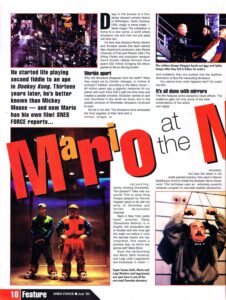 Mario Bros. The Movie previewSNES Force · Issue 1July 1993
 Yoshi’s Safari previewSNES Force · Issue 3September 1993
 Super Mario 64 players guide64 Extreme · Issue 2May 1997
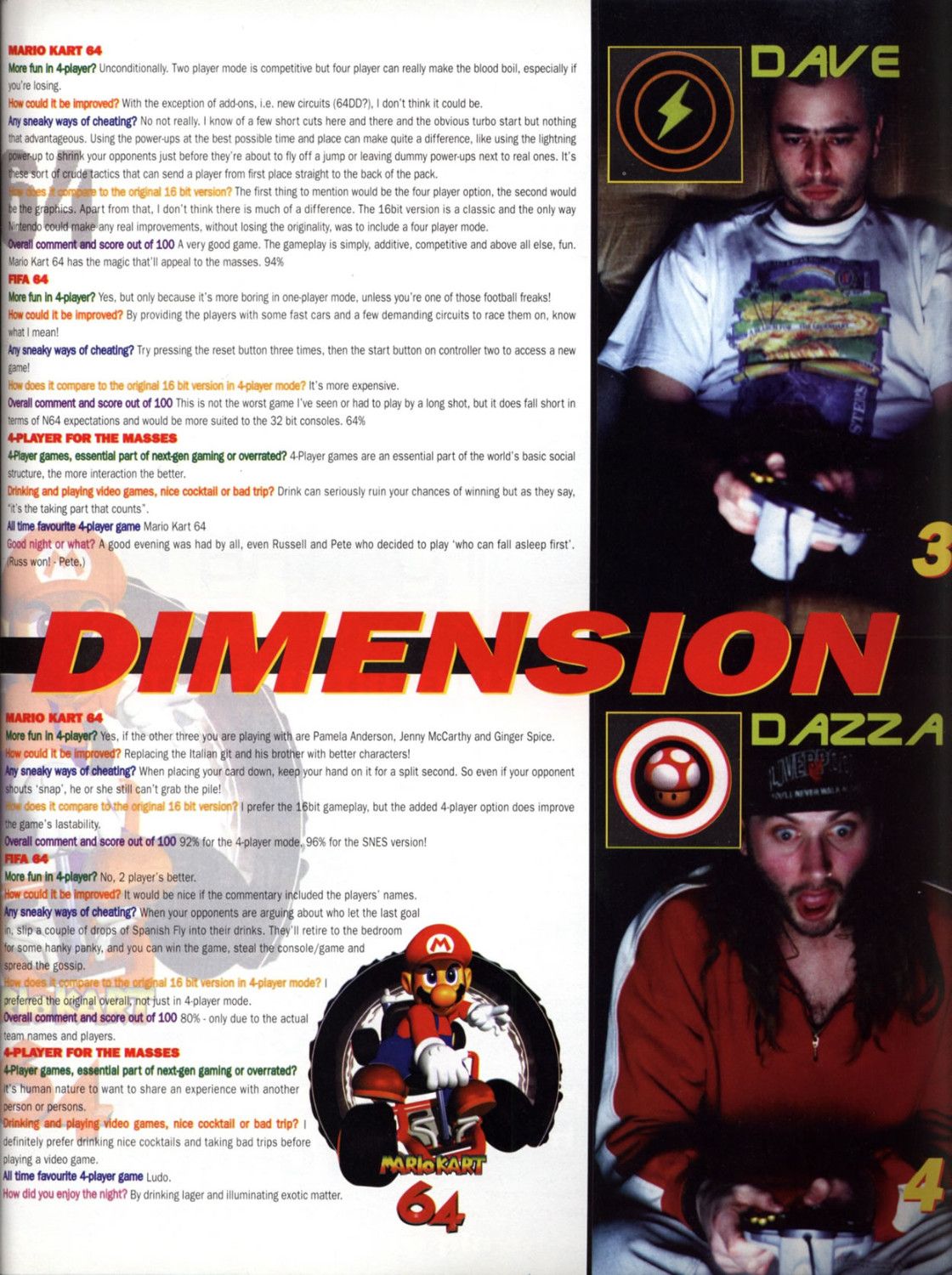
 Mario Kart 64: Fun in 4-Player64 Extreme · Issue 2May 1997
 Mario Kart 64 advert poster64 Extreme · Issue 4July 1997
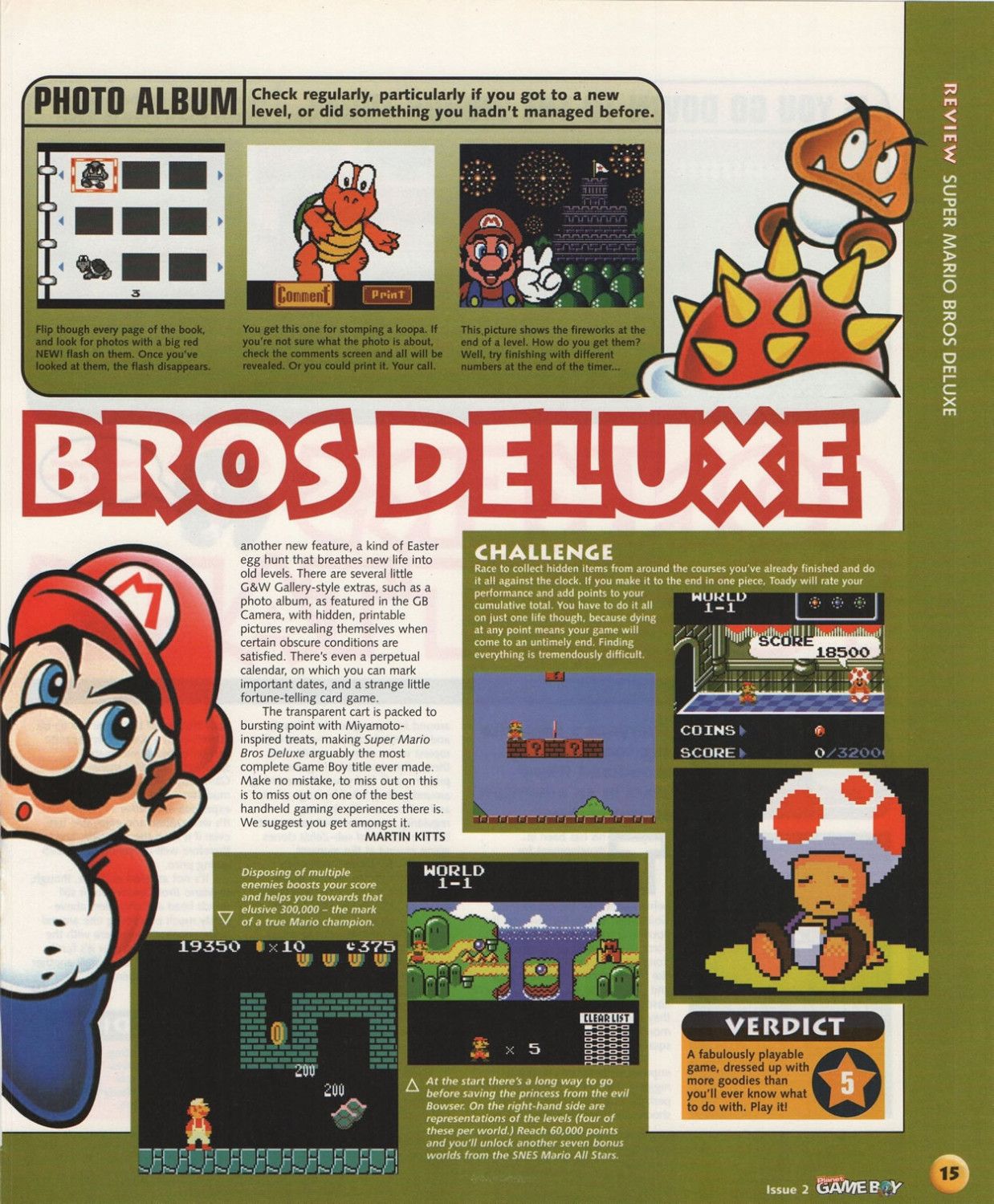
 Super Mario Bros. Deluxe reviewPlanet GB · Issue 2Autumn 1999
 Super Mario Advance reviewGBX · Issue 1July 2001
Nothing matches that search – try a shorter name.
Mario in the Magazines: A Short History
How the magazines in SLB’s archive fit into the bigger picture: who published them, what else sat beside them on the shelf, and what they made of Mario.
A crowded rack: Britain’s Nintendo magazines in the early 1990s
In the early 1990s a British Nintendo owner had plenty to read. Emap published Mean Machines from 1990 to 1992 and launched Nintendo Magazine System in 1992. Future Publishing in Bath started Super Play that autumn, with Wil Overton’s manga-style cover art, the title printed in katakana and a real appetite for Japanese imports and role-playing games; it was selling 50,578 copies a month in June 1994.
Up in Cheshire, Europress had bought Newsfield, the company behind Crash and Zzap!64, in 1991, and its magazine arm (renamed Impact Magazines in 1993) covered Nintendo in N-Force from July 1992 before moving its Super NES pages into a dedicated SNES Force in July 1993. Europress also put out GB Action, which went on sale in June 1992 for 99p and claimed to be the first and only magazine anywhere devoted to the Game Boy. A typical issue ran to about 60 pages of news, previews, reviews, readers’ own reviews and cheats.
Mario goes to Hollywood: the 1993 movie in print
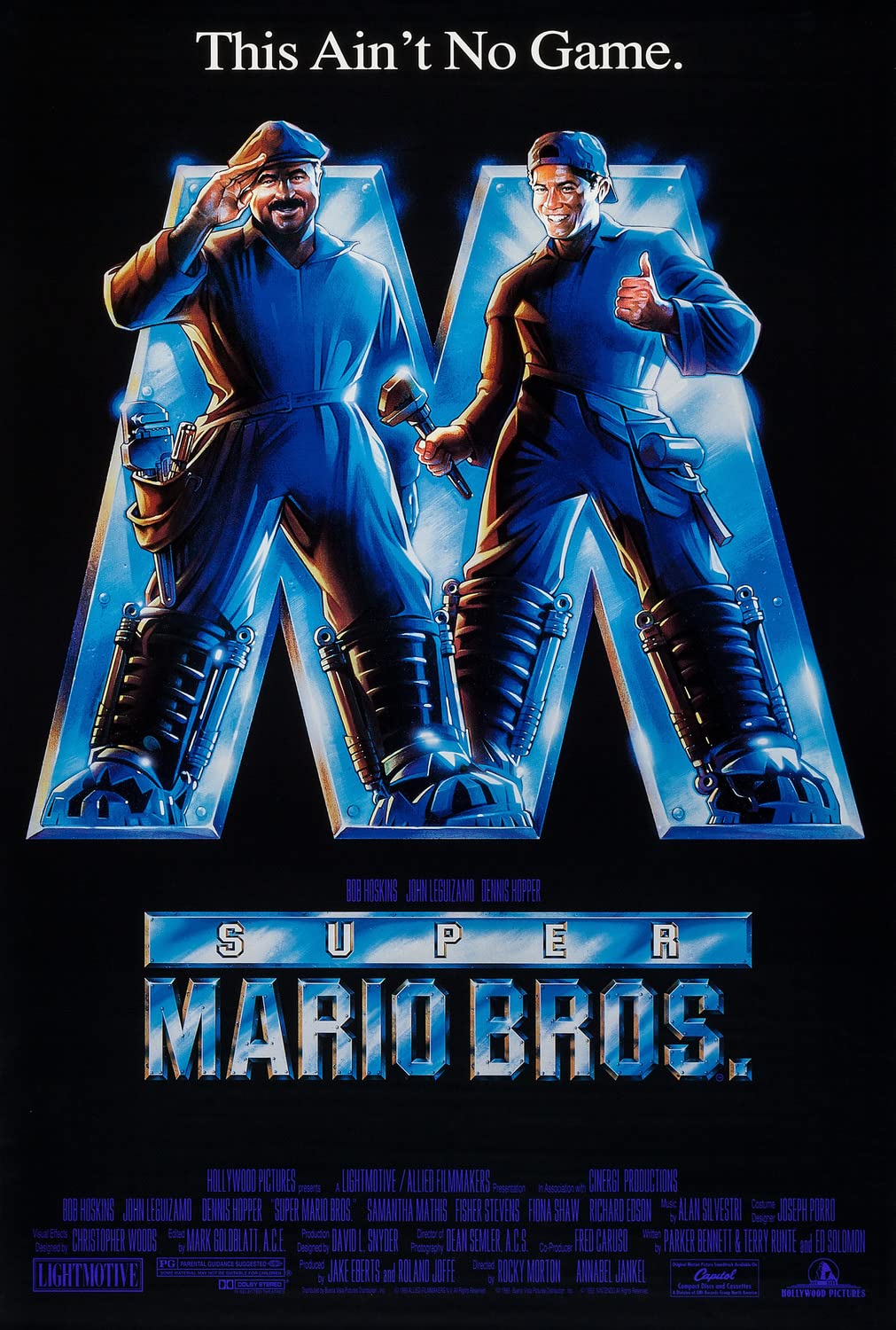
Producer Roland Joffé came away from a meeting with Nintendo president Hiroshi Yamauchi holding a $2 million deal for temporary control of the Mario character, and Disney’s Hollywood Pictures took on the film a few weeks before shooting. The husband-and-wife team of Rocky Morton and Annabel Jankel directed Super Mario Bros. at Carolco Studios in Wilmington, North Carolina, between 6 May and 27 July 1992, with Bob Hoskins as Mario, John Leguizamo as Luigi, Dennis Hopper as President Koopa and Samantha Mathis as Daisy.
The magazines followed it all the way. GB Action’s fourth issue, dated September 1992, carried a short item on the film while it was still in the making. By the summer of 1993 there were proper previews: Flicks ran a feature with the cast in its June issue, and SNES Force ran a two-page preview in its very first issue in July, tracing Mario from second billing behind the ape in Donkey Kong to a star the magazine reckoned was more famous than Mickey Mouse. The timing explains the excitement: the film opened in America on 28 May 1993, but British cinemas did not get it until 9 July, so UK readers were still being sold a film that American audiences had already seen.
The verdicts were not kind. The film cost between $42 and $48 million and took about $38.9 million worldwide; Siskel and Ebert gave it two thumbs down, and Hoskins later named it the worst job he had ever done. It has since gathered a cult following, helped along in 2021 by a fan-restored version called the Morton-Jankel Cut.
SNES Force, 1993: Mario Paint, Yoshi’s Safari and a missing plumber
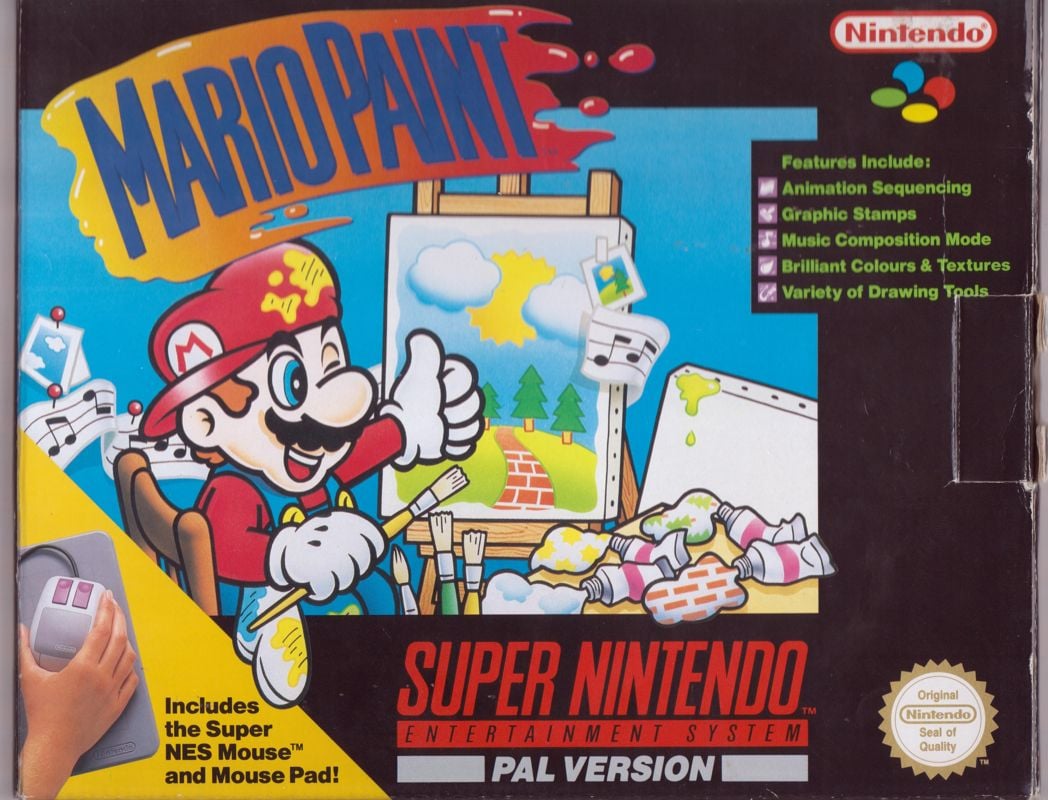
SNES Force’s first issue, cover-dated July 1993, did not stop at the movie. On page 94, in its Guide Directory, it rated Mario Paint, the mouse-driven art package, at 82%, far kinder than Super Play (55%) or Total! (48%), though Computer and Video Games had been keener still at 91%.
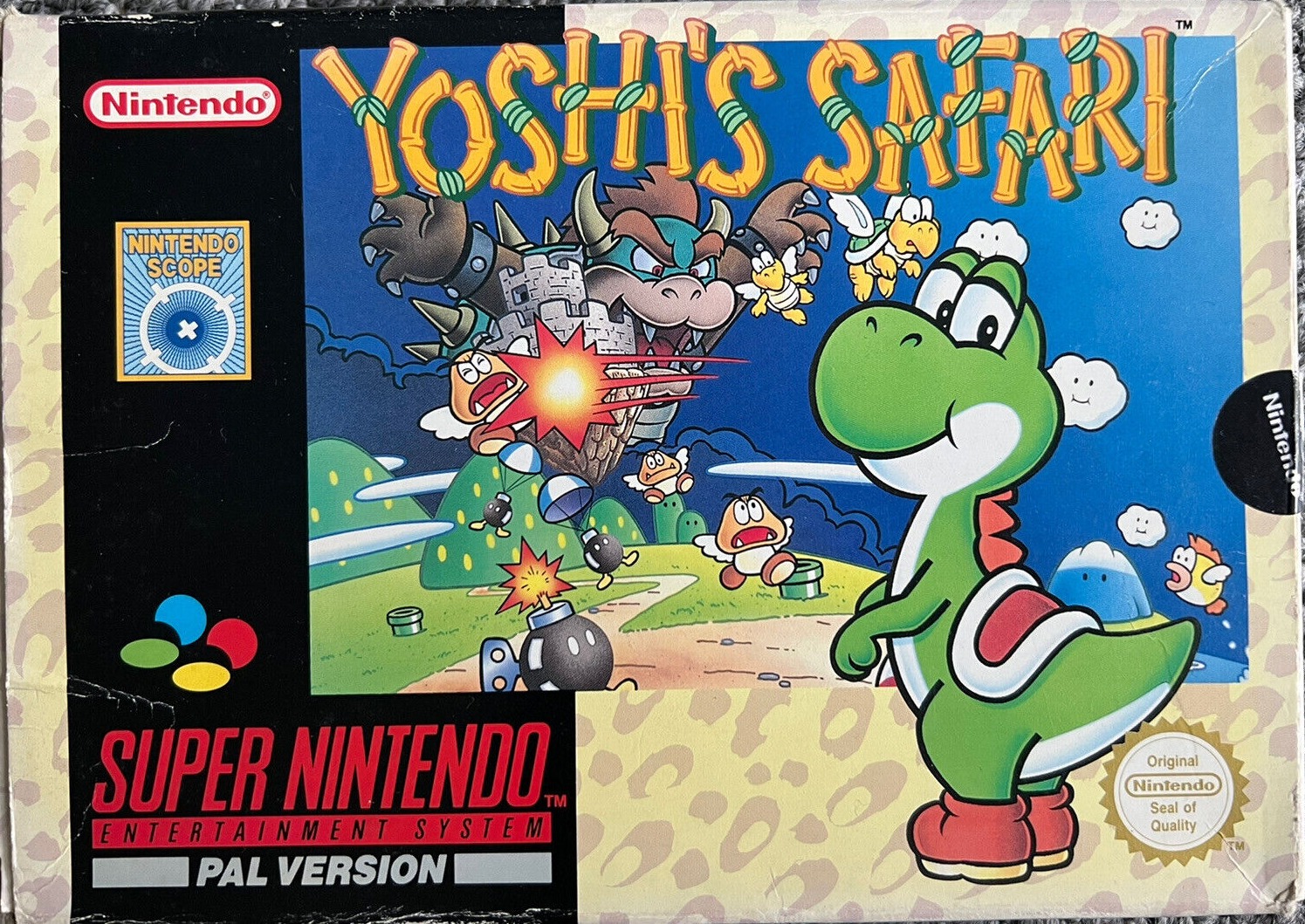
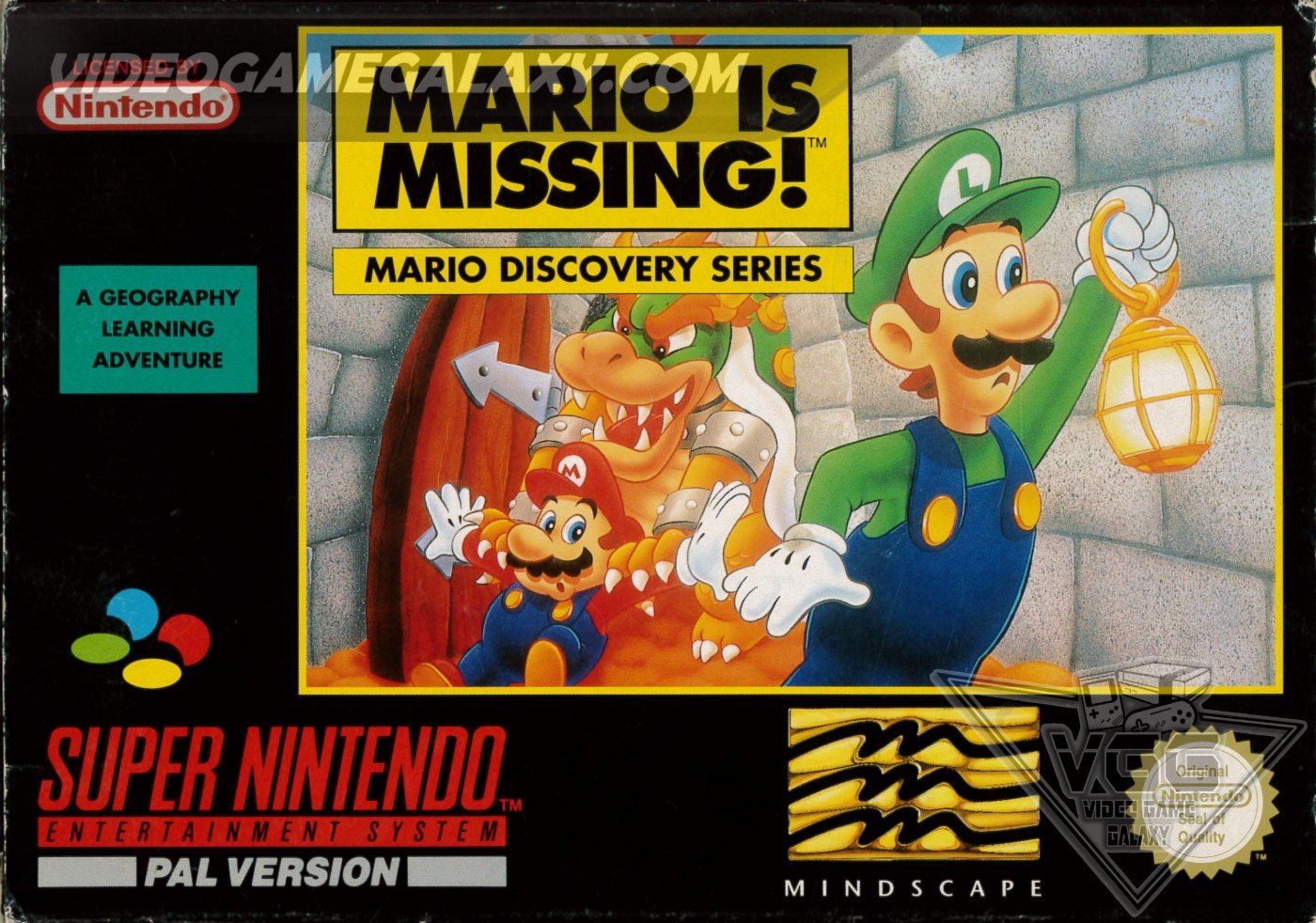
Issue 3 (September 1993) previewed Yoshi’s Safari, a shooter for the Super Scope light gun starring the cast of Super Mario World. Made by Nintendo R&D1, it was the first Super Scope game to use the console’s Mode 7 effects; it had come out in Japan on 14 July 1993 and would reach Europe on 19 November, and Nintendo Magazine System gave it 77/100 in its own September issue. The same issue of SNES Force was far harder on the edutainment spin-off Mario is Missing!, marking it down to 42/100 across pages 58 and 59.
SNES Force rated Super Mario All-Stars at 92%, with Computer and Video Games going to 94%. The magazine did not get long with the Super NES’s best years, though: its publisher, Impact Magazines, ceased publication in March 1994.
1997: Super Mario 64 lands, and so do the N64 magazines
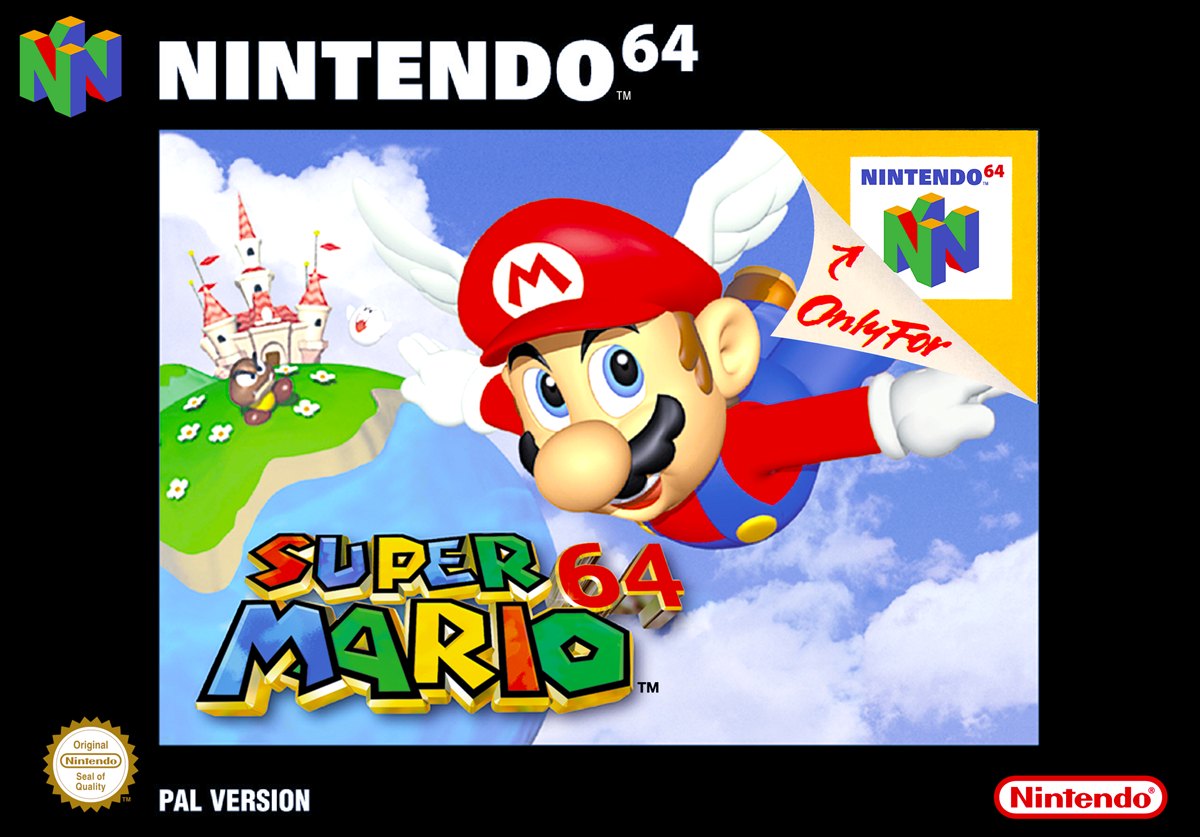
Super Mario 64 reached Europe on 1 March 1997, and the magazines were waiting. That same month Future replaced Super Play with N64 Magazine, edited by Jonathan Davies with Wil Overton as art editor. Its 116-page first issue, cover-dated April 1997, reviewed the UK release of Super Mario 64 (96%) and an import copy of Mario Kart 64 (91%, by Jonathan Nash). Elsewhere Total! gave Super Mario 64 a perfect 100 and Computer and Video Games five out of five.
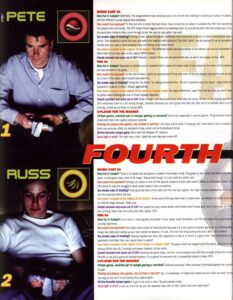
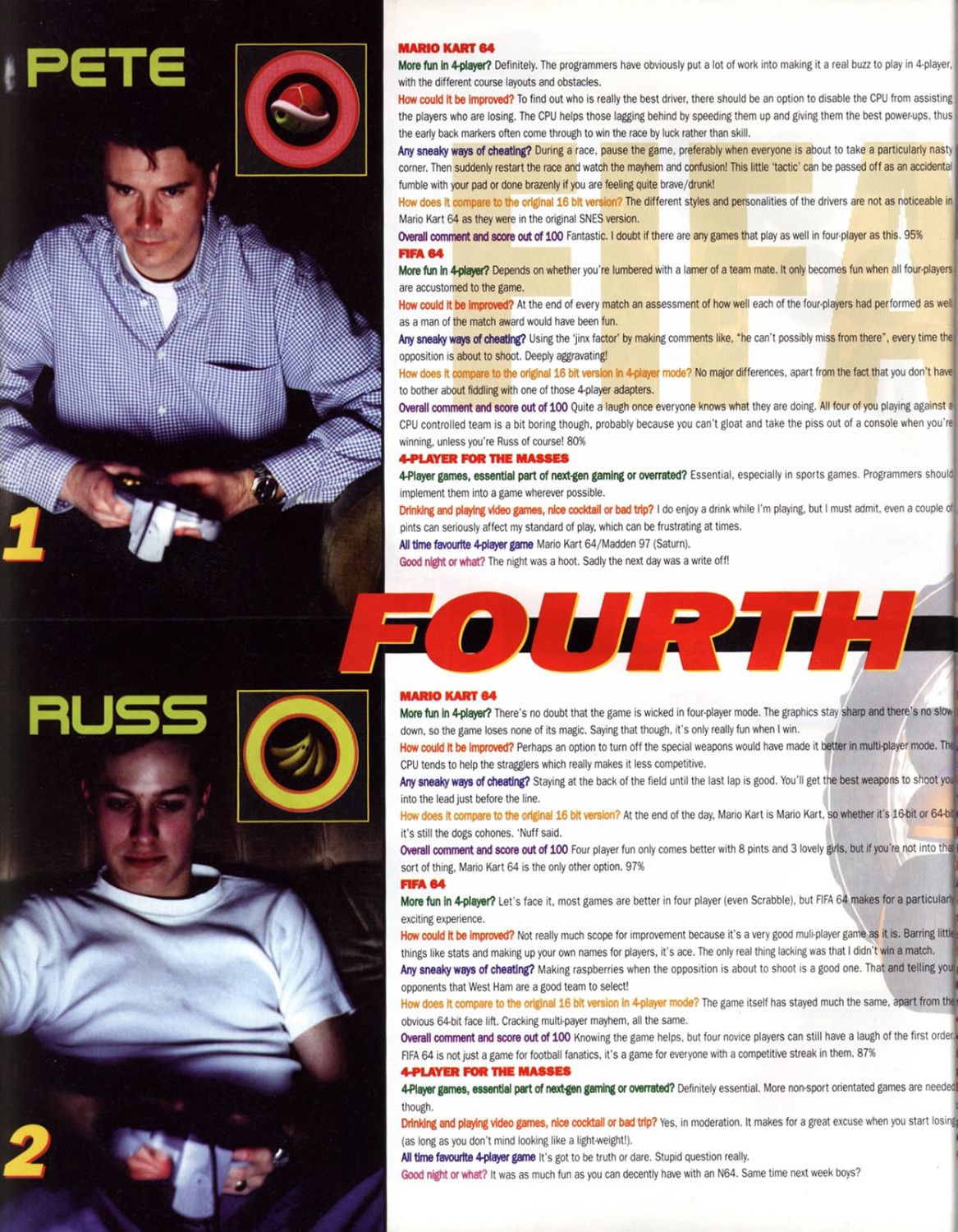
64 Extreme burned brighter and shorter: an English magazine given over entirely to the Nintendo 64, it managed eight issues between April 1997 and the turn of 1998. Its second issue (May 1997, 84 pages) carried the concluding part of a complete Super Mario 64 guide, 17 pages on the final eight courses, the closing Bowser fights and the castle secrets you need for all 120 Power Stars, plus a feature in which the magazine’s four editors picked the games that are better with four players and put Mario Kart 64 at the top.
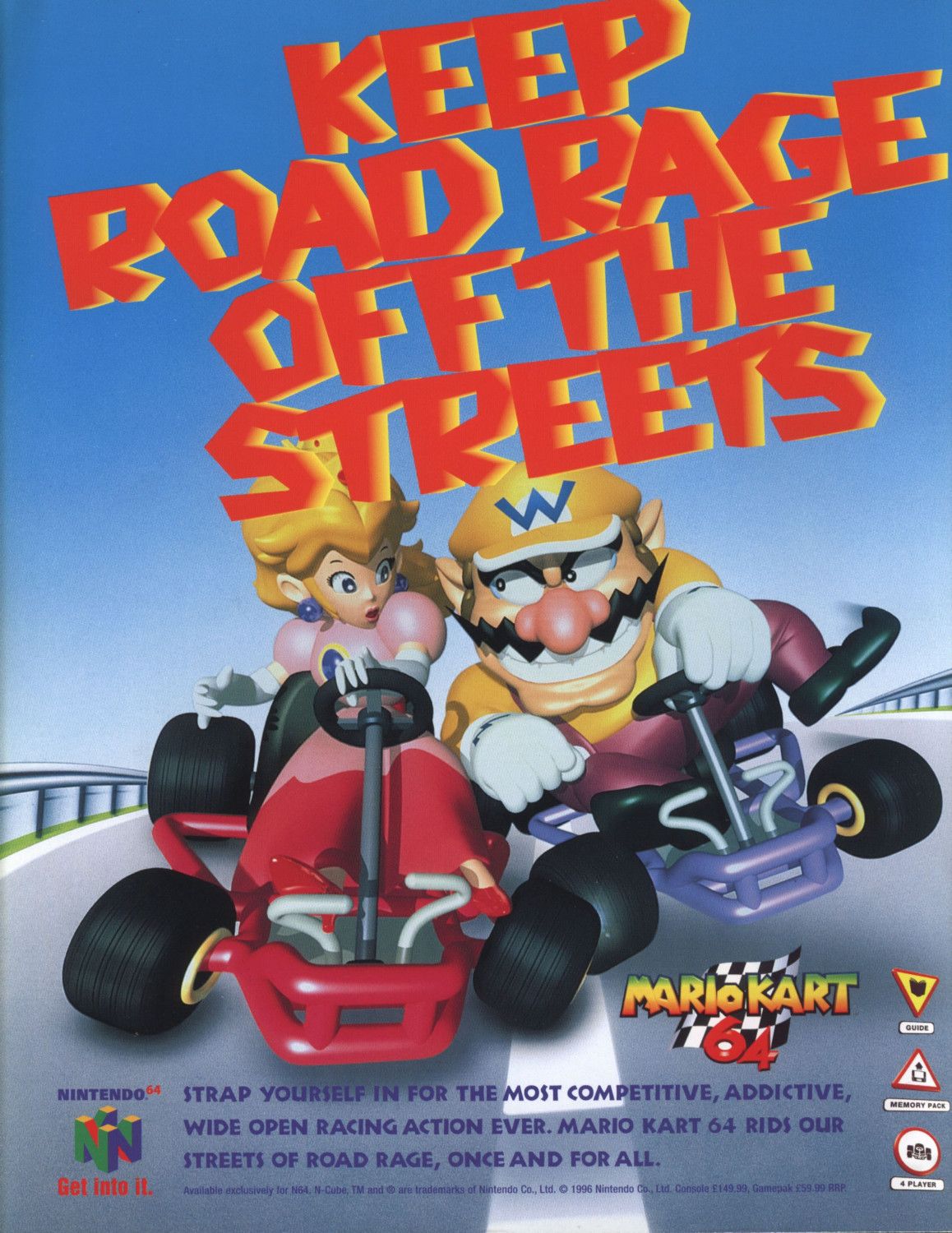
Mario Kart 64 arrived in European shops on 24 June 1997, and 64 Extreme’s July issue duly carried its “Keep Road Rage off the Streets” advert as a poster.
Pocket-sized: Game Boy magazines from GB Action to GBX
Handheld Mario had magazines of its own. GB Action lasted 41 issues, ending with an August 1995 issue that had Primal Rage on the cover, and by one count Super Mario fronted it only once. Its reviews scored gameplay, presentation and lastability, added a second opinion, and shared the pages with readers’ reviews and cheats approved by Nintendo’s hotline. It bowed out shortly before Pokémon took off.
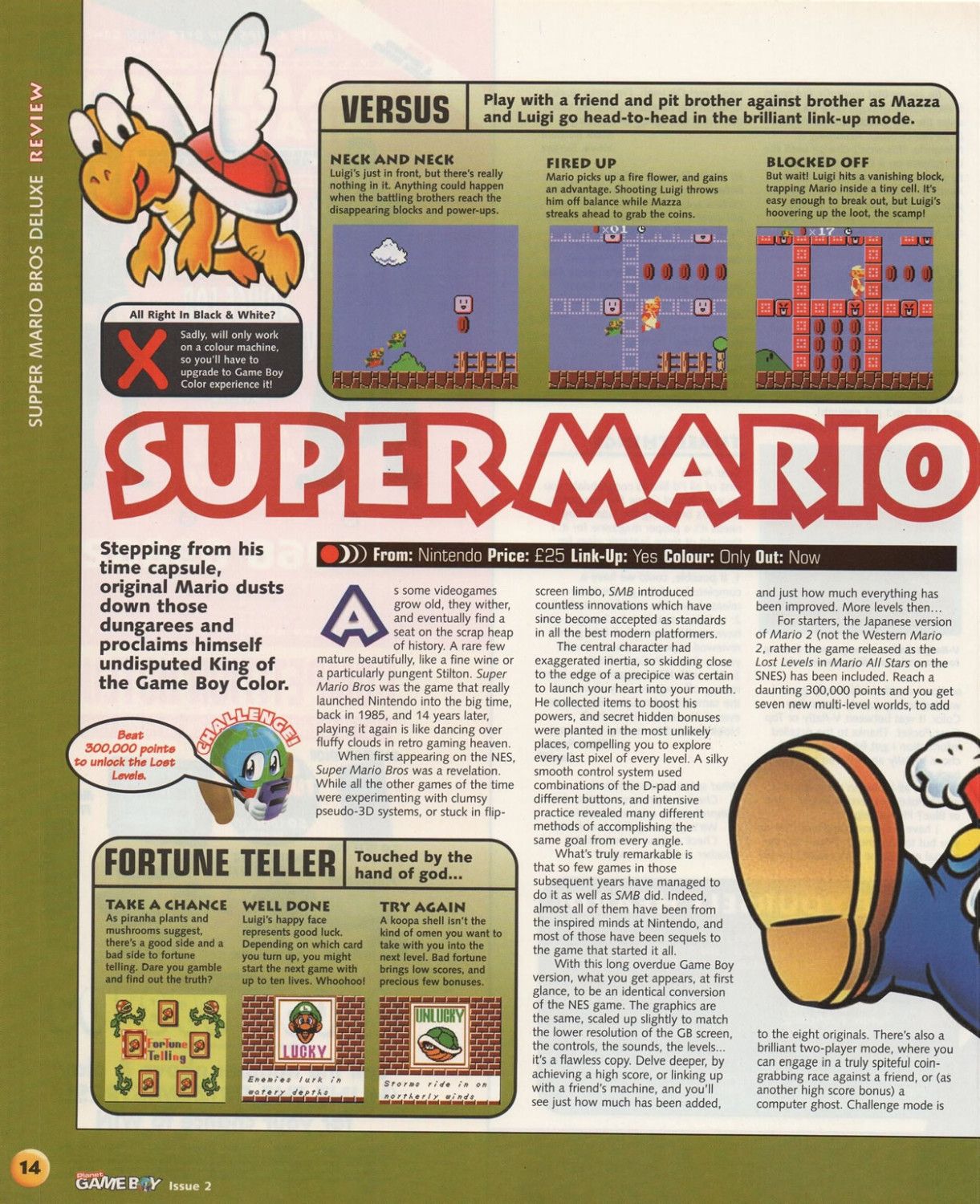
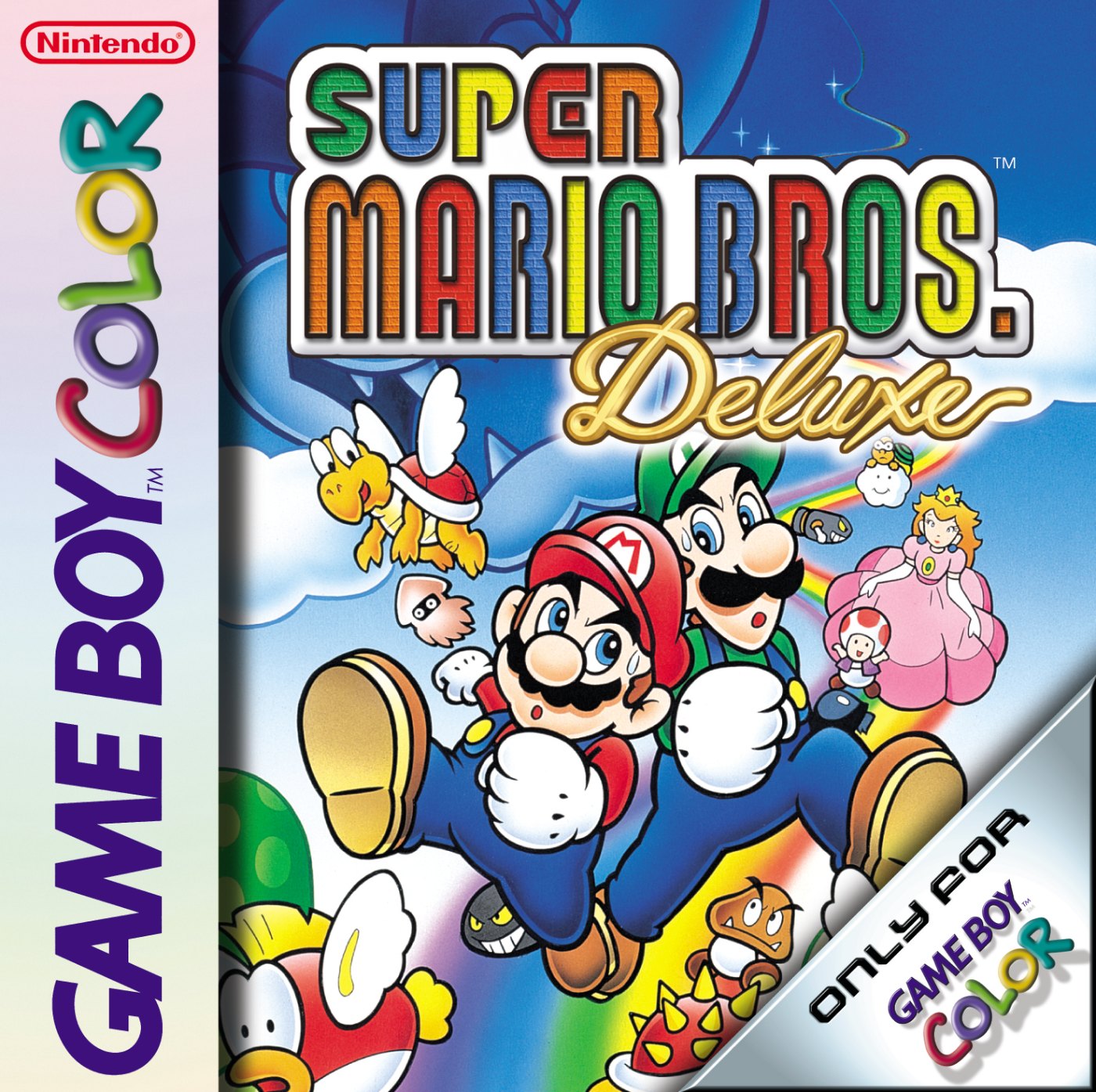
Planet GB, a British magazine dedicated to the Game Boy, launched in the summer of 1999 with a Pokémon Pinball preview in its first issue. Its second issue, that autumn, spent two pages on Super Mario Bros. Deluxe, the Game Boy Color version of the 1985 original that had come out in America on 10 May 1999 with save-anywhere play, a Challenge mode, a two-player race over the link cable, Game Boy Printer extras and The Lost Levels for anyone who scored 300,000 points.
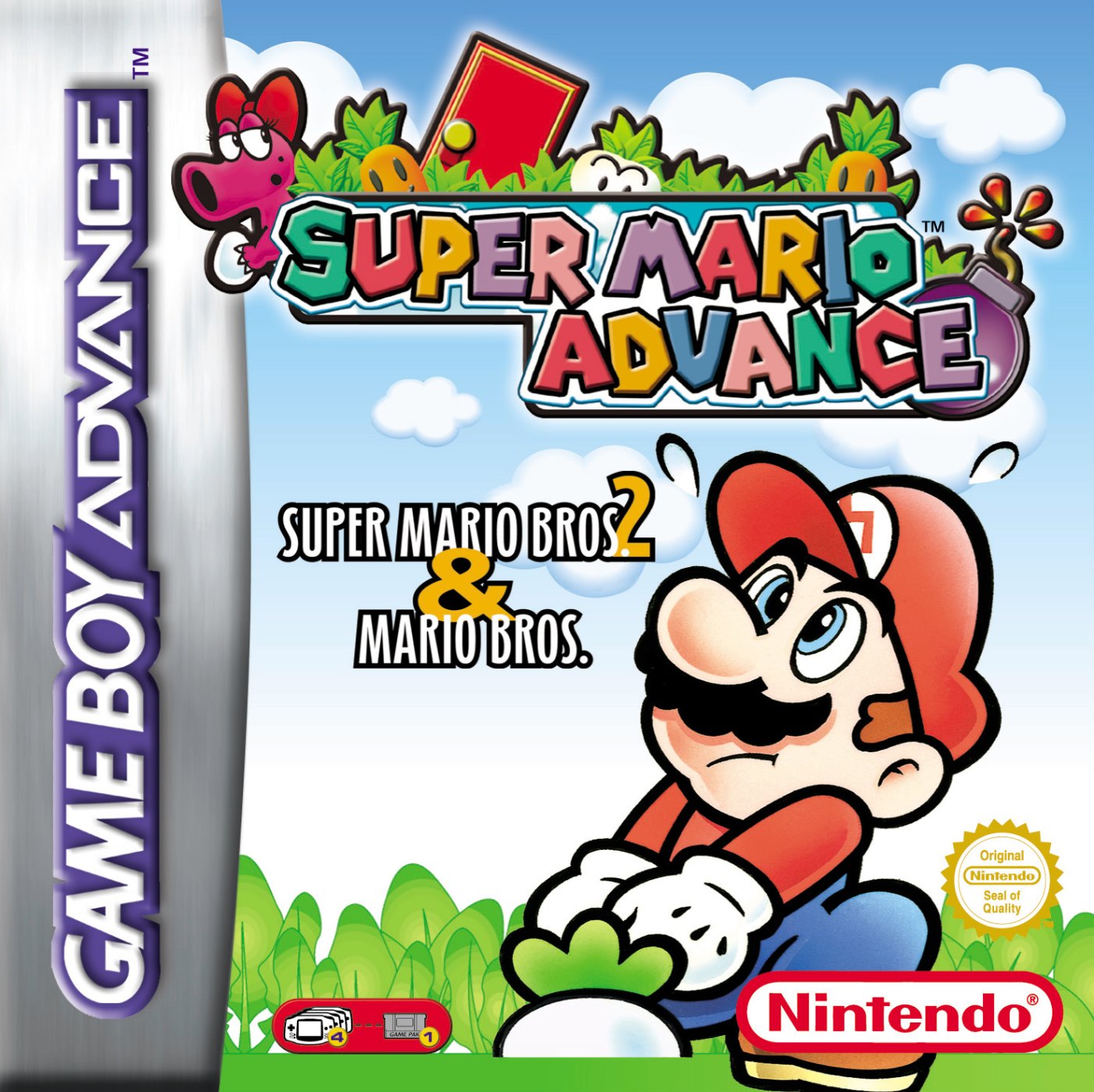
GBX, from Thin Ice Media, covered the Game Boy in 2001 and 2002. Its first issue (July 2001) reviewed Super Mario Advance, a launch title for the Game Boy Advance in every region that reached Europe on 22 June 2001: an enhanced Super Mario Bros. 2 drawn in the All-Stars style, with a four-player Mario Bros. thrown in.
Closing time: how the shelves emptied
N64 Magazine moved with the hardware. After issue 59 (October 2001) it became NGC Magazine for the GameCube, and when NGC closed in 2006 Future replaced it with NGamer, whose first issue came out on 13 July 2006. It was relaunched as Nintendo Gamer from issue 71 on 5 January 2012, but on 30 August 2012 Future announced that issue 80 (October 2012) would be the last.
The others went the same way. Nintendo Power, the American magazine Nintendo of America had launched in 1988, ended in 2012, and the UK’s Official Nintendo Magazine followed in 2014. Super Play made a one-off comeback in September 2017 as issue 48, bundled with issue 172 of Retro Gamer. SLB’s own scans arrived over the same years: the Flicks feature went up as a Weekly Retro Feature in February 2014, and the other eight articles followed between October and December 2017.
Timeline
From GB Action’s launch to Nintendo Gamer’s final issue: the dates behind the scans.
Mario in the magazines, 1992–2017
- GB Action June 1992Europress launches a magazine just for the Game Boy, priced 99p.
- The movie 6 May – 27 July 1992Super Mario Bros. is shot in Wilmington, North Carolina.
- GB Action #4 September 1992A news item on the Mario film: the oldest scan in the archive.
- The movie 28 May 1993The film opens in American cinemas.
- Flicks June 1993A preview of the film and its cast.
- SNES Force #1 July 1993Impact’s new Super NES magazine previews the movie and gives Mario Paint 82%.
- The movie 9 July 1993The film reaches British cinemas.
- SNES Force #3 September 1993A Yoshi’s Safari preview; Mario is Missing! scores 42/100.
- Impact Magazines March 1994SNES Force’s publisher ceases publication.
- GB Action August 1995The 41st and final issue.
- N64 Magazine #1 April 1997Super Mario 64 scores 96% and an import Mario Kart 64 91%; 64 Extreme’s first issue is dated the same month.
- 64 Extreme #2 May 1997The 17-page Super Mario 64 guide and the four-player feature.
- Mario Kart 64 24 June 1997European release; 64 Extreme’s July issue carries the advert poster.
- Planet GB #2 Autumn 1999Super Mario Bros. Deluxe is reviewed.
- GBX #1 July 2001Super Mario Advance is reviewed, weeks after the Game Boy Advance reached Europe.
- NGamer 13 July 2006The first issue of NGC Magazine’s successor.
- Nintendo Gamer October 2012Issue 80, the last; Nintendo Power also ends in 2012.
- Super Luigi Bros 2014–2017The Flicks feature goes up in February 2014; the other eight articles follow in late 2017.
Trivia & Interesting Facts
- GB Action sold itself as the first and only magazine in the world devoted to the Game Boy. The launch issue in June 1992 cost 99p, and even when the price rose to £1.25 it was one of the cheapest games magazines around.
- By Games Asylum’s count, Super Mario took the front cover just once in 41 issues of GB Action.
- N64 Magazine’s long-running “wah!” gag came from the noise Wario makes when a shell hits him in Mario Kart 64.
- Readers of N64 Magazine once sent in papier-mâché statues of Luigi as competition entries.
- Super Play sold 50,504 copies a month in November 1993 and 50,578 in June 1994; by November 1995 the figure had dropped to 23,657.
- SNES Force’s first issue holds two pieces of Mario history at once: the movie preview in this archive and an 82% rating for Mario Paint in its Guide Directory.
- Before Roland Joffé secured the film, Dustin Hoffman tried to buy the rights in 1990 to play Mario himself, with Danny DeVito as Luigi and Barry Levinson directing.
- The 1993 film has a post-credits scene in which two Japanese businessmen pitch Iggy and Spike a video game called Super Koopa Cousins.
- The film’s soundtrack came out on Capitol Records on 10 May 1993 with two Roxette songs, and the video for “Almost Unreal” used footage from the film.
- Planet GB’s first issue, the one before its Super Mario Bros. Deluxe review, previewed Pokémon Pinball.
- N64 Magazine’s first issue reviewed Mario Kart 64 on import; European players had to wait until 24 June 1997 for the PAL release.
More from the Scans
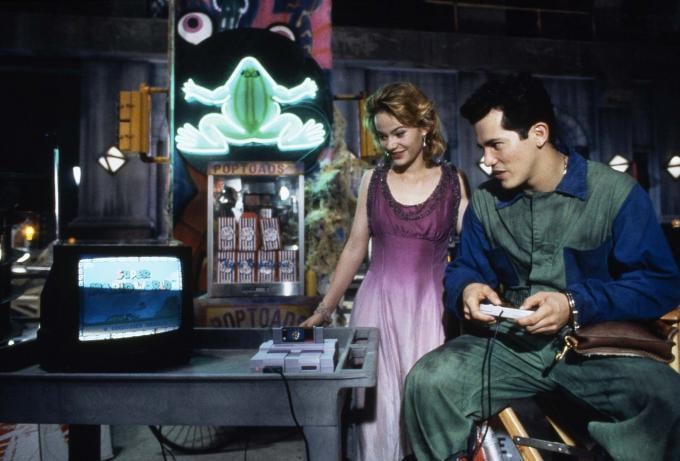
More pages from the archive, plus a few pictures from the 1993 film that so many of these magazines were excited about.


Sources
Every fact on this page was checked against the 29 sources listed here.
Show sources
Super Luigi Bros, Mario Bros. movie announced: GB Action issue 4 · Super Luigi Bros, Super Mario Bros. movie in Flicks magazine · Super Luigi Bros, Mario Bros. The Movie preview: SNES Force issue 1 · Super Luigi Bros, Super Mario 64 players guide: 64 Extreme issue 2 · Out of Print Archive, N64 Magazine issue 1 · Wikipedia, Mario Kart 64 · Nintendo64EVER, 64 Extreme issue 2 · Wikipedia, Super Mario Bros. · Games Asylum, GB Action magazine: flying the flag for the monochrome marvel · Wikipedia, Super Mario 64 · Nintendo64EVER, 64 Extreme magazine series · Wikipedia, NGC Magazine · Wikipedia, NGamer · Wikipedia, Mario Paint · Wikipedia, Mario Is Missing! · Wikipedia, List of video game magazines · Wikipedia, Super Play · Wikipedia, Impact Magazines · Super Luigi Bros, Yoshi’s Safari preview: SNES Force issue 3 · Wikipedia, Yoshi’s Safari · Wikipedia, Super Mario All-Stars · Super Luigi Bros, Mario Kart 64: Fun in 4-Player, 64 Extreme issue 2 · Super Luigi Bros, Mario Kart 64 advert poster: 64 Extreme issue 4 · Pokémon Dungeon, Pokémon Pinball preview: Planet GB issue 1 · Super Luigi Bros, Super Mario Bros. Deluxe review: Planet GB issue 2 · Wikipedia, Super Mario Bros. Deluxe · Super Luigi Bros, Super Mario Advance review: GBX issue 1 · Wikipedia, Super Mario Advance · Super Mario Wiki
Images: Mario and all related characters, artwork and screenshots are © Nintendo; other artwork, covers and scans are © their respective owners. Images are used here for commentary and reference.