Wii2007Nintendo EAD Tokyo3D platformerMetacritic 9712.8 million soldBAFTA Best GameFirst orchestral Mario42 galaxies
Super Mario Galaxy
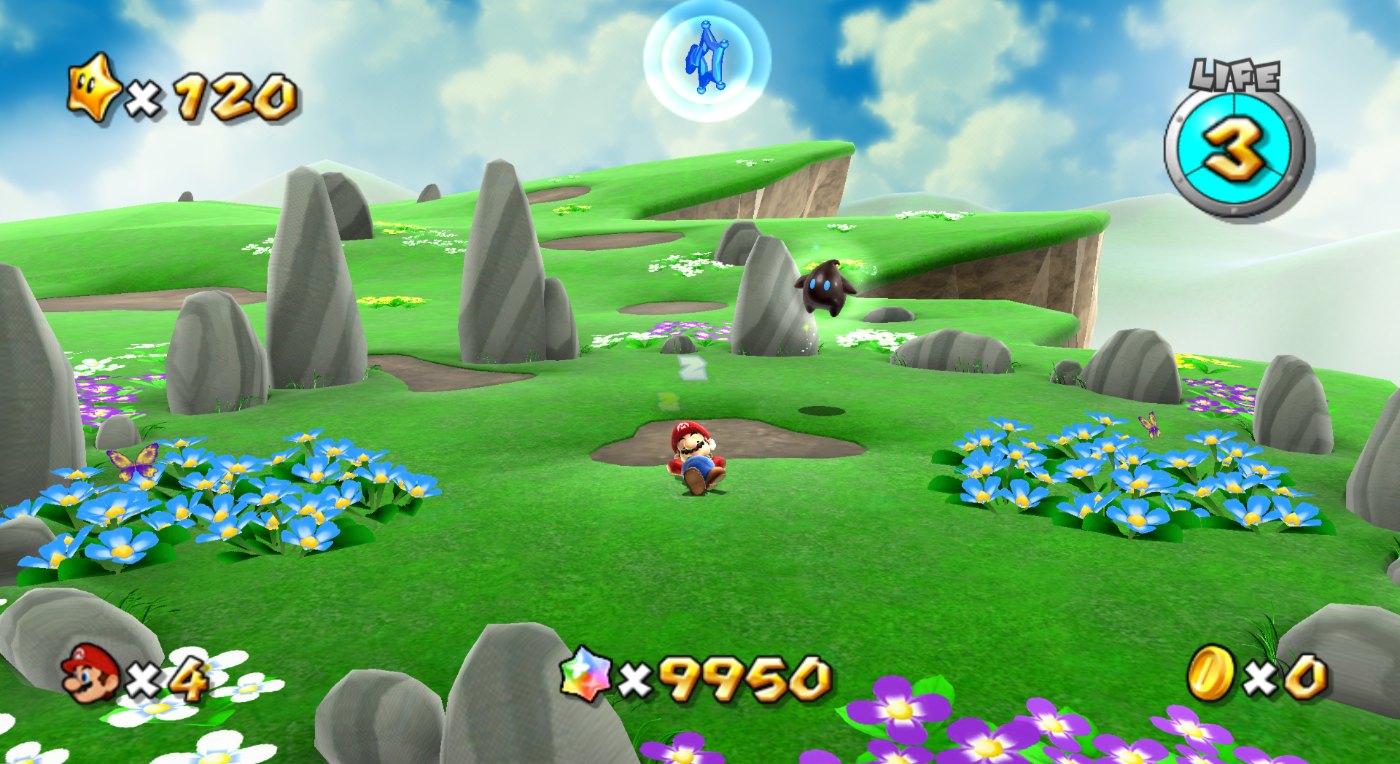
Mario leaves the ground behind. Released for Wii in November 2007, Super Mario Galaxy swaps the castles and islands of earlier 3D Marios for 42 galaxies of tiny planets, each with its own gravity, so that running off the edge of the world simply brings you round to the other side. Director Yoshiaki Koizumi and the young team at Nintendo EAD Tokyo built it from an idea that began with the Super Mario 128 demo of 2000, added a spin on the Wii Remote, a pointer that scoops up Star Bits and a second player who can join in, and gave the series two things it had never had: a full orchestra and Rosalina, whose bedtime storybook is the saddest thing in any Mario game. There are 121 Power Stars to find, then 121 more as Luigi. It scored 97 on Metacritic, won the BAFTA for Best Game, sold 12.80 million copies, and has returned twice on Nintendo Switch, most recently in October 2025 alongside its sequel.
Developer:Nintendo EAD Tokyo
Publisher:Nintendo
Platform:Wii; Wii U eShop (2015–16); Nvidia Shield TV (China, 2018); Nintendo Switch (2020 and 2025)
Genre:3D platformer
Japan:1 November 2007
N. America:12 November 2007
Europe:16 November 2007
Australia:29 November 2007
South Korea:4 September 2008 (as Super Mario Wii: Galaxy Adventure)
Music:Mahito Yokota, Koji Kondo; performed by the Mario Galaxy Orchestra
Galaxies:42, reached from six domes of the Comet Observatory
Power Stars:121 for Mario, then 121 again for Luigi
Ratings:ESRB E · PEGI 3 · CERO A · ACB G · USK 6
Sales:12.80 million worldwide (Nintendo)
Re-releases:Nintendo Selects (2011); Wii U eShop (2015–16); Super Mario 3D All-Stars (Switch, 2020); Super Mario Galaxy + Super Mario Galaxy 2 (Switch, 2 October 2025)
Advertisement
Overview
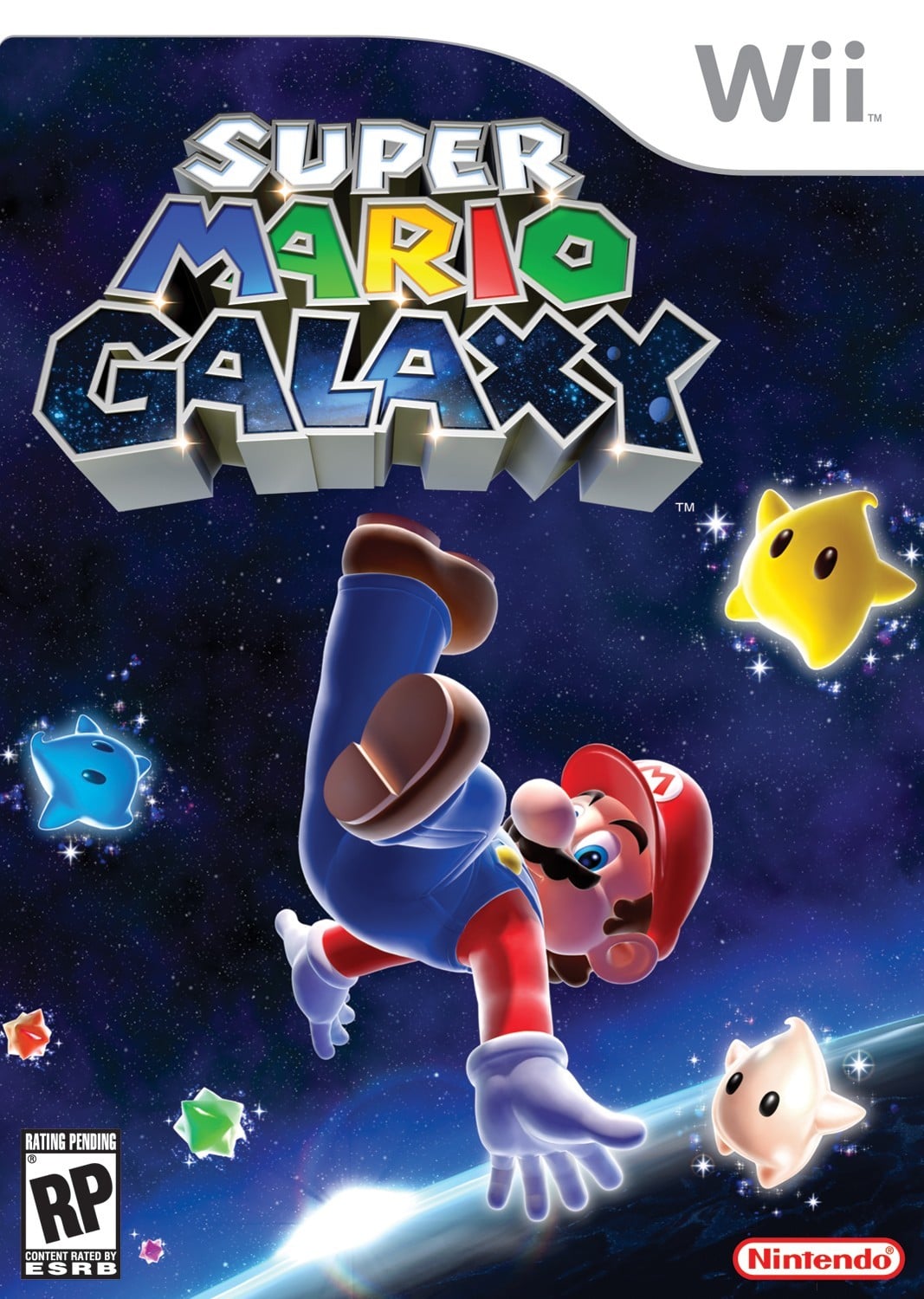
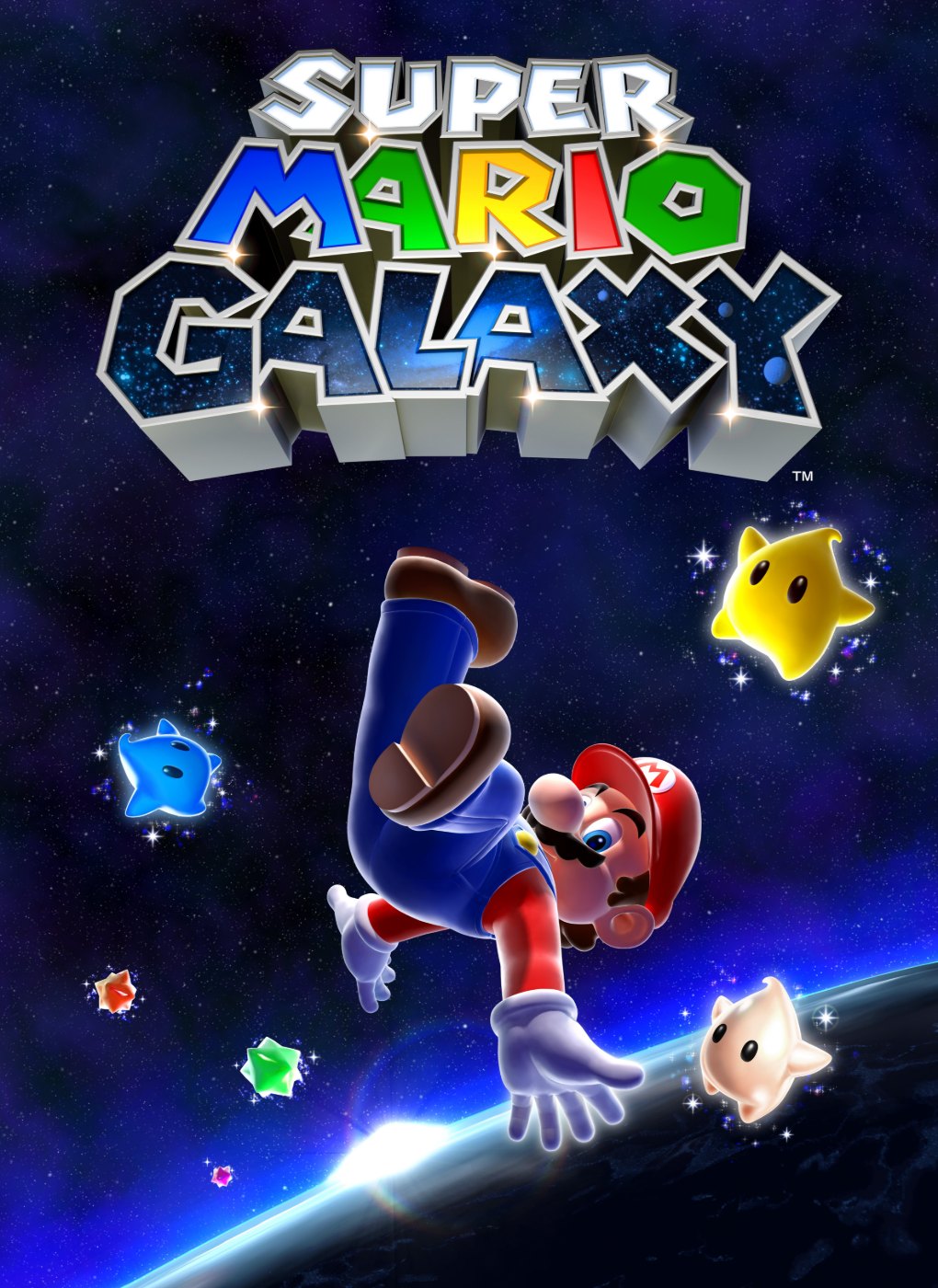
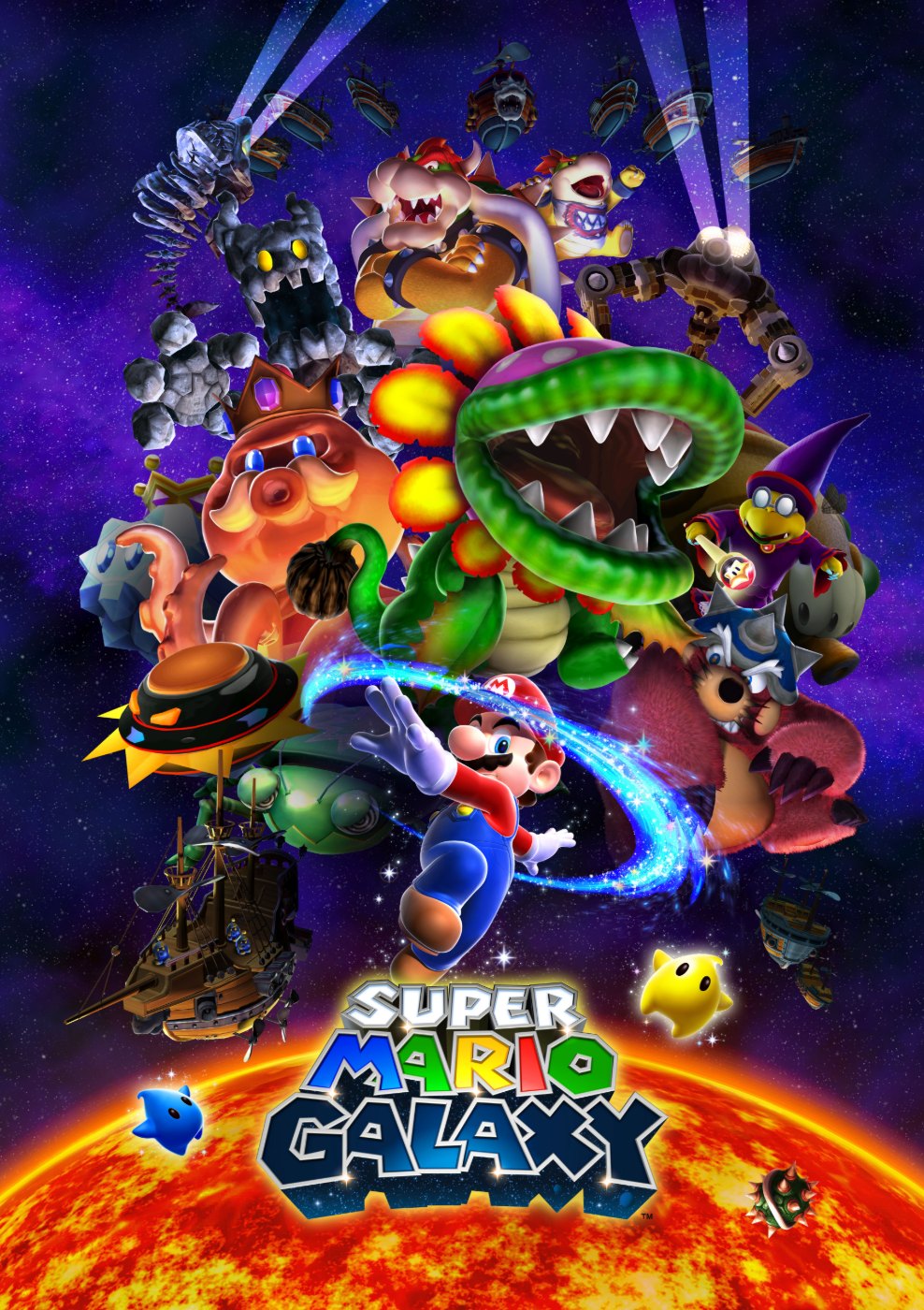
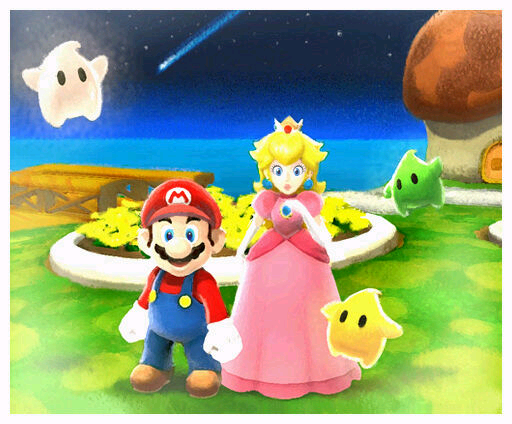
The box artwork: Mario, a Luma and a sky full of planets.
Super Mario Galaxy is the third 3D Mario adventure, after Super Mario 64 and Super Mario Sunshine, and the first made for Wii. It arrived in Japan on 1 November 2007, in North America on 12 November, in Europe on 16 November and in Australia on 29 November, eleven months after the console itself, and it was the game people had been waiting for since Mario first waved from a tiny planet in a trailer at E3 2006.
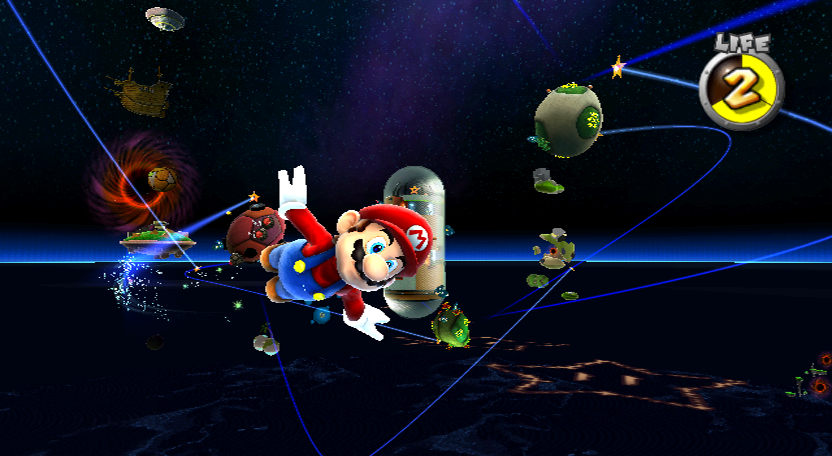
The premise is the oldest one going. Bowser gatecrashes a festival, rips Peach’s Castle out of the ground and carries it into space, and Mario goes after him. What nobody had seen before was where the chase happens. Every level is a cluster of small worlds: spheres you can run all the way around, flat discs with a top and an underside, hollow planets, planets shaped like eggs, apples and ice creams. Each has its own gravity, so the ground is whichever way your feet are pointing, and Mario travels between them by spinning into Launch Stars that fling him across the void. Because a sphere has no edge to fall off and no far corner to get lost in, the camera can mostly look after itself, which was the point: Nintendo wanted a 3D Mario that people who had bounced off Super Mario 64 could simply pick up and play.
Home is the Comet Observatory, a drifting palace run by a tall, quiet woman in blue called Rosalina and her family of star children, the Lumas. Bowser has stolen the Power Stars that drive it, and each one Mario brings back relights another dome and opens more galaxies. Along the way he becomes a bee, a ghost, a spring and a skater on ice; surfs a manta ray; rolls on a ball with a star inside; and races his own shadow whenever a Prankster Comet passes. Sixty stars will get you to Bowser. One hundred and twenty unlock Luigi and a second run through the whole game, and finishing that opens the one galaxy you never thought you would see.
It was greeted as a masterpiece. Edge and Eurogamer gave it ten out of ten, IGN called it the best game on Wii, Metacritic’s average settled on 97 and GameRankings eventually listed it as the best-reviewed game on the site. It won the BAFTA for Best Game in March 2009, the first Nintendo title to do so, and Nintendo’s own figures put sales at 12.80 million. A sequel, Super Mario Galaxy 2, followed in 2010; the original came back in Super Mario 3D All-Stars in 2020 and again, sharpened up and with a new storybook chapter, on Nintendo Switch in October 2025.
From the amazing diversity of galaxies to the incredible control scheme offered through the Wii Remote, Super Mario Galaxy takes the Mario action you know and love and transports it into a world of gravity-defying levels set amid the stars.
Whether you’re a Mario master or playing one of his adventures for the first time, you’ll actively jump from planet to planet with the motion-sensing and pointing capabilities of the controller. Mario’s newest move – the spin move – is performed by giving the Wii Remote a quick shake. It’s the most versatile move in the game and can aide Mario in his many discoveries. Additionally, the Wii Remote’s pointer is used to collect Star Bits, which can be thrown at enemies to stun them.
— Official description (Nintendo UK, 2007)
Why Super Mario Galaxy matters to Mario fans
This is where Rosalina, the Lumas and the Toad Brigade (and with them the future Captain Toad) come from, where Mario first got a real orchestra, and where the 3D games stopped being playgrounds to explore and became obstacle courses to finish, the shape that Galaxy 2, 3D Land and 3D World all followed. It is also the one where you can play the entire adventure a second time as Luigi, which, on a site with our name, counts for a lot.
Good Egg Galaxy, the first proper stop.Pull Stars drag Mario through Space Junk Galaxy.The Comet Observatory, Rosalina’s home and the hub.Bee Mario meets the Queen Bee in Honeyhive Galaxy.
“Every hundred years, a comet appears in the skies above the Mushroom Kingdom.”
Opening narration, Super Mario Galaxy (Nintendo, 2007; English localisation by Nintendo of America). First line quoted; the rest summarised.
So begins the picture-book prologue. It goes on to tell how the comet once filled the whole sky, how the Toads gathered the shooting stars it shed and carried them to the castle, and how the Star Festival has been held once a century ever since. Then Bowser turns up.
Quick Answers
The questions people ask most about Super Mario Galaxy, answered briefly here and in depth further down the page.
When did Super Mario Galaxy come out?
On Wii on 1 November 2007 in Japan, 12 November in North America, 16 November in Europe and 29 November 2007 in Australia. South Korea received it on 4 September 2008. More →
How many stars are there in Super Mario Galaxy?
121 for each brother. There are 120 Power Stars in the main game; collect them all as Mario and then again as Luigi and Grand Finale Galaxy opens with one more for each, making 242 across a complete save file. You only need 60 to reach the final battle. More →
How many galaxies are there?
42. Fifteen are large galaxies with six or seven stars each; the rest are single-star galaxies, Bowser and Bowser Jr. strongholds, seven grown from Hungry Lumas, three trial galaxies and the Grand Finale. More →
How do you unlock Luigi?
Collect all 120 Power Stars as Mario, then beat Bowser in Bowser’s Galaxy Reactor once more. Luigi becomes selectable on a save file and plays the whole game again from the start, jumping higher and skidding further. More →
What is the 121st star?
The Star Festival, the only mission in Grand Finale Galaxy. It appears once you have 120 stars as both Mario and Luigi and have beaten Bowser again, and asks you to gather 100 Purple Coins in the castle gardens from the start of the game. More →
Who is Rosalina?
The keeper of the Comet Observatory and adoptive mother of the Lumas, introduced in this game. Her history is told in a storybook she reads aloud in the Observatory library, with new chapters appearing as you collect stars. More →
What power-ups are in Super Mario Galaxy?
The Bee Mushroom, Boo Mushroom, Spring Mushroom, Ice Flower, Fire Flower and Rainbow Star, plus the Red Star, which turns Mario into Flying Mario, and the Life Mushroom, which doubles his health. More →
What are Prankster Comets?
Comets that settle over a galaxy and change its rules for one mission: beat the clock, survive on one unit of health, race a Cosmic Mario, cope with double-speed enemies or collect 100 Purple Coins. They account for 30 of the stars. More →
Is Super Mario Galaxy two-player?
Yes, in Co-Star Mode. A second Wii Remote gets its own Star Pointer to gather and fire Star Bits, hold enemies still and even give Mario an extra boost when he jumps. More →
Can I play Super Mario Galaxy on Nintendo Switch?
Yes. It was part of Super Mario 3D All-Stars (2020, no longer on sale) and was released again on 2 October 2025, on its own or in a bundle with Super Mario Galaxy 2, with sharper graphics, an Assist Mode and a free update for 4K on Nintendo Switch 2. More →
Story
Rosalina, watcher of the stars.
Told in two layers. On top is the brightest, loudest rescue mission Mario has ever been on. Underneath, in a library most players only find by accident, is a quiet story about a girl who went looking for somebody else’s mother and never went home.
The night of the Star Festival
Once a century a comet crosses the sky above the Mushroom Kingdom, and the Toads hold a festival to catch the Star Bits it sheds. Peach writes to Mario asking him to come to the castle that night, because she has something to give him. He arrives in the castle gardens to lanterns, music and falling stars, and then to airships. Bowser’s fleet opens fire and seals the Toads in crystal. With mock courtesy he tells Peach she is invited to the creation of his new galaxy, a flying saucer slices the ground from beneath the castle with a beam of light, and the whole building is hoisted into space with the princess on the balcony.
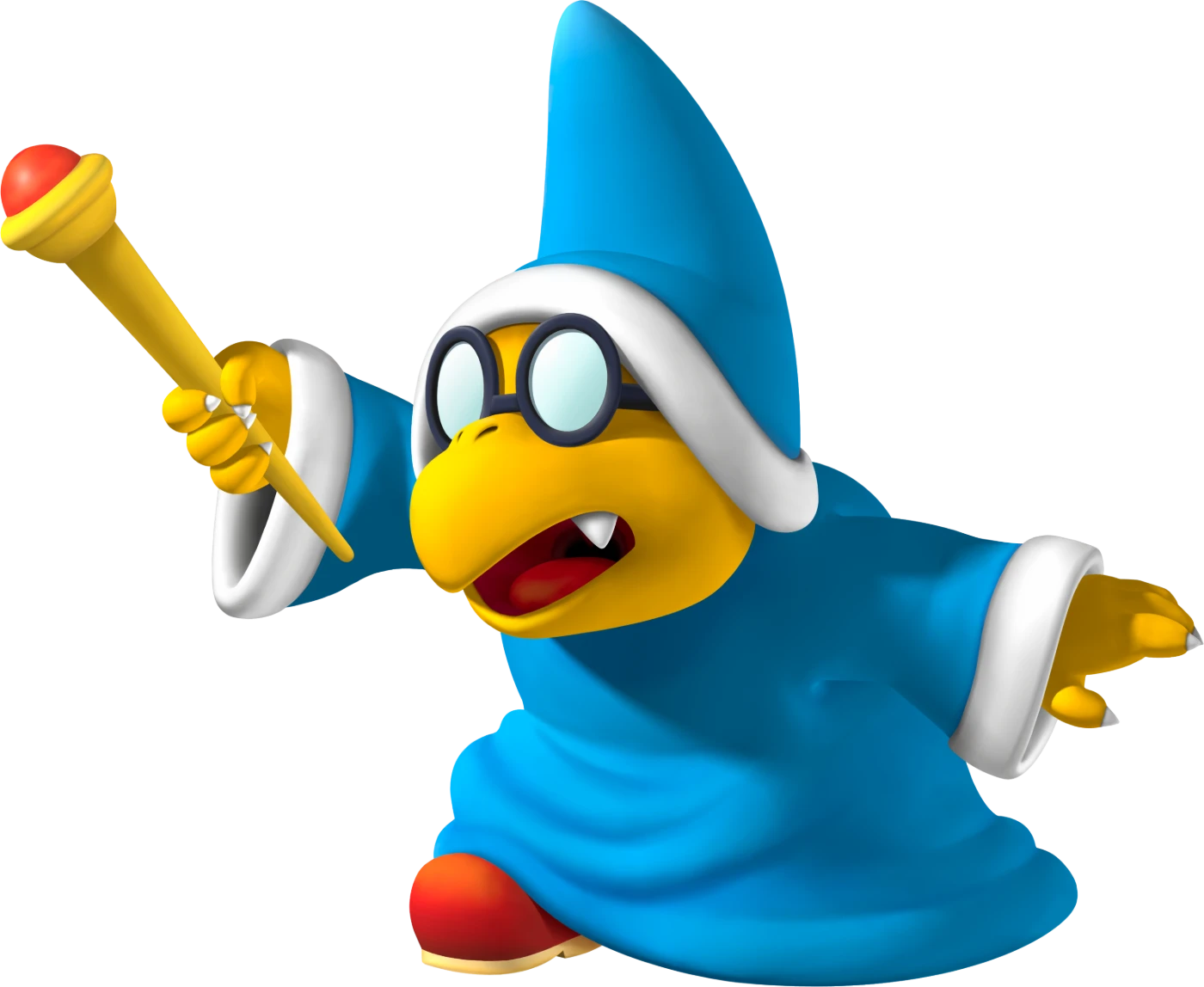
Mario reaches the castle just as it lifts off. A Magikoopa, Kamek by every indication, floats down, takes aim and blasts him away into the dark. The small, apricot-coloured star creature Peach had been clutching slips free and goes after him.
Peach’s invitation.Bowser’s airships arrive over the castle gardens.The castle is cut loose.A Magikoopa sees Mario off.
Three rabbits and a lady in blue
Mario comes round on a little grassy planet with the star creature bouncing on his chest. It turns into a rabbit and hops off, and catching it and its two friends turns out to be a tutorial in how to run around a world that is the size of a village green. With the game of hide-and-seek over, Rosalina appears. She explains that she and the Lumas travel the cosmos in a comet-shaped observatory that passes this way once every hundred years, that Bowser’s forces have stolen the Power Stars that drive it, and that she will help Mario find his “special one” if he will bring the stars back.
She gives him the apricot Luma, who tucks himself under Mario’s cap and gives him the power to spin. One short flight later Mario frees a Grand Star from a machine on a metal planet, the Observatory’s beacon flickers into life, and the first dome opens.
Mario wakes on the Gateway planet.A first look at the Luma.Rosalina introduces herself.Gateway Galaxy and the first Grand Star.
Relighting the Observatory
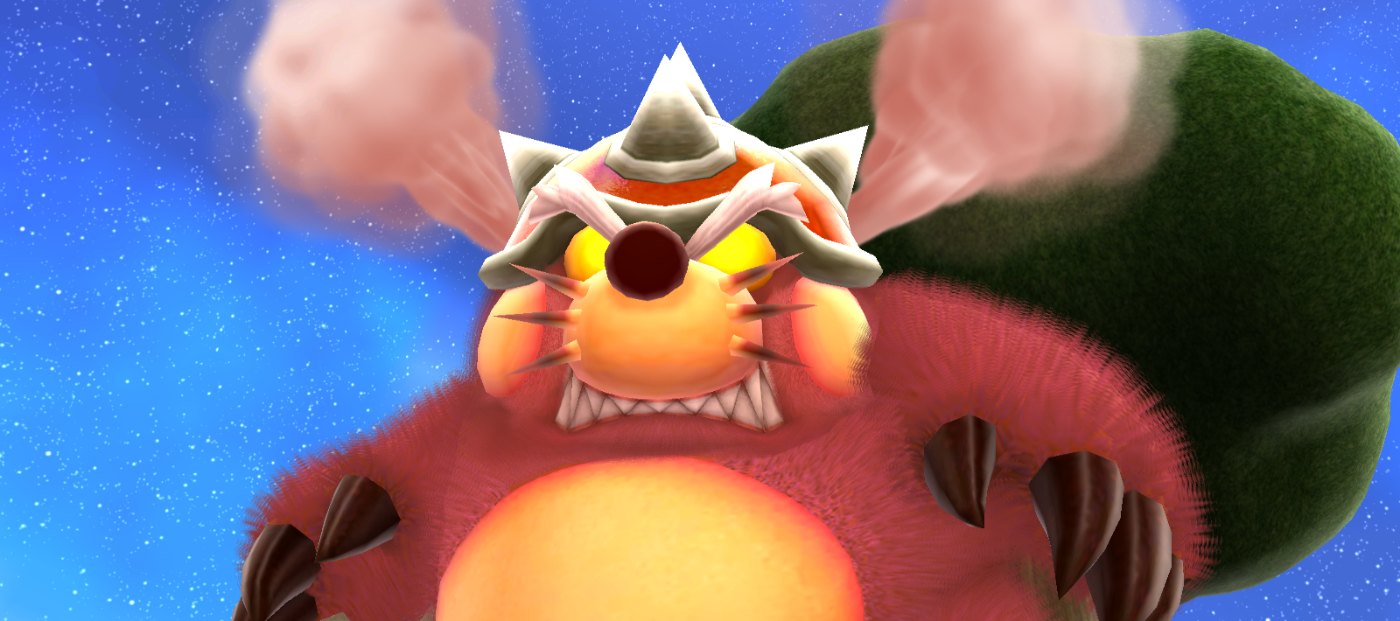
The Terrace leads to Good Egg Galaxy, where a Dino Piranha hatches from a giant egg, and to Honeyhive, where Mario first becomes a bee and is asked by a very large queen to deal with something itchy in her fur. The Toad Brigade, five Toads who have followed Peach into space aboard a mushroom-shaped starship the Lumas built for them, appoint themselves Mario’s advance party. At eight stars Bowser Jr.’s Robot Reactor appears, and with it Megaleg, a three-legged machine that dwarfs the moon it walks on, with a Grand Star caged on its head.
That star lights the Fountain. Space Junk Galaxy has a Magikoopa queen, Kamella, and a giant spider, Tarantox; Battlerock is one enormous gun emplacement. Then comes Bowser’s Star Reactor and the first meeting with the Koopa King himself, on a small planet where the trick is to make him land on something hot. He slips away towards the centre of the universe, where his new galaxy is taking shape; the Grand Star stays behind, the Kitchen opens, and so, without any fuss, does the library.
Chasing Dino Piranha’s tail around its own planet.Megaleg strides across its moon.Bowser’s Star Reactor.
Luigi, ghosts and airships
In the Ghostly Galaxy a familiar voice is calling for help from inside a haunted mansion. It is Luigi, cornered by Boos with a Power Star in his hands. Freed, he moves into the Observatory’s garage beside the Toad Brigade and sets off star-hunting on his own, with mixed results: three times he sends a photograph of wherever he has got himself stranded, and three times Mario has to go and fetch both him and the star.
The Kitchen’s galaxies end with Bowser Jr. in person, firing on Mario from the flagship of his Airship Armada. The Bedroom brings the dandelion winds of Gusty Garden, the ice and lava of Freezeflame and the sand rivers of Dusty Dune, and then Bowser’s Dark Matter Plant, a fortress eaten away by a black fog that dissolves whatever it touches. Bowser loses again, and blusters again about his galaxy at the centre of everything.
Ghostly Galaxy, where Luigi is waiting to be rescued.A Boo loses its nerve in the haunted mansion.Bowser Jr.’s Airship Armada.Bowser’s Dark Matter Plant.
The storybook in the library
Go into the library and Rosalina is in an armchair with the Lumas at her feet, reading from a picture book. There are nine chapters, opening one at a time as your star count climbs. A girl finds a rusty spaceship with a star child inside it, waiting for a mother who has not come. They set off together to look for her, living on Star Bits. They land on a comet of turquoise ice and find nobody there. The girl dreams of her own mother and wakes to comfort a tearful Luma, promising to look after him; she builds a home from what she finds in the ice, and more Lumas arrive and start calling her mama.
Then one day she looks through her telescope, sees the planet she was born on, remembers the tree on the hill where her mother sleeps, and breaks down. The first Luma shows her that she is not alone, and turns himself into a comet so that the home they have built can carry her back to visit every hundred years. That is why the Observatory passes the Mushroom Kingdom, and why there is a festival. Yoshiaki Koizumi wrote it late at night when the office was empty, and put it somewhere players would never be made to go.
Mario walks in on story time.Chapter 1, “The Celestial Duo”.Chapter 3, “The Comet”.Chapter 7, “The Telescope”.
To the centre of the universe
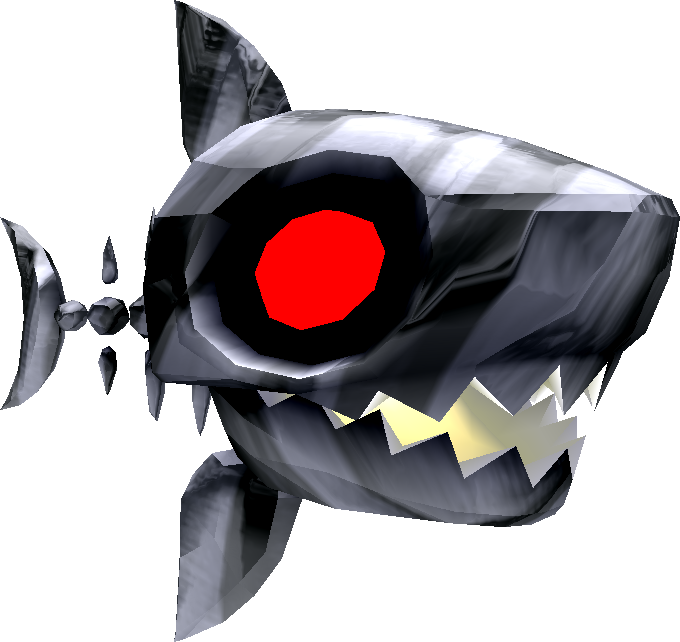
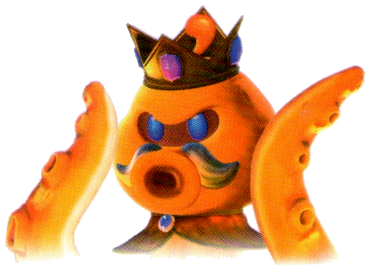
The Engine Room and the Garden hold the game’s biggest set pieces: the autumn woods of Gold Leaf, the ocean ring of Sea Slide, a toy box with a clockwork Bowser in it, a skeleton shark, a ghost ship in an underground lake, a battleship called the Dreadnought and the volcanoes of Melty Molten. Bowser Jr. makes his last stand at the Lava Reactor by sending King Kaliente, a crowned octopus who lives in magma, for a second round.
At sixty stars Rosalina says the Observatory is ready. The beacon flares, the whole palace wraps itself in light and becomes a comet again, and it crosses the universe with Mario aboard. At the far end is Bowser’s Galaxy Reactor, a last gauntlet through fire, ice, sand and shifting gravity, with Bowser at the top of a staircase beside a newborn sun and Peach held on an airship above. He boasts about the galaxy he is building. The fight that follows moves from planet to planet and ends with Bowser beaten, his plans in ruins, and the final Grand Star in Mario’s hands.
King Kaliente’s return in Bowser Jr.’s Lava Reactor.Bowser’s Galaxy Reactor, at the centre of the universe.Bowser Jr. keeps watch over Peach.Mario squares up to Bowser.
A supernova and a new beginning
Mario and Peach are flying clear when Bowser’s sun collapses. It becomes a black hole and starts to pull in the fortress, the castle, the airships and the Observatory. The Luma from under Mario’s cap says goodbye and dives into it; then every other Luma does the same. The black hole is smothered and bursts, and there is nothing.
In the whiteness Rosalina speaks to Mario. This is not an ending, she says: when stars die they become stardust and are born again, and the cycle never repeats in quite the same way. Mario wakes up in the castle gardens. Peach is there, and Bowser, and Toads and Goombas and penguins and bees from every galaxy he has visited, all blinking in the sun. Overhead a new spiral galaxy hangs in a blue sky. “Welcome! Welcome new galaxy!” he shouts, and the credits roll.
Mario and Peach escape together.Bowser’s sun goes supernova.Friends and enemies wake up in the castle gardens.A new galaxy over the Mushroom Kingdom.
After the credits
Beating Bowser sets Purple Comets loose across the galaxies and leaves another sixty stars to find. Finish with all 120 and a second closing scene plays: Rosalina thanks you, promises to watch from beyond the stars and sails off aboard the Observatory, and somewhere in the wreckage a small apricot Luma peeps out from behind a rusty spaceship, exactly as the storybook began.
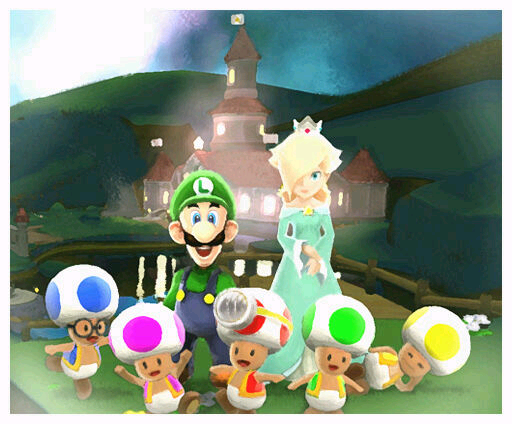
Then the file select screen offers a new option, and you do it all again in green. Bring Luigi’s total to 120 as well, beat Bowser once more, and a green Luma on the Planet of Trials offers one last destination, Grand Finale Galaxy: the castle gardens on festival night, with no Bowser this time, and a hundred Purple Coins among the lanterns. That is star 121. Speak to Mailtoad afterwards and he sends a souvenir photograph to the Wii Message Board: Mario and Peach among the Lumas for one brother, Luigi and Rosalina with the Toad Brigade for the other.
Rosalina in the secret closing scene.Grand Finale Galaxy: the Star Festival at last.The final frame of the staff roll.
Every galaxy in Super Mario Galaxy
All 42 galaxies, grouped by the dome that leads to them, with the number of Power Stars you need before each one opens. The fifteen large galaxies have six stars each (seven where a Green Star is hidden); the rest have one or two.
Gateway GalaxyThe Gate · 2 stars · prologueWhere Mario wakes up, meets Rosalina and frees the first Grand Star. Come back late in the game for Gateway’s Purple Coins and the Red Star.
Good Egg GalaxyTerrace · 6 stars · Dino Piranha, King KalienteEgg-shaped planetoids, the first Launch Stars and a baby dinosaur with a club for a tail.
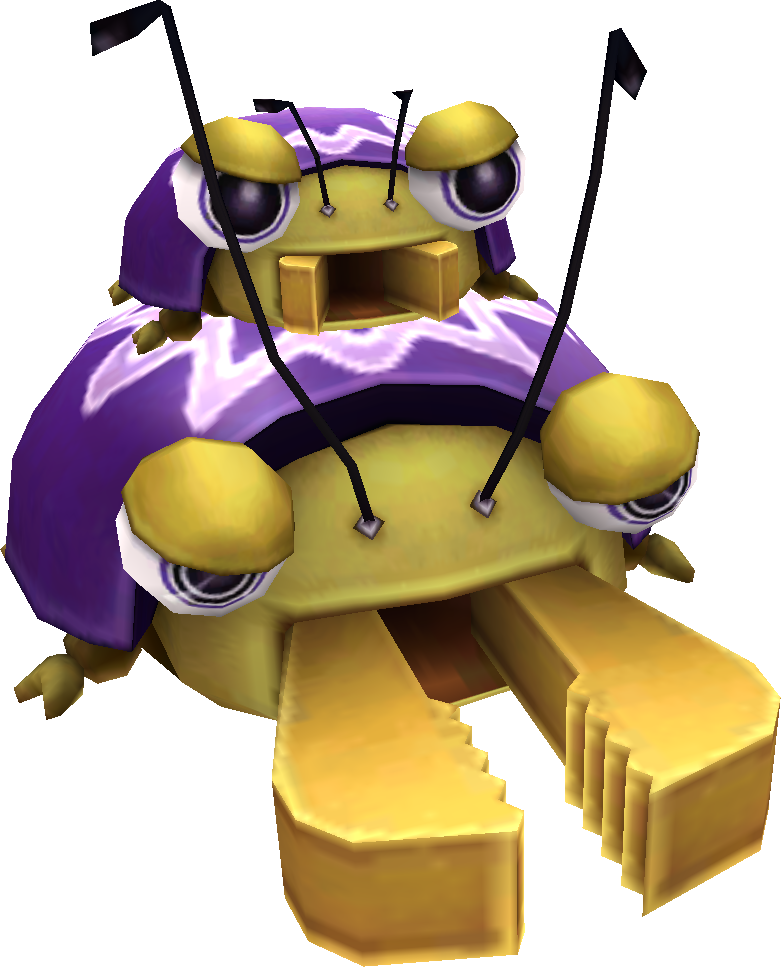
Honeyhive GalaxyTerrace · opens at 3 stars · 6 stars · Mandibug Stack, BugaboomA kingdom dripping with honey where the Bee Mushroom makes its debut.
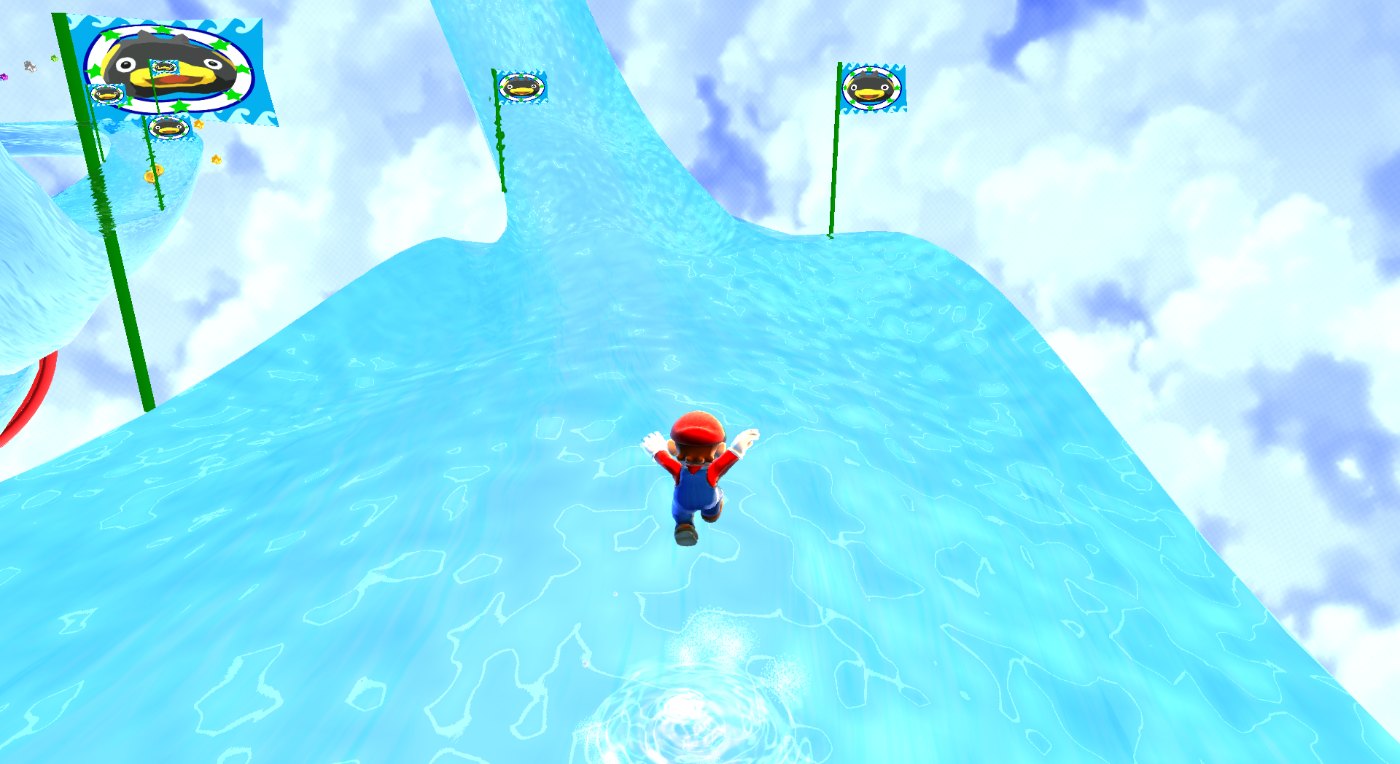
Loopdeeloop GalaxyTerrace · opens at 5 · 1 starA ribbon of water hanging in space, surfed on the back of Ray the manta.
Flipswitch GalaxyTerrace · opens at 7 · 1 starStep on every blue panel of a floating block to paint the planet yellow.
Bowser Jr.’s Robot ReactorTerrace · opens at 8 · Grand Star · MegalegClimb a walking robot the size of a moon and lure its own Bullet Bills into the cage on top.
Sweet Sweet GalaxyTerrace · Hungry Luma (400 Star Bits) · 1 starA conveyor belt of cake and biscuits with rather a lot of holes in it.
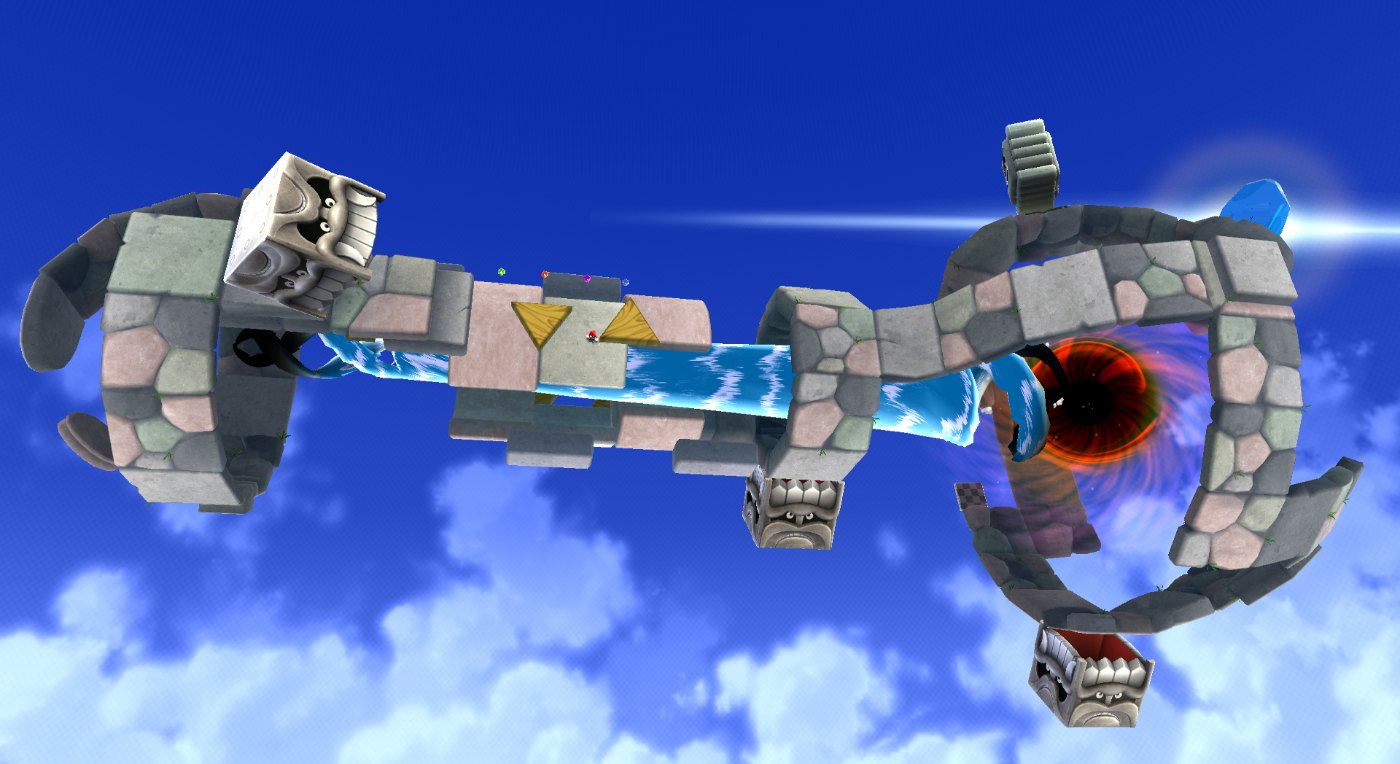
Space Junk GalaxyFountain · opens at 9 · 6 stars · Kamella, TarantoxPull Stars through drifting wreckage, a Toad Brigade rescue and a wooden planet shaped like Yoshi’s head.
Rolling Green GalaxyFountain · opens at 11 · 1 starThe first Star Ball course, a crazy-golf hole in the clouds.
Battlerock GalaxyFountain · opens at 12 · 7 stars · TopmaniacA fortress moon bristling with cannons. Luigi finds a Green Star underneath it.
Hurry-Scurry GalaxyFountain · opens at 18 · 1 starCollect the notes while the tiles underfoot shrink away around a black hole.
Bowser’s Star ReactorFountain · opens at 15 · Grand Star · BowserA staircase through shifting gravity to the first duel with Bowser.
Sling Pod GalaxyFountain · Hungry Luma (400) · 1 starCatapult from one sticky pod to the next across open space.
Beach Bowl GalaxyKitchen · opens at 16 · 6 starsA tropical bowl of sea water, a penguin swimming school and the Cyclone Stone.
Bubble Breeze GalaxyKitchen · opens at 19 · 1 starDrift over a poison swamp inside a bubble, blown along with the pointer.
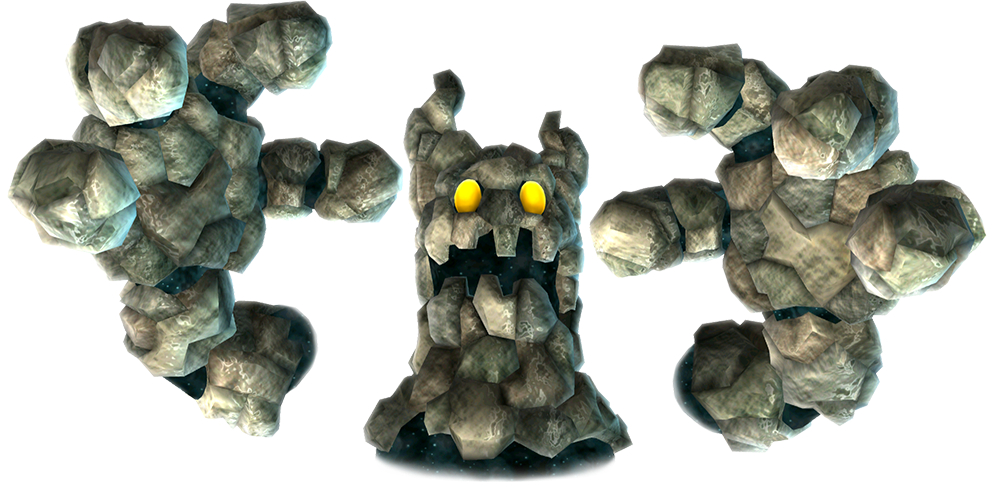
Ghostly GalaxyKitchen · opens at 20 · 6 stars · BouldergeistA haunted mansion with Luigi locked inside, a race against a Boo and a boss made of rocks.
Buoy Base GalaxyKitchen · opens at 30 · 2 starsA tower raised out of the sea. Its secret mission hides a Green Star.
Bowser Jr.’s Airship ArmadaKitchen · opens at 23 · Grand Star · Bowser Jr.Across a fleet of airships to a shell fight with Bowser Jr. himself.
Drip Drop GalaxyKitchen · Hungry Luma (600) · 1 starA ball of water with an eel problem that a few Koopa shells will solve.
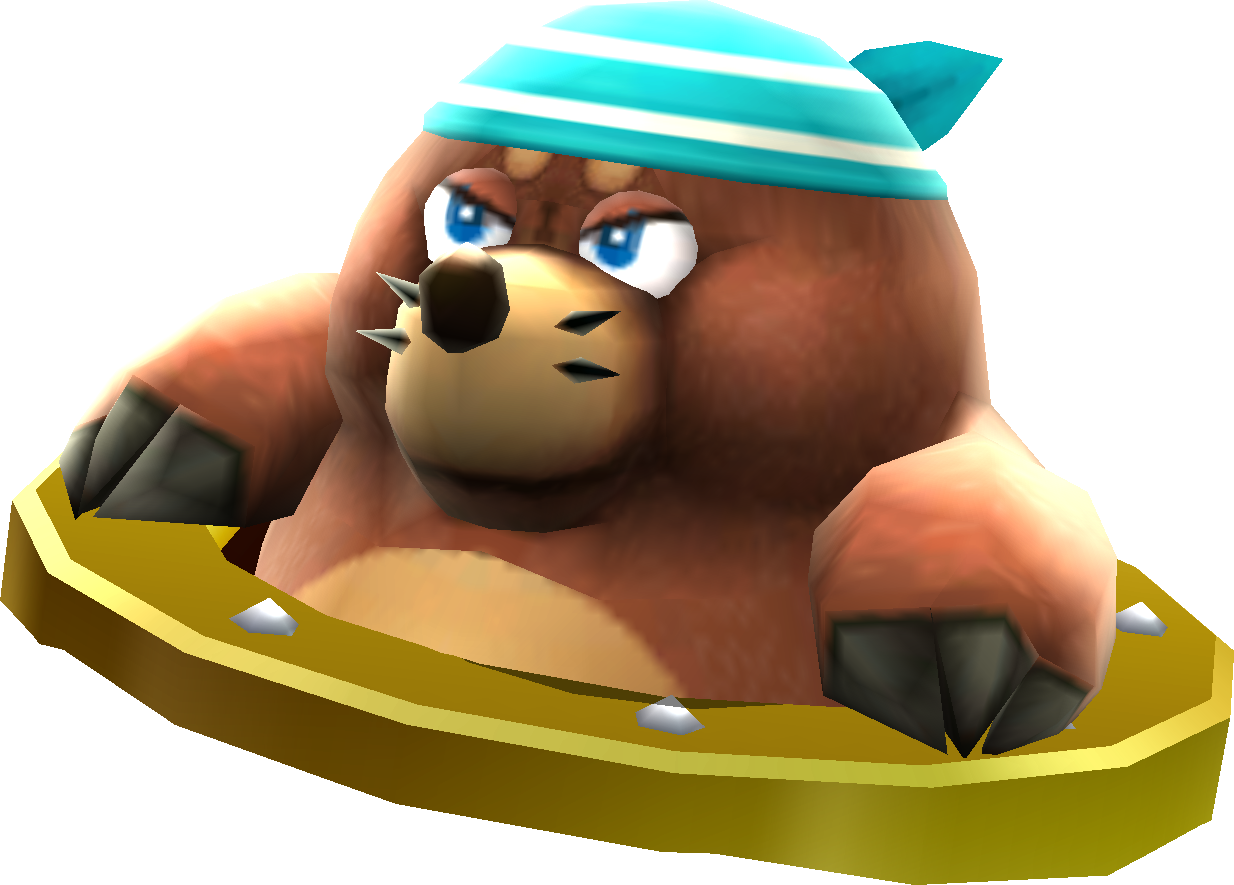
Gusty Garden GalaxyBedroom · opens at 24 · 6 stars · Major BurrowsDandelion fluff on the wind, apple planets, a mole with a helmet and the best-loved tune on the soundtrack.
Freezeflame GalaxyBedroom · opens at 26 · 6 stars · Baron BrrrHalf glacier, half volcano; Ice Mario and Fire Mario both earn their keep.
Dusty Dune GalaxyBedroom · opens at 29 · 7 starsRivers of sand, whirlwinds and pyramids, with another Green Star in the treasure room.
Honeyclimb GalaxyBedroom · opens at 42 · 1 starBee Mario scales walls of honeycomb while meteors fall.
Bowser’s Dark Matter PlantBedroom · opens at 33 · Grand Star · BowserGravity flips and matter-eating darkness on the way to the second Bowser fight.
Bigmouth GalaxyBedroom · Hungry Luma (800) · 1 starA planet shaped like a fish, a Gold Shell and the chest it opens.
Gold Leaf GalaxyEngine Room · opens at 34 · 6 stars · Undergrunt GunnerHoneyhive turned autumnal and back to front, with Cataquacks and a bell at the top of the tree.
Sea Slide GalaxyEngine Room · opens at 36 · 6 starsA ring of ocean with racing penguins, Guppy the orca and five Silver Stars to find.
Toy Time GalaxyEngine Room · opens at 40 · 6 stars · Mecha-Bowser, Undergrunt GunnerTrains, cake, a giant clockwork Bowser and a planet built in the shape of 8-bit Mario.
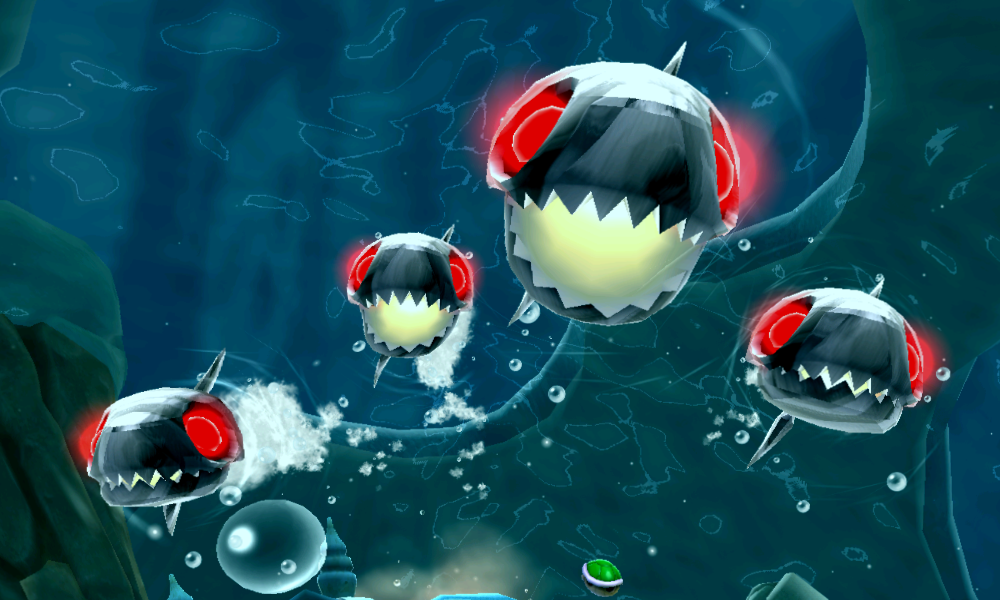
Bonefin GalaxyEngine Room · opens at 55 · 1 star · KingfinA dark undersea duel with a skeleton shark.
Bowser Jr.’s Lava ReactorEngine Room · opens at 45 · Grand Star · King KalienteA rematch with the lava octopus over sinking platforms.
Sand Spiral GalaxyEngine Room · Hungry Luma (1,000) · 1 starA tunnel of spinning sand: pick the Bee or the Boo Mushroom and take your chances.
Deep Dark GalaxyGarden · opens at 46 · 6 stars · Kamella, Undergrunt GunnerA beach, a cavern lake and a sunken ghost ship with Kamella aboard.
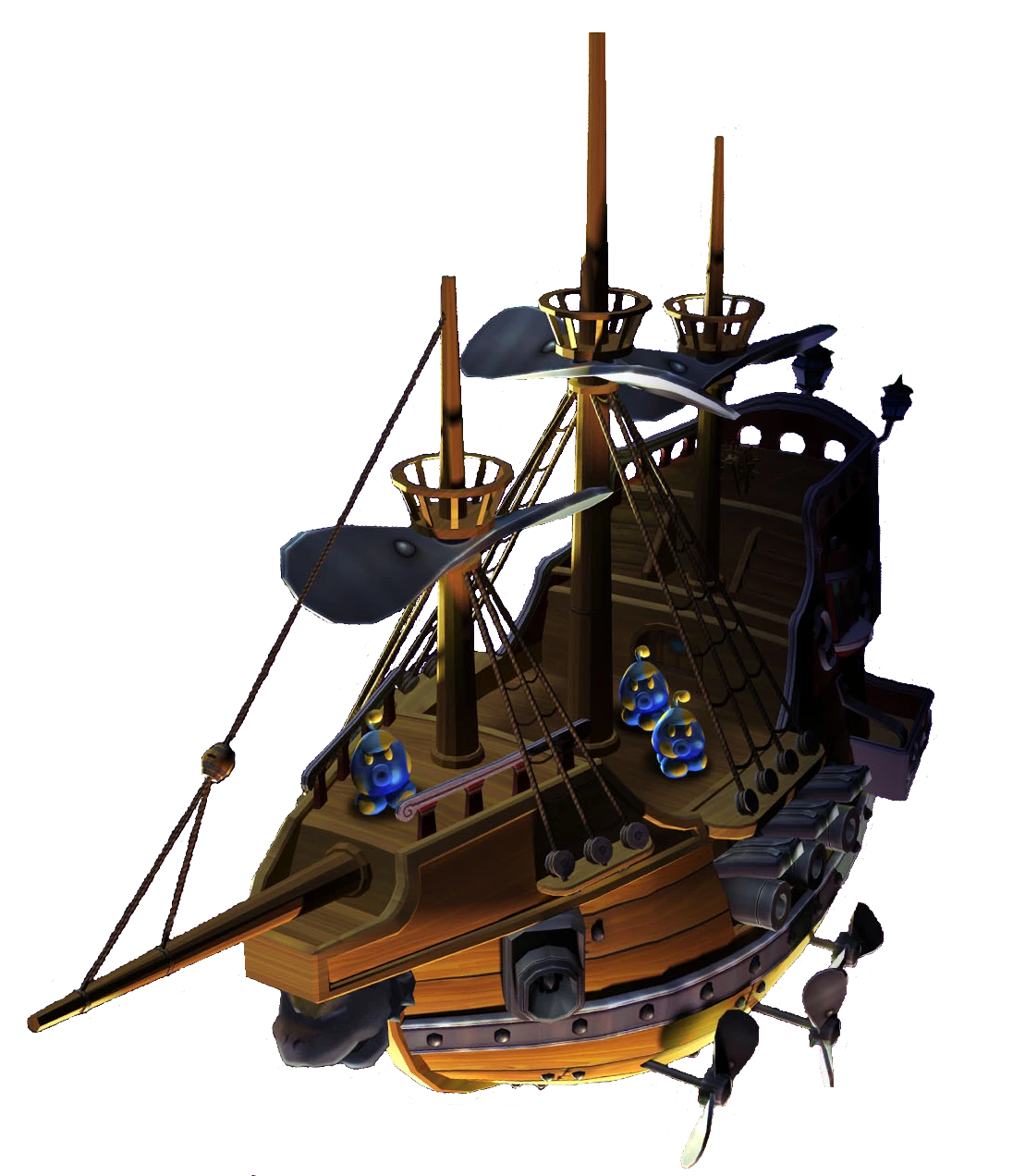
Dreadnought GalaxyGarden · opens at 48 · 6 stars · TopmaniacBowser’s battleship: cannon corridors, moving platforms and gravity that will not sit still.
Matter Splatter GalaxyGarden · opens at 50 · 1 starA mansion that exists only where the drifting pools of matter happen to be.
Melty Molten GalaxyGarden · opens at 52 · 6 stars · Fiery Dino PiranhaVolcanoes, lava tides, sinking spires and a Dino Piranha in flames.
Snow Cap GalaxyGarden · Hungry Luma (1,600) · 1 starStar Bunnies hiding in the drifts on a small snowy planet.
Boo’s Boneyard GalaxyThe Gate · Hungry Luma (1,200) · 1 starA race against the Spooky Speedster, run as Boo Mario.
Bowser’s Galaxy ReactorCentre of the universe · opens at 60 · Grand Star · BowserEvery trick in the game in one last gauntlet, and the final battle.
Rolling Gizmo GalaxyPlanet of Trials · 3 Green Stars · 1 starThe Star Ball exam: gears, rails and Bob-ombs.
Bubble Blast GalaxyPlanet of Trials · 3 Green Stars · 1 starThe bubble again, this time through an electric maze.
Loopdeeswoop GalaxyPlanet of Trials · 3 Green Stars · 1 starRay surfing’s much nastier second course.
Grand Finale GalaxyPlanet of Trials · 120 stars as Mario and as Luigi · star 121The castle gardens on festival night, and a hundred Purple Coins among the crowd.
Bowser is fought in the Fountain, the Bedroom and at the centre of the universe; Bowser Jr.’s strongholds close the Terrace, the Kitchen and the Engine Room. The Garden has no stronghold: its last galaxies simply carry you past the sixty-star mark.
Advertisement
Gameplay & Controls
Under the stars it is recognisably the Mario of Super Mario 64: the triple jump, the long jump, the wall kick and the backward somersault are all present and correct. The differences are the ground under his feet, which curves, and the controller in your hands, which now comes in two halves.
Controls and moves
The spin: one flick of the Wii Remote, a dozen uses.
The Nunchuk stick moves Mario, A jumps, Z crouches and ground pounds, and a flick of the Wii Remote makes him spin. The spin is the game’s universal verb: it knocks enemies dizzy so that a touch kicks them away, smashes crystals, throws shells, fires up Launch Stars, lets Mario skate on ice and gives a little extra lift in mid-air. Pressing Z and shaking in the air produces a homing ground pound; crouching and shaking gives a sweep kick. The D-pad nudges the camera and C snaps it behind Mario, though you rarely need either.
Pointing the Remote at the screen moves a Star Pointer that hoovers up Star Bits wherever they lie; the B trigger fires them back at enemies to stun them. The same pointer grabs Pull Stars to haul Mario through space, blows his bubble along in Bubble Breeze Galaxy and stretches the gluey Sling Pods. Some stars swap the control scheme entirely: Mario balances on a rolling Star Ball steered by holding the Remote upright like a joystick, or surfs Ray the manta by tilting it from side to side.
Gravity and the planets
Every lump of rock has a pull of its own. On a small sphere Mario can run right round and arrive back where he began; long jump off one planetoid near another and he will be caught and swung into its orbit. Some stages are flat plates with a second landscape on the underside, some are tubes you walk round the inside of, and some drop into side-on 2D sections where coloured arrows on the wall tell you which way is currently down. Black holes sit at the heart of many planets and swallow anything that drops too far.
Travel between worlds is by Launch Star (spin inside one to be fired along a set path), by the smaller Sling Stars, by blue Pull Stars you drag yourself towards with the pointer, and by cannons. Yellow Star Chips, usually five of them, assemble into a new Launch Star; blue ones make Pull Stars. Because each planet is small and the route between them is laid out for you, levels play more like a string of set pieces than the open courses of the earlier 3D games.
Gusty Garden’s apple planets, linked by a very hungry caterpillar.Learning to spin on the way out of Gateway Galaxy.
Stars, domes and Hungry Lumas
The Comet Observatory has six domes (Terrace, Fountain, Kitchen, Bedroom, Engine Room and Garden), each a doorway to a handful of galaxies. A new galaxy opens when your star total reaches the number beside it, and every dome except the Garden ends with a Bowser or Bowser Jr. stronghold whose boss guards a Grand Star. Bring a Grand Star home and the Observatory’s beacon swells and the next dome lights up. There are seven Grand Stars in all, counting the one you rescue in the prologue.
The fifteen big galaxies hold six stars apiece: three main missions, a hidden star, and two that arrive by comet. Hidden stars turn up when you wander off the mission path, often by feeding a Hungry Luma inside a level, who swells into a brand-new planet once it has eaten enough Star Bits or coins. Other Hungry Lumas wait outside the domes and turn into whole galaxies, for a fee of between 400 and 1,600 Star Bits. Three well-hidden Green Stars open the Planet of Trials, and sixty stars of any kind give the Observatory enough power to fly to the centre of the universe.
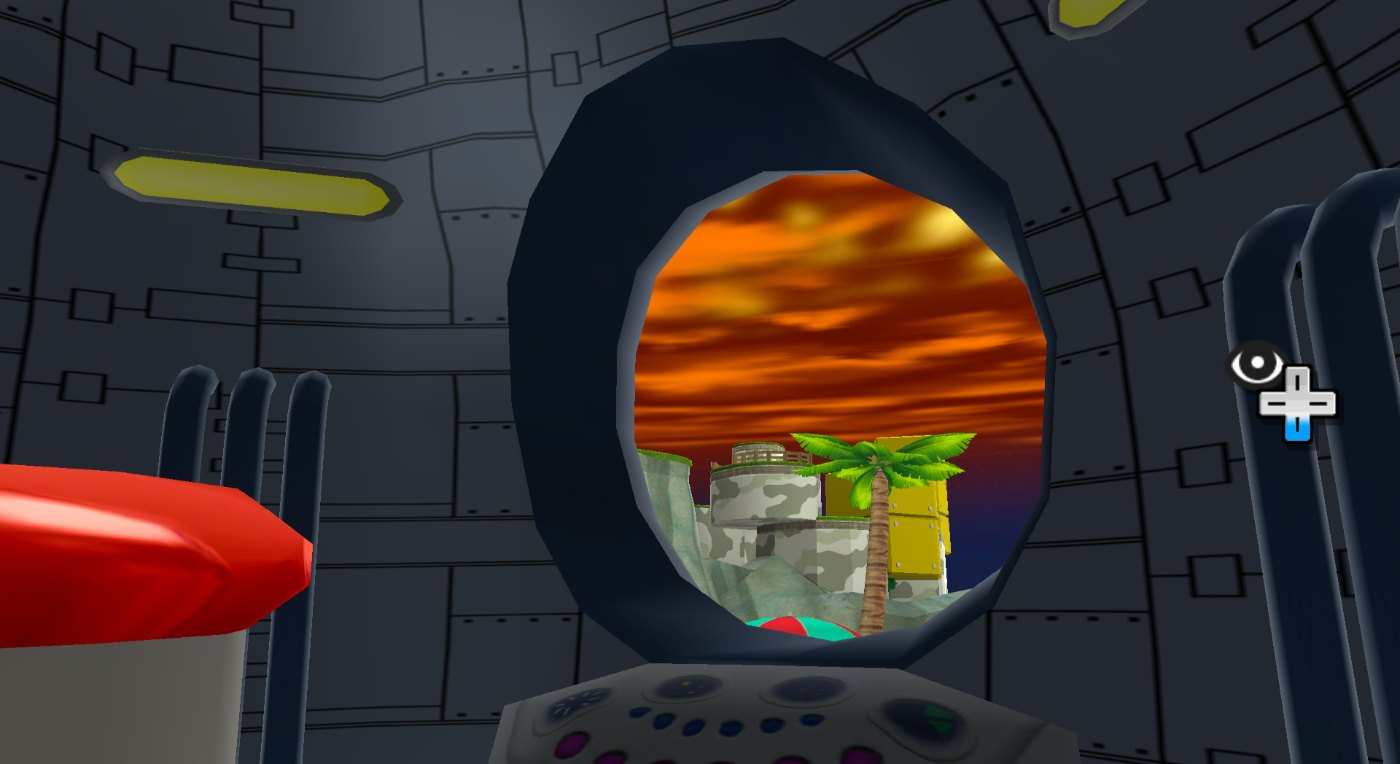
Inside the Terrace, the first dome.A Power Star in the bag.
Health, lives and Star Bits
The Life Mushroom: six health instead of three.
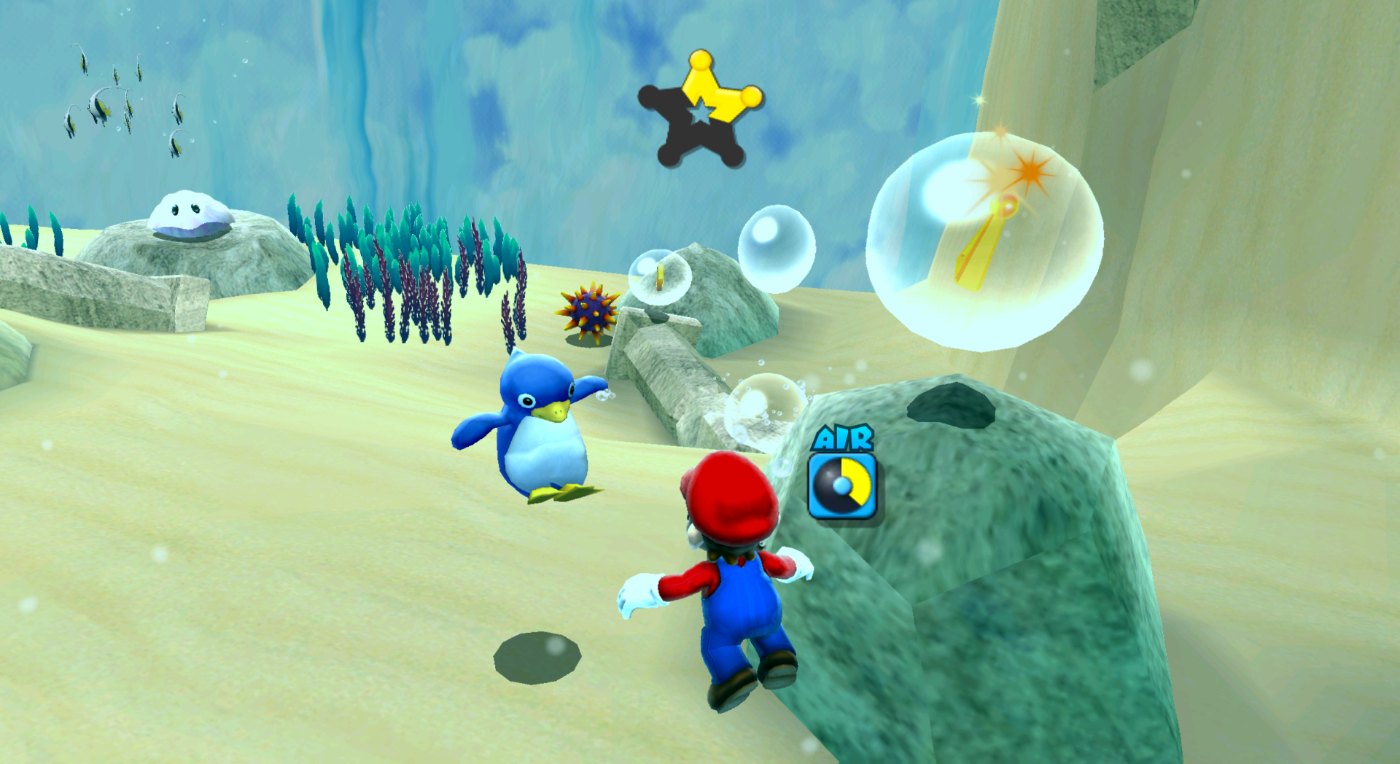
Mario’s life meter has three segments, down from the eight of Super Mario 64 and Sunshine, and coins that refill it are scarcer than before. A Life Mushroom adds a second meter for six in total until you drop back to three. To balance the thinner health bar, 1-Up Mushrooms and checkpoints are everywhere: fifty coins or fifty Star Bits earn an extra life, Princess Peach posts Mario a letter with five 1-Ups in it every so often, and a Lumalee shopkeeper before most bosses will turn into a 1-Up or a Life Mushroom for 30 Star Bits. Long falls do not hurt, but tumbling into a black hole or off a flat-edged planet costs a life. Underwater an air meter runs down first. The game keeps six save files, each with a character portrait or a Mii as its icon and a note of when it was last played.
Prankster Comets
Every so often a comet parks itself over a galaxy you have already visited and rewrites one of its missions. A Speedy Comet puts the star on a time limit; a Daredevil Comet makes you repeat a boss or an obstacle run with a single point of health; a Cosmic Comet has you race a purple doppelgänger called Cosmic Mario; a Fast-Foe Comet doubles the speed of every enemy and hazard. Each of the fifteen large galaxies has one of those four, plus a Purple Comet that scatters Purple Coins across the level and asks for a hundred of them. Purple Comets only begin to appear once Bowser’s Galaxy Reactor has been cleared for the first time.
Comets come and go as you complete missions. If one is in the wrong place, the Comet Luma on the Observatory will tell you what is about and, for 20 Star Bits, shuffle the comets around.
Cosmic Mario throws down the gauntlet in Honeyhive Galaxy.Purple Coins: a hundred for a star.
Co-Star Mode
Hand a second Wii Remote to anyone in the room and a second Star Pointer appears. Player two can collect Star Bits and fire them, and can do two things player one cannot: point at an enemy and hold A to freeze it in place, and point at Mario and press A to make him jump or, in mid-air, spin. If both players press A together Mario leaps higher than he can alone. It was designed for the people who used to sit and watch, and it works: producer Takao Shimizu had planned for both pointers to have the same powers, and it was Shigeru Miyamoto who suggested keeping some for the helper alone.
Playing as Luigi
Luigi is in the story from the Ghostly Galaxy onwards, as a nervous helper who keeps finding Power Stars and then getting stuck somewhere with them. Collect all 120 stars and defeat Bowser again, and he becomes playable in his own right for a complete second run. He jumps higher and runs a touch faster than Mario, but takes longer to get up to speed and slides when he stops, and he runs out of breath sooner underwater. The Cosmic Comet races are tougher, because Cosmic Luigi takes shortcuts; Peach’s letters contain twenty 1-Ups rather than five, and are still addressed to Mario; and the Luigi you rescue from the haunted mansion is baffled to meet himself. Rosalina, unfazed, simply calls it another world.
Luigi faces Bowser in Bowser’s Star Reactor.Cosmic Luigi lines up in Freezeflame Galaxy.Luigi rescues Luigi in the Ghostly Galaxy.
Power-ups and items
Seven transformations, only one of which (the Fire Flower) had appeared in a Super Mario game before. Suits end when Mario is hit; the Bee and Spring suits are also lost in water, the Boo suit vanishes in light, and the Ice Flower, Fire Flower, Rainbow Star and Red Star run on a timer.
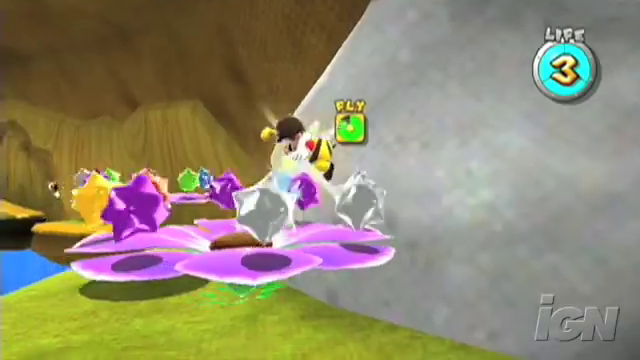
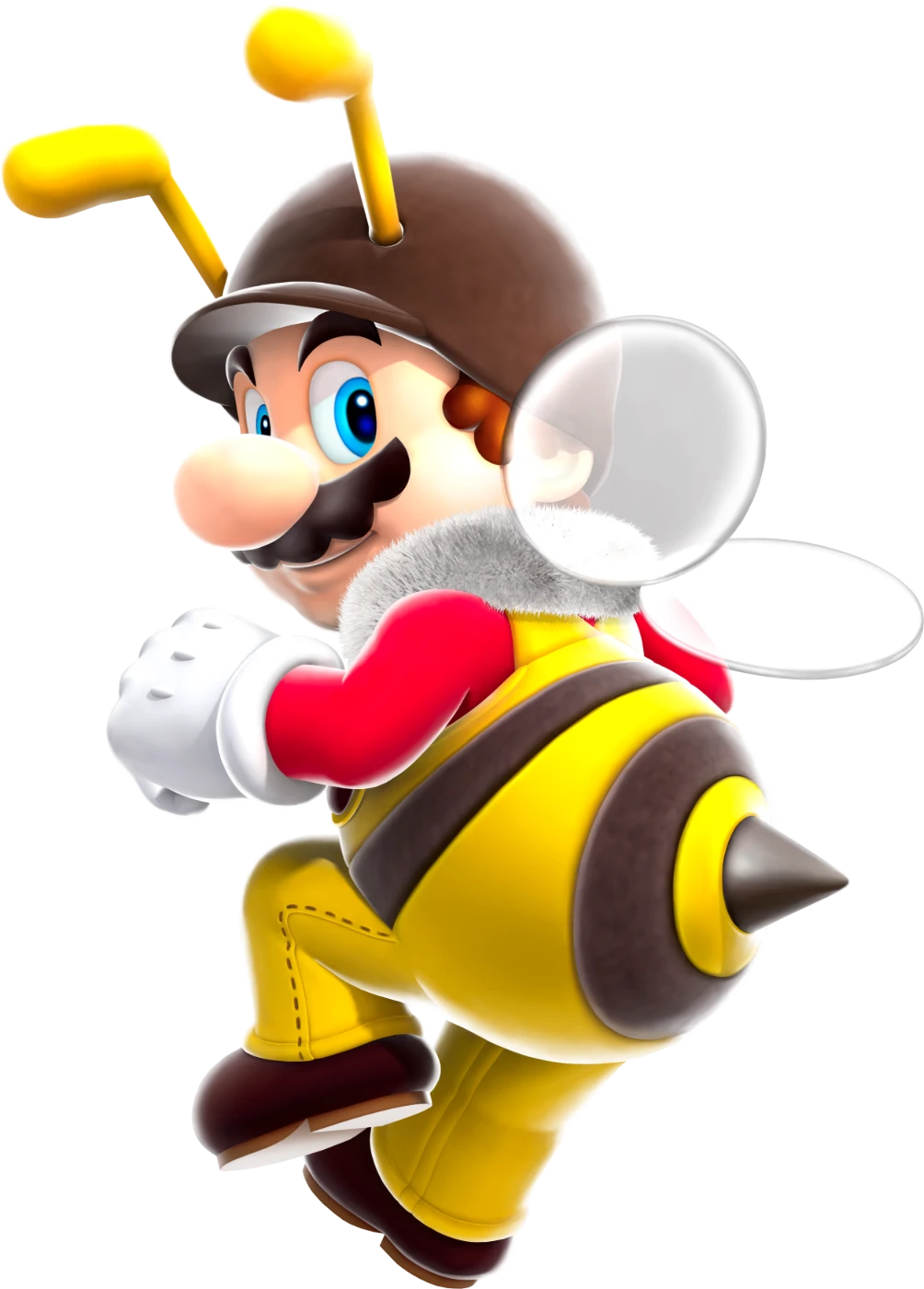
Bee MushroomBee Mario hovers for as long as his flight meter lasts, clings to honeycomb walls and can stand on flowers and clouds. First found in Honeyhive Galaxy.
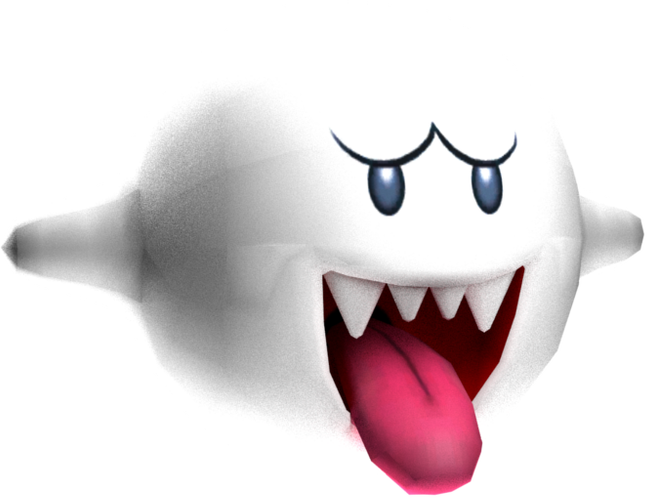
Boo MushroomBoo Mario floats upward with A and turns intangible with a shake to pass through bars. Other Boos take a shine to him.
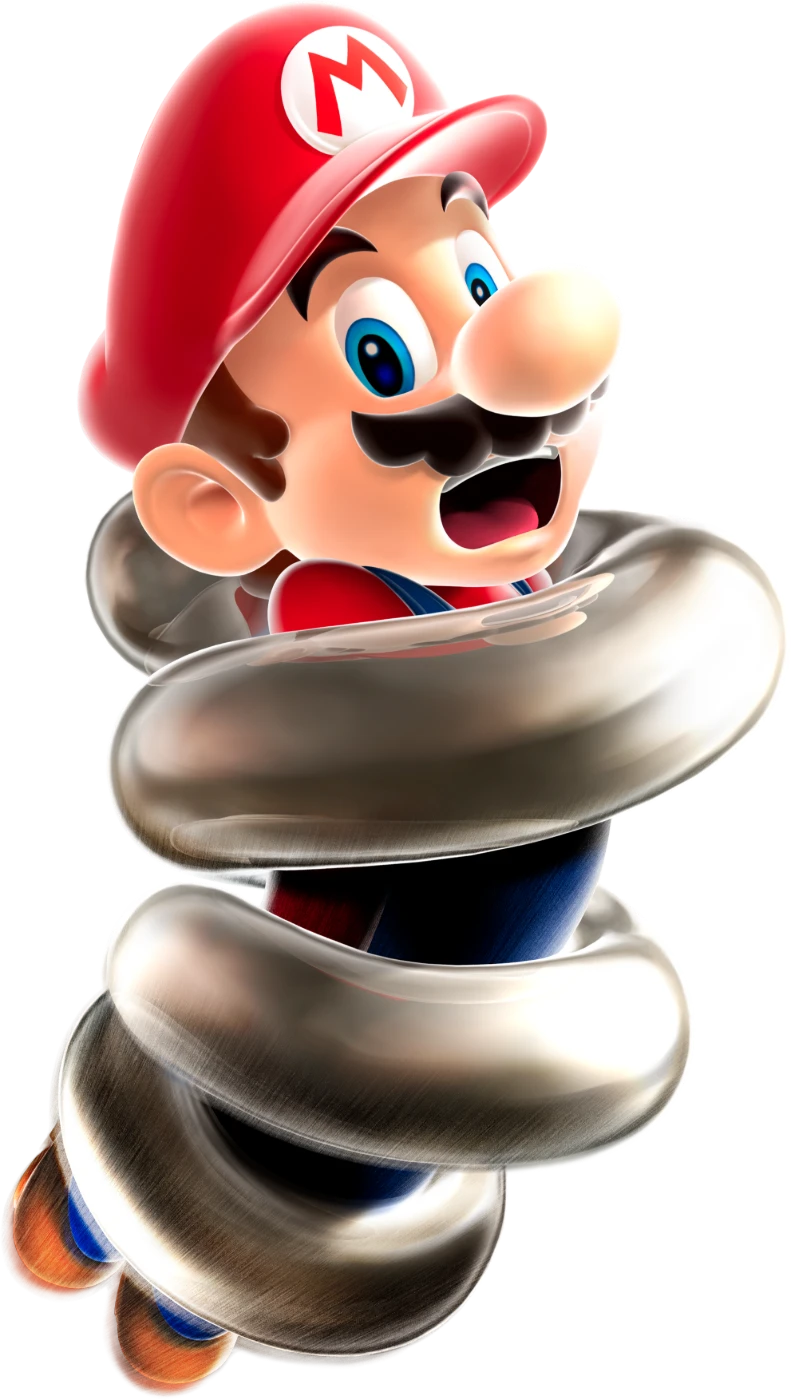
Spring MushroomMario becomes a coiled spring that never stops bouncing; time a press of A on landing for a huge leap. Taught by the Gearmos of Toy Time Galaxy.
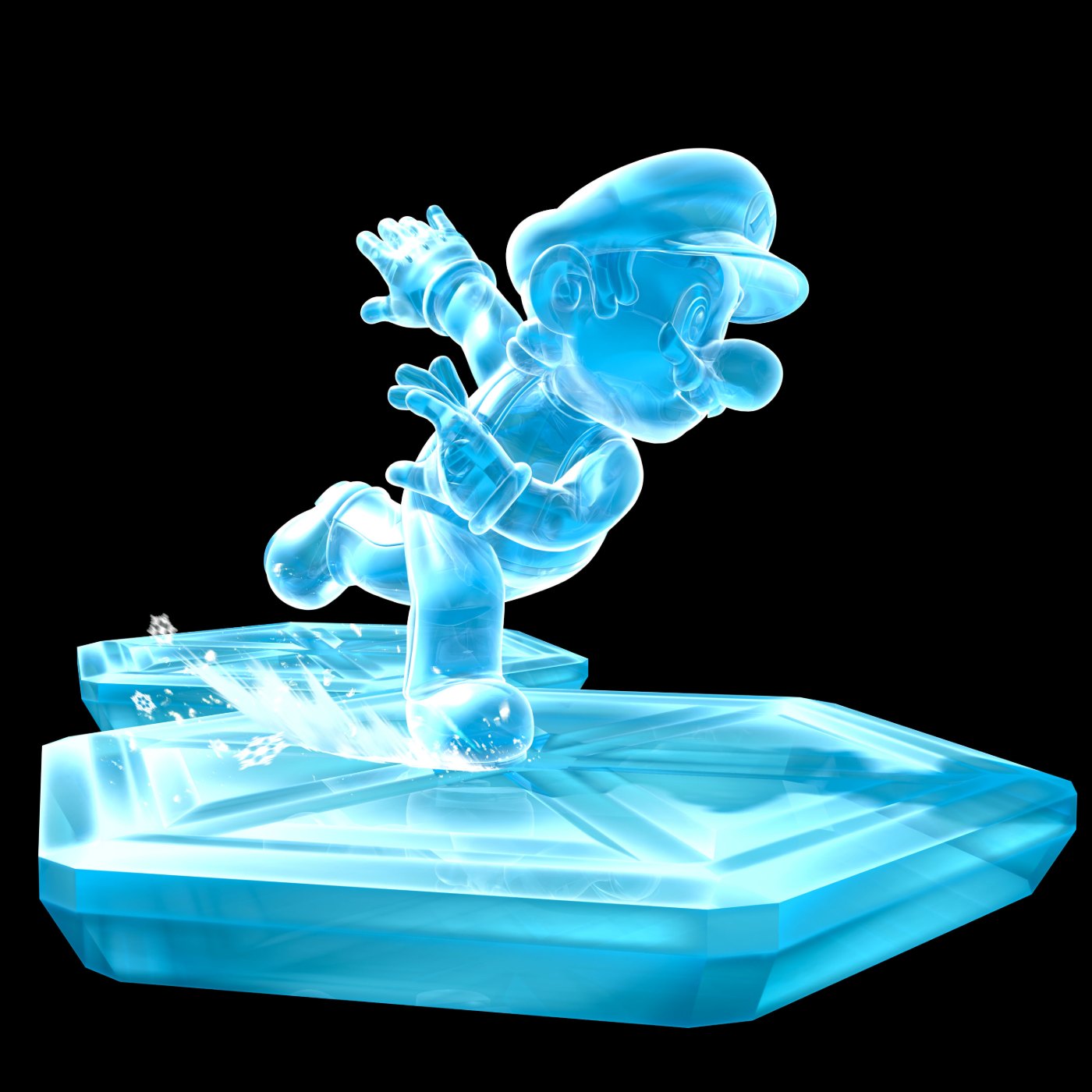
Ice FlowerIce Mario freezes water and lava into hexagonal tiles under his feet, skates across them and can wall-jump up frozen waterfalls.
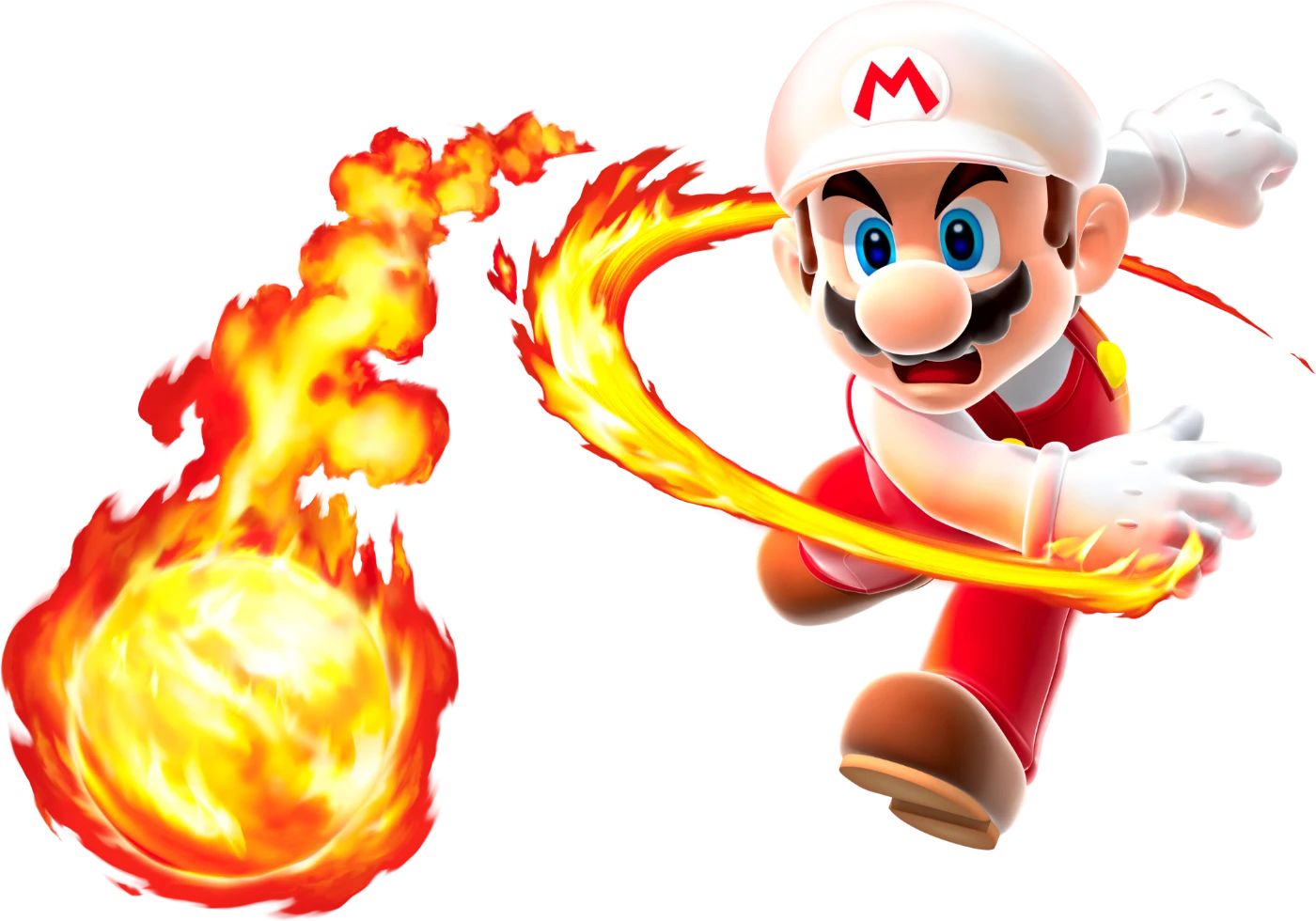
Fire FlowerShake to throw fireballs that light torches, melt snow and burn through enemies. Its first appearance in a 3D Mario.
Rainbow StarInvincibility with a turn of speed; Rainbow Mario flattens everything he touches, including Chomps.
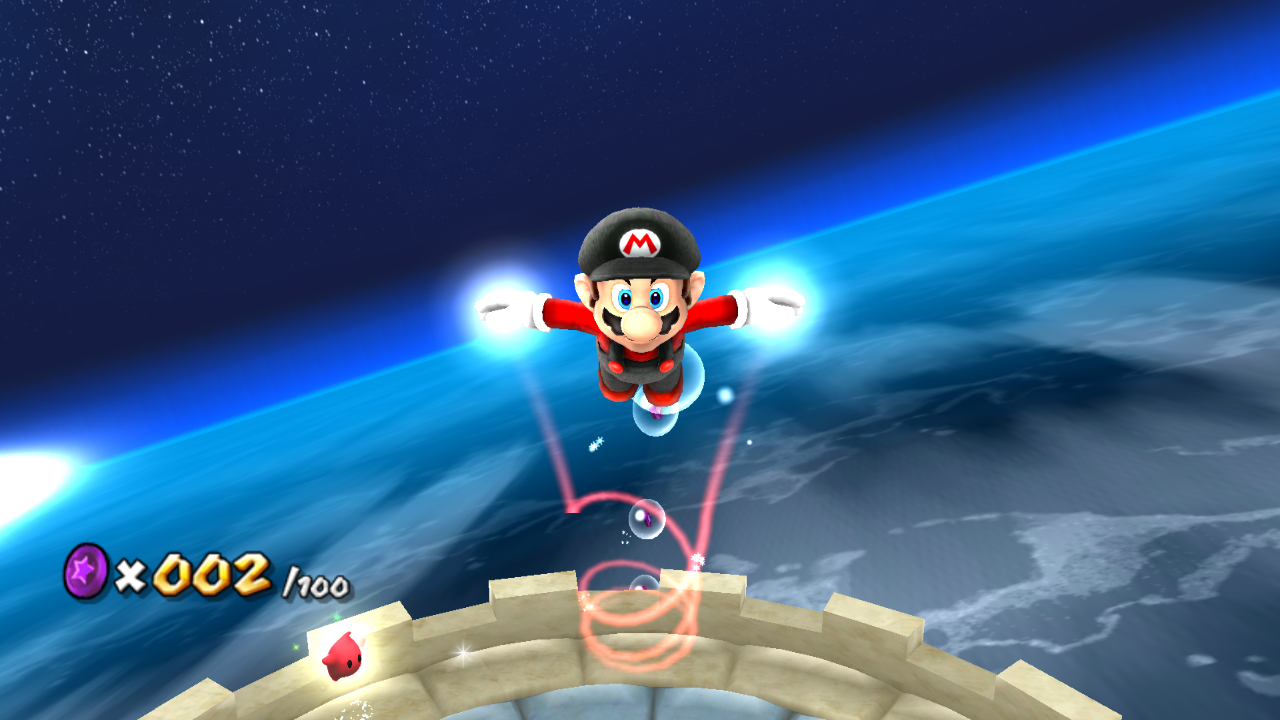
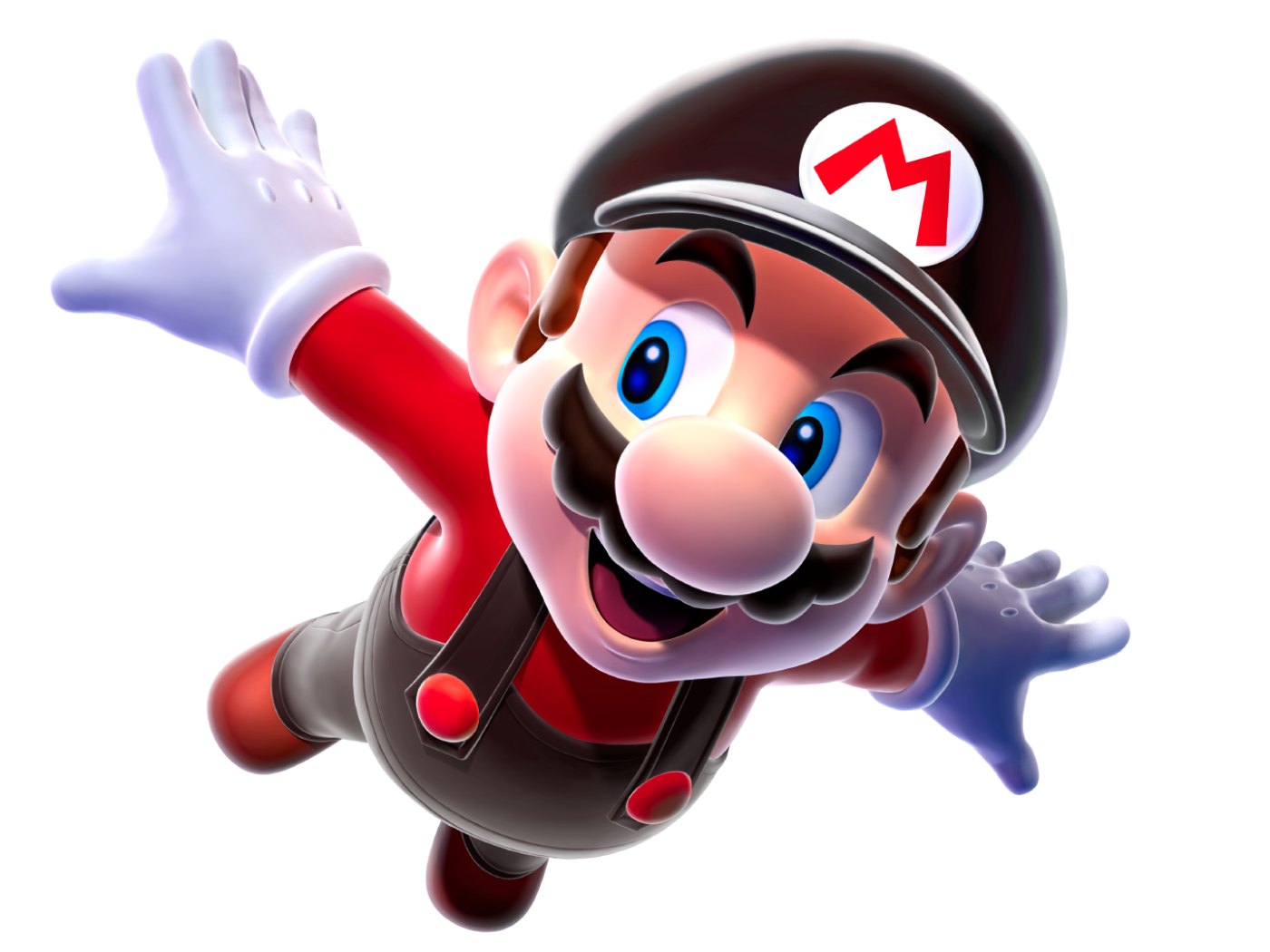
Red StarFlying Mario in a black and red suit: shake to take off, steer freely, and Purple Coins drift towards him. Earned in Gateway Galaxy and kept on the Observatory.
Life MushroomDoubles the life meter to six until you fall back to three.
1-Up MushroomAn extra life. Five are hidden around the Observatory itself.
Power StarThe reward for every mission, and the fuel the Observatory runs on.
Grand StarSeven of them, held by Bowser and Bowser Jr. Each one relights a dome.
Green StarThree secret stars in Battlerock, Buoy Base and Dusty Dune. Together they open the Planet of Trials.
Star BitsCollected with the pointer. Fire them to stun enemies, feed them to Hungry Lumas, or save fifty for a 1-Up.
Purple CoinOnly appear under a Purple Comet. A hundred make a Power Star.
? CoinMakes something happen nearby, most often a trail of musical notes to collect before they fade.
Launch StarSpin inside to be fired to the next planet. Small ones are Sling Stars.
Pull StarPoint and hold A to be drawn towards it through space.
Star ChipsFive yellow chips build a Launch Star; five blue ones build a Pull Star.
Silver StarsFind all five in a level and they merge into a Power Star.
Koopa shellsThrown at enemies and treasure chests on land; held out in front underwater they act as a motor. Red ones home in and Gold ones are fastest.
Star BallA ball with a Power Star inside, steered by tilting the Remote. Reach the goal and it cracks open.
Cartoons, Comics & Other Media
Super Mario Galaxy never had a cartoon, but it has had a manga, a card game, a symphony concert, a children’s book and, eventually, a film with its name on the poster.
Rosalina’s Storybook, in printShogakukan / Dark Horse · 2025Koizumi once told Nintendo Power he would have liked to see the storybook published as a real children’s book. For Mario’s 40th anniversary it was: a hardcover edition was announced in the September 2025 Nintendo Direct and released in Japan on 2 October 2025 and in the US and UK on 25 November. It contains the nine original Wii chapters, not the new one added on Switch.
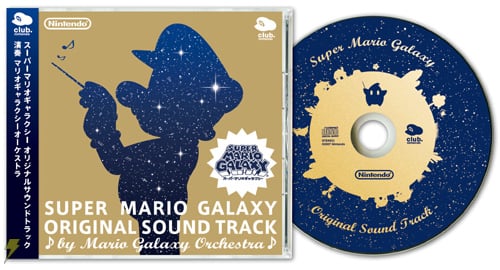
Super Mario Galaxy Original SoundtrackNintendo / Club Nintendo · 31 January 2008A Club Nintendo reward, first offered in Japan in a 28-track standard edition and a two-disc, 81-track Platinum Edition. The single disc was later packed in with a Wii console bundle in North America in October 2011, and all 81 tracks are included in the music player of Super Mario 3D All-Stars. The soundtrack joined the Nintendo Music app at its launch on 30 October 2024.
Super Mario-kun, volumes 38–40Yukio Sawada / Shogakukan · 2008–2009CoroCoro’s long-running gag manga spent three volumes in space. Volume 38 (October 2008) opens with a dejected Mario being talked round by Rosalina and the Lumas, volume 39 (March 2009) works through most of the power-ups and a rescue of Luigi, and volume 40 (November 2009) wraps the arc up.
Trading Card Fun PaksEnterplay · 2007A collectable card set sold in “Fun Paks”, each holding two regular cards, a trivia card, a pop-up standee and a temporary tattoo.
Prima Official Game GuidePrima Games · 2007Published in Premiere and Collector’s editions, with a printed letter to players from Shigeru Miyamoto.
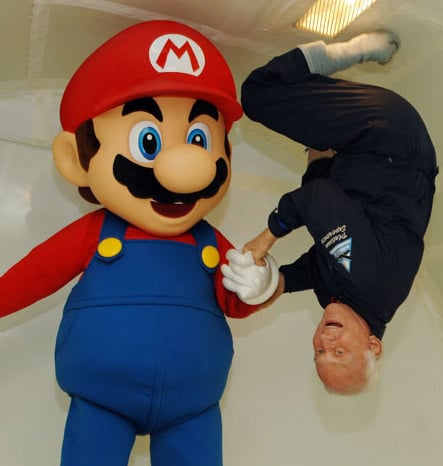
Mario and Buzz Aldrin in zero gravityNintendo of America / MTV · 3 November 2007To launch the game in the US, Nintendo put a costumed Mario aboard G-Force One, the Zero Gravity Corporation’s parabolic-flight aircraft, with Apollo 11 astronaut Buzz Aldrin. The crew wore “Super Mario Galaxy Flight Team” patches. Ten days later Aldrin was in Madrid for Nintendo Ibérica, trying Co-Star Mode in front of the press and admitting that it was quite a challenge for a person who did not play games.
Press Start 2008: Symphony of GamesBunkamura Orchard Hall, Tokyo · 14 September 2008Famitsu’s annual game-music concert included “Super Mario Galaxy 2008”, a medley arranged by Mahito Yokota and conducted by Taizo Takemoto, with Yokota and Koji Kondo in the audience. The recording was later issued on a CD with a Japanese 25th-anniversary Mario book. The score has since been played by the WDR Rundfunkorchester in Cologne and the London Philharmonic.
Iwata Asks: Super Mario GalaxyNintendo · autumn 2007Satoru Iwata’s interviews with producer Takao Shimizu and director Yoshiaki Koizumi, with the designers and programmers, and with the sound team are the best first-hand account of how the game was made, and the source of several stories on this page.
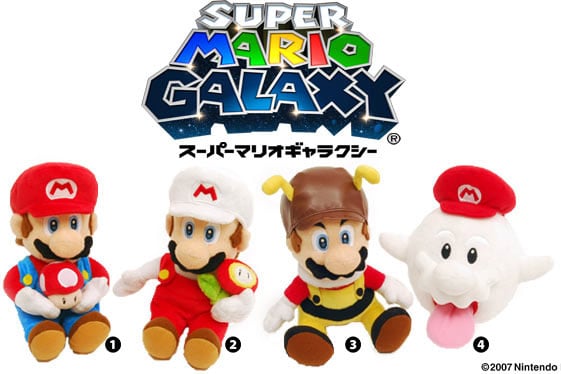
Toys and merchandiseTakara Tomy, San-ei, Banpresto, Bandai, Epoch and others · 2007–2009Japan got desktop figures, plush toys, three volumes of keychains, bean-sized “Mame” figures, light-up keychains and water toys; America got a 550-piece jigsaw and T-shirts; Club Nintendo members in Europe could claim a Galaxy kite.
The Super Mario Galaxy MovieIllumination / Nintendo / Universal · April 2026The follow-up to The Super Mario Bros. Movie took the game’s name and its leading lady. Directed again by Aaron Horvath and Michael Jelenic, it opened in the US and UK on 1 April 2026 and in Japan on 24 April, and sends Mario, Luigi and Yoshi into space to stop Bowser Jr. and rescue Rosalina. Brian Tyler had already woven themes from the game into the first film’s score.
Later gamesNintendo · 2008 onwardsRosalina was playable within months in Mario Kart Wii and has barely missed a spin-off since; she became a hidden fifth hero in Super Mario 3D World and a Super Smash Bros. fighter in 2014, with a Luma at her side. The Toad Brigade’s captain grew into Captain Toad and his own game. Super Mario Galaxy 2 reused the engine wholesale, Mario Kart 8 rearranged the music, and the starting planet of Gateway Galaxy can be seen from the Yoshi’s Adventure attraction at Super Nintendo World.
Characters
A small cast by Mario standards, and almost all of it new: Rosalina, the Lumas and the Toad Brigade all make their first appearance here, alongside a rogues’ gallery of bosses that Bowser seems to have recruited from across the cosmos.
Character
Who they are
In this game
Abilities & notes
MarioThe hero, and the Luma’s ride
Invited to a festival, blasted into orbit, and handed the job of refuelling a comet.
Collects Power Stars for Rosalina, relights the Observatory dome by dome, beats Bowser three times and Bowser Jr.’s champions three times, and wakes up in a universe that has been made again.
Spin, triple jump, long jump, wall kick, backward and side somersaults, ground pound and homing ground pound
Forms: Bee, Boo, Spring, Ice, Fire, Rainbow and Flying
Three health; six with a Life Mushroom
LuigiHelper, then hero
Mario’s twin, afraid of ghosts as ever and found, inevitably, in a haunted house.
Rescued in the Ghostly Galaxy, he sets up in the Observatory garage and hunts stars himself, sending photographs when he gets stuck in Good Egg, Honeyhive and Battlerock. After 120 stars he is playable for a complete second game.
Jumps higher and runs slightly faster than Mario
Slower to accelerate, skids when stopping, less air underwater
Has his own Bee, Boo, Spring, Ice, Fire, Rainbow and Flying forms
RosalinaKeeper of the Comet Observatory
A calm, distant figure in a pale blue gown who looks after the Lumas and watches over the cosmos. The Lumas call her mama. Voiced by Mercedes Rose.
Meets Mario in Gateway Galaxy, lends him a Luma, sends him out for stars and pilots the Observatory to the centre of the universe. Her own past is the subject of the library storybook, and it is she who explains, at the end, what has just happened to the universe.
Not playable here. Mario cannot be hurt aboard her Observatory, and anyone who falls off is quietly put back.
LumaThe star under the cap
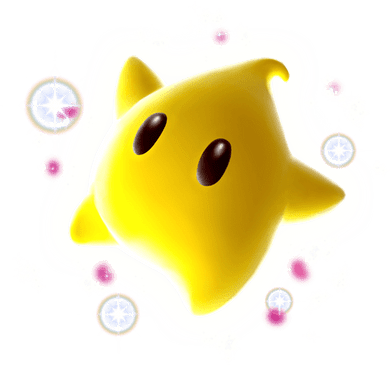
A young, apricot-coloured Luma (named Baby Luma in the sequel) who was being held by Peach when the castle was taken.
Follows Mario into space, lives under his hat for the whole adventure and is the source of the spin. The ending and the storybook hint that he is the first Luma of Rosalina’s story, born again.
Grants the spin and the ability to use Launch Stars.
The Lumas and PolariStar children of the Observatory
Round, star-shaped infants in yellow, blue, green, red and other colours, who eat Star Bits and one day grow up to become stars, planets, comets or whole galaxies. Polari, an elderly, dark-coloured Luma, serves as Rosalina’s butler.
Lumas become the Launch Stars, Sling Stars and Pull Stars Mario travels by. Polari waits in the domes with the map and star list and explains the Star Pointer.
More Lumas appear on the Observatory as each dome is relit.
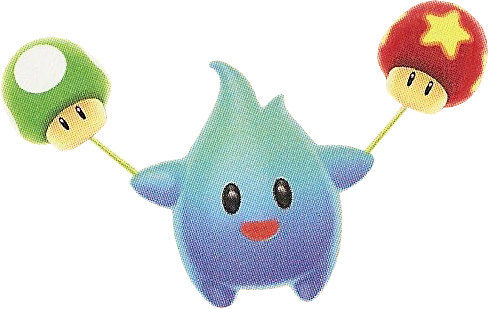
Hungry Lumas, Lumalees and the Comet LumaLumas with appetites
Plump pink Lumas who want feeding, blue shopkeepers and a specialist in Prankster Comets.
Hungry Lumas turn into new planets, or into seven entire galaxies, once they have eaten enough. A Lumalee sells a 1-Up or a Life Mushroom for 30 Star Bits by becoming one. The Comet Luma moves comets for 20.
Galaxy prices run from 400 Star Bits (Sweet Sweet, Sling Pod) to 1,600 (Snow Cap).
Princess PeachGuest of honour, briefly
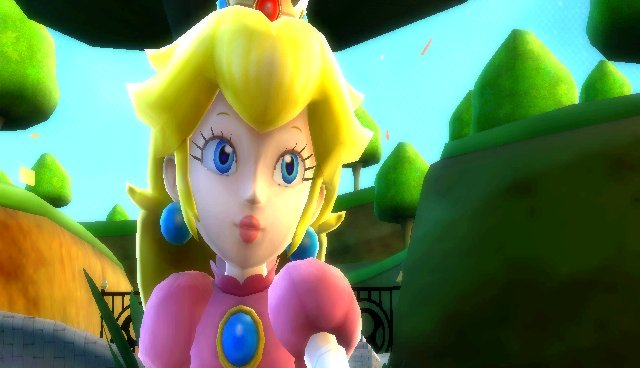
Ruler of the Mushroom Kingdom and host of the Star Festival, voiced by Samantha Kelly, who had taken over the role in Mario Strikers Charged earlier in 2007.
Carried off with her entire castle in the opening minutes and held at the centre of the universe. She still manages to write: her letters reach the Observatory by Mailtoad with 1-Up Mushrooms enclosed.
Five 1-Ups per letter for Mario, twenty for Luigi.
The Toad BrigadeFive Toads and a Starshroom
A red-capped captain with a headlamp, who is braver in speeches than in practice, and his crew: the bespectacled blue Hint Toad, sleepy Yellow Toad, green Banktoad and purple Mailtoad.
They fly ahead of Mario in mushroom-shaped Starshrooms the Lumas built for them, get into trouble in most galaxies and occasionally find a Power Star. Mailtoad runs the post from the Observatory.
The captain went on to become Captain Toad, star of his own levels in Super Mario 3D World and then his own game.
BowserWould-be emperor of the universe
The Koopa King, thinking bigger than usual and voiced by Kenny James, who had first played him in Super Mario Strikers (2005) and makes his mainline debut here.
Steals the Observatory’s Power Stars, kidnaps Peach castle and all, and starts building a galaxy of his own at the centre of the universe. Fought in Bowser’s Star Reactor, Bowser’s Dark Matter Plant and Bowser’s Galaxy Reactor.
Shockwaves, a rolling attack and, later, a coat of stone; hurt by being lured onto a glass panel over the lava and then spun into.
Bowser Jr.Admiral of the airships
Bowser’s son, in charge of the fleet and of three Grand Stars. Voiced by Caety Sagoian, who had first played him in Mario Strikers Charged a few months earlier.
Sets Megaleg on Mario in the Robot Reactor, fights in person from his flagship in the Airship Armada, calls in King Kaliente at the Lava Reactor and guards Peach during the final battle.
His airship sinks after a few Koopa shells to the hull.
Kamek and KamellaThe Magikoopas
The Magikoopa who blasts Mario into space in the prologue, and Kamella, an outsized Magikoopa witch.
Kamella commands an airship in Space Junk Galaxy and haunts the ghost ship in Deep Dark Galaxy.
Kamella can only be hurt with the green shells she conjures herself; she teleports more and more as the fight goes on.
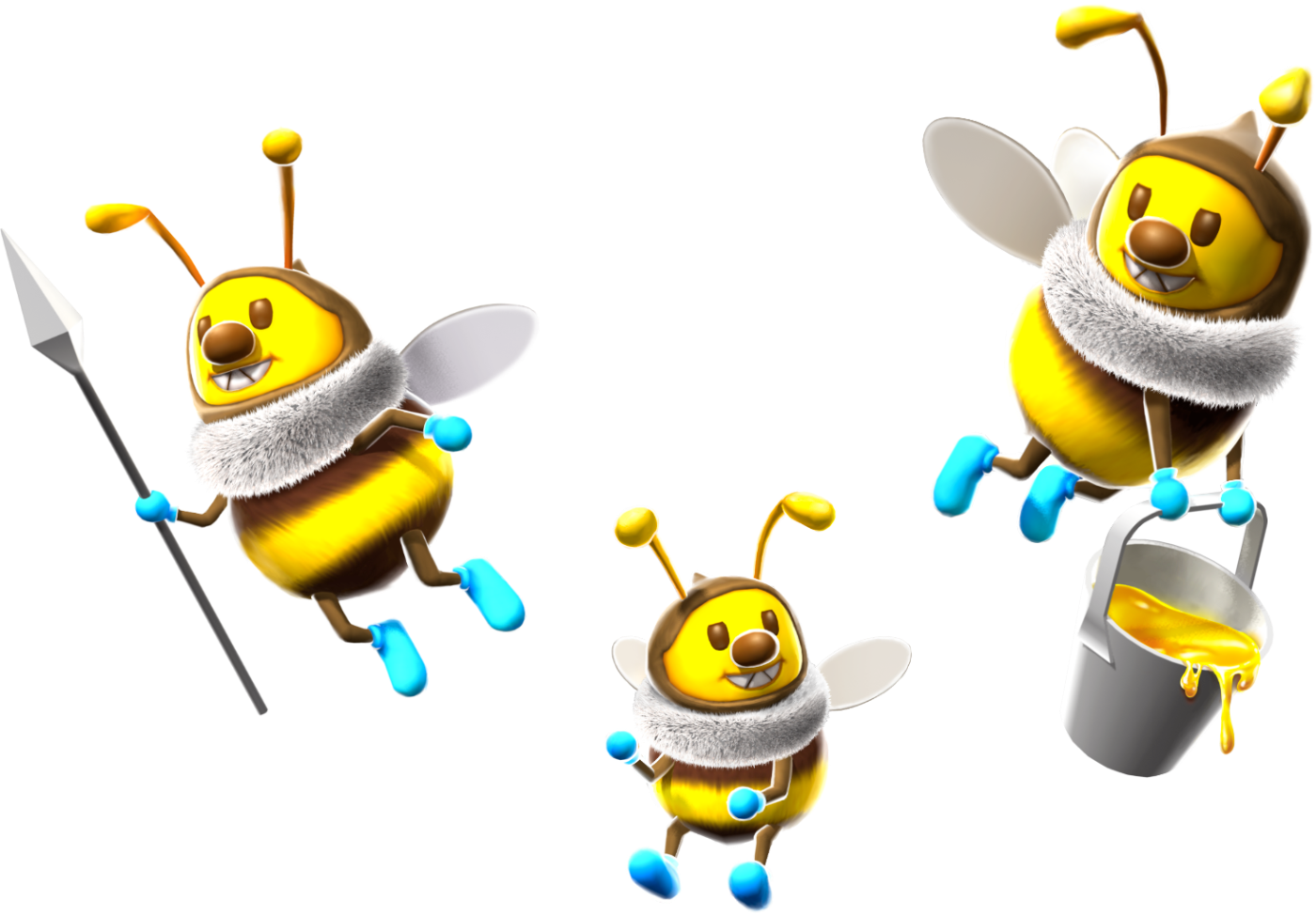
The Queen Bee and the HoneybeesThe Honeyhive Kingdom
A bee the size of a cottage, her loyal workers, and their neighbours-from-hell, the Mandibugs.
The Honeybees teach Mario to fly as Bee Mario; the Queen mistakes him for a doctor and has him crawl through her fur after whatever is making her itch. Her relatives in Gold Leaf Galaxy keep Cataquacks.
Honeyhive, Honeyclimb, Gold Leaf and Sand Spiral galaxies.
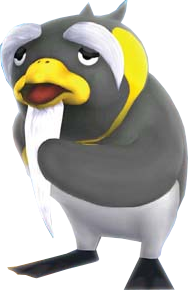
Penguins, Coach and PenguruThe swimmers
Chatty young penguins, the big fatherly Coach who trains them, and old Penguru, who would rather be left to his fishing.
The penguins hand out swimming lessons in Beach Bowl, Coach runs the manta-ray surfing in Loopdeeloop and Loopdeeswoop, and a four-penguin relay team races Mario round Sea Slide.
One penguin in Freezeflame Galaxy calls Mario an old man, then challenges him to a race.
Star BunniesHide-and-seek champions
Yellow rabbits who love a chase and say “boiyoing” a lot. Some of them are Lumas in disguise.
Catch them for Power Stars in Gateway, Gusty Garden, Gold Leaf and Snow Cap.
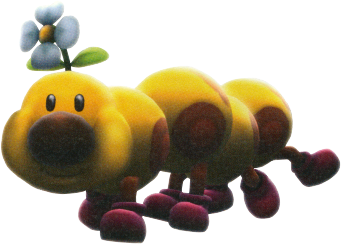
Gusty Garden’s bunnies are being bullied by Major Burrows and his Undergrunts.
Cosmic MarioThe rival from the comet
A star-speckled, purple-blue double of Mario who appears only under a Cosmic Comet. Luigi gets a Cosmic Luigi, who is faster and cheats.
Races the player to the Power Star in Honeyhive, Freezeflame, Gold Leaf and Sea Slide.
Bump into him and he sheds Star Bits.
Ray, Guppy and the Spooky SpeedsterRacers and rides
A manta ray you surf on, an orca with a mean streak and a Boo with a need for speed.
Ray carries Mario round the water courses; Guppy bullies the penguins of Sea Slide and sets a ring-swimming challenge there and in Deep Dark; the Speedster races in Ghostly Galaxy and Boo’s Boneyard.
Guppy was a friendly character in early concept art.
GearmosMaintenance robots
Polite maintenance robots, found tidying Battlerock, Toy Time and the Engine Room.
They explain the Spring Mushroom, ask Mario to clear up rubbish with Bob-ombs and are freed in numbers when Mecha-Bowser falls apart.
One in Battlerock describes herself as an iron old lady.
Bill Board and familyTalking signs
Wooden signposts with faces and opinions: Bill, Gil, Phil and Jill.
Bill teaches the Star Ball, Gil the wall jump, Phil the bubble and Jill the Boo Mushroom.
Bill Board turns up in four galaxies.
Enemies and bosses
Every enemy in the game, with the galaxy where you first meet it. About fifty of them were new, and several were renamed later: the names here are the ones used for this game, with the sequel’s names in brackets where they differ. Bosses follow.
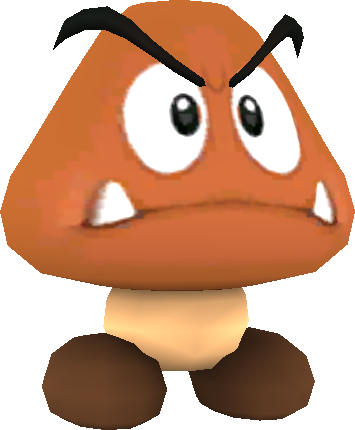
Goomba, Micro Goomba, Grand GoombaGateway GalaxyStomp the regular ones, spin the tiny ones. There is exactly one giant.
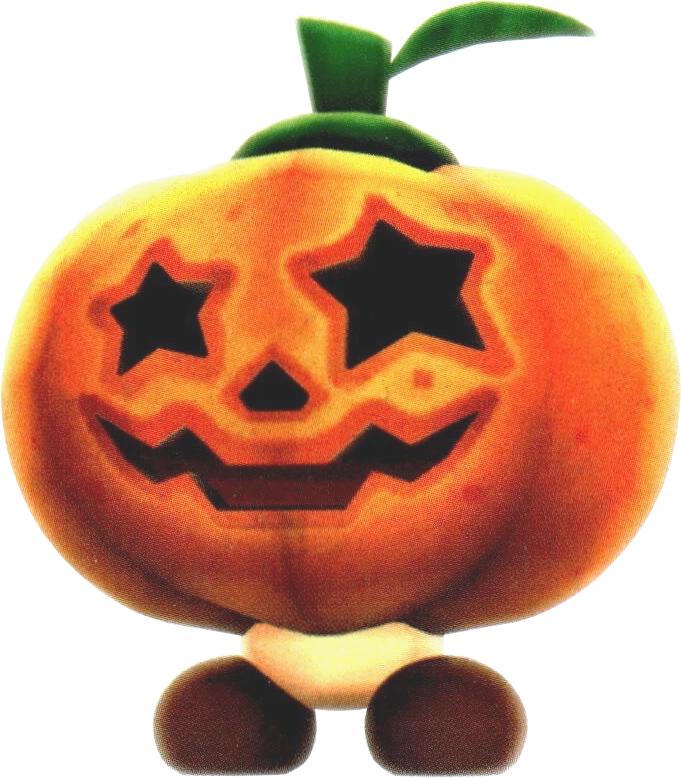
Pumpkinhead Goomba (Jack O’Goomba)Ghostly GalaxyWears a lantern and leaves a trail of blue flame.
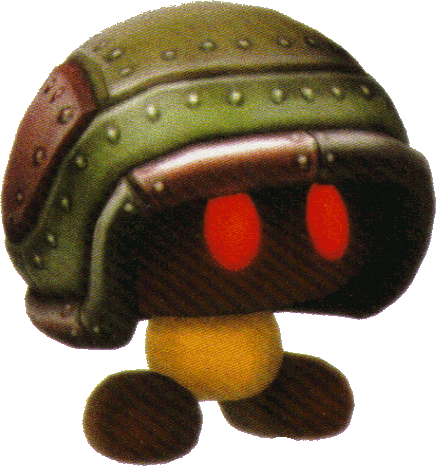
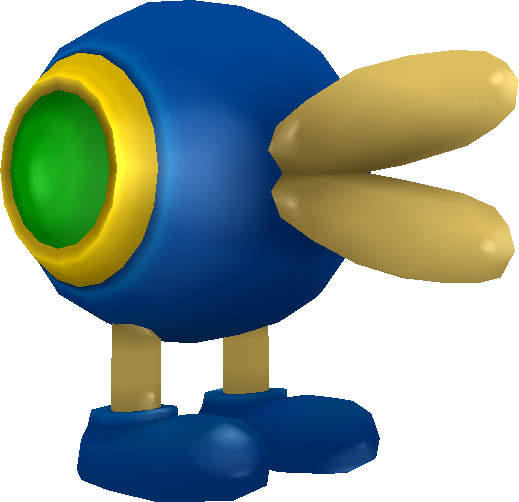
GoombeetleBowser Jr.’s Robot ReactorA Goomba in a spiked helmet. Spin it over first.
Electrogoomba (Octoomba)Good Egg GalaxyA blue alien cousin of the Goomba with an antenna.
Octoguy and RoctoHoneyhive; Good EggRed octopuses that spit rocks; Roctos sit in barrels and fire coconuts you can spin back.
SlurpleGood Egg GalaxyClamps onto Mario and drains his health until shaken off.
Ruby Rock and Big Ruby RockGood Egg; Dusty DuneRolling boulders with a red jewel for a weak point.
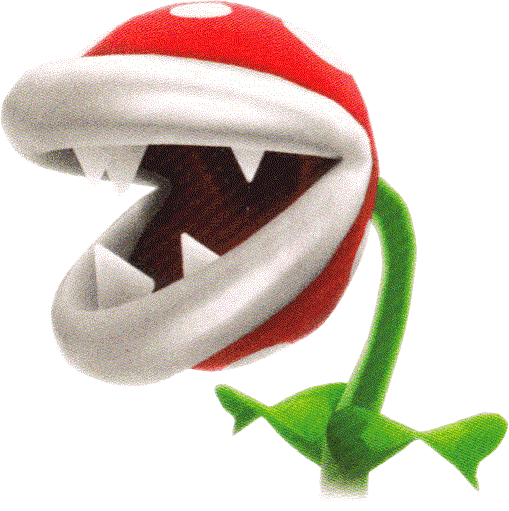
Piranha Plant and Spiny Piranha PlantGood Egg GalaxyThe big thorny ones slam their heads on the ground. Beat one and a Sproutle Vine grows in its place.
TracksGood Egg GalaxyInvisible but for its footprints. Spin where it stands for a shower of Star Bits.
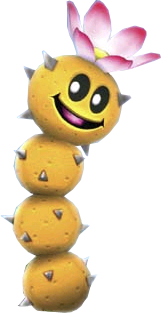
Pokeynut, Pokeyplant and Pokey HeadGood Egg; Dusty Dune; Gusty GardenCactus relatives that topple forwards to squash you.
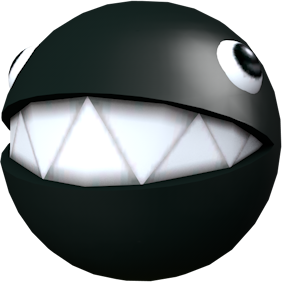
Chomp, Mini Chomp and Golden ChompGood Egg; Dreadnought; Gusty GardenThey roll rather than lunge, and only Rainbow Mario can break them. The golden one holds a star.
Bullet Bill, Banzai Bill and Torpedo TedGood Egg; Galaxy Reactor; Buoy BaseHoming missiles, useful for smashing cages if you lead them there.
Lava BubbleGood Egg GalaxyLeaping blobs of fire.
FlipbugHoneyhive GalaxyRuns from Mario, but chases Bee Mario.
MandibugHoneyhive GalaxyA charging stag beetle. Ground pound its back.
WigglerHoneyhive GalaxyMarches in circles and turns red with rage if flipped.
Water Shooter and Fire ShooterHoneyhive; Bowser’s Star ReactorTurrets. One traps Mario in a bubble, the other is a flamethrower.
Spring Vault, Sentry Garage, Sentry BeamFlipswitch; Buoy Base; BattlerockRobot sentries that emit rings of electricity or laser fire. Stomp a Spring Vault for a boost.
Spoing and SpanglerSpace Junk; GhostlySpiders, hopping and dangling.
Amp and Zap BallBuoy Base; Space JunkElectric orbs on patrol routes.
MagikoopaSpace Junk GalaxyTeleports, fires spells and conjures other enemies.
Koopa Troopa (green and red)Space Junk; Sea SlideKnock one out of its shell and the shell is yours.
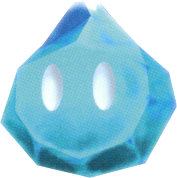
Ice Bubble (Li’l Brr) and Li’l CinderFreezeflame GalaxyLittle spirits of frost and flame. Spin them out before you touch them.
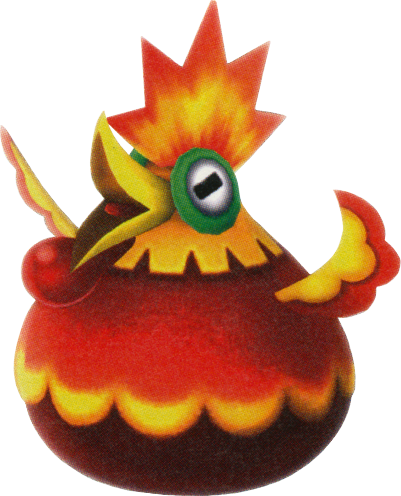
CluckboomDusty Dune GalaxyA flying bird that lays bombs.
Bone TwisterDusty Dune GalaxyA whirlwind with a skull in it.
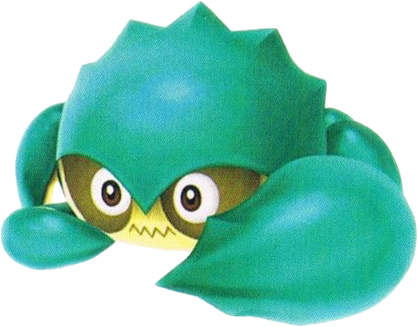
Red and Blue CrabberDusty Dune GalaxyArmoured in front, soft behind.
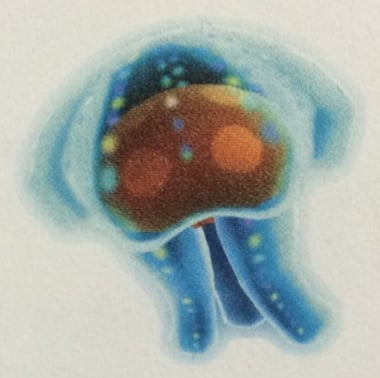
Jammyfish and Jam-o’-WarBigmouth GalaxyJellyfish, small in shoals and large with a sting.
Mecha-Bowser (small)Toy Time GalaxyWind-up Bowsers that breathe real fire.
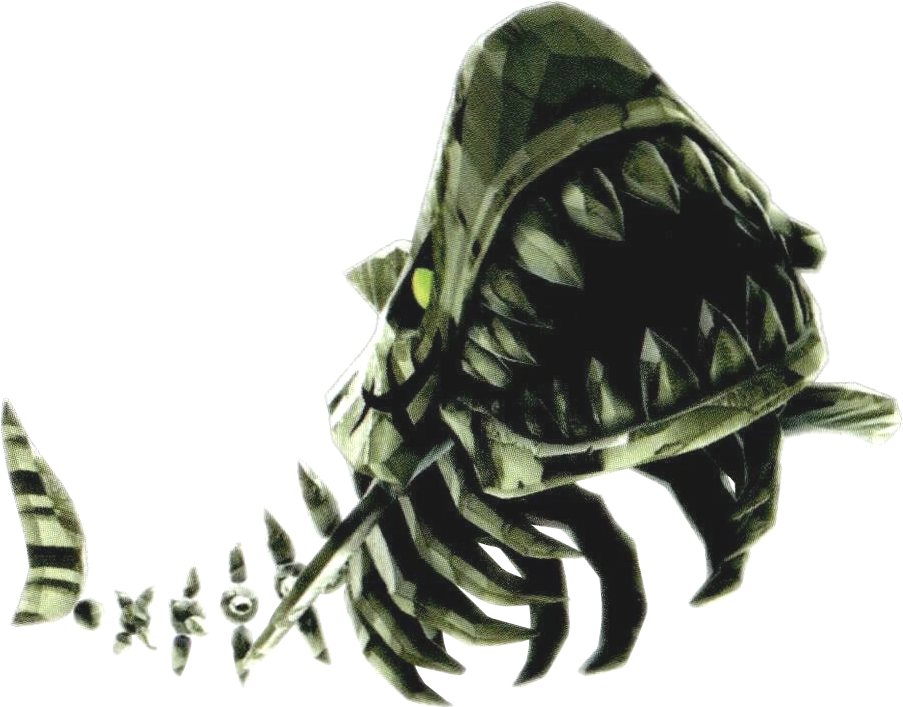
BonefinBonefin GalaxySkeleton fish that Kingfin sends out as torpedoes.
Dino Piranha (boss)Good Egg; fiery rematch in Melty MoltenSpin its clubbed tail so that it swings round into its own head.
King Kaliente (boss)Good Egg; Bowser Jr.’s Lava ReactorBat his coconuts back at him; he learns to return serve.
Mandibug Stack and Bugaboom (bosses)Honeyhive GalaxyGround pound the child, then the furious parent. Bugaboom takes off and must be pounded from above as Bee Mario.
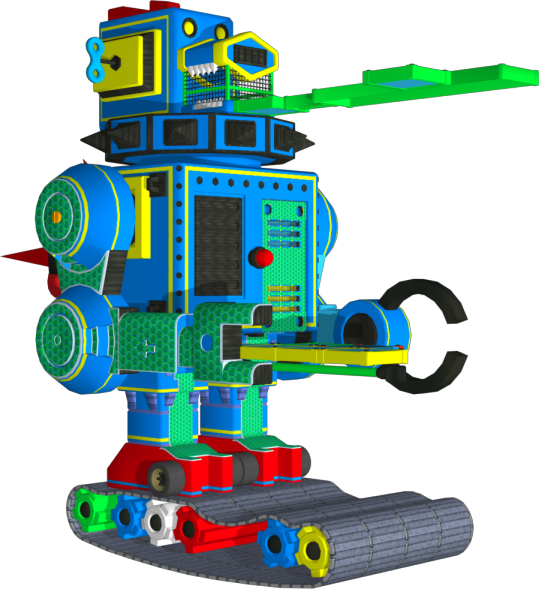
Megaleg (boss)Bowser Jr.’s Robot ReactorClimb a leg to the top and bring a Bullet Bill with you.
Kamella (boss)Space Junk; Deep DarkThrow her own green shells back.
Tarantox (boss)Space Junk GalaxyCatapult from the Sling Pods of its web into the glowing bulbs on its body.
Topmaniac (boss)Battlerock; DreadnoughtStomp to retract the blades, then spin him into the electric fence.
Bouldergeist (boss)Ghostly GalaxySwing Bomb Boos into his rocky shell, then into the core. He grows hands for round two.
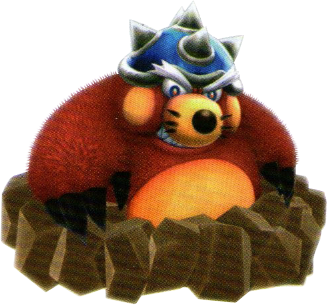
Major Burrows (boss)Gusty Garden GalaxyGround pound near him to pop him out of the soil, then spin.
Baron Brrr (boss)Freezeflame GalaxySpin away his icy aura when he lands, then hit him again.
Undergrunt Gunner (boss)Gold Leaf; Deep Dark; Toy TimeA mole in a cannon turret that fires water or electricity. Break the glass cockpit.
Mecha-Bowser (boss)Toy Time GalaxyA robot Bowser the size of a tower block. Ground pound the stone wheels on top of its head.
Bowser Jr. (boss)Bowser Jr.’s Airship ArmadaShell his airship until it goes down.
Bowser (boss)Star Reactor; Dark Matter Plant; Galaxy ReactorLure his jump onto a glass panel so that he burns his tail, then spin into him.
The people who made it
Nintendo EAD Tokyo was set up in 2003 with a smaller, younger staff than the Kyoto teams behind earlier Marios. Galaxy was its second game, after Donkey Kong Jungle Beat.
Yoshiaki KoizumiDirector and game designAssistant director on Super Mario 64, co-director of Sunshine and director of the Super Mario 128 demo. This was his first Mario as sole director, and the last game he directed before moving into producing. He also wrote the storybook.
Shigeru MiyamotoProducer; game design conceptHad wanted spherical worlds since 2000. He played every build sent down from Tokyo and argued the difficulty back up when it got too soft.
Takao ShimizuProducerCo-founder of the Tokyo studio with Koizumi, and the man who first imagined Co-Star Mode.
Satoru IwataExecutive producerNintendo’s president, who asked for a game that anyone from five to ninety-five could play.
Koichi HayashidaLevel design directorLed the stage design. He went on to direct Galaxy 2, 3D Land and 3D World.
Naoki Koga and Takeshi HayakawaProgram director; game programming leadLed the programmers behind the gravity and the planet camera that follows Mario without being asked.
Kenta MotokuraCharacter design leadLater the director of Super Mario Odyssey.
Kazumi Yamaguchi and Futoshi ShiraiPlanet design lead; level designShirai sketched planets shaped like apples and ice creams; Yamaguchi’s team built them.
Mahito YokotaMusicComposed and arranged most of the score and supervised the orchestral recording, having written all of Jungle Beat’s music.
Koji KondoMusicWrote four pieces, among them Good Egg Galaxy’s theme and the Observatory waltz, and steered Yokota away from his first idea.
Masafumi KawamuraSound directorMade the orchestra respond to the player by running the recordings in step with sequenced parts.
Charles Martinet, Mercedes Rose, Samantha Kelly, Kenny James, Caety SagoianVoicesMario and Luigi; Rosalina; Peach and the Toads; Bowser; Bowser Jr. For Kelly, James and Sagoian it was their first mainline Super Mario game in those roles.
Advertisement
How It Was Made
Super Mario Galaxy took about a decade to arrive, if you count from the day Nintendo started wondering what should follow Super Mario 64, and a little over two years if you count from the proposal. Both stories are told in Iwata Asks, in Koizumi’s conference talks and in the histories that draw on them.
128 Marios on a saucer
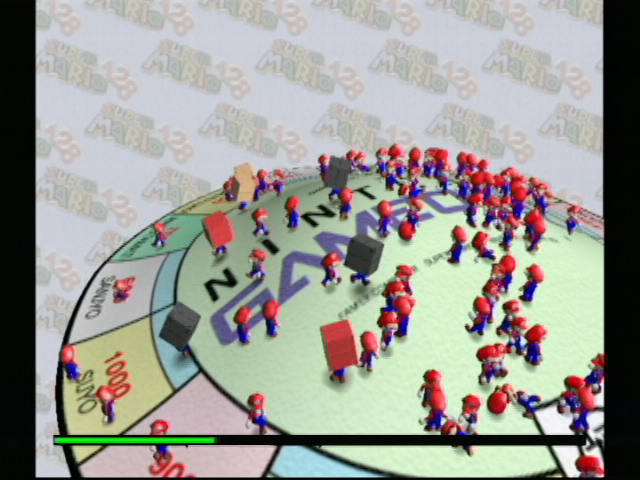
The Super Mario 128 demo at Space World 2000.
After Super Mario 64, Nintendo noticed something it had not expected: 3D had split its audience. Players who had breezed through the 2D games were getting lost, misjudging jumps or feeling queasy, and the camera controls meant to help them were one more thing to learn. Yoshiaki Koizumi, an assistant director on that game, kept turning the problem over. Shigeru Miyamoto, meanwhile, had a team experimenting on a successor nicknamed Super Mario 128.
What the public saw of it was a technology demo at Nintendo’s Space World show in August 2000, directed by Koizumi: 128 little Marios running about on a saucer-shaped platform that bent and warped beneath them. No game came of it directly, and Super Mario Sunshine in 2002 was, by Miyamoto’s account, a continuation of 64 instead. But Miyamoto had seen something in the demo: if Mario ran around a sphere there would be no edge to fall from, no far corner to get lost in and much less need to steer the camera. Koizumi agreed it could be a game, and thought it was close to technically impossible.
Bongos, then “Super Mario Revolution”
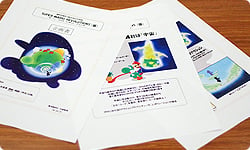
Koizumi’s 2005 proposal documents for “Super Mario Revolution”.
In 2003 Koizumi and producer Takao Shimizu opened a new Nintendo studio in Tokyo with a small, young staff. Its first game was Donkey Kong Jungle Beat (2004), a platformer played on a pair of bongo drums. Making a whole game out of two drums and a clap taught Koizumi to let the same input do different things in different situations, and watching people play taught him that a game could be staged for the benefit of whoever was sitting next to the player.
When Jungle Beat shipped, Miyamoto asked the Tokyo team for something with Nintendo’s best-known characters. In 2005 Koizumi wrote a proposal for “Super Mario Revolution”, after the code name of the console that became Wii: Mario on small round worlds with gravity of their own. Space was chosen because a small sphere reads at once as a planet. A handful of staff spent about three months on a prototype, and that was enough to convince a sceptical office. Builds went from Tokyo to Miyamoto in Kyoto throughout, and he was in the Tokyo office in person for the final stretch. When the two disagreed, Koizumi told Iwata, Miyamoto’s clinching argument was: “Trust what the old guy says!”
The spin, the camera and “from 5 to 95”
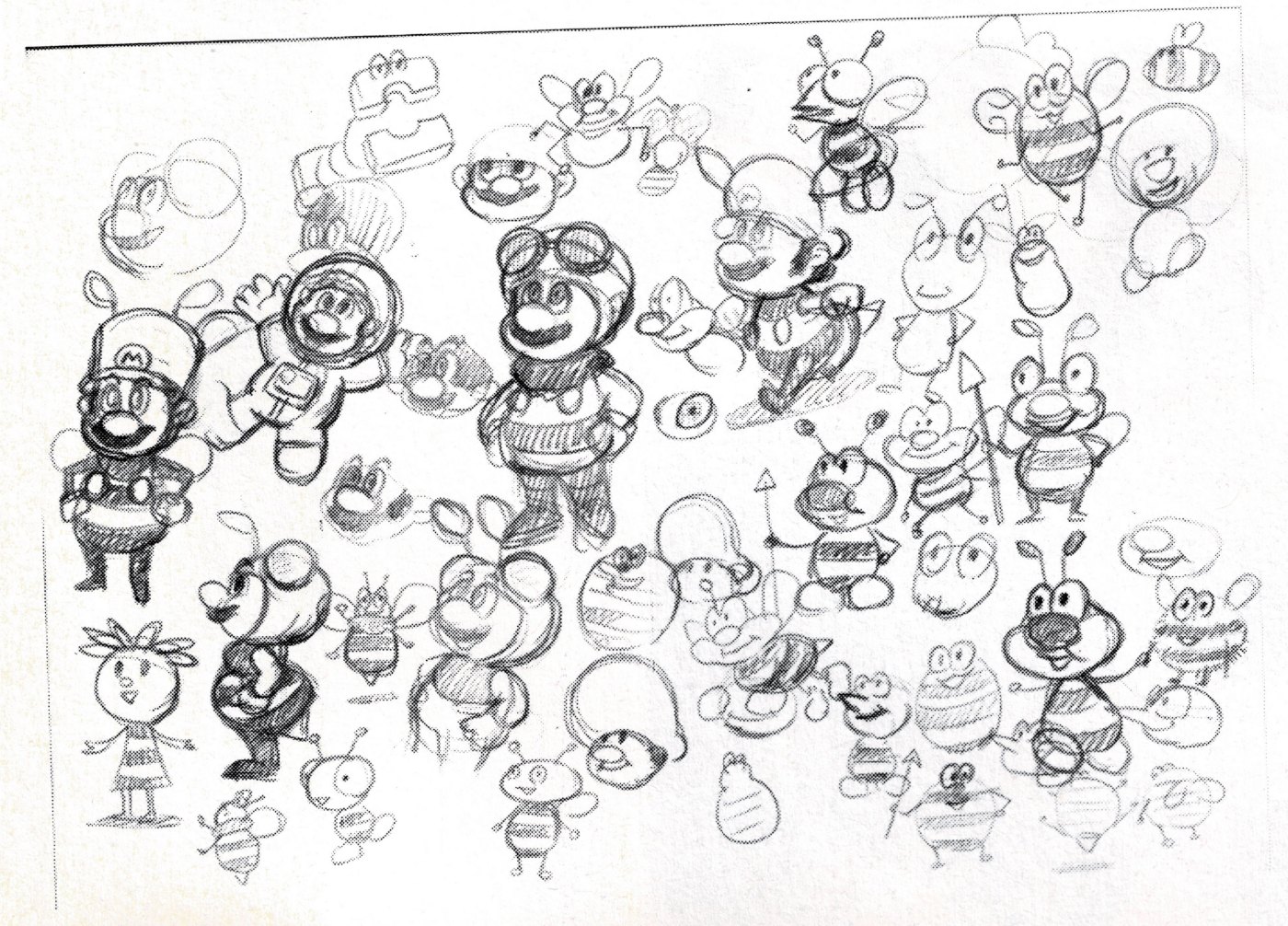
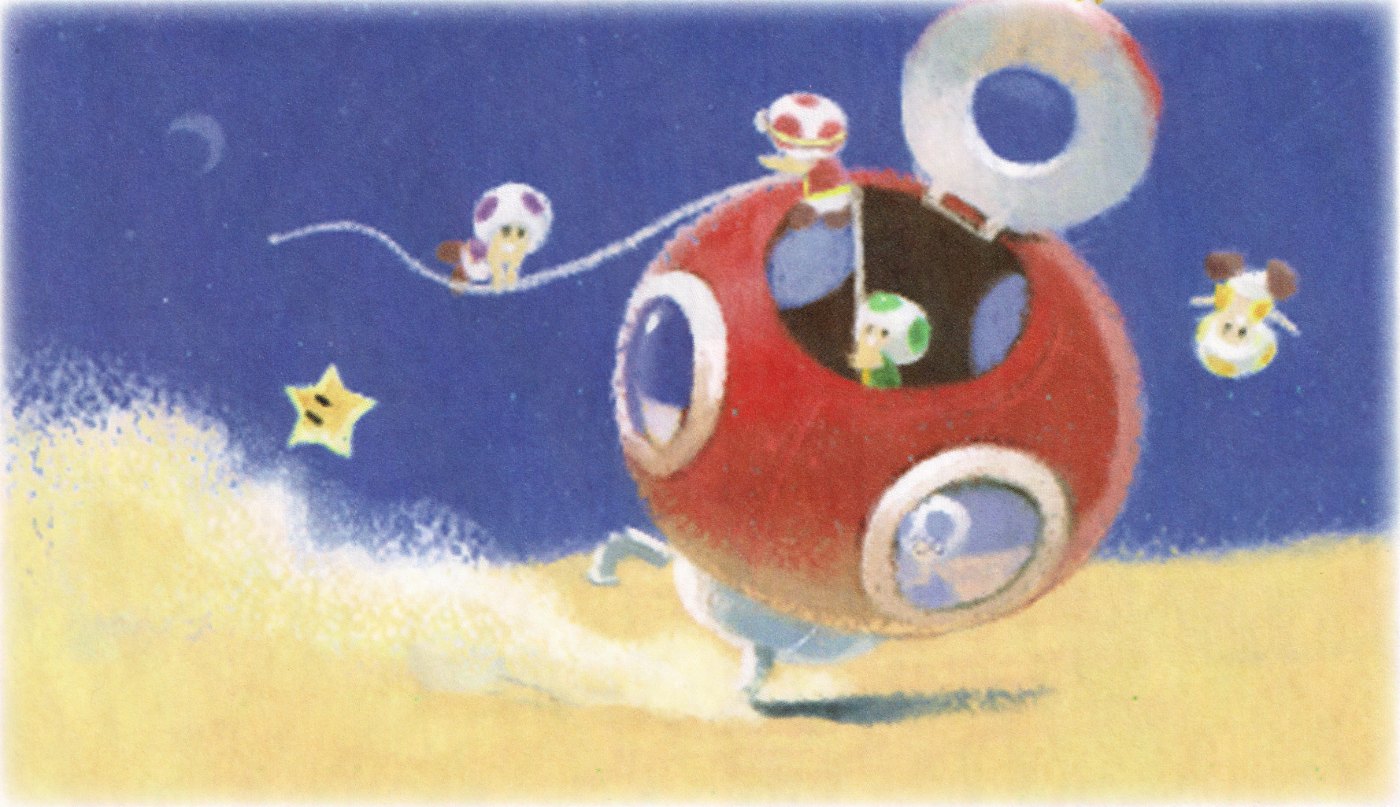
Concept art of Bee Mario and a Honeybee.
Jumping on enemies is harder on a ball than on a flat floor, so the team gave Mario an attack that did not need such careful aim. The spin began as a rotation of the GameCube stick, moved to the Nunchuk and ended up as a shake of the Wii Remote; at first Mario could spin without pause, and it was Miyamoto who asked for the short delay between spins so that timing would matter. The camera was programmed to track Mario round each planet by itself, and the pointer took over jobs that would otherwise have needed more buttons.
Iwata had asked for a game that could be enjoyed “from the age of 5 to 95”. Koizumi made sure there were places with nothing to fight where a small child could simply run about, and Bee Mario, which began as a note from a member of staff, gave beginners a way to hover over trouble. But early builds turned out too gentle, and Miyamoto insisted the tension come back. The compromise was the three-segment life meter: it is easier to lose a life than in 64 or Sunshine, and far easier to earn one back. Co-Star Mode came out of the same argument, as a way to let the person on the sofa take part.
Rosalina, written after hours
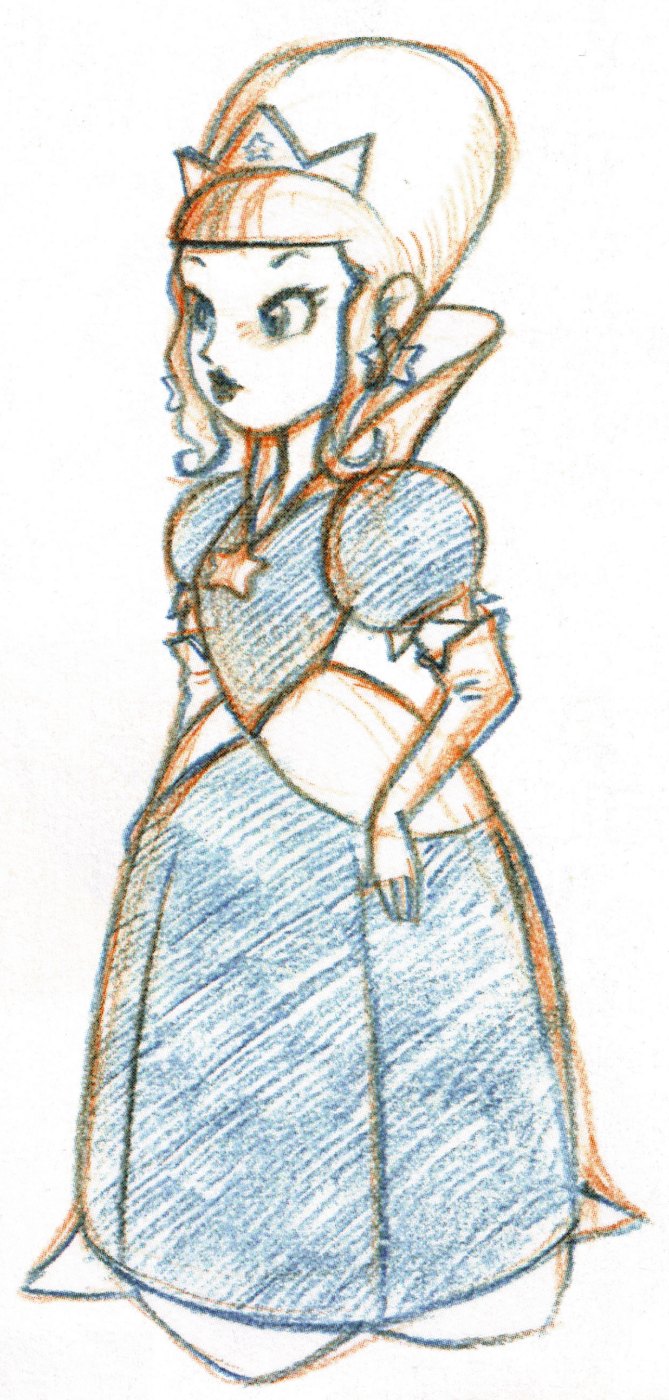
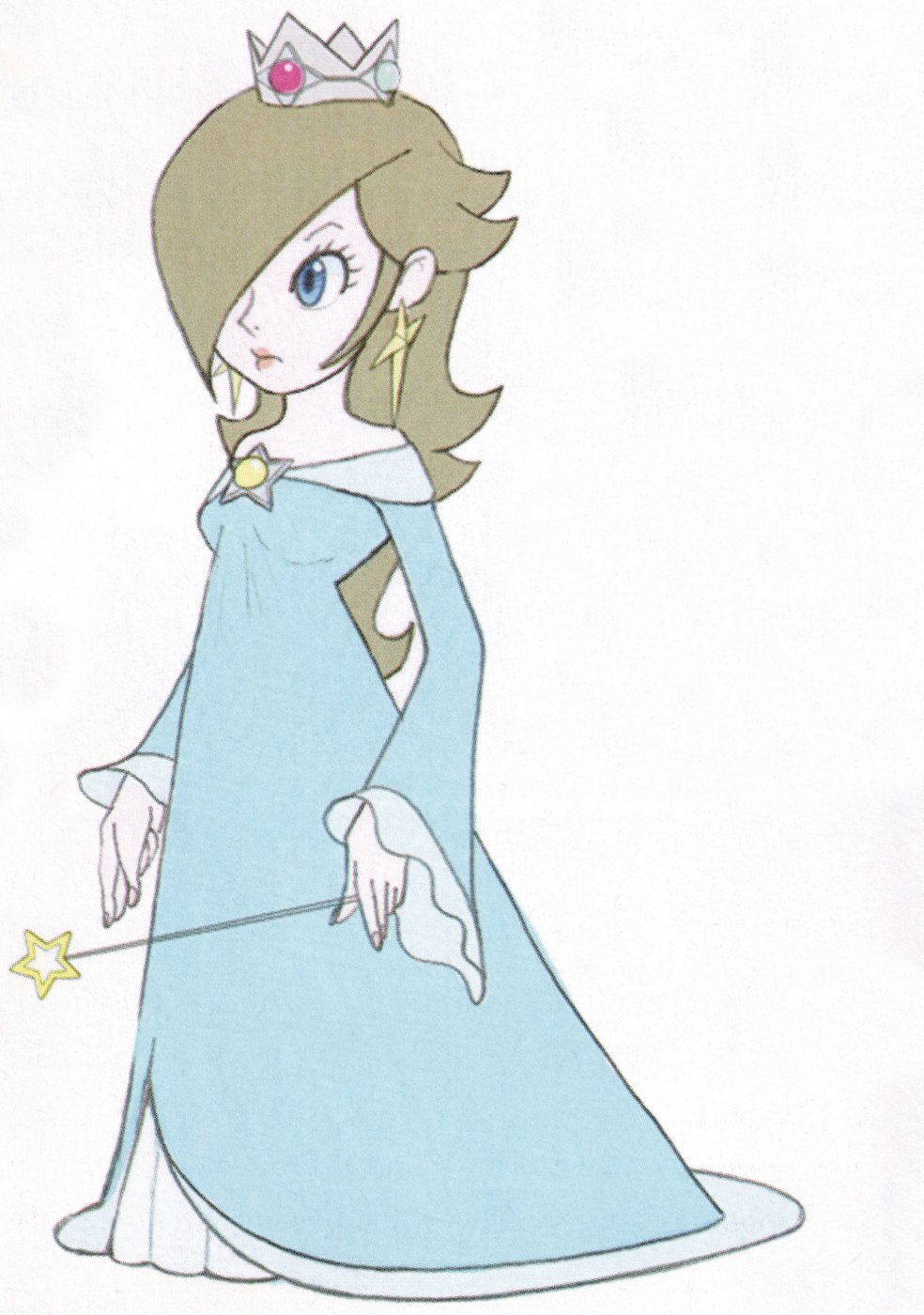
An early design for Rosalina, when she was imagined as one of Peach’s relations.
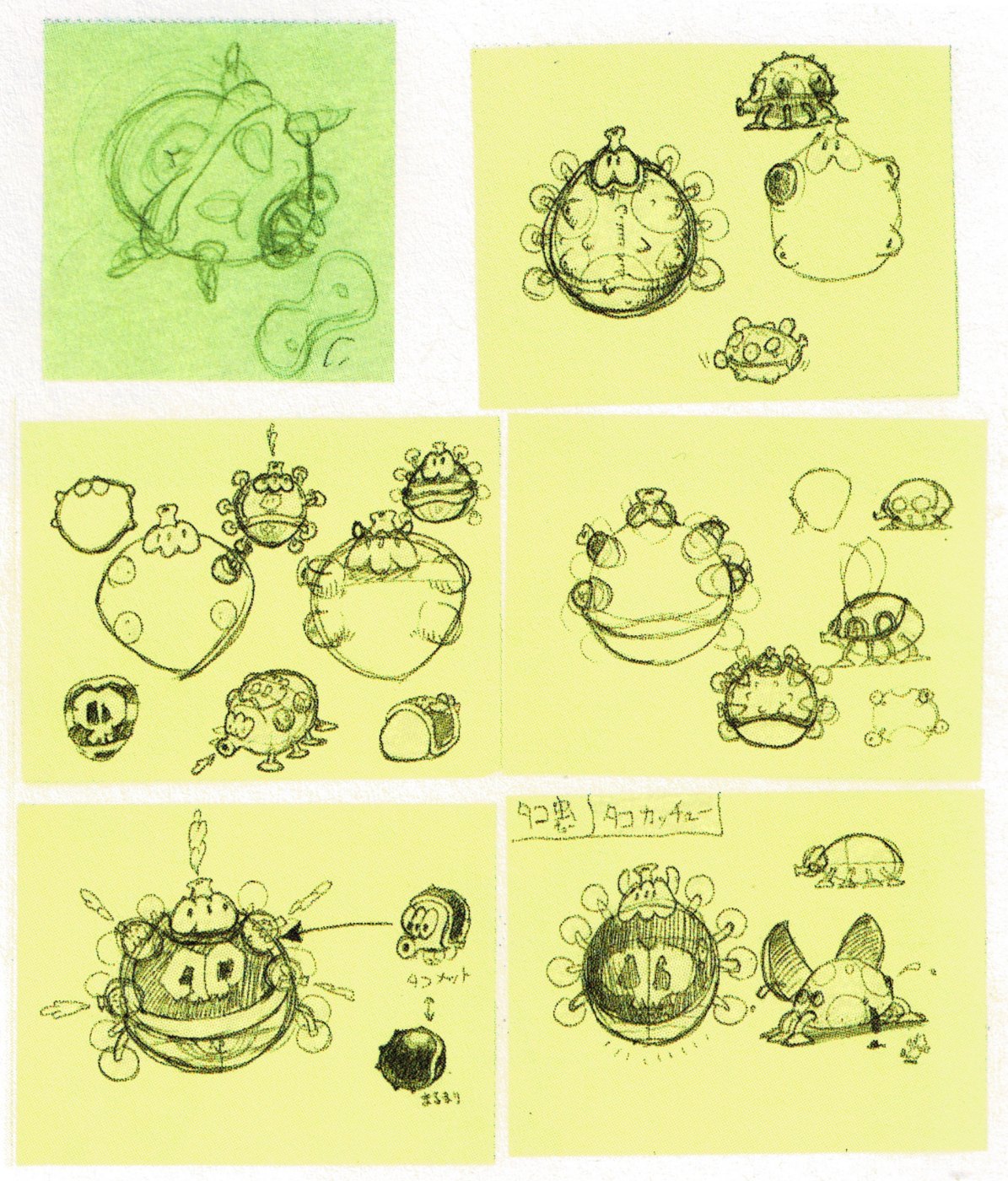
Koizumi wrote Rosalina’s picture book late at night, when the office was empty, and showed it to Miyamoto the next day. Miyamoto allowed it in, and it sits in a library the player never has to enter. In early designs Rosalina was conceived as a relative of Peach and looked a good deal more like her; the finished character is taller, cooler and has her fringe over one eye.
Other things changed along the way. The E3 2006 demo had Toads with star-shaped spots handing out hints and turning into rabbits, a job that passed to the Lumas. Guppy the orca started out friendly, drawn like the dolphins of Super Mario World. Bonefin and Deep Dark galaxies were meant to be much darker until that proved unplayable, and Beach Bowl and Sea Slide appear in concept art as a single galaxy. Yoshi appears in the 2005 proposal; he ended up as a planet-sized wooden head in Space Junk Galaxy and had to wait for the sequel.
The Mario Galaxy Orchestra
The Club Nintendo soundtrack album.
Mahito Yokota’s first idea for the music was Latin percussion and bright pop, and he spent three months writing 28 pieces in that vein. Koji Kondo turned the main theme down. Mario, he told the younger composer, is not cute; Mario is cool. Yokota has said he thought about resigning. Instead, three months later, he put three unlabelled demos in front of Miyamoto: one orchestral, one pop and one in between. Miyamoto picked the orchestral one as the most space-like. It was Kondo’s, and it became the Good Egg Galaxy theme.
The result was the first Super Mario game with a fully orchestrated score. Around fifty musicians, credited as the Mario Galaxy Orchestra, recorded 28 pieces at Sound Inn Studios in Tokyo under conductor Koji Haishima, playing to a metronome matched to the rhythm of Mario’s run so that the music would sit with the action. Sound director Masafumi Kawamura then synchronised the recordings with sequenced parts, so that the music keeps step with what the player does. Kondo wrote four pieces in all, among them the waltz for the Observatory, which is heard in three arrangements that fill out as the lights come back on. Yokota wrote the rest and arranged old themes from Super Mario Bros., Super Mario Bros. 3 and Super Mario 64.
E3 2006 to launch
Good Egg Galaxy as shown at E3 2007.
The game was unveiled, and playable, at E3 in May 2006, where Miyamoto said it would be out within six months of the Wii. Some at Nintendo had been unhappy that Sunshine missed the GameCube’s launch and wanted this one early. EAD Tokyo chose polish instead: it was shown again at E3 2007 and reached Japanese shops on 1 November 2007, eleven months after the console.
The North American launch came with a publicity stunt in a zero-gravity aircraft with Buzz Aldrin, and a row in Quebec, where this was the first Super Mario game to receive its own Canadian French translation. The Lumas and Toads spoke in joual, the province’s working-class slang, and the Office québécois de la langue française and the Union des artistes complained that it set children a poor example. Nintendo of Canada replied that it was localising for its market; later Quebec releases mostly reverted to standard French.
Series Firsts
What Super Mario Galaxy brought to the series, as far as we could confirm against the games that came before it.
1Rosalina and the LumasThe first appearance of the cosmic guardian and her star children, who have been part of the Mario family ever since.
2The Toad BrigadeThe debut of the five-Toad search party and its headlamp-wearing captain, who later became Captain Toad.
3A fully orchestrated Mario scoreIt was the first Super Mario game whose soundtrack was recorded with a full orchestra, about fifty players strong.
4Planets with their own gravityThe first Mario built on spherical worlds, an idea carried over from the Super Mario 128 demo of 2000.
5The first “course clear” 3D MarioIts levels are routes to a goal, not open playgrounds, the approach later 3D entries up to Super Mario 3D World kept.
6Six new transformationsBee, Boo, Spring, Ice, Rainbow and Flying Mario were all new to the Super Mario series; only the Fire Flower had been seen in it before, and never in 3D.
7Prankster Comets and Cosmic MarioRemixed missions that return to a finished level with new rules, including races against a shadow double.
8Co-Star ModeThe first 3D Mario adventure in which a second player could join in during the main game, with a pointer of their own.
9New voices for Peach, Bowser and Bowser Jr.Samantha Kelly, Kenny James and Caety Sagoian all made their mainline Super Mario debuts here, having first played the parts in the Mario Strikers games, and Rosalina was voiced by Mercedes Rose.
10Nintendo’s first BAFTA for Best GameIt took the top prize at the British Academy Games Awards in March 2009, the first Nintendo title to win it.
11A Mario in Quebec FrenchThe first Super Mario game with its own Canadian French localisation.
Cheats & Secrets
There are no button codes in Super Mario Galaxy. What it has instead is a long list of things it does not tell you, starting with the fact that the credits are only the halfway point.
Collect all 120 Power Stars as Mario, then clear Bowser’s Galaxy Reactor again. From then on you can start a save file as Luigi, with every star to earn afresh.
Grand Finale Galaxy and star 121
Get 120 stars with Luigi too and beat Bowser once more. A green Luma on the Planet of Trials then opens Grand Finale Galaxy for both brothers. Its one mission, The Star Festival, has 100 Purple Coins scattered through Toad Town and the castle gardens. Talk to Mailtoad there afterwards and he sends a souvenir photo to the Wii Message Board, a different one for each brother.
The three Green Stars
Green Stars hide in secret missions: Luigi under the Saucer in Battlerock Galaxy, The Secret of Buoy Base in Buoy Base Galaxy and Treasure of the Pyramid in Dusty Dune Galaxy. With all three, the green Lumas on the Planet of Trials will launch you to Rolling Gizmo, Bubble Blast and Loopdeeswoop, the three hardest single-star galaxies.
The Red Star and Flying Mario
Once King Kaliente has been beaten in Bowser Jr.’s Lava Reactor, Gateway Galaxy offers a new mission, Gateway’s Purple Coins, played entirely as Flying Mario. Finish it and a Red Star appears above the Bedroom, letting you fly around the Comet Observatory whenever you like.
Hungry Luma galaxies
Seven galaxies have to be bought with Star Bits from a Hungry Luma outside a dome: Sweet Sweet and Sling Pod (400 each), Drip Drop (600), Bigmouth (800), Sand Spiral (1,000), Boo’s Boneyard (1,200) and Snow Cap (1,600). Each Luma only turns up after particular missions are done; Boo’s Boneyard, for instance, needs Luigi and the Haunted Mansion and Gateway’s Purple Coins.
Luigi’s three letters
After you free Luigi in the Ghostly Galaxy he goes star-hunting and writes for help, with a photograph, three times. The snaps point to Luigi on the Roof in Good Egg Galaxy, Luigi in the Honeyhive Kingdom in Honeyhive Galaxy and Luigi under the Saucer in Battlerock Galaxy.
Moving the comets
If the Prankster Comet you need is not in orbit, talk to the Comet Luma on the Observatory. Twenty Star Bits buys a reshuffle. Purple Comets will not appear at all until Bowser’s Galaxy Reactor has been cleared once.
The storybook chapters
The library opens after Bowser’s Star Reactor. Chapter 1 is ready at 17 stars, then chapters follow at 24, 28, 32, 40, 49 and 58 stars, and the last two after Bowser’s Galaxy Reactor. The 2025 Switch version adds an epilogue, “Good Night”, once you have cleared any Purple Comet.
Easy lives
Five 1-Up Mushrooms are hidden on the Comet Observatory itself. Peach’s letters, delivered by Mailtoad, carry five more each (twenty if you are Luigi), and every 50 Star Bits in a level is another life.
The Co-Star boost
With a second Remote connected, have player two point at Mario and press A at the same moment player one jumps. The combined jump is higher than anything Mario can do alone, and player two can add a spin in mid-air.
Coconuts into watermelons
Bank 9,999 Star Bits on a save file and the coconuts you bat at enemies are replaced by watermelons.
Yoshi and 8-bit Mario
Space Junk Galaxy’s hidden star, Yoshi’s Unexpected Appearance, takes place on a wooden planet carved in the shape of Yoshi’s head. Toy Time Galaxy has a planet laid out as a giant sprite of Mario from Super Mario Bros. (in the mission Mario Meets Mario), and under the Purple Comet the same trick is played with Luigi.
Switch extras
The 2025 Nintendo Switch release adds an Assist Mode that starts you on six health, tops it up when you stand still and lifts you back out of the void, plus amiibo support for free items. Its soundtrack player is on the title screen.
Unlock conditions for the galaxies, the Grand Finale Galaxy, Rosalina’s Storybook and the Comet Observatory.
Glitches & Oddities
A tidy game by any standard, but the list of known glitches still runs to dozens of entries. These are the ones worth seeing; none of them will damage a save file, though a couple will cost you a life.
The floating Toad
The green Toad, untroubled by the lack of floor.
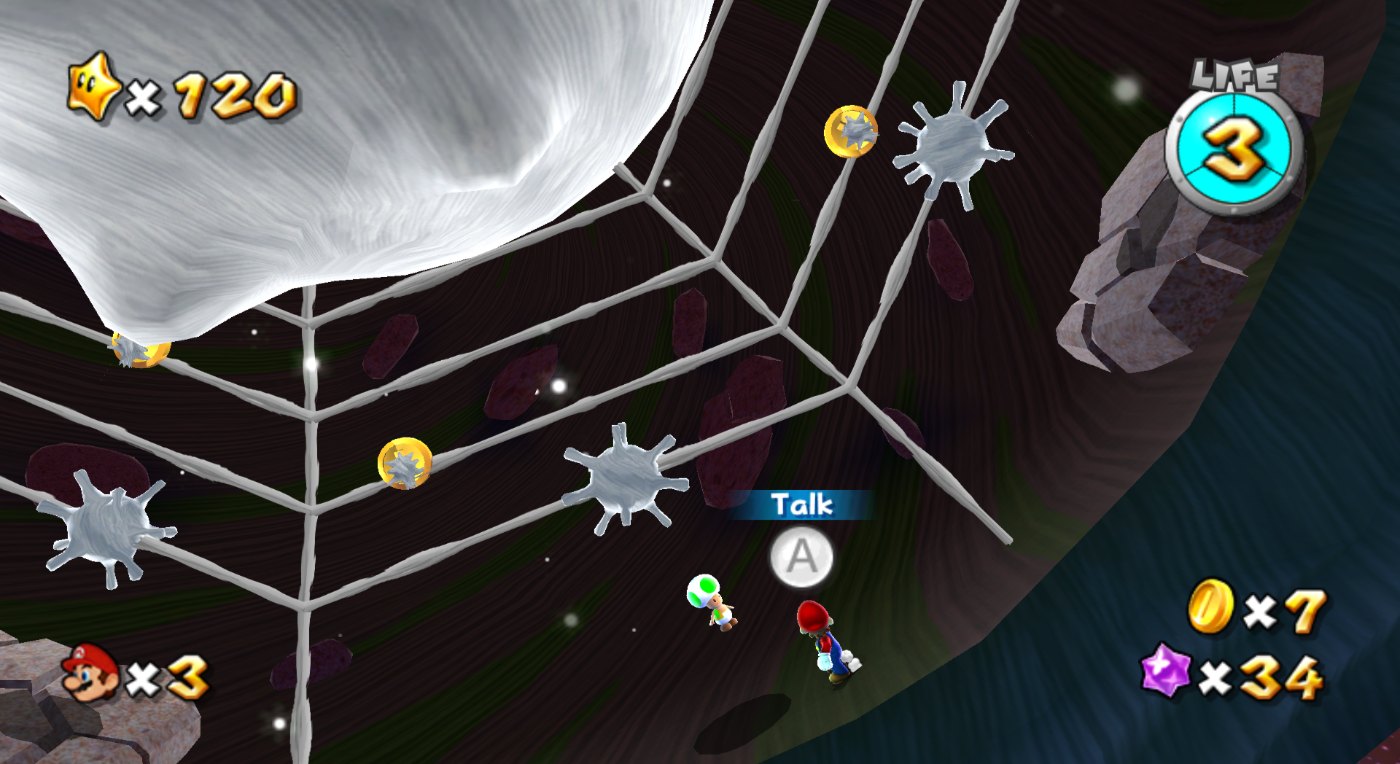
In Tarantox’s Tangled Web (Space Junk Galaxy), fire the green Toad onto one of the breakable platforms around the boss planet, then sling Mario into the same platform so that it shatters. The Toad carries on standing in mid-air as if nothing had happened.
Swimming through sand
Inside the Starshroom, courtesy of the sand glitch.
In Deep Dark Galaxy’s first mission, climb into the cannon on the beach and aim at the point where the parasol meets its pole. Crouch and edge forward on landing and Mario drops beneath the beach, where he can swim about under the sand and even get inside the Toad Brigade’s red Starshroom. Stray too far and he dies.
The explosion that never ends
A fireball that refuses to go out.
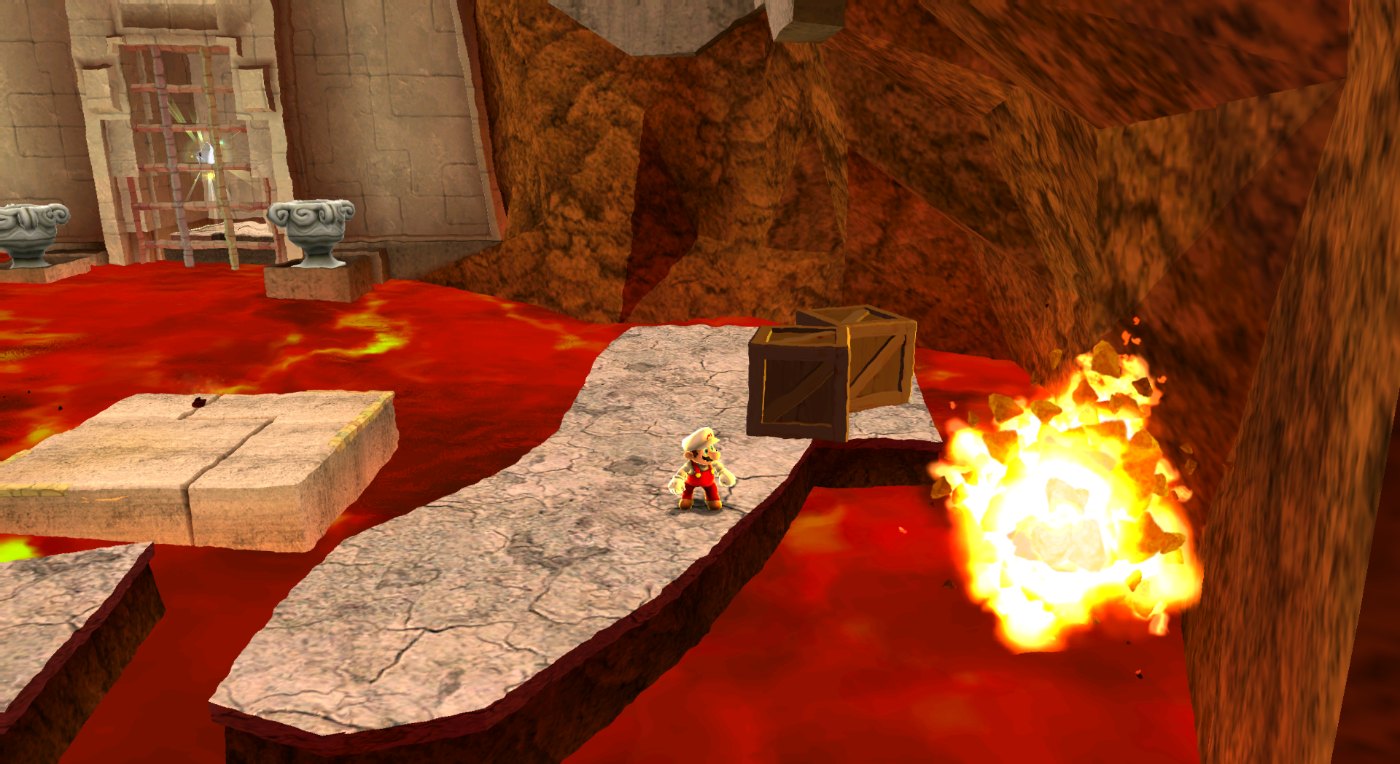
In Freezeflame’s Blistering Core, take a Fire Flower and hit a Li’l Cinder with a fireball at the instant it drops into the lava. The burst of flame it leaves stays on screen for the rest of the level. This one survived into the 2025 Switch version.
Swimming on the race track
Front crawl in Loopdeeswoop Galaxy.
At the start of Loopdeeswoop Galaxy, backflip, spin and ground pound so that Mario homes in on Coach and bounces off him towards the giant hoop. Land on one of the spheres there, then long jump and spin back to the course, and Mario can swim along the track he is meant to surf.
Trapped in a Starshroom
Stuck inside the Toad Brigade’s ship.
During Kamella’s Airship Attack in Space Junk Galaxy, stand in the middle of the yellow Starshroom, run at the red one and long jump into a particular spot on its hull. Mario is thrown backwards and ends up inside the yellow ship with no way out except quitting to the Observatory.
Sleeping bosses (Luigi only)
Two tricks that only work as Luigi skip the triggers that wake a boss. In Bowser Jr.’s Robot Reactor a pair of triple jumps off the glass cage on the first planet, with a spin at the top, drops him onto Megaleg’s moon while the robot stands inert. In Bowser’s Galaxy Reactor a long jump, backward spin and wall jump on the final staircase lets him walk right up to a Bowser who has not noticed him and cannot be touched.
Freezeflame out of bounds
In Hot and Cold Collide, triple jump in the walkway between the two faces of the second planet and scramble up the slope to the top. Walk around up there and icy water textures flicker in and out, with the planet’s surface drawn in the wrong place or not at all.
Falling twice
Luigi takes the long way down, twice.
On the Observatory as Luigi, long jump from beside the beacon into the bar that rotates around it. Luigi is knocked off, the Observatory lifts him back, and he promptly falls off again before being rescued properly.
Videos
Nintendo’s seven-minute overview of the 2025 Switch release, which walks through the first game before moving on to the second, and Did You Know Gaming’s tour of the Galaxy games’ development secrets.
Nintendo’s official overview trailer for the October 2025 Switch release.
Did You Know Gaming’s 2016 episode on how the Galaxy games were made.
Trivia & Interesting Facts
The project’s working title was Super Mario Revolution, after the Wii’s code name, and Koizumi’s 2005 proposal documents under that name survive.
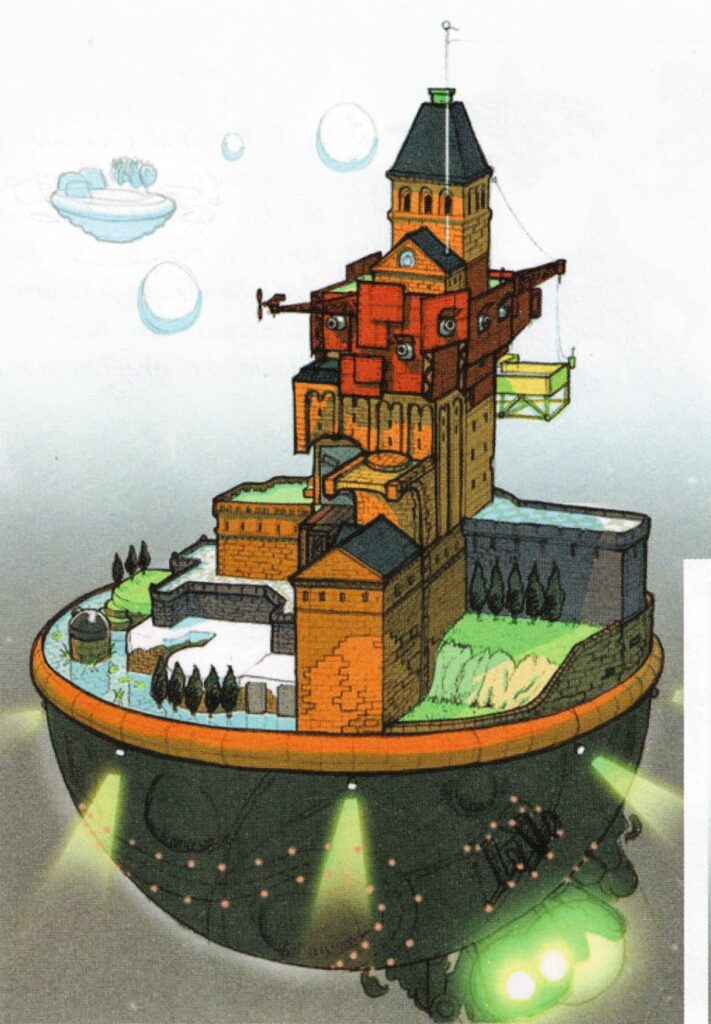
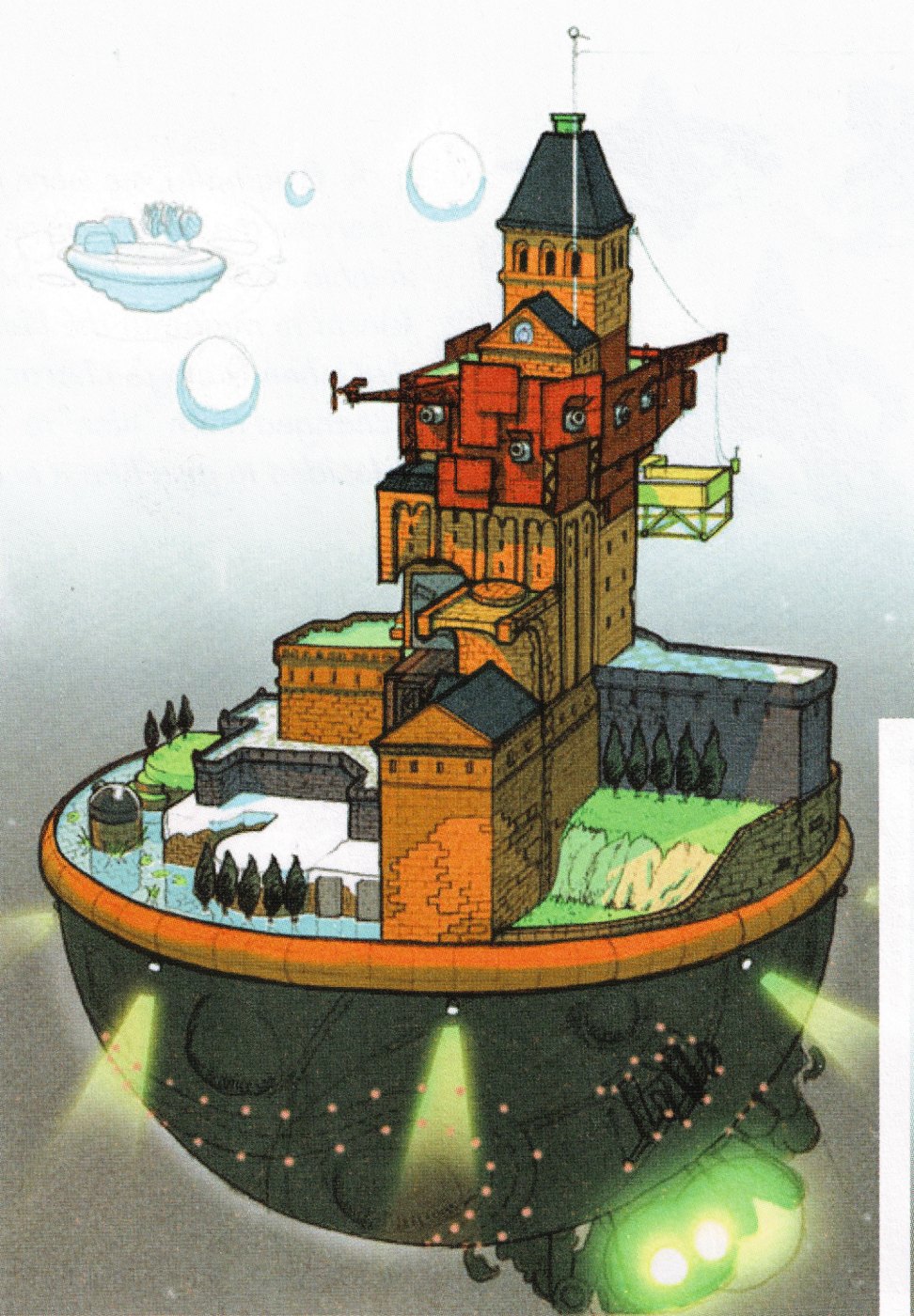
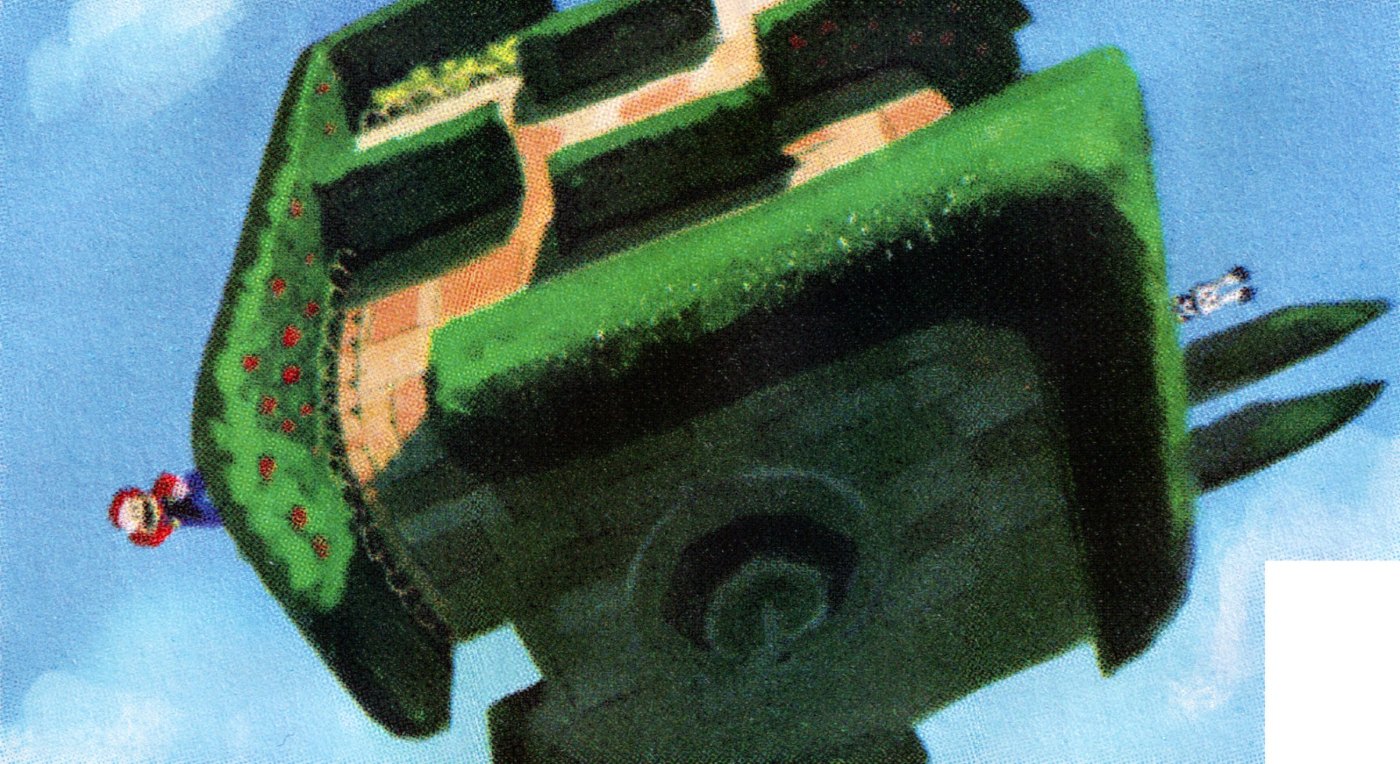
The “Fortress” concept painting.One of the very first pieces of concept art, a planet labelled “Fortress”, shows a world that is not in the game at all, though it has some similarities to Good Egg Galaxy, Beach Bowl Galaxy and Bowser Jr.’s Robot Reactor. The staff remained fond of it.
In the E3 2006 demo, hints were given by Toads with star-shaped spots who could turn into rabbits. The Lumas took over both jobs.
Rosalina was first imagined as a relative of Princess Peach, with a design to match.
Yoshi appears in the 2005 proposal documents. In the finished game he is a wooden planet shaped like his own head, in a Space Junk Galaxy mission called Yoshi’s Unexpected Appearance.
Mario’s life meter was cut from eight segments to three during development, after Miyamoto found early builds too easy.
The orchestra recorded to a click track set to the tempo of Mario’s running feet.
Koji Kondo wrote only four pieces for the game, but they include the Good Egg Galaxy theme used in the very first trailer and the Comet Observatory waltz, which exists in three versions that grow fuller as you collect stars.
Mahito Yokota’s first three months of work, 28 Latin-flavoured tracks, were set aside after Kondo told him Mario should sound cool, not cute.
Mario and Buzz Aldrin, weightless.For the American launch Nintendo flew a costumed Mario in a zero-gravity aircraft with Buzz Aldrin, the second man on the Moon, on 3 November 2007.
In South Korea the game was released on 4 September 2008 as Super Mario Wii: Galaxy Adventure.
It was the first Super Mario game translated specifically for Quebec, and the slangy joual spoken by its Lumas and Toads drew complaints from the province’s language office.
Peach’s letters to Luigi contain twenty 1-Up Mushrooms where Mario gets five, and are still addressed to Mario.
Play as Luigi and the Luigi you rescue in the Ghostly Galaxy is thoroughly confused to meet you. Rosalina describes the Luigi game as another world.
Luigi’s souvenir photo, with Rosalina and the Toad Brigade.Finish Grand Finale Galaxy and Mailtoad offers a souvenir photograph for the Wii Message Board: Mario gets a picture with Peach and the Lumas, Luigi one with Rosalina and the Toad Brigade. On Switch the pictures go to the console’s album.
Collect 9,999 Star Bits and the game swaps its coconuts for watermelons.
Like Paper Mario before it, the story begins with Bowser stealing not just Peach but her whole castle, and Peach’s opening letter echoes the invitation that starts Super Mario 64.
The pink-capped Toads in red dresses seen at the Star Festival look very like Toadette.
Guppy the orca was a friendly character in early drawings, modelled on the dolphins of Super Mario World.
In 2018 the game was officially released for the Nvidia Shield TV in China, running at 1080p with a Simplified Chinese translation by iQue, one of very few occasions a mainline Mario has appeared on hardware that is not Nintendo’s own. It was withdrawn in 2021.
Koizumi told Nintendo Power he would like to see Rosalina’s story printed as a children’s book. It finally was in 2025.
A balloon modelled on Mario’s pose from the Galaxy box art was announced for the Macy’s Thanksgiving Day Parade of November 2025, as part of the 40th-anniversary celebrations.
Nintendo Power named Rosalina its Best Supporting Character in 2012, and ranked Galaxy the best mainline Mario game of all.
Galaxy was the last game Yoshiaki Koizumi directed; he has been a producer ever since.
Regional Box Art
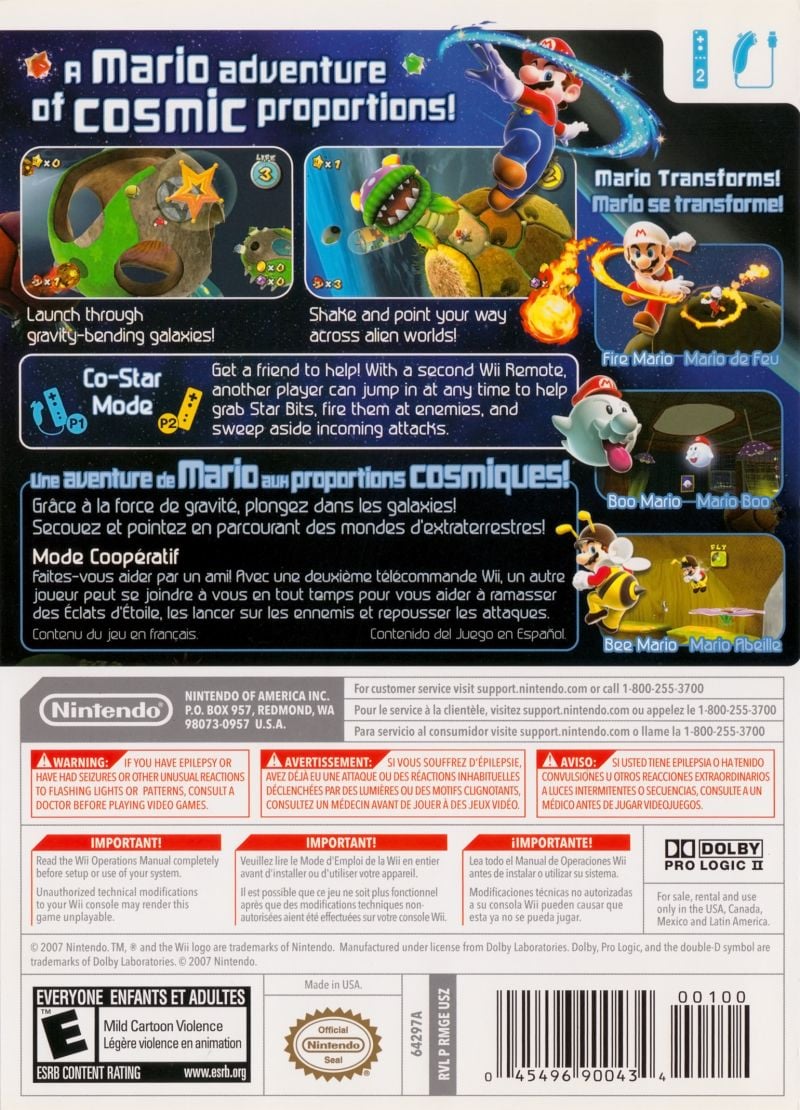
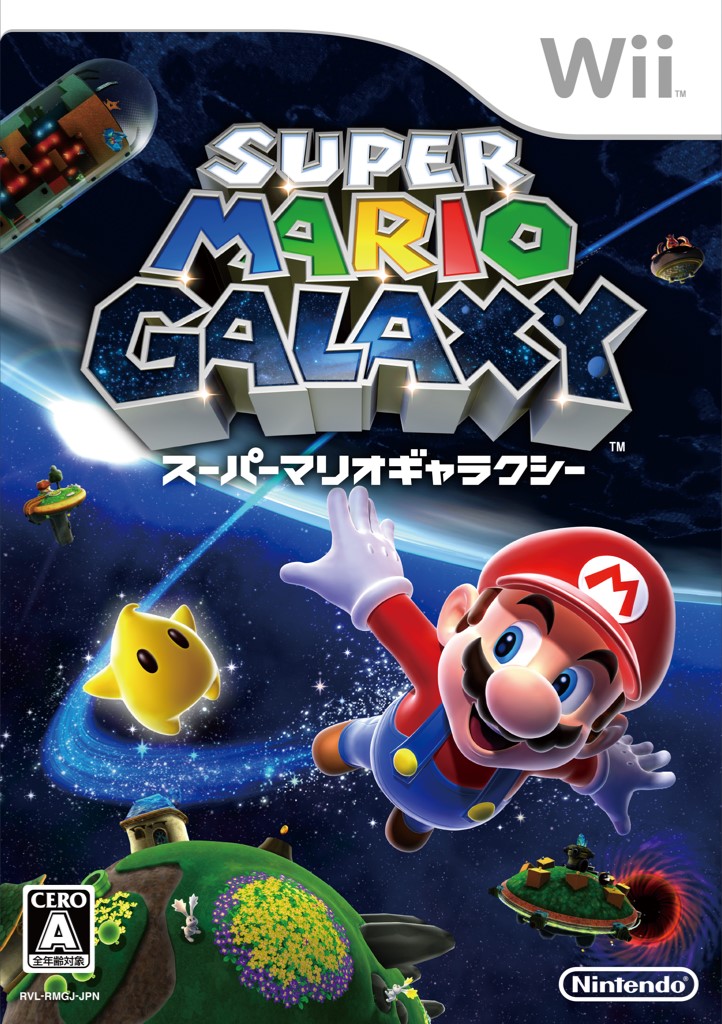
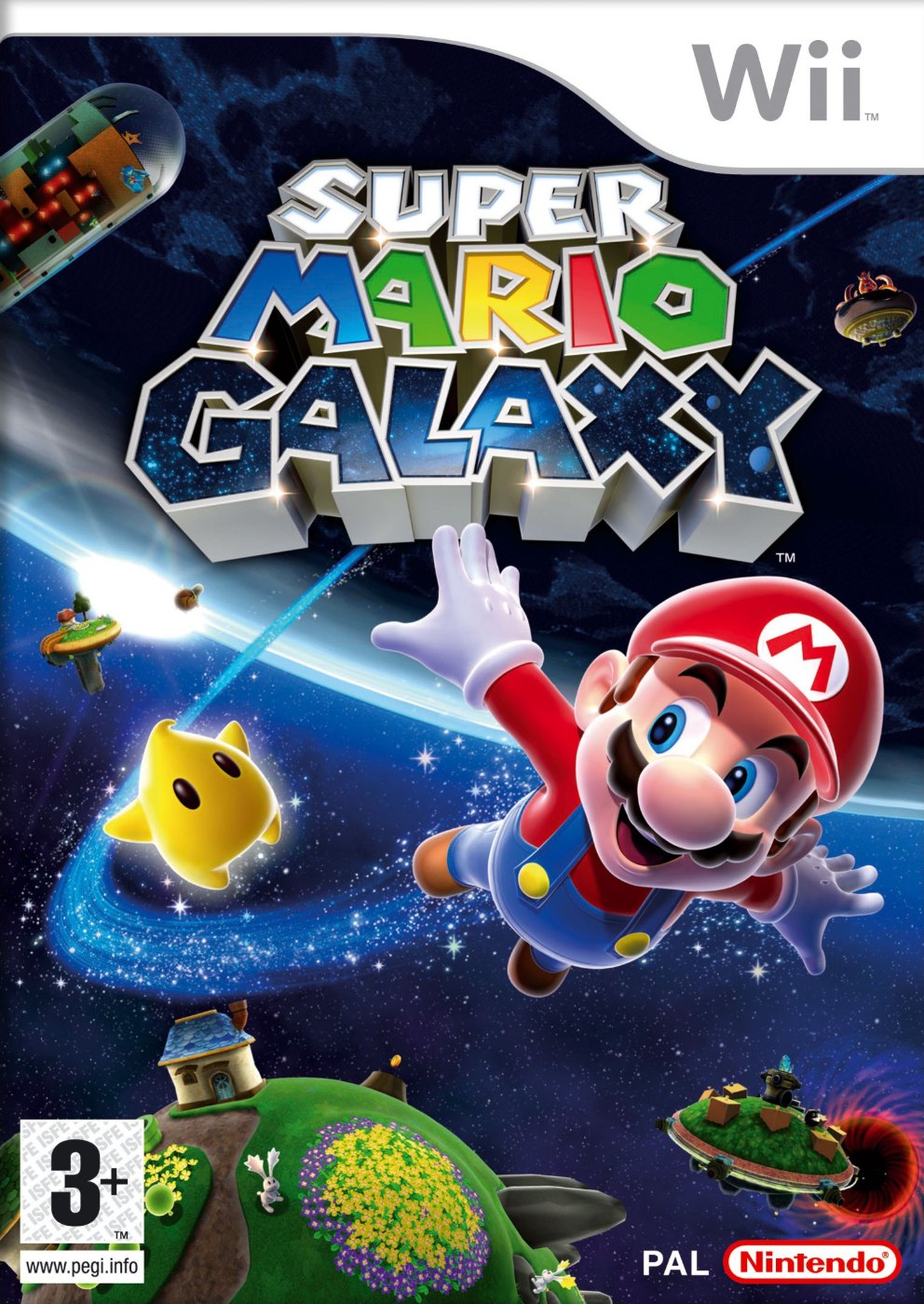
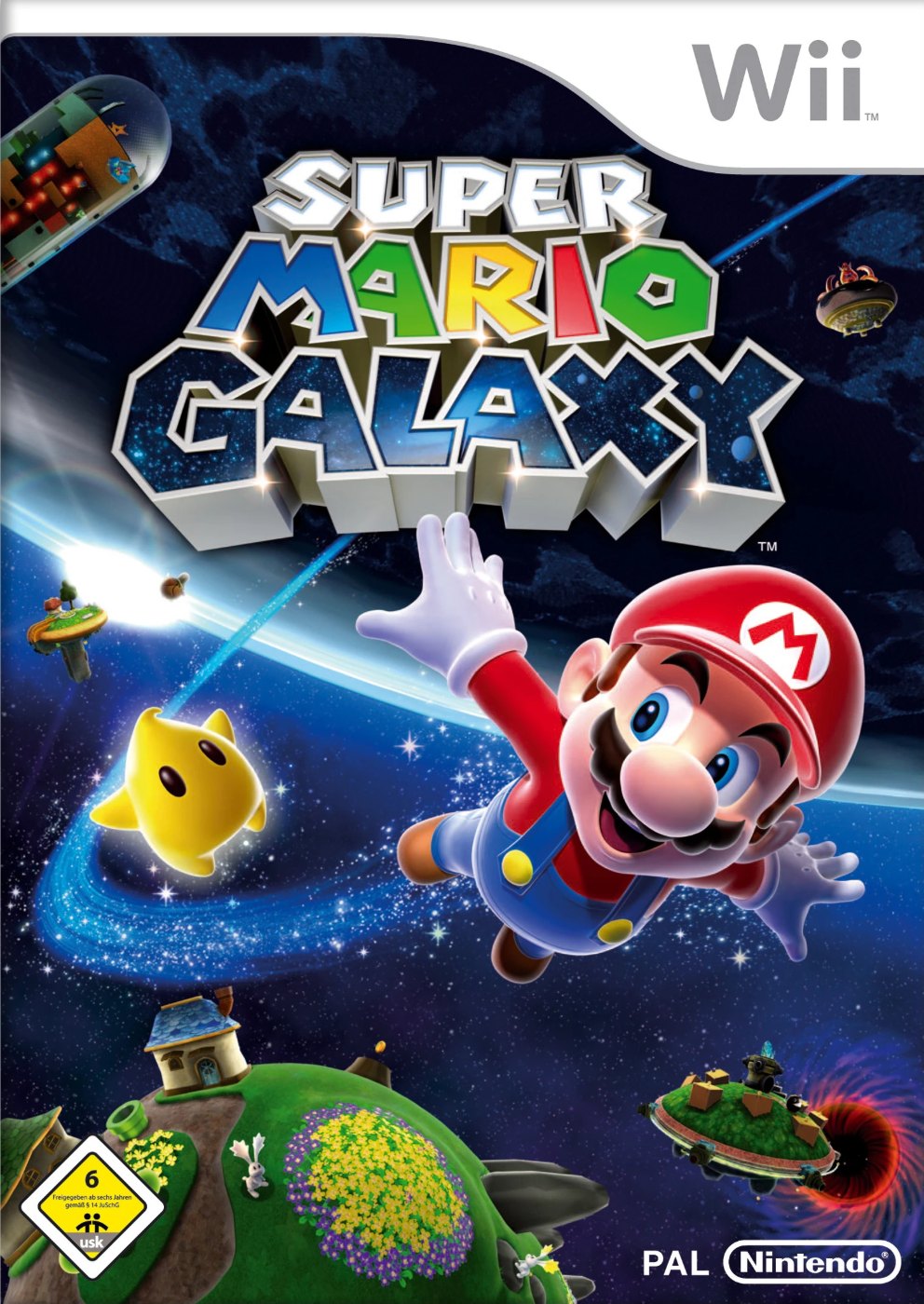
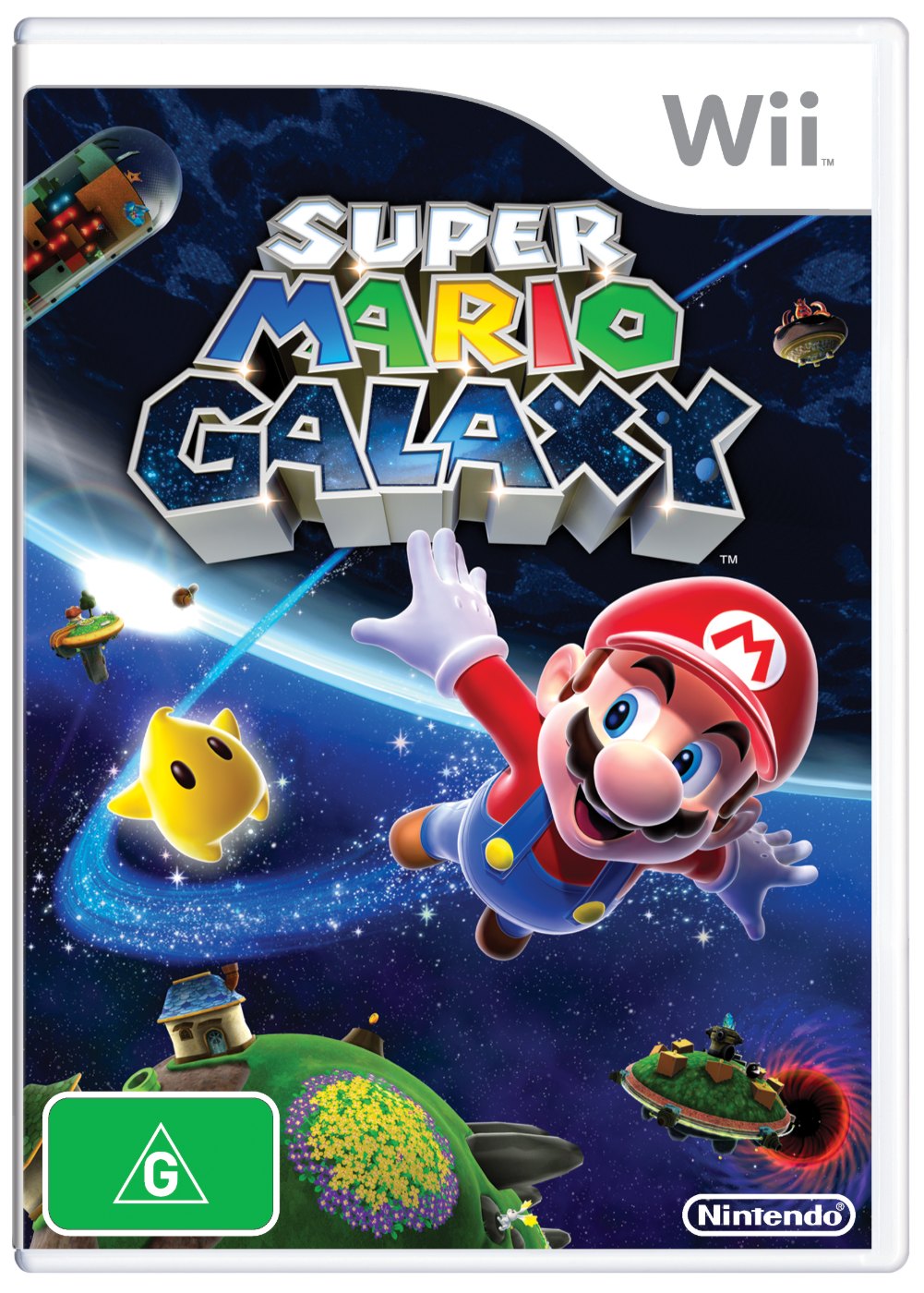
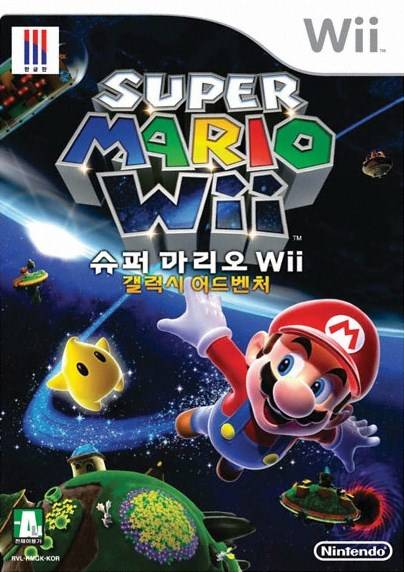
Every region used the same painting of Mario and his Luma sailing past a field of planets, with small differences in logo and rating marks. Korea’s box carries the game’s local title, Super Mario Wii: Galaxy Adventure. An early North American mock-up still shows “Rating Pending”.
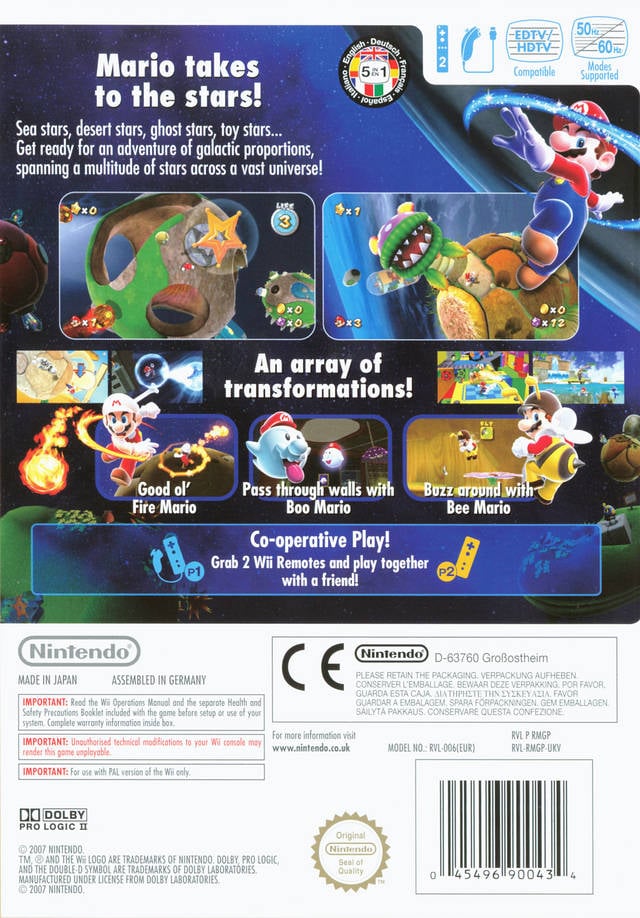
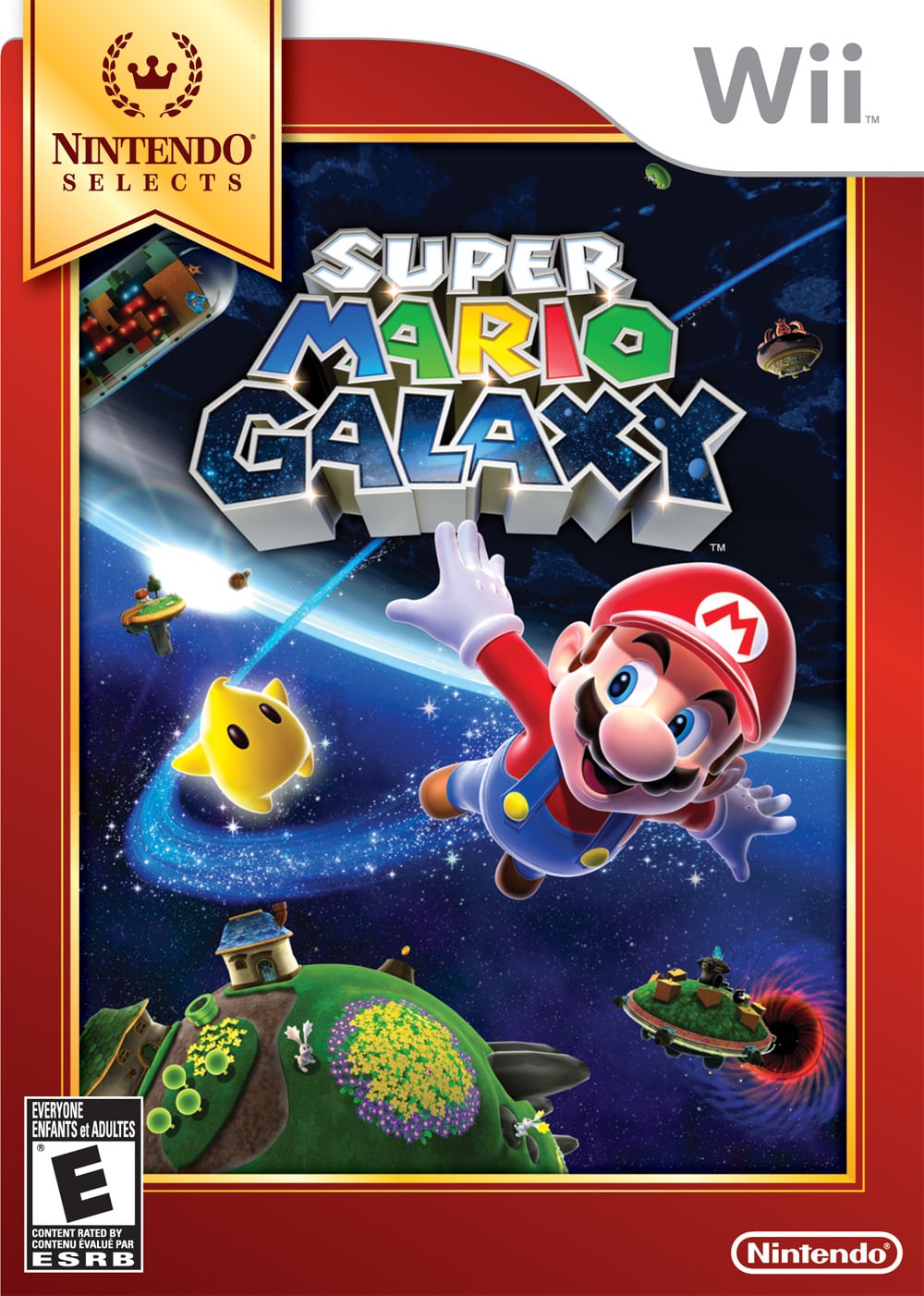
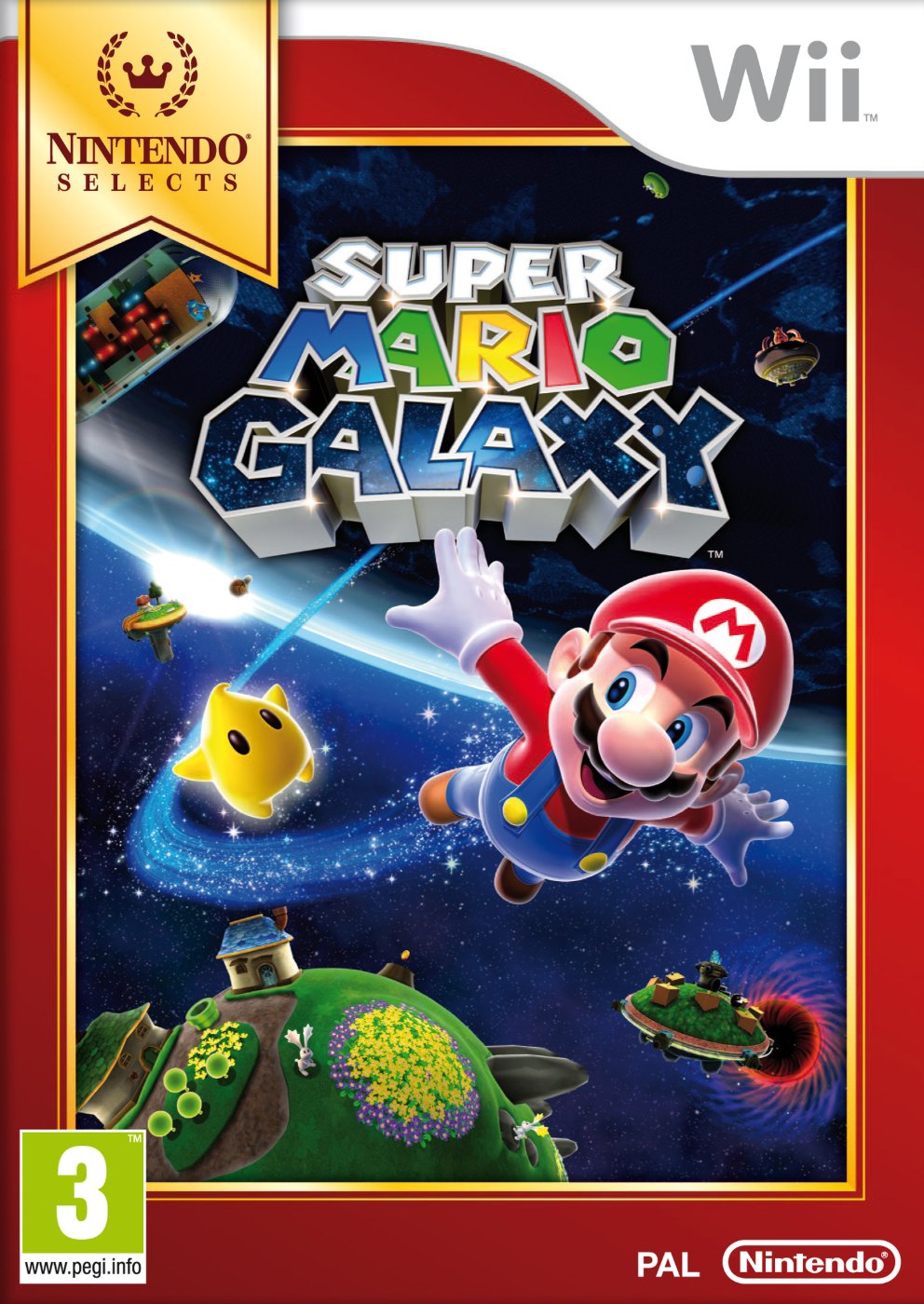
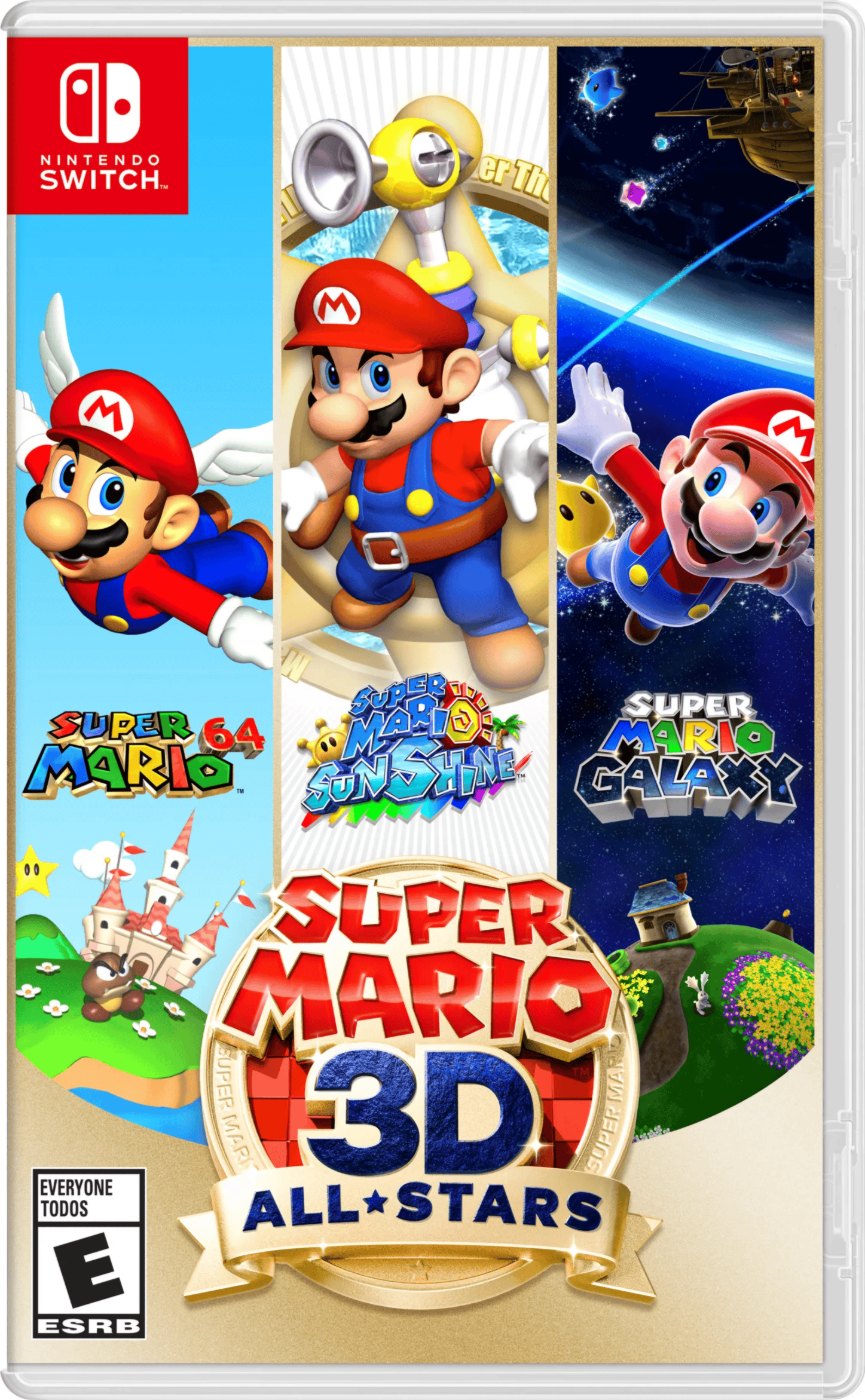
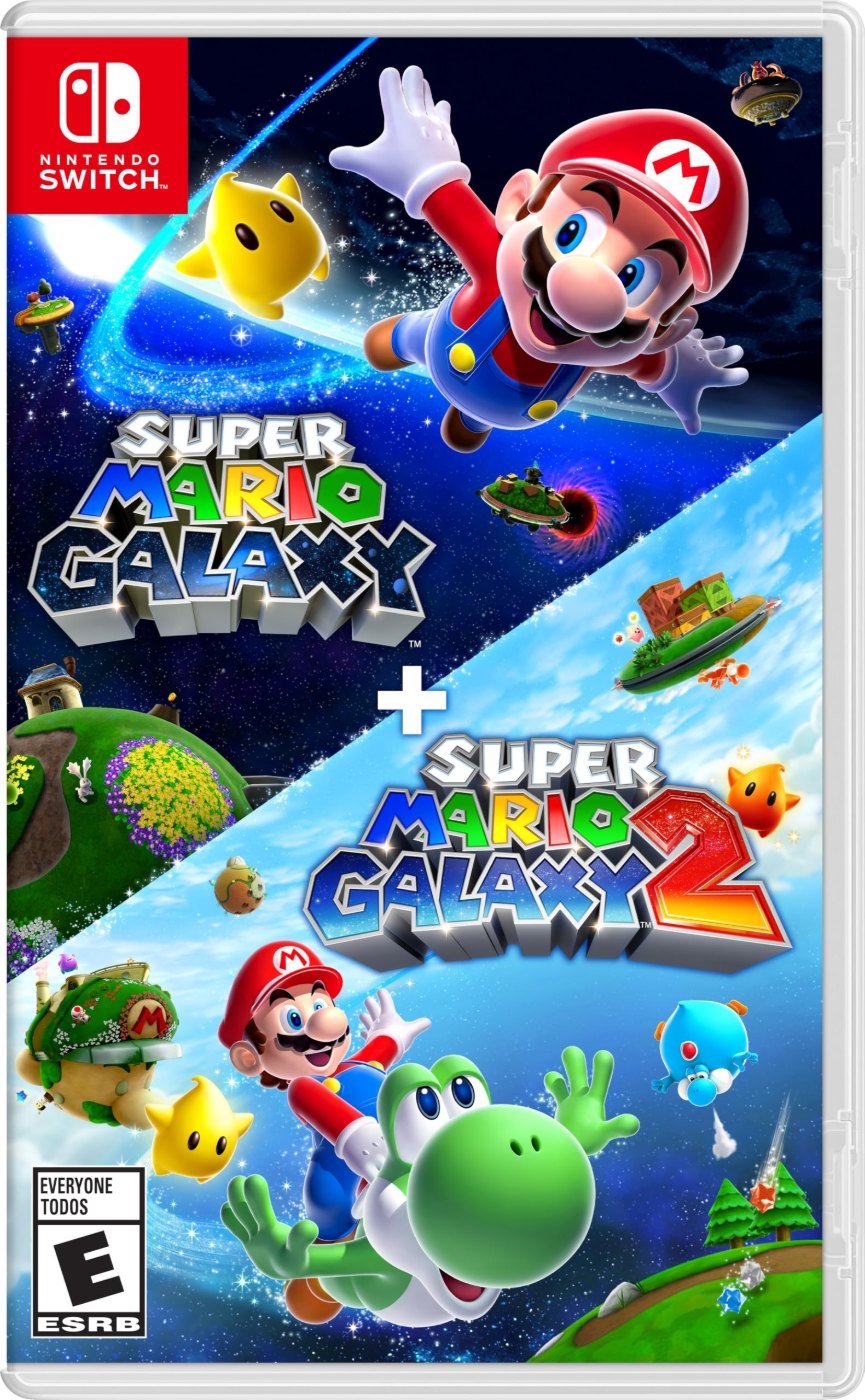
North America12 November 2007.North America (back)The reverse of the US case.North America (early design)A pre-release cover, before the ESRB rating was assigned.Japan1 November 2007.Europe16 November 2007.Europe (back)The PAL reverse.GermanyWith the USK 6 mark.Australia29 November 2007.South KoreaSold as Super Mario Wii: Galaxy Adventure, 4 September 2008.North America (Nintendo Selects)The 2011 budget reissue.Europe (Nintendo Selects)September 2011.Nintendo Switch (Super Mario 3D All-Stars)The 2020 collection with Super Mario 64 and Sunshine.Nintendo Switch (Super Mario Galaxy + Super Mario Galaxy 2)The 2 October 2025 bundle.
Screenshots
More from around the cosmos, including one from before the game was finished.
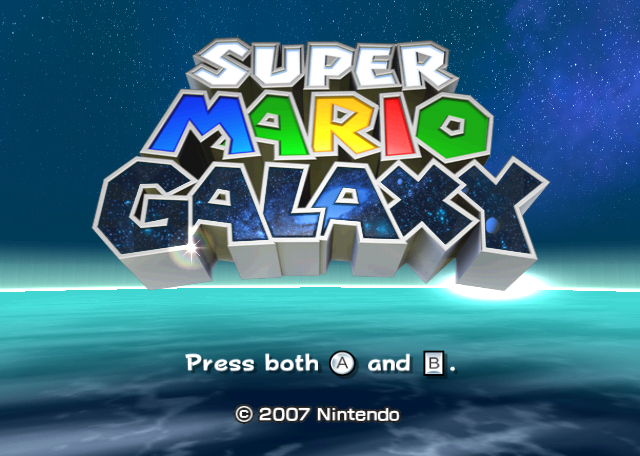
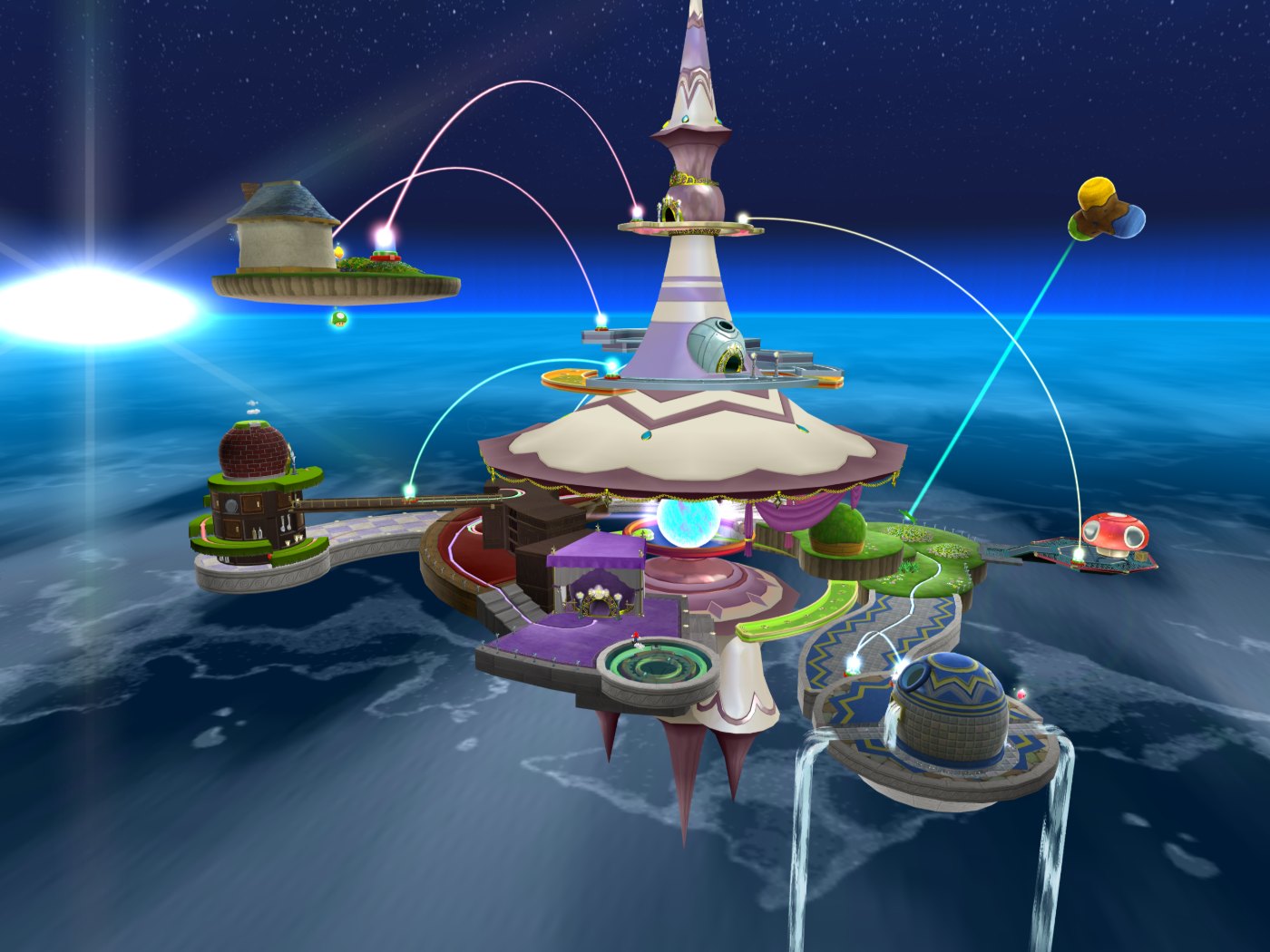
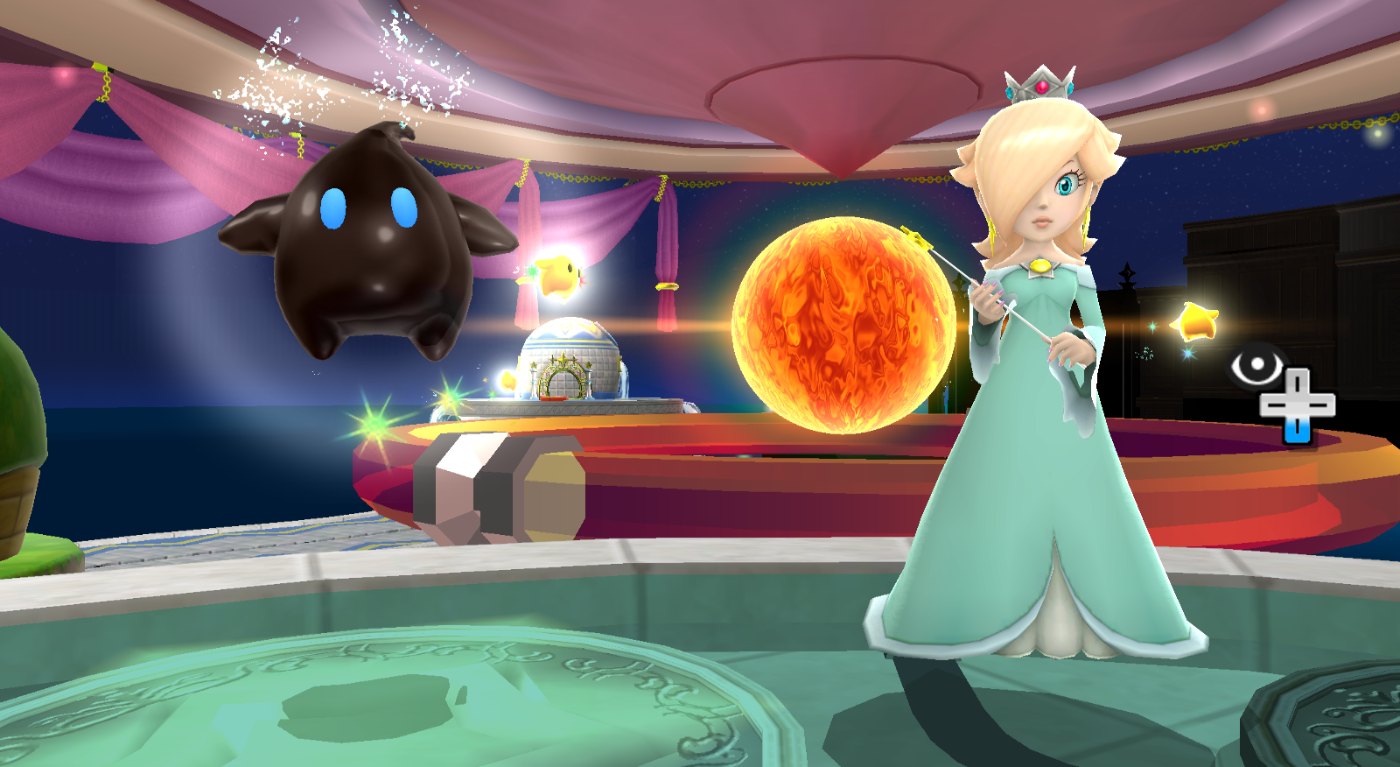
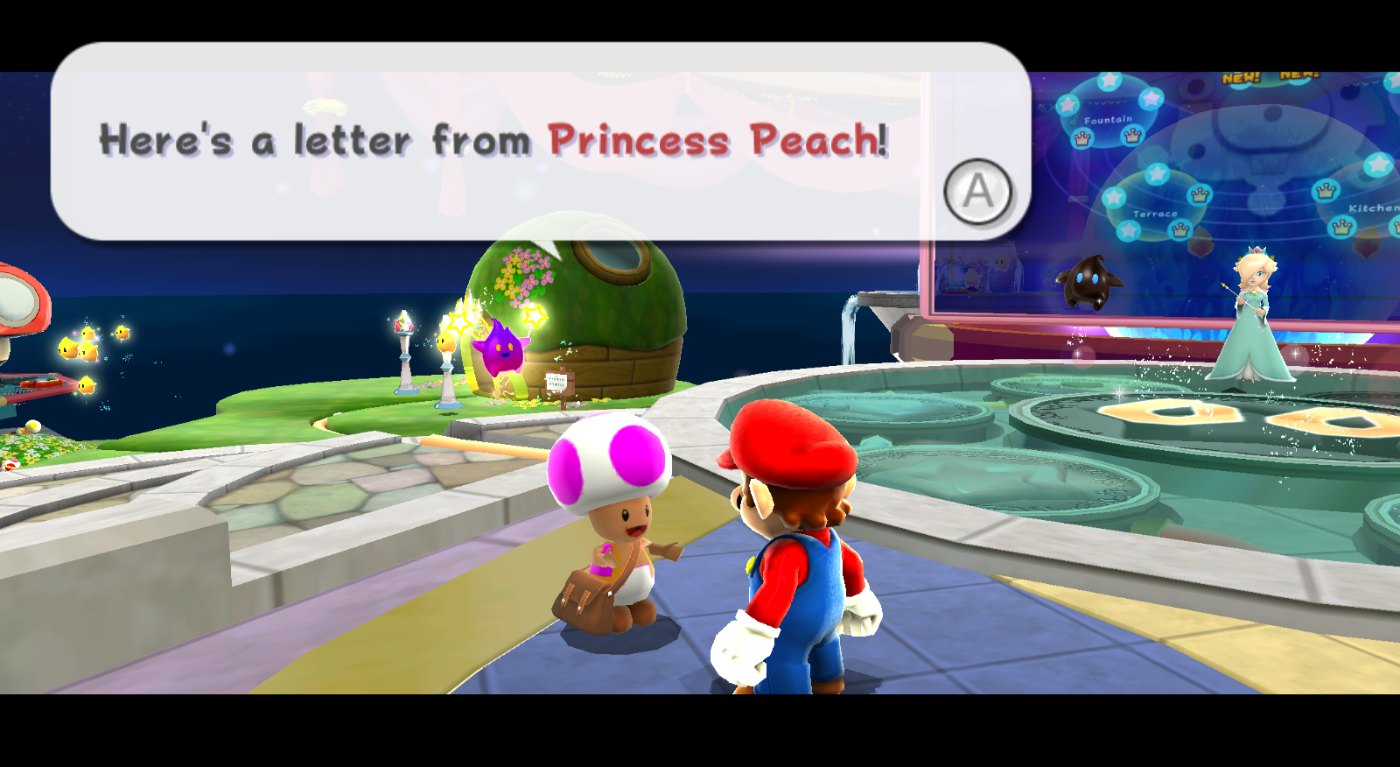
The title screen.Looking down on the Comet Observatory from the Bedroom.Rosalina and Polari.Mailtoad has post for Mario.Star Chips and penguins in Beach Bowl Galaxy.The Cyclone Stone, later rebuilt for Galaxy 2.Major Burrows loses his temper.Bonefins pour out of a vent in Kingfin’s lair.Flying Mario over Gateway Galaxy.Forty winks in the Garden dome.Peach wakes in the castle gardens after the universe is remade.A pre-release Honeyhive Galaxy.
Artwork & Media Gallery
Official artwork, concept paintings, logos and merchandise from Super Mario Galaxy. Select any image to view it larger. Super Luigi Bros also has galleries of rendered artwork, screenshots and box art.
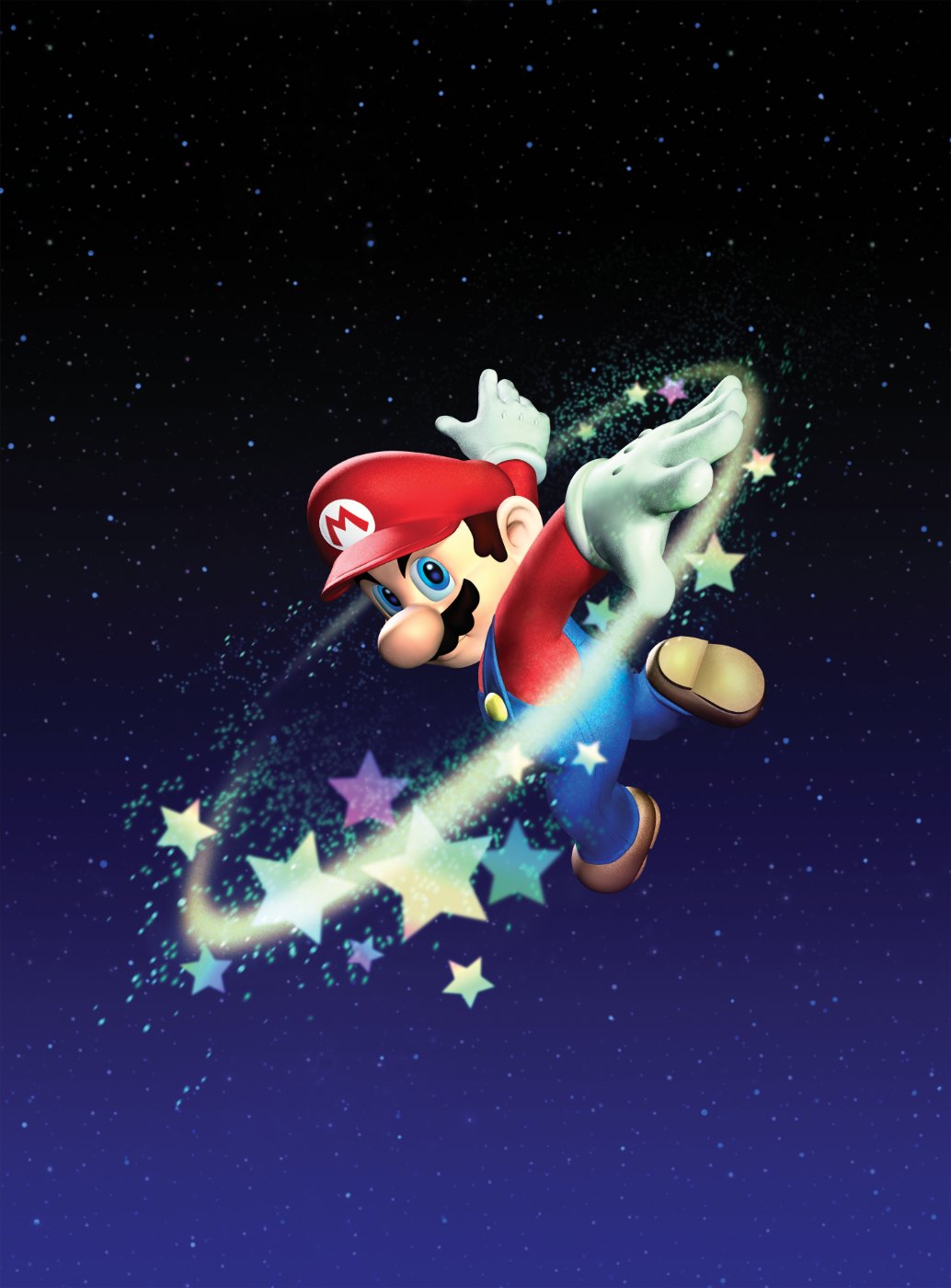
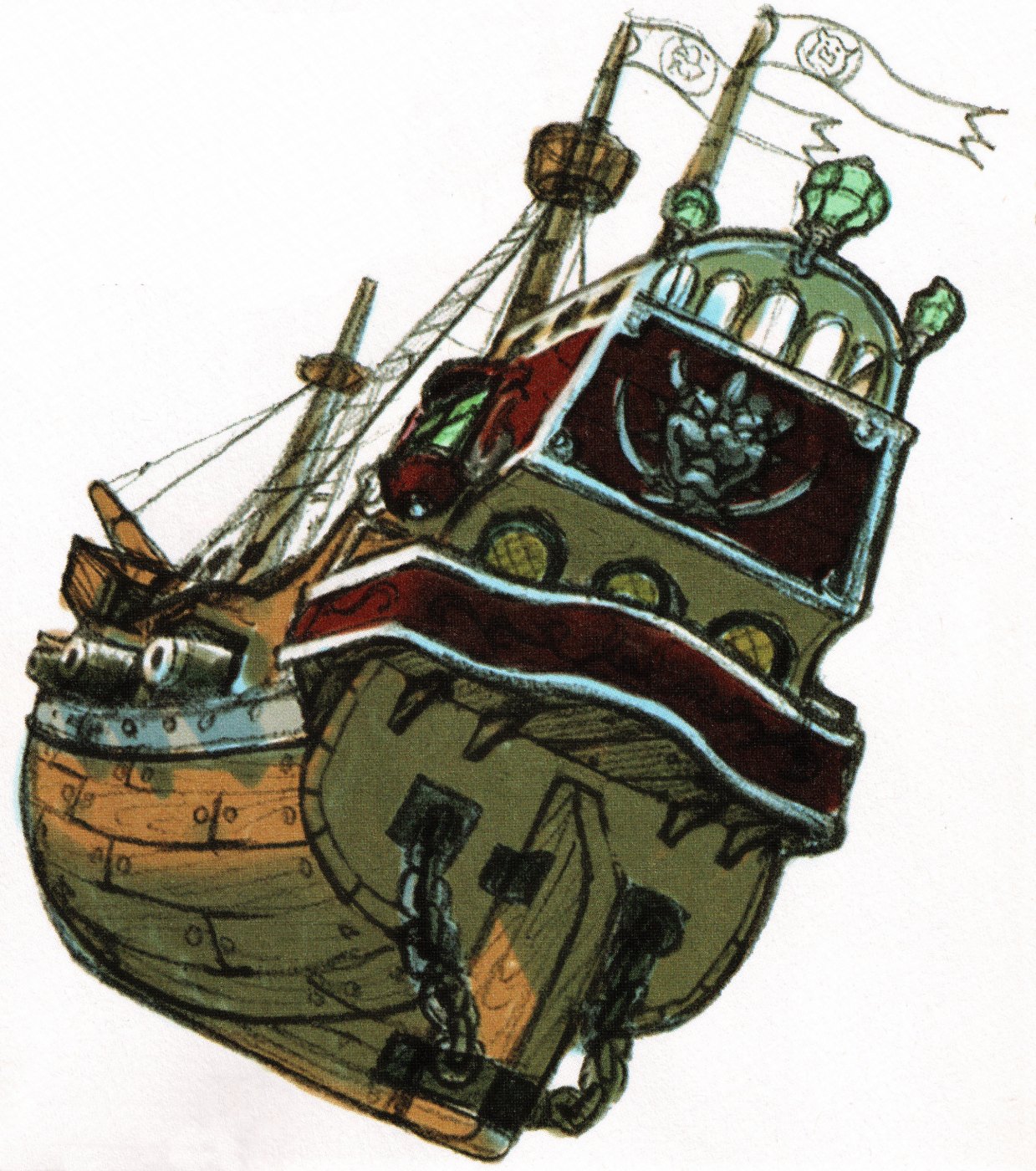
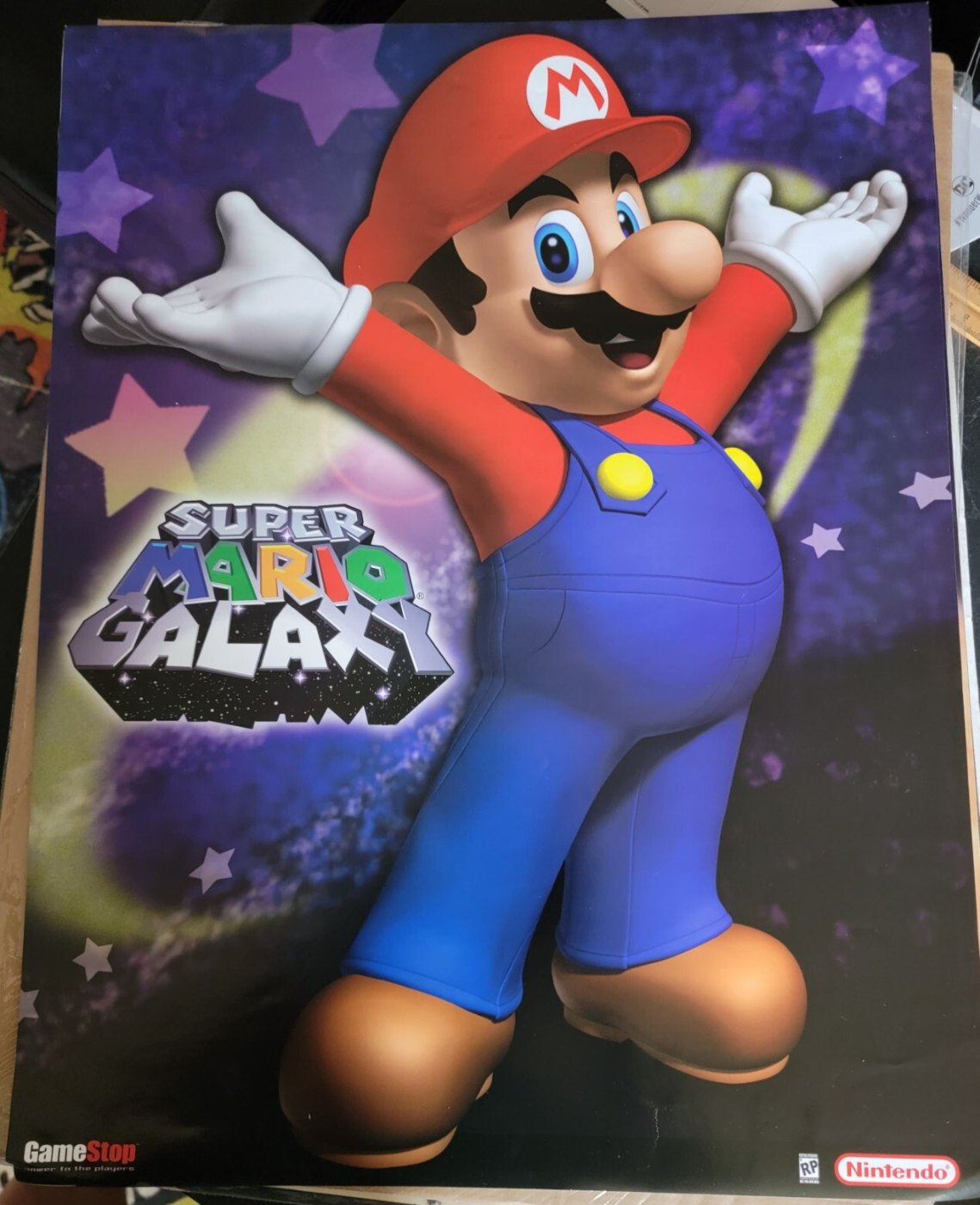
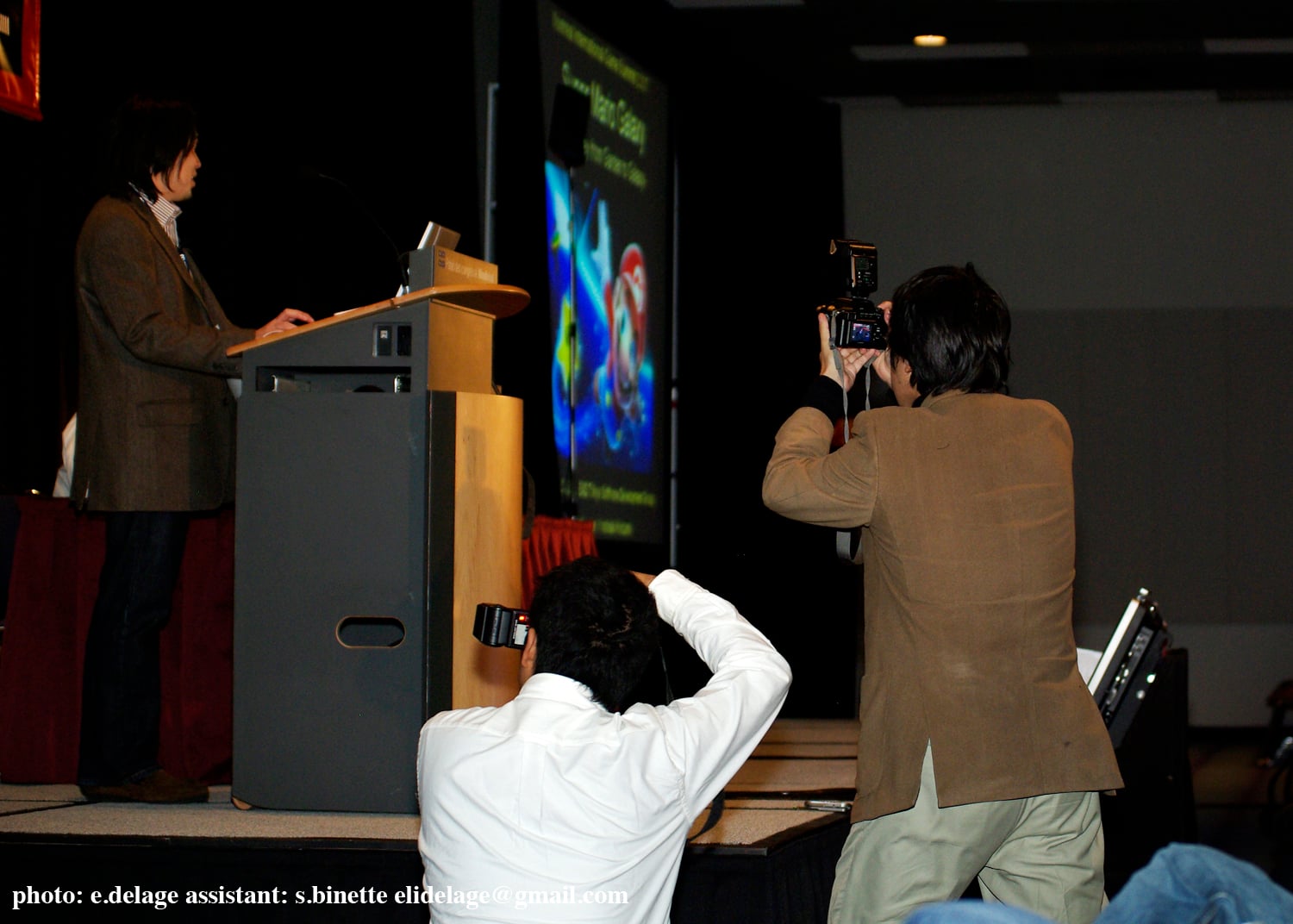
The international logo.The Japanese logo.The preliminary logo from E3 2006.Key art: Mario adrift among the stars.Key art of the bosses.The first press artwork, from E3 2006.Bee Mario.Boo Mario.Ice Mario.Fire Mario.Spring Mario.Rainbow Mario.Flying Mario.Surfing on Ray.A yellow Luma.Lumalee, the shopkeeper.Penguru.Honeybees.Rosalina’s final concept design.Concept art of the Toad Brigade and their Starshroom.Concept art of Bowser’s ship.Concept art for Gusty Garden Galaxy.Concept art of Tarantox.The cover of Rosalina’s storybook, as seen in the library.Mario’s souvenir photo from Grand Finale Galaxy.A GameStop pre-release poster with the E3 2006 logo.Yoshiaki Koizumi presenting the game at the Montreal International Games Summit, 2007.San-ei’s plush set.
Legacy & Re-releases
Super Mario Galaxy has never really been away. It stayed in print on Wii for years, moved to the Wii U eShop, turned up unexpectedly on a Chinese set-top box, and has now been remastered twice for Nintendo Switch.
Releases and re-releases
WiiNovember 2007Japan 1 November, North America 12 November, Europe 16 November and Australia 29 November 2007. Taiwan and Hong Kong followed on 12 July 2008 and South Korea on 4 September 2008.
Nintendo Selects2011–2013Budget reissues in North America (28 August 2011), Europe (16 September 2011) and Australia and New Zealand (7 November 2013).
Wii U eShop2015–2016A download of the Wii original: Japan 31 May 2015, North America 24 December 2015, Europe 4 February 2016, Australia 5 February 2016. It still needed a Wii Remote and Nunchuk, and was on sale until the eShop closed on 27 March 2023.
Nvidia Shield TV22 March 2018China only. An emulated 1080p version with controls remapped to a standard pad and a Simplified Chinese localisation; removed from sale in late 2021.
Super Mario 3D All-Stars18 September 2020Nintendo Switch collection with Super Mario 64 and Super Mario Sunshine for Mario’s 35th anniversary. Galaxy runs at 1080p, spins on the Y button, uses motion to aim the pointer (or the touch screen in handheld mode) and keeps Co-Star Mode. Sold only until 31 March 2021.
Super Mario Galaxy (Nintendo Switch)2 October 2025Announced in the 12 September 2025 Nintendo Direct for the 40th anniversary, and sold on its own on the eShop or with its sequel as Super Mario Galaxy + Super Mario Galaxy 2. Sharper textures, a re-rendered opening, Assist Mode, amiibo support, a soundtrack player, a tenth storybook chapter and a free update for 4K and, for the Co-Star player, Joy-Con 2 mouse controls on Nintendo Switch 2.
Rosalina’s StorybookOctober–November 2025The hardcover book: Japan 2 October 2025, US and UK 25 November 2025.
The Super Mario Galaxy MovieApril 2026Illumination’s second Mario film opened on 1 April 2026 in the US and UK, with Mario and Rosalina amiibo released alongside it.
What it changed
Miyamoto has called Galaxy the true follow-up to Super Mario 64, but what it actually did was send 3D Mario in a new direction. Its levels are courses with a start and a finish, and that way of building them ran straight through Super Mario Galaxy 2, Super Mario 3D Land and Super Mario 3D World, all directed by Galaxy’s level design chief Koichi Hayashida. Only with Super Mario Odyssey in 2017 did the series return to open sandboxes, and even that game has a Moon Kingdom with low gravity, Multi Moons that work like Grand Stars and a photo mode its director credits to Galaxy.
Its characters travelled further still. Rosalina has been in nearly every Mario spin-off since Mario Kart Wii, is playable in 3D World and fights alongside a Luma in Super Smash Bros.; the Toad Brigade’s captain got his own game; Lumas, Star Bits and Launch Stars turn up whenever a Mario game goes anywhere near space. Further afield, Gravity Ghost, Solar Ash and Mario + Rabbids Sparks of Hope are among the games cited as taking inspiration from it.
Its standing today
Nearly twenty years on it is the 3D Mario people get sentimental about. Critics still write about the mood of it as much as the mechanics: the loneliness of all that dark sky, the waltz in the Observatory, a storybook about grief in a game about a plumber, and an ending in which the universe is quietly remade. The argument over whether it or its sequel is the better game has never been settled, and with both now sold together on Switch it does not have to be.
Reviews & Sales
Sales figures
It sold from the first day. Japan bought about 350,000 copies in the opening weeks, and in the United States more than half a million went in the first week, at the time the fastest start any Super Mario game had made there. In Britain it was the fifth best-selling game of its launch week on two days’ sales. NPD counted 1.4 million in the US in December 2007 alone and 2.52 million by the end of the year, enough to make it America’s fifth biggest seller of 2007 from seven weeks on the shelves.
Worldwide the total reached 7.66 million after thirteen months and went on climbing through a Nintendo Selects reissue in 2011. Nintendo’s final published figure for the Wii version is 12.80 million, which makes it the ninth best-selling game on the system and the third best among those never bundled with a console. That is well short of New Super Mario Bros. Wii or Mario Kart Wii, but comfortably ahead of Galaxy 2’s 7.41 million.
12.80mworldwide, Wii (Nintendo)
7.66min the first 13 months
2.52mUS, 2007 (NPD)
500k+US, first week
350kJapan, first weeks
97Metacritic, 73 reviews
Reception and review scores
Metacritic’s average is 97 from 73 critics, and GameRankings closed in 2019 with the game on 97.64 per cent from 78 reviews, the highest score on the site for any game with at least 20. Scores below are as listed in Wikipedia’s reception table.
EdgeUK · November 2007
10/10
EurogamerMargaret Robertson · 23 November 2007
10/10
Nintendo LifeAnthony Dickens
10/10
Nintendo World ReportUS
10/10
PlayUS magazine
10/10
GameZoneUS
9.8/10
Game InformerUS
9.75/10
IGNMatt Casamassina · 8 November 2007
9.7/10
Official Nintendo MagazineUK · Chris Scullion · December 2007
97%
DestructoidAaron Linde · 12 November 2007
9.6/10
GameSpotAlex Navarro
9.5/10
Computer and Video GamesUK
9.5/10
FamitsuJapan · October 2007
38/40
VideoGamer.comTom Orry
9/10
Reviewers kept reaching for the same comparison: this was the true heir to Super Mario 64 that Sunshine had not quite been. Eurogamer’s Margaret Robertson wrote of simply following the fun from one glimmer to the next while levels assembled and fell away under Mario’s feet. Edge thought the pointer let you play in two ways at once without ever feeling clumsy, and called the camera flawless. IGN’s Matt Casamassina predicted it would still be talked about as a classic in ten years, which it was. Destructoid’s Aaron Linde called it one of the most beautiful games he had seen in years, Official Nintendo Magazine called it the game of the decade, and in Famitsu one reviewer noted that it was fun just to watch somebody else play.
The complaints were small and fairly consistent. The automatic camera could struggle in the few places that wanted manual control, Honeyhive Galaxy especially. Several critics missed proper voice acting in the cutscenes; a few found the long opening and the storybook an awkward fit, and Casamassina thought the story darker than a Mario game needed. VideoGamer’s Tom Orry wanted more of a character-driven plot. The one widely read dissent came from Tim Rogers at Action Button, who argued that the game explained too much and asked too little.
Its reputation has only grown. IGN named it the best game on Wii in 2009, Official Nintendo Magazine placed it third among the hundred best Nintendo games the same year, Nintendo Power’s final issue in December 2012 ranked it the third greatest game it had ever covered, and both Eurogamer and IGN chose it as their game of the generation.
Honours
British Academy Games Awards · 10 March 2009Best GameWinner, ahead of Call of Duty 4; also nominated for Gameplay and Use of Audio.
2007Game of the YearFrom IGN, GameSpot, Kotaku, Yahoo! Games, GameTrailers, Nintendo Power and Edge, which also gave it Best Audio Design.
Interactive Achievement Awards · February 2008Adventure Game of the YearWinner at the 11th D.I.C.E. awards, with nominations for Overall Game of the Year, Console Game of the Year, Innovation, Game Design and Game Play Engineering.
Spike Video Game Awards · December 2007Best Action Game and Best Wii GameTwo wins on the night.
Famitsu Awards 2007Game of the YearShared with Monster Hunter Freedom 2.
Japan Game Awards · October 2008Award for ExcellenceIn the Games of the Year division.
NAVGTR Awards · March 2008Control DesignPlus Game Sequel, Children’s; nominated for Game of the Year.
NominationsGDC Awards, Golden Joysticks, Kids’ ChoiceGame of the Year and Game Design at the 2008 Game Developers Choice Awards; three categories at the 2008 Golden Joystick Awards; Favorite Video Game at the 2012 Kids’ Choice Awards.
SLB User Reviews
Super Luigi Bros readers have reviewed Super Mario Galaxy over the years. Their write-ups are kept exactly as they were sent in:
Played it? If you’d like to add your own review, please get in touch.
More from the Super Luigi Bros Guide
These picture lists come from the earlier Super Luigi Bros guide to Super Mario Galaxy and are kept here in full.
The Comet Observatory
The Comet Observatory is Mario’s hub world — a beautiful, star-shaped space station that serves as home to Rosalina and the Lumas. As Mario collects Grand Stars, he restores power to the Observatory’s six domes, each of which opens access to a new set of galaxies. The Observatory itself is explorable, with different areas unlocking throughout the game:
The Terrace
First dome — opened from the start. Home to Good Egg Galaxy, Honeyhive Galaxy and other early galaxies. Bright, welcoming and earthlike.
The Fountain
Second dome — the water and ice galaxies. Space Junk, Battlerock, Rolling Green and more. Opens after collecting 1 Grand Star.
The Bedroom
Third dome — eerie ghost and nighttime galaxies. Ghostly Galaxy, Boo’s Boneyard, Gusty Garden and more.
The Engine Room
Fourth dome — mechanical and fiery galaxies. Buoy Base, Bowser Jr.‘s Airship Armada, Freezeflame Galaxy.
To provide the best experiences, we use technologies like cookies to store and/or access device information. Consenting to these technologies will allow us to process data such as browsing behavior or unique IDs on this site. Not consenting or withdrawing consent, may adversely affect certain features and functions.
Functional
Always active
The technical storage or access is strictly necessary for the legitimate purpose of enabling the use of a specific service explicitly requested by the subscriber or user, or for the sole purpose of carrying out the transmission of a communication over an electronic communications network.
Preferences
The technical storage or access is necessary for the legitimate purpose of storing preferences that are not requested by the subscriber or user.
Statistics
The technical storage or access that is used exclusively for statistical purposes.The technical storage or access that is used exclusively for anonymous statistical purposes. Without a subpoena, voluntary compliance on the part of your Internet Service Provider, or additional records from a third party, information stored or retrieved for this purpose alone cannot usually be used to identify you.
Marketing
The technical storage or access is required to create user profiles to send advertising, or to track the user on a website or across several websites for similar marketing purposes.

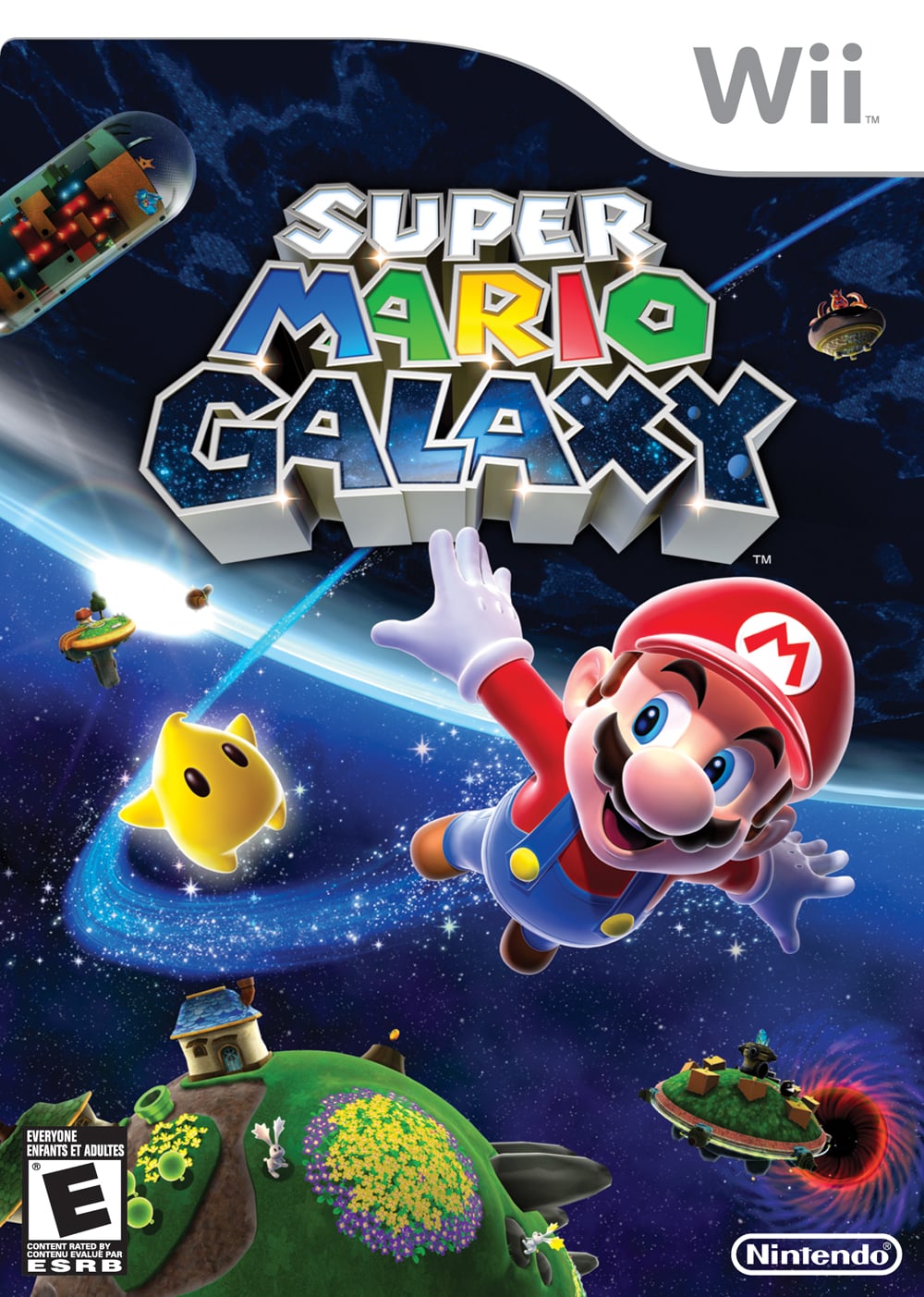
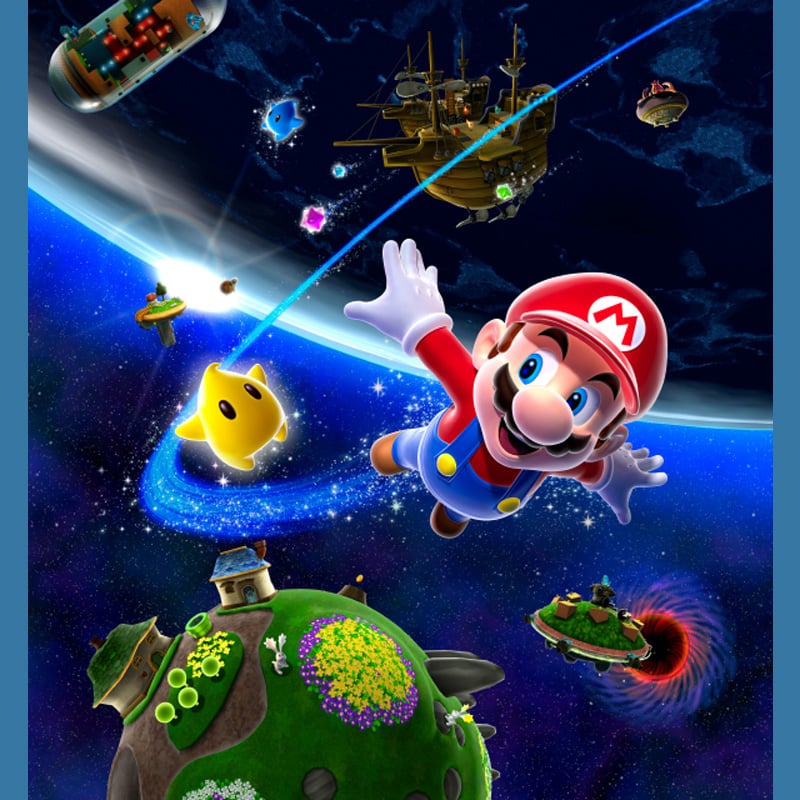
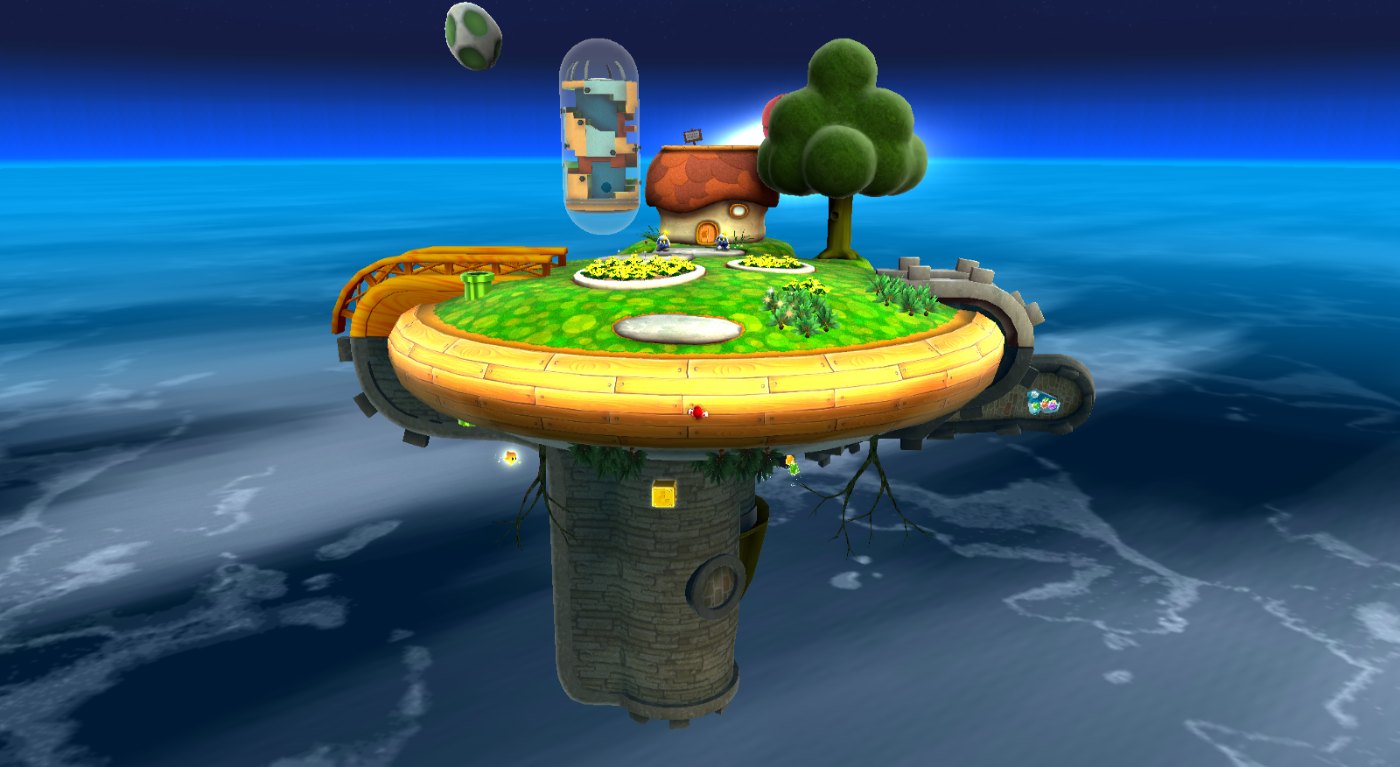
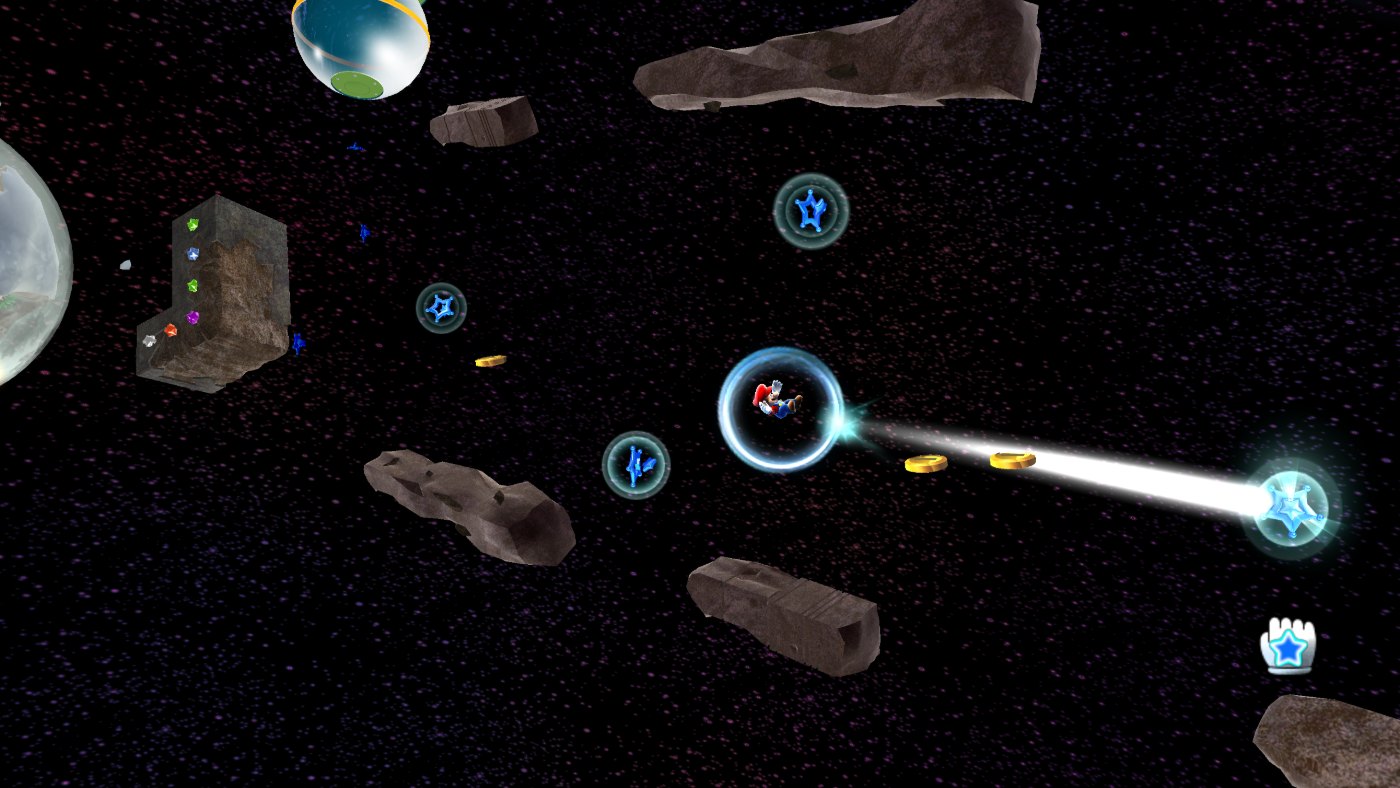
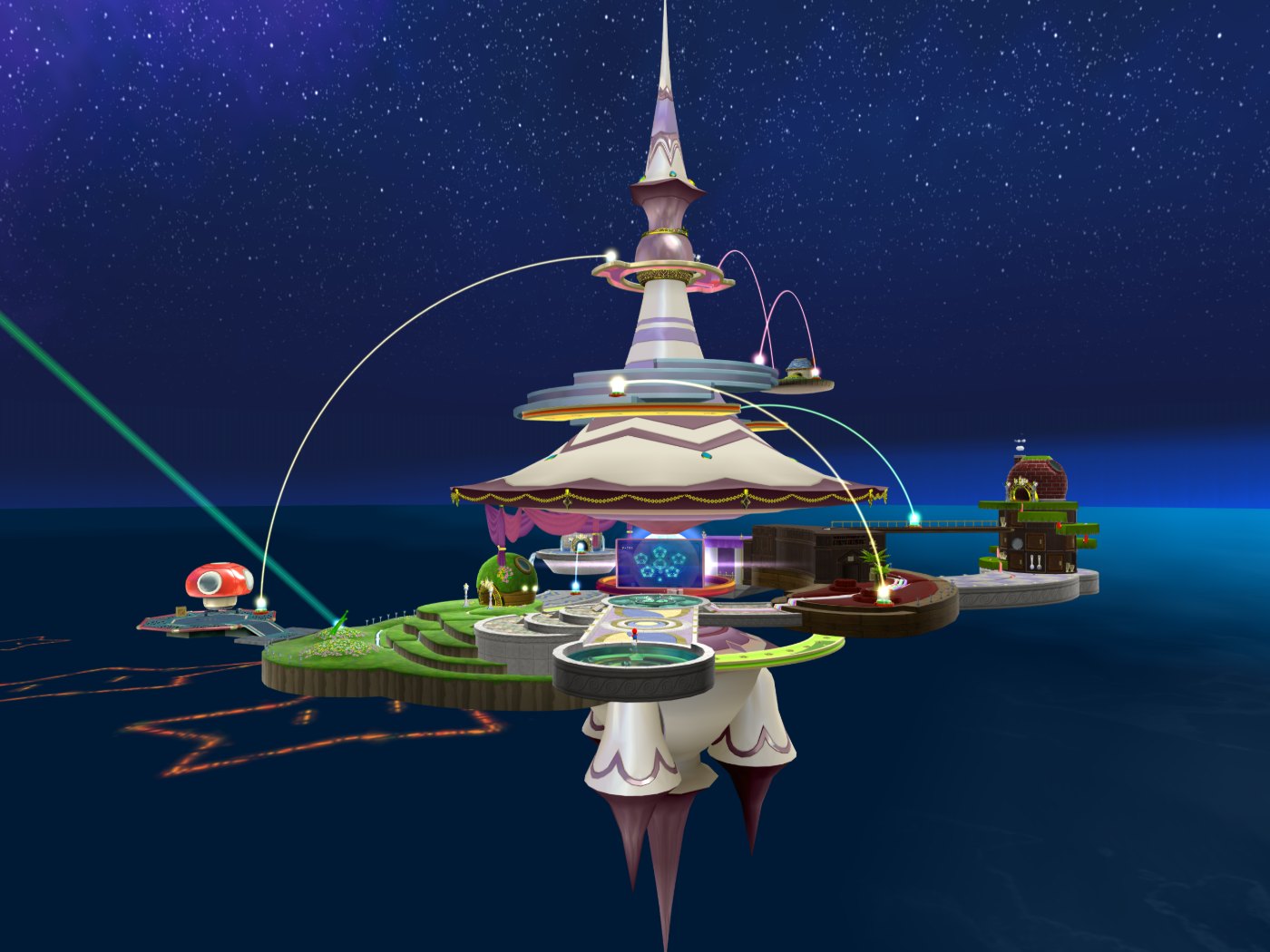
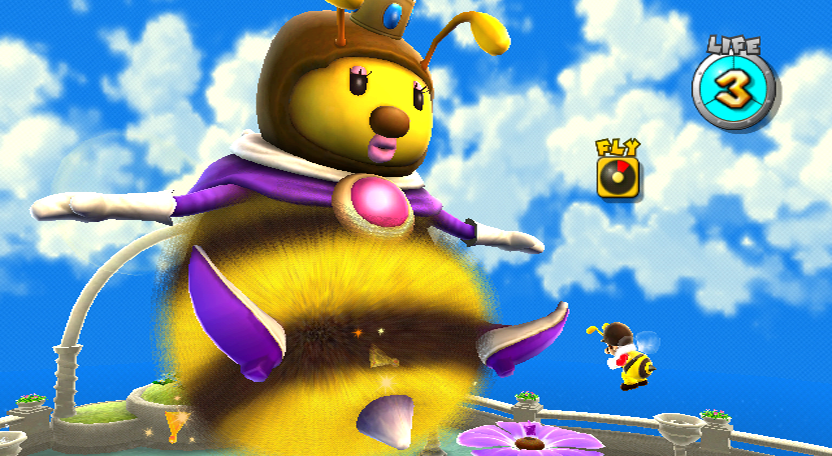
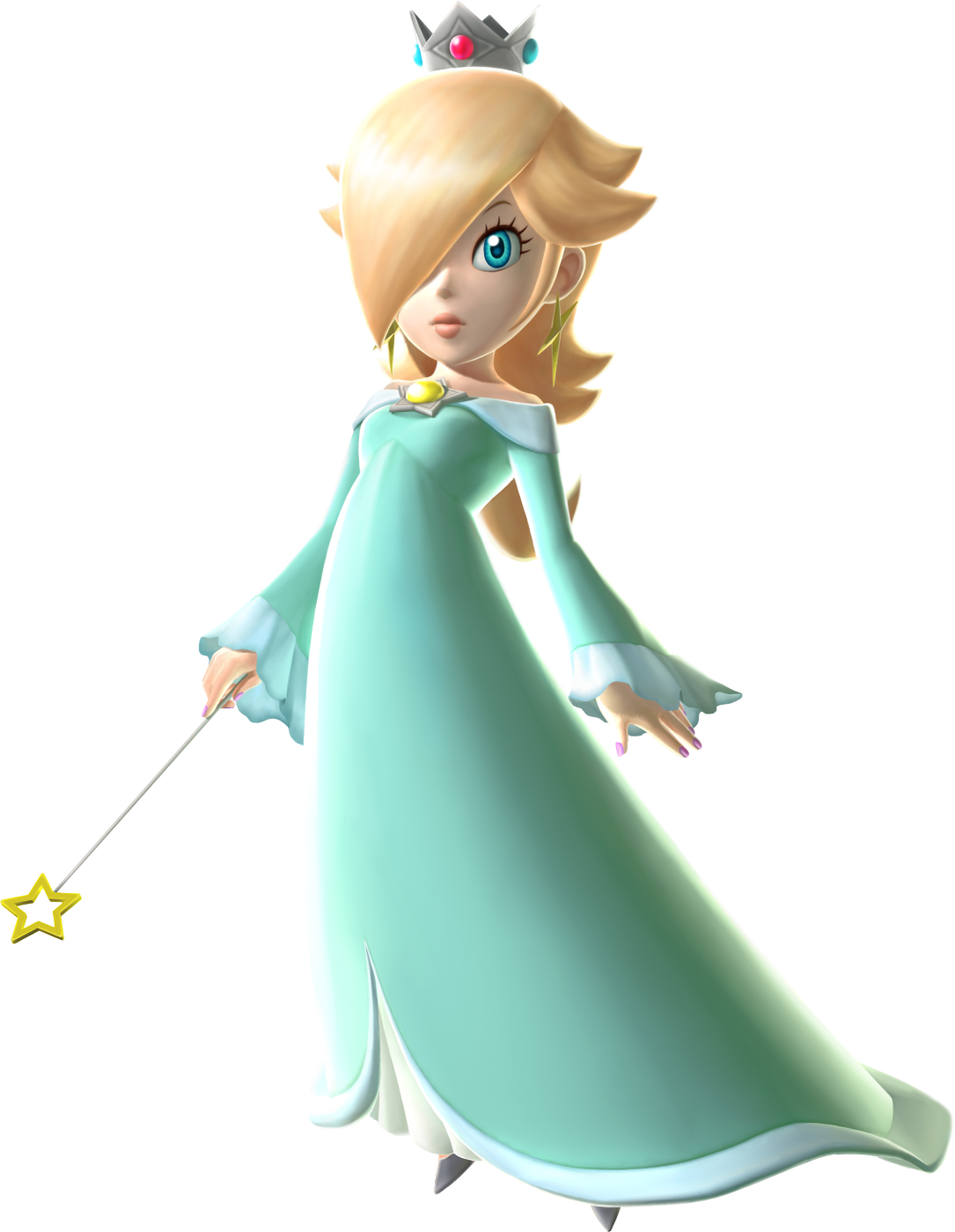
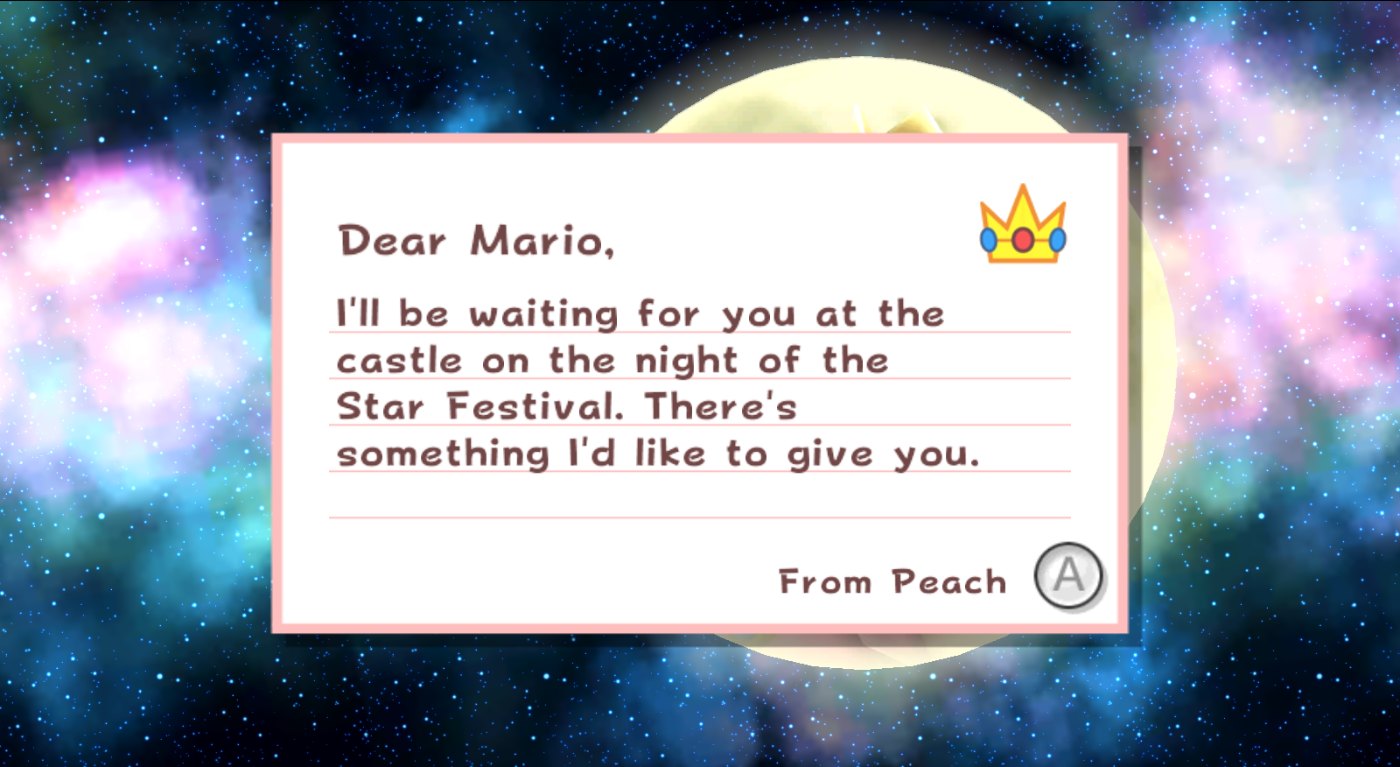
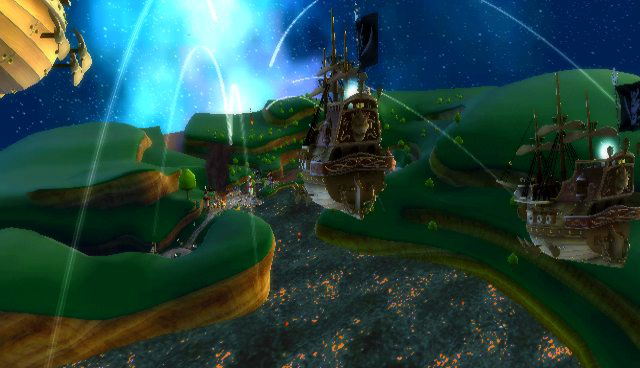
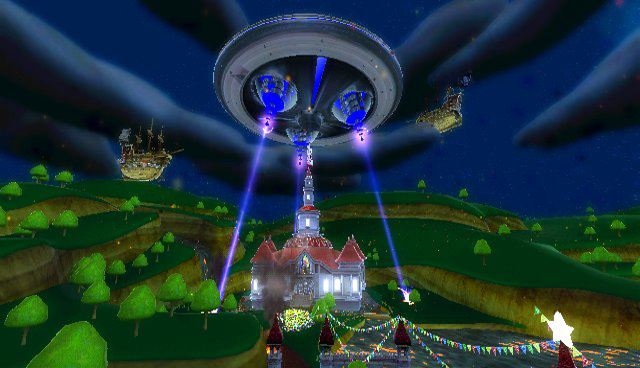
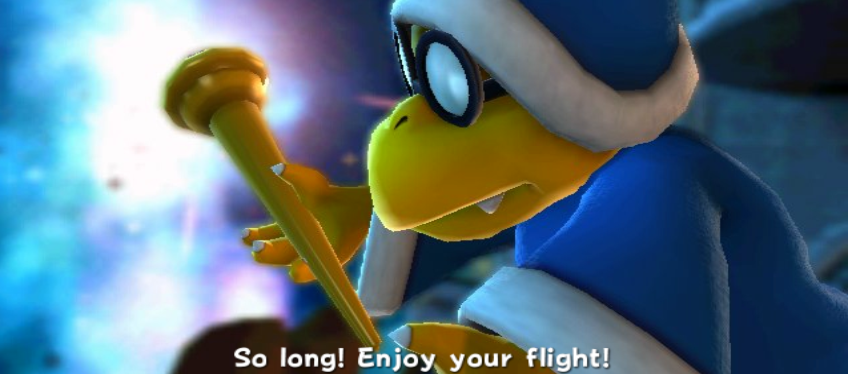
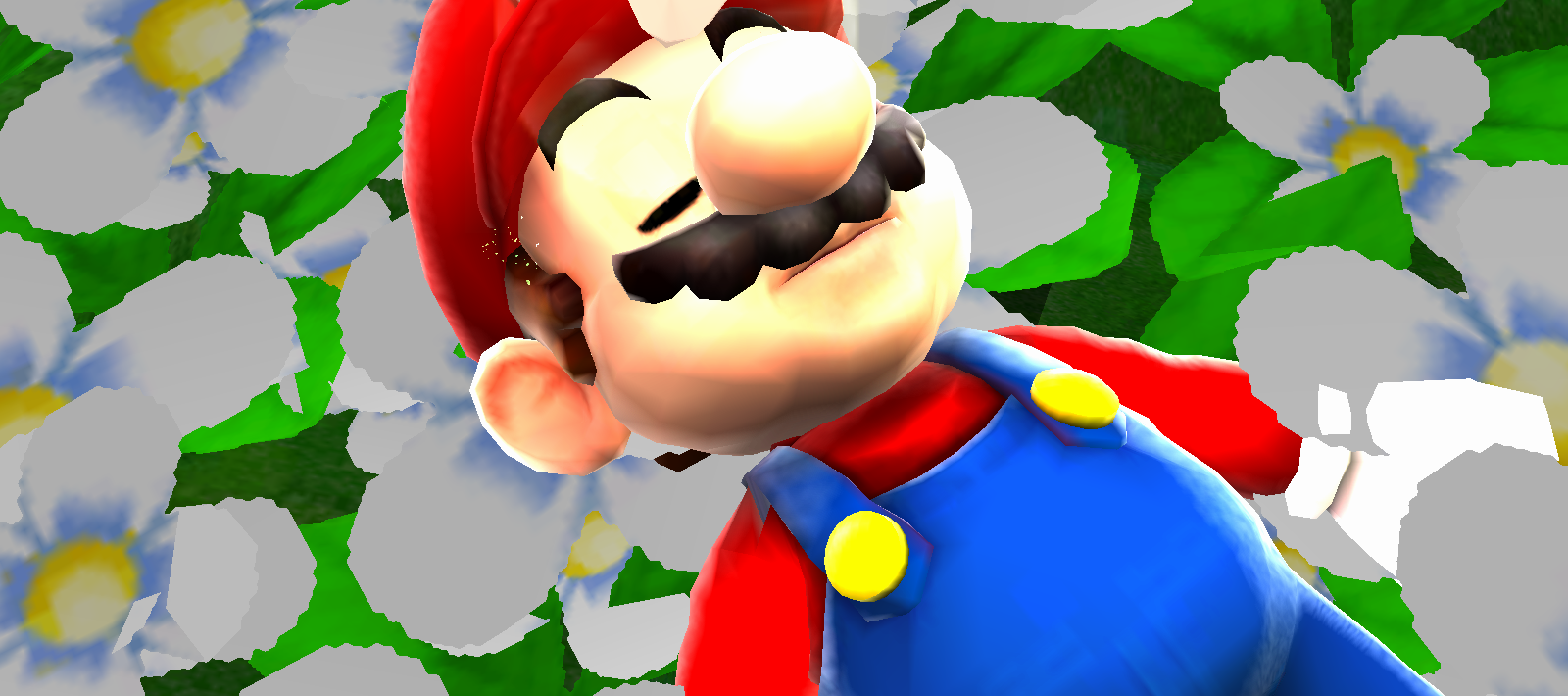
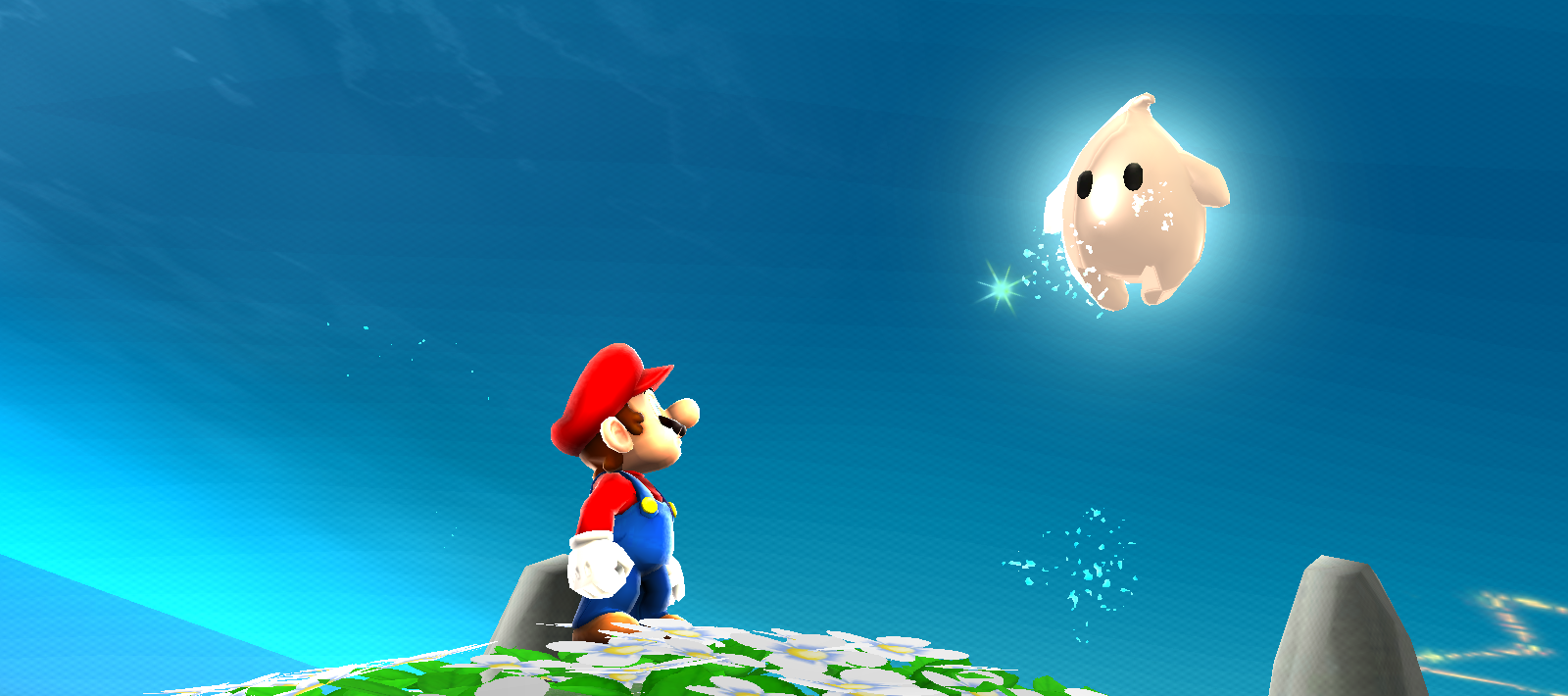
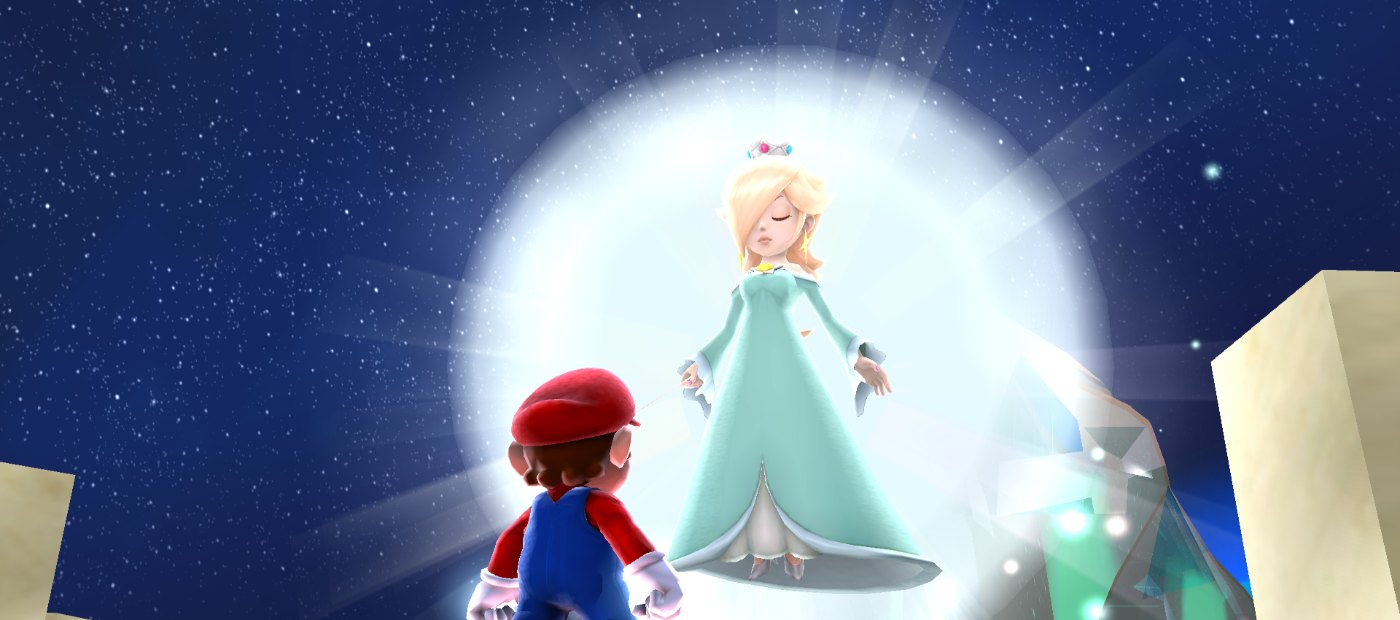
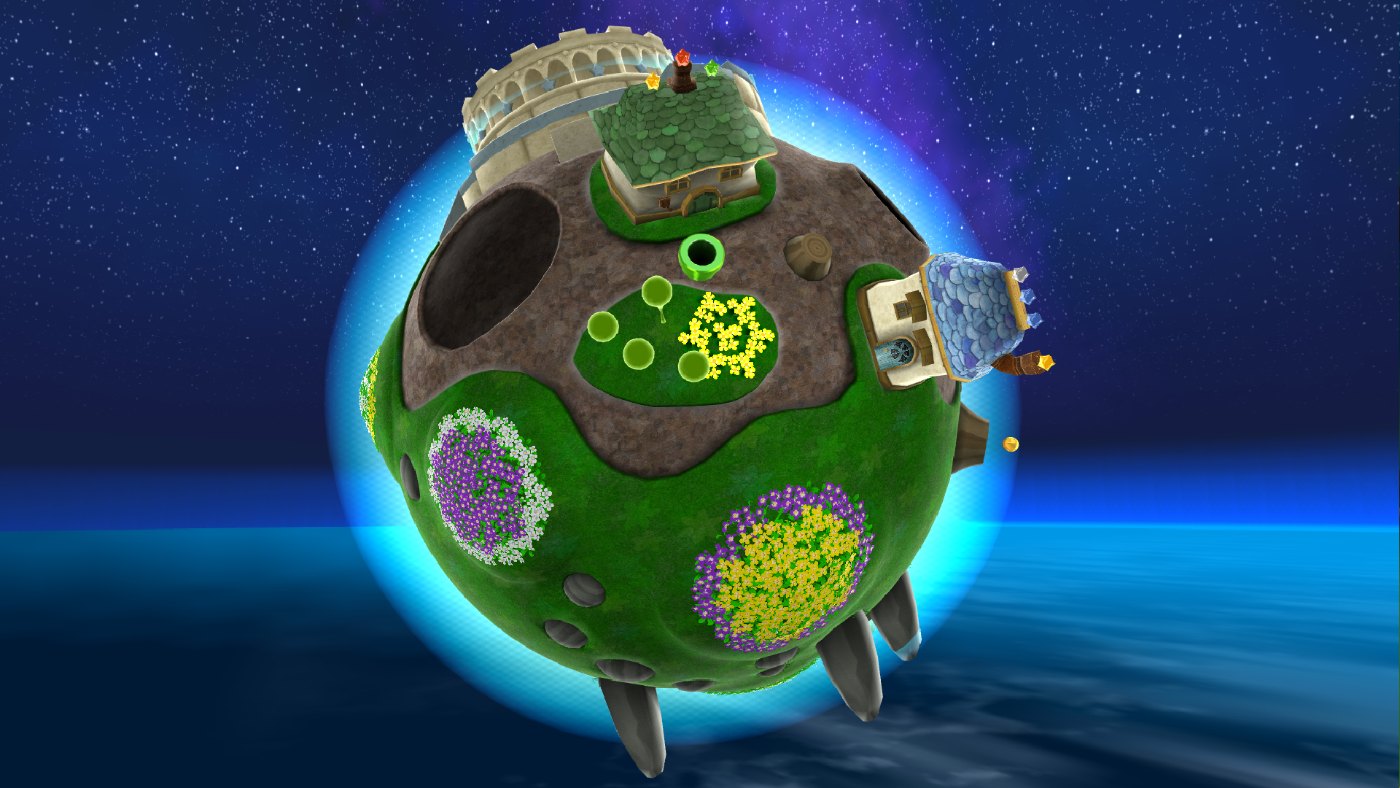
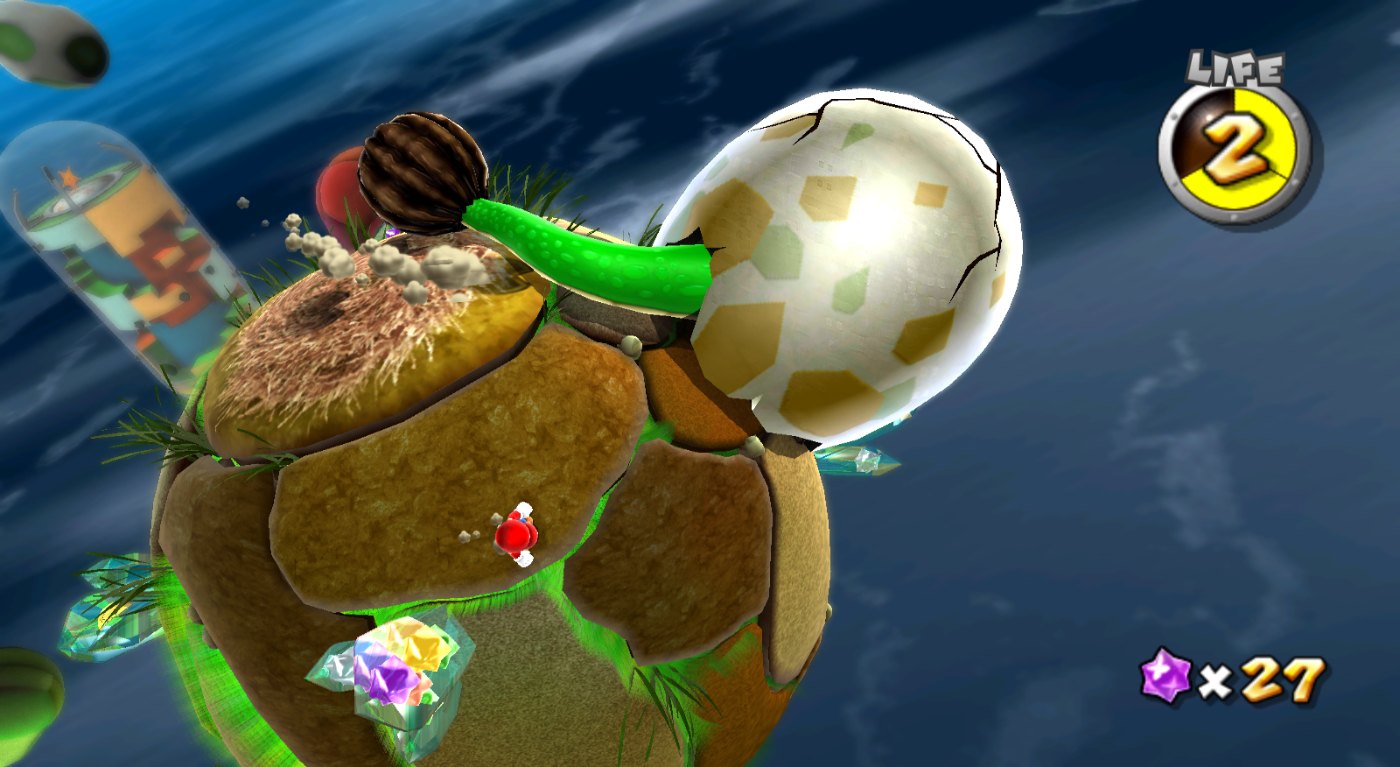
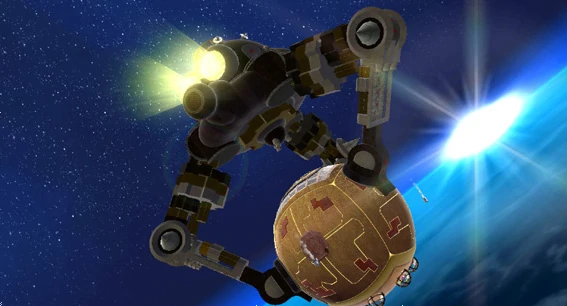
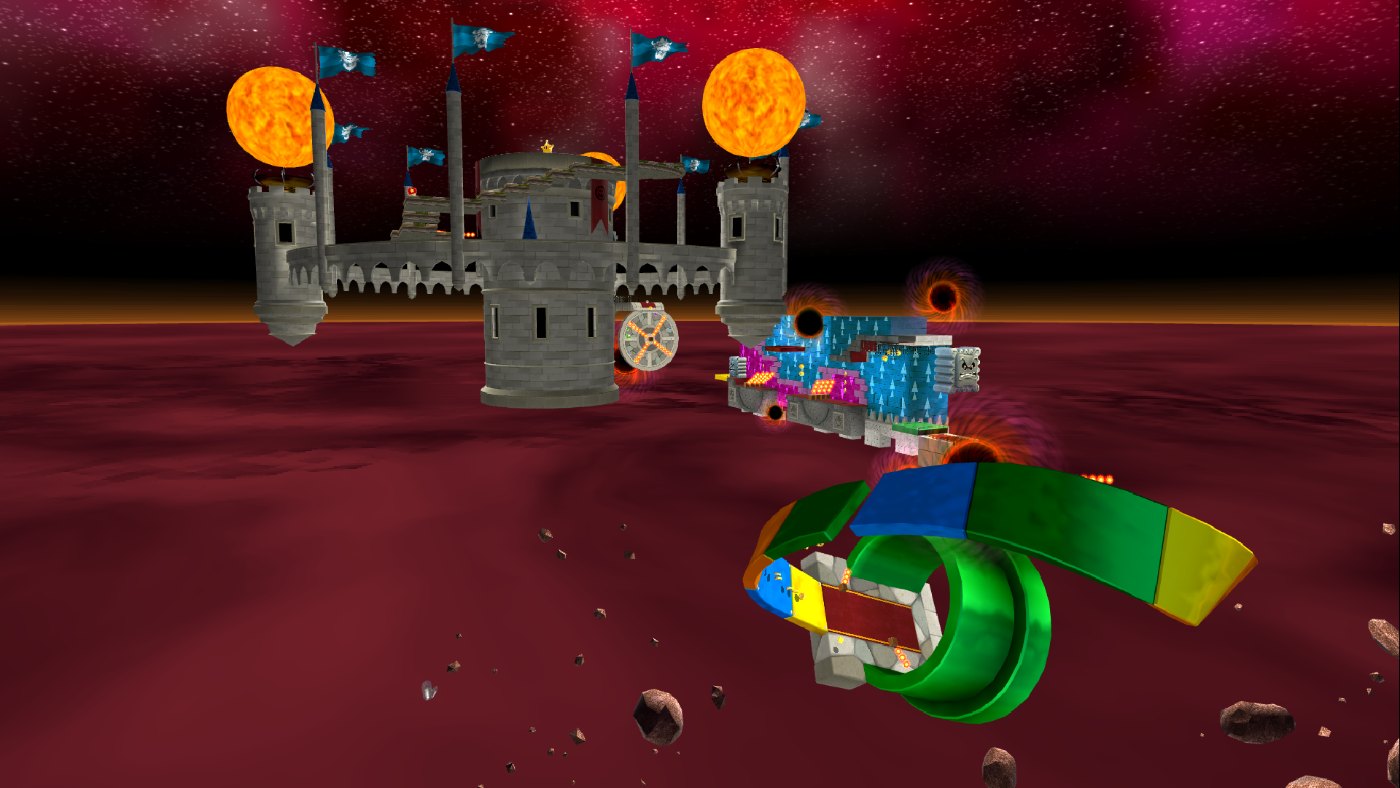
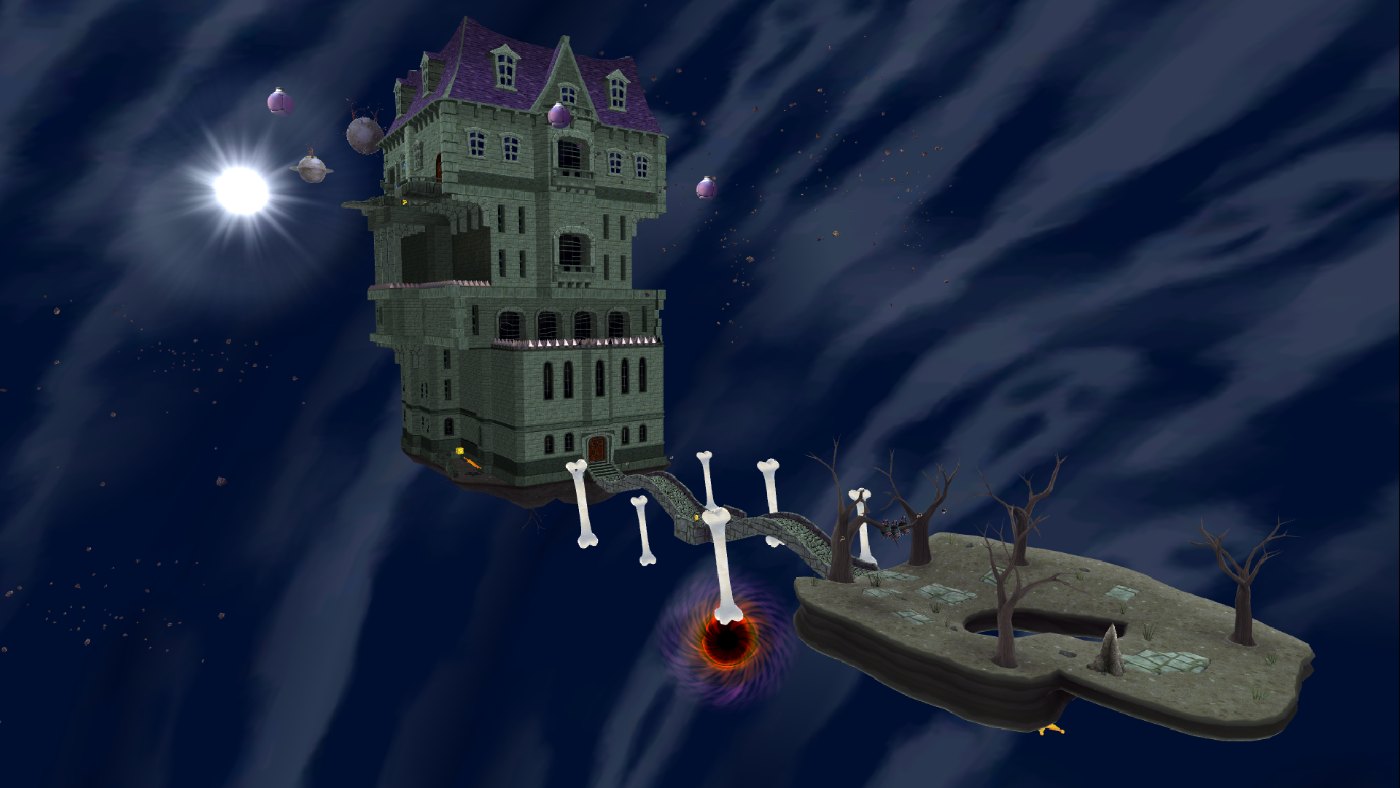
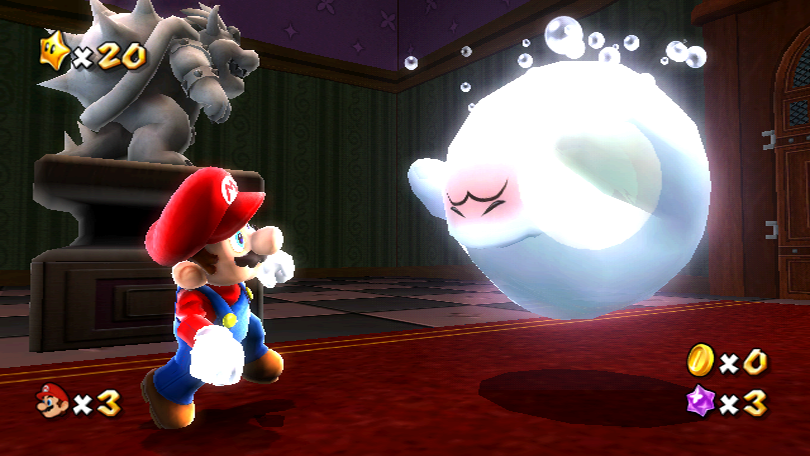
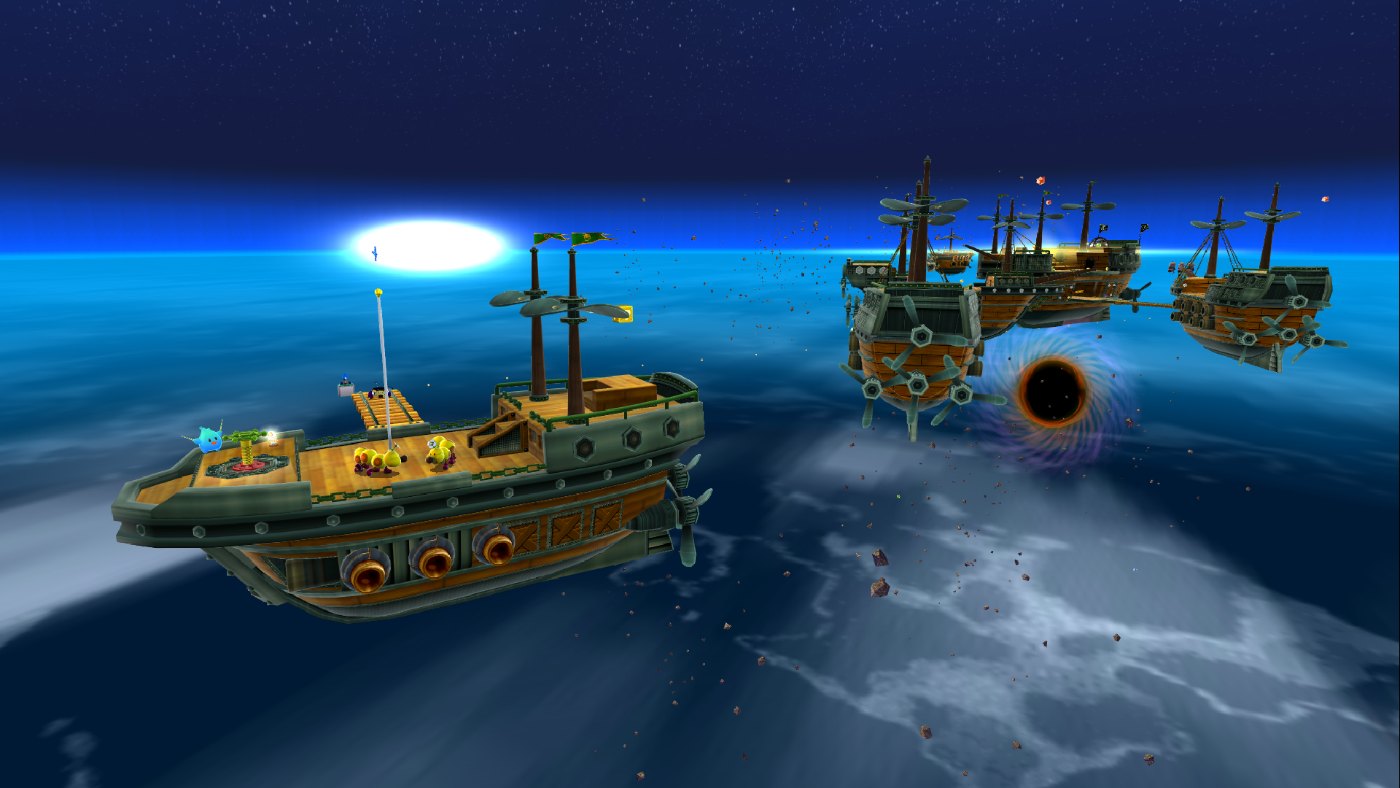
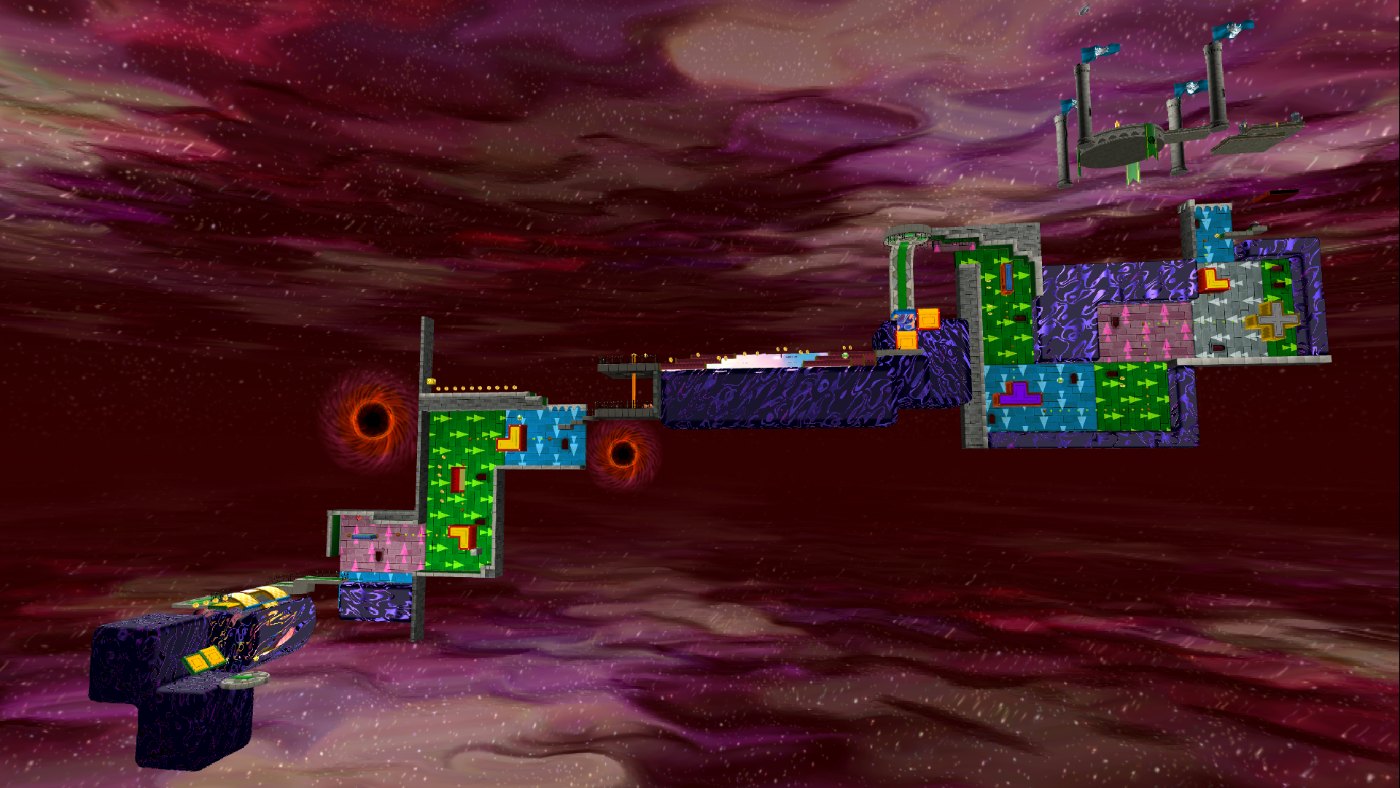
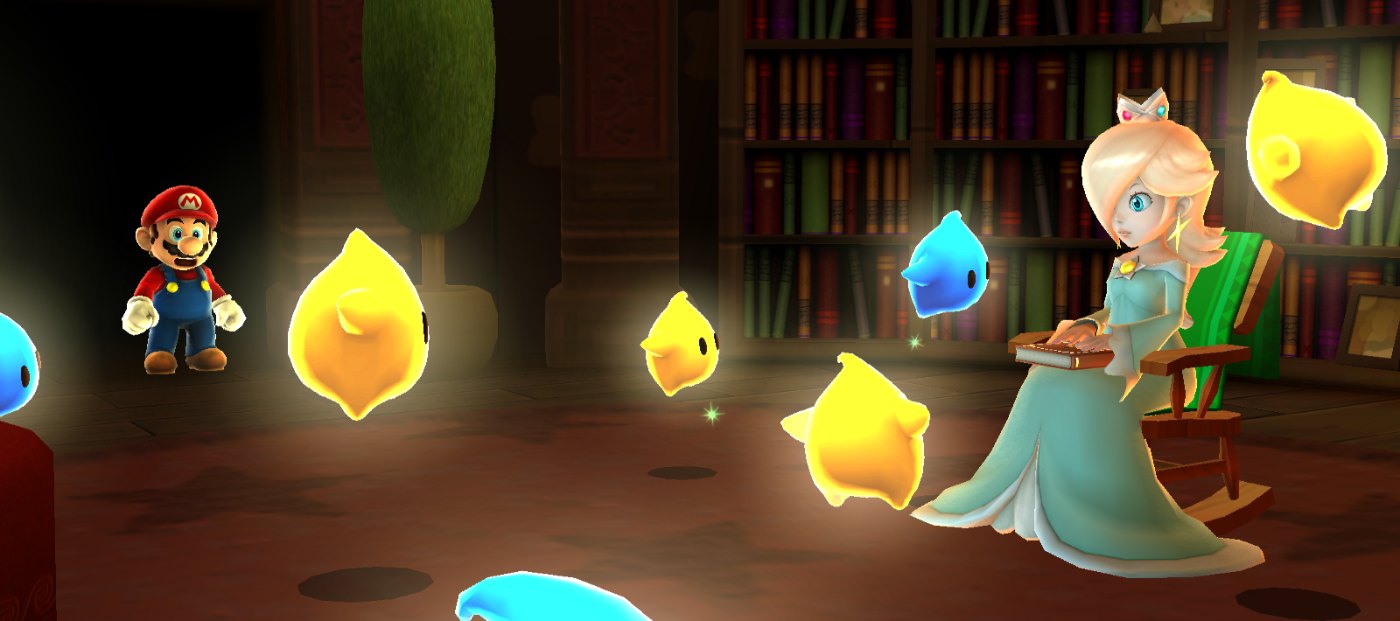
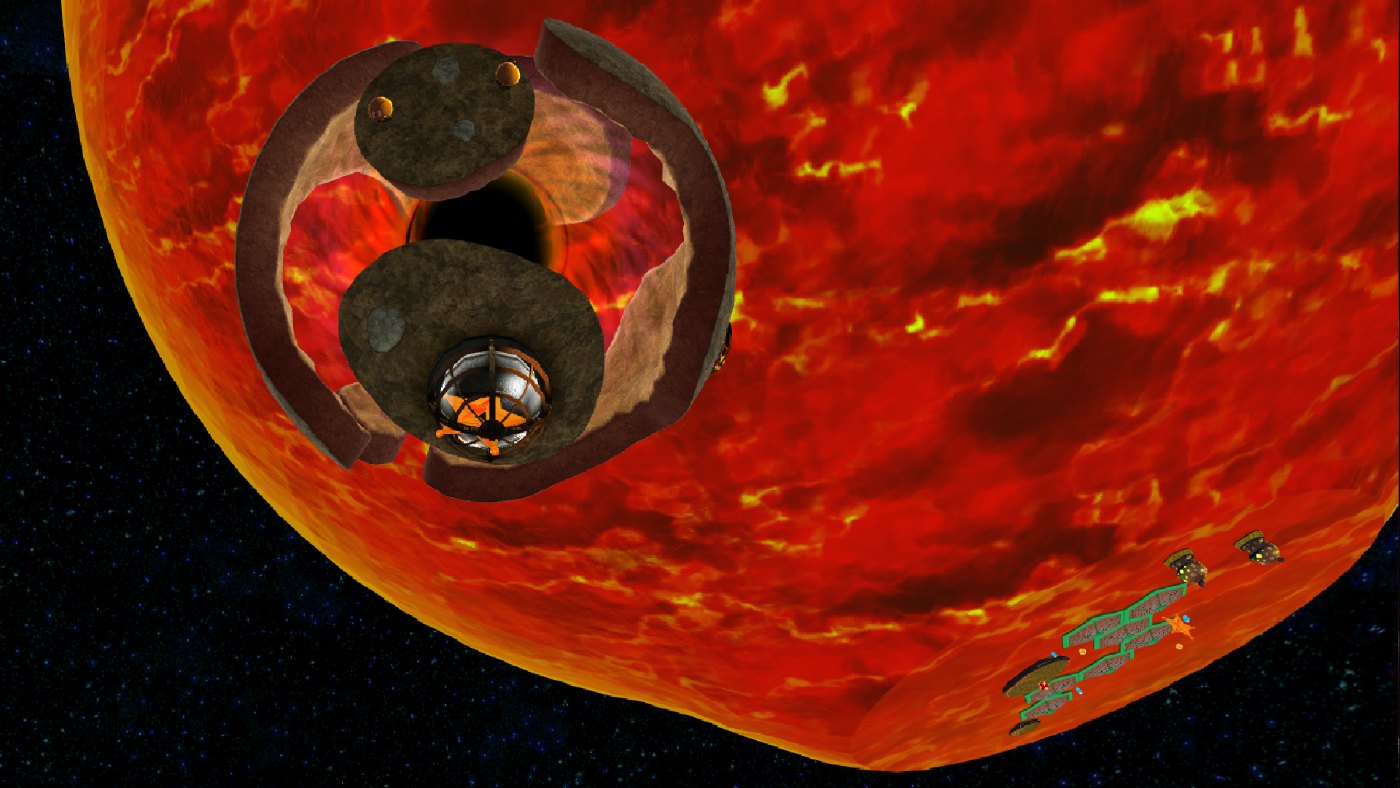
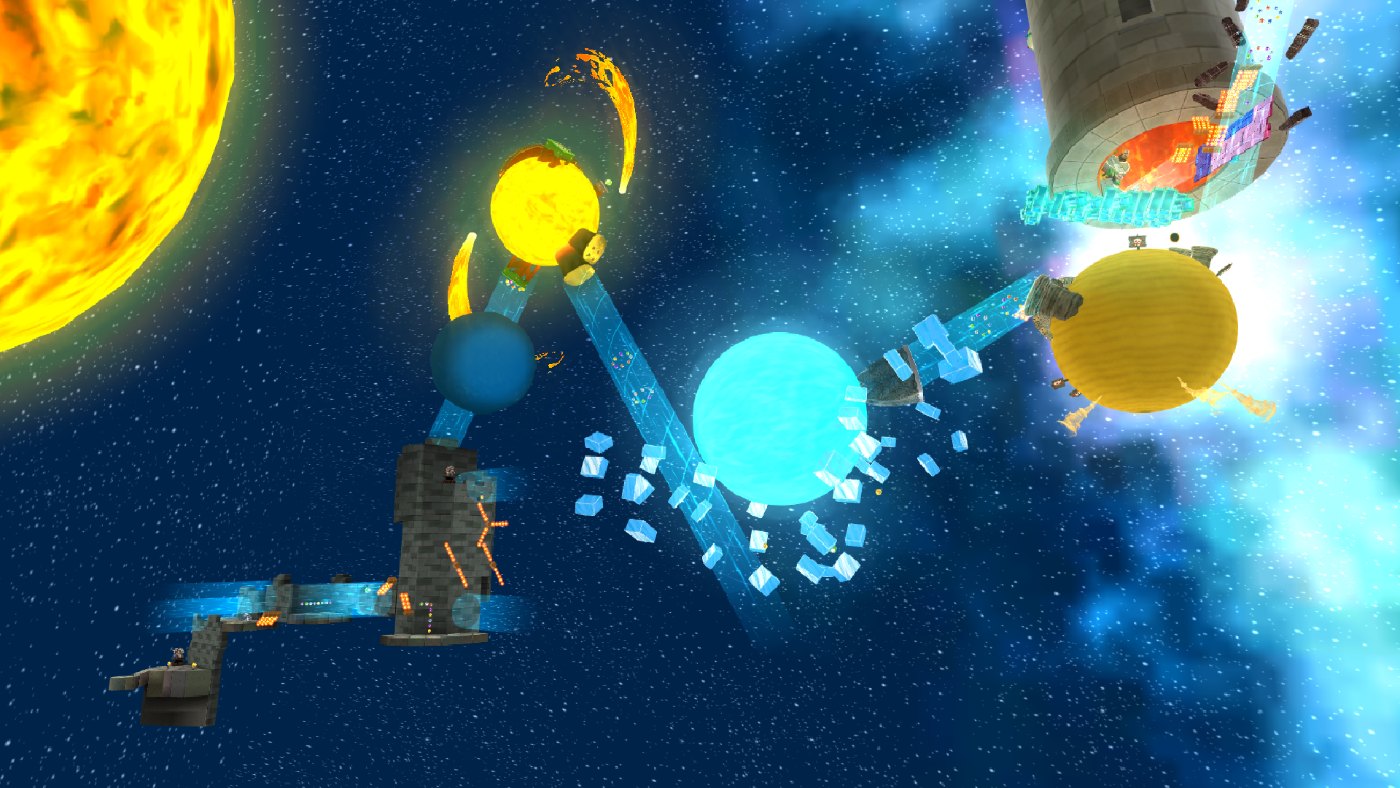
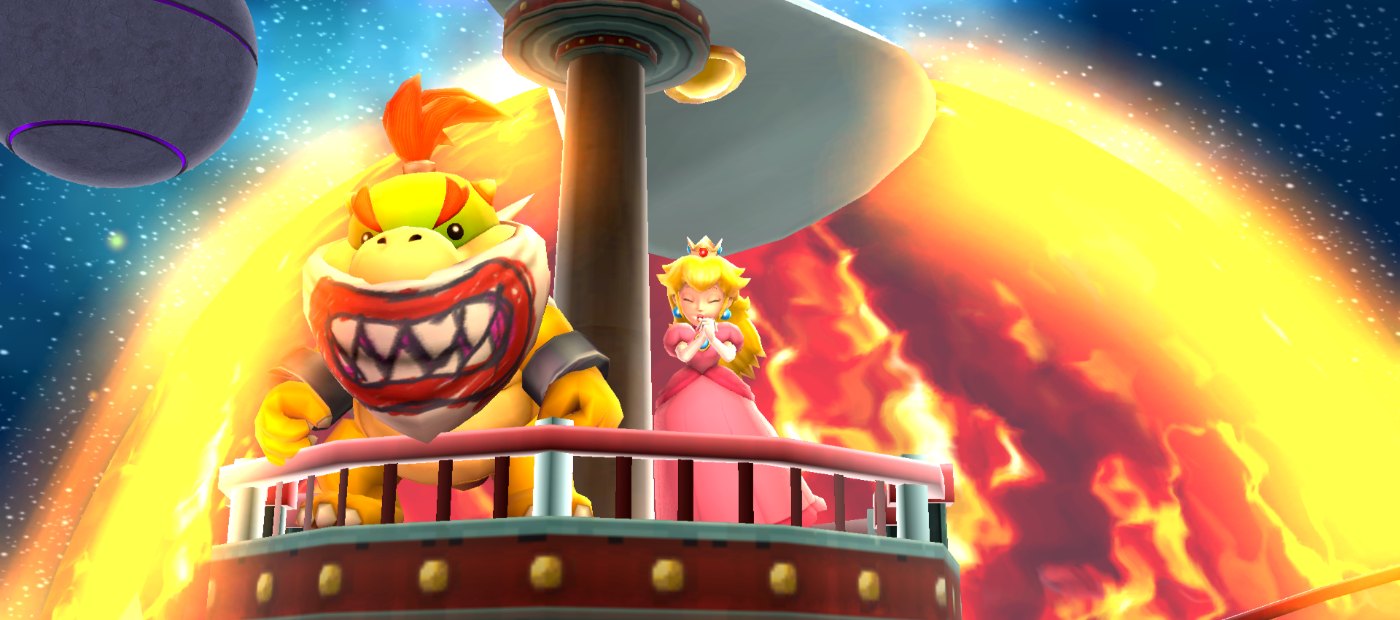
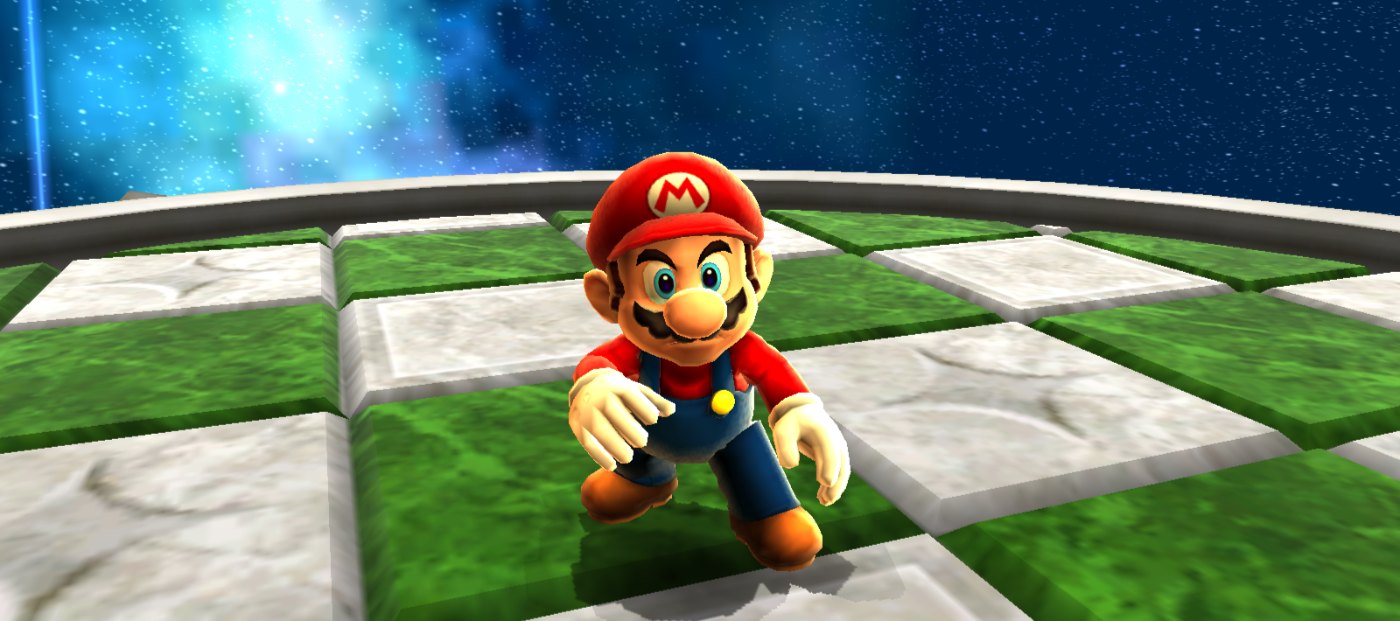
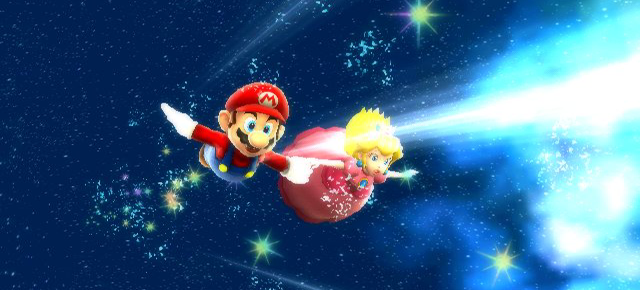
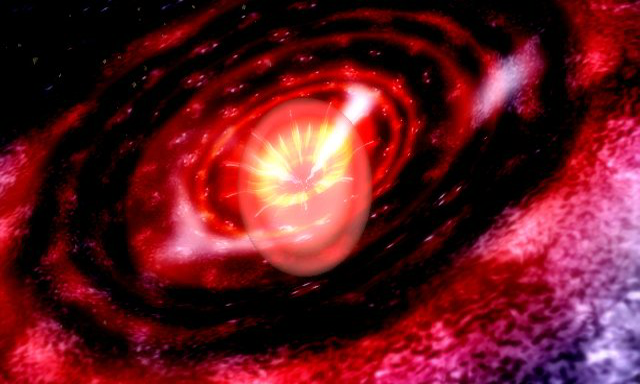
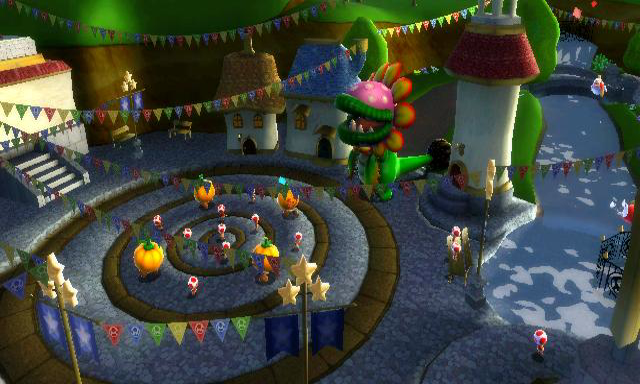
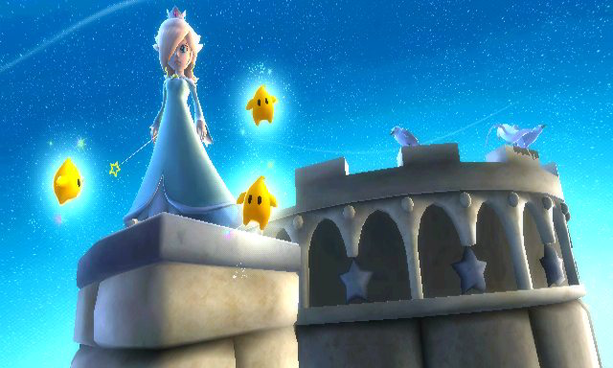
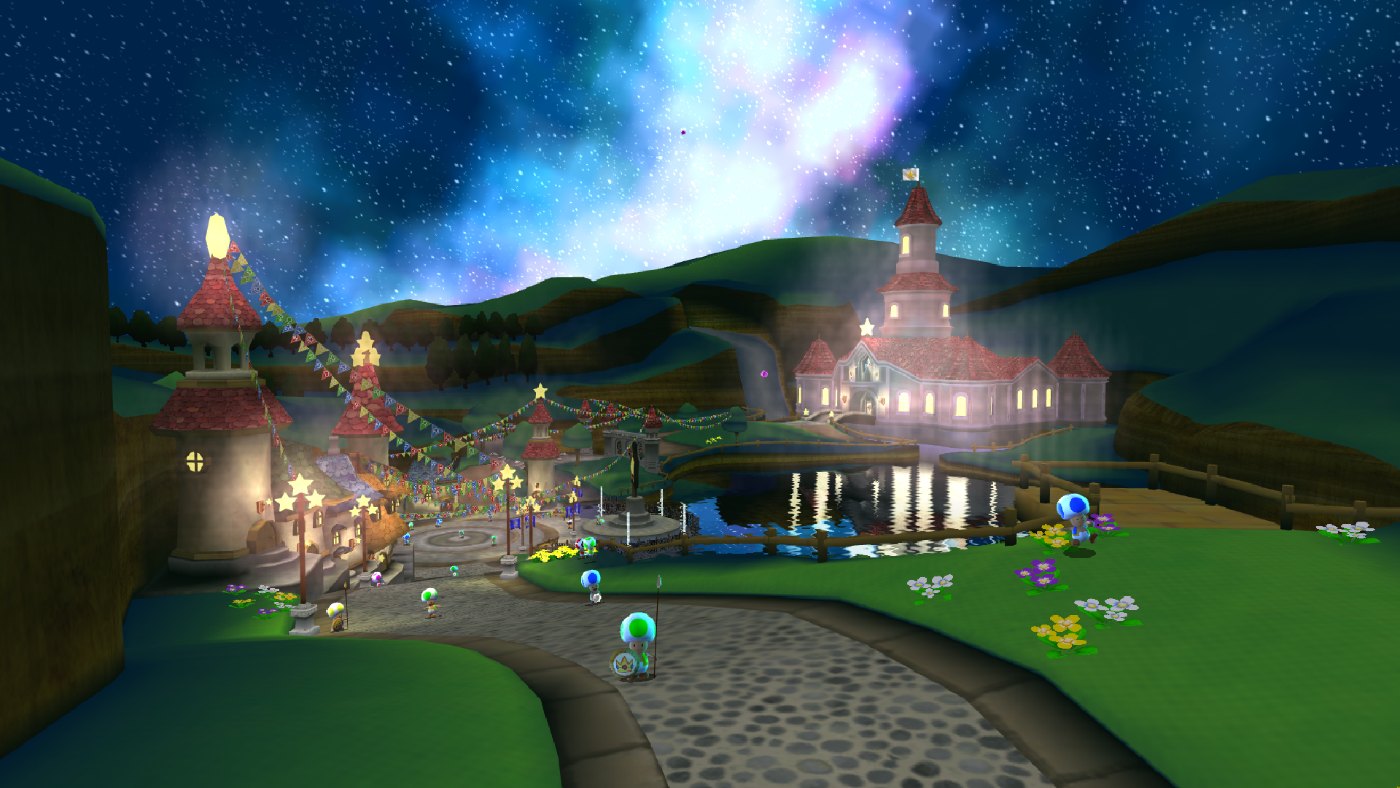
 Gateway GalaxyThe Gate · 2 stars · prologueWhere Mario wakes up, meets Rosalina and frees the first Grand Star. Come back late in the game for Gateway’s Purple Coins and the Red Star.
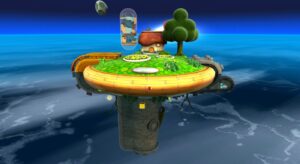 Good Egg GalaxyTerrace · 6 stars · Dino Piranha, King KalienteEgg-shaped planetoids, the first Launch Stars and a baby dinosaur with a club for a tail.
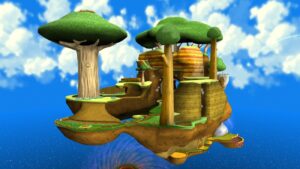 Honeyhive GalaxyTerrace · opens at 3 stars · 6 stars · Mandibug Stack, BugaboomA kingdom dripping with honey where the Bee Mushroom makes its debut.
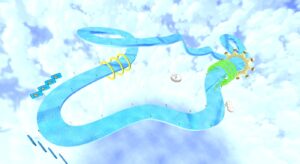 Loopdeeloop GalaxyTerrace · opens at 5 · 1 starA ribbon of water hanging in space, surfed on the back of Ray the manta.
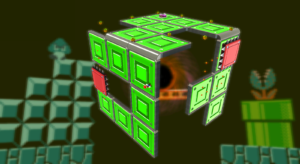 Flipswitch GalaxyTerrace · opens at 7 · 1 starStep on every blue panel of a floating block to paint the planet yellow.
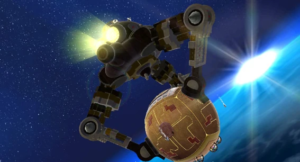 Bowser Jr.’s Robot ReactorTerrace · opens at 8 · Grand Star · MegalegClimb a walking robot the size of a moon and lure its own Bullet Bills into the cage on top.
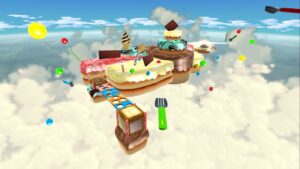 Sweet Sweet GalaxyTerrace · Hungry Luma (400 Star Bits) · 1 starA conveyor belt of cake and biscuits with rather a lot of holes in it.
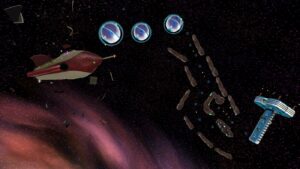 Space Junk GalaxyFountain · opens at 9 · 6 stars · Kamella, TarantoxPull Stars through drifting wreckage, a Toad Brigade rescue and a wooden planet shaped like Yoshi’s head.
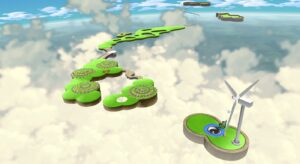 Rolling Green GalaxyFountain · opens at 11 · 1 starThe first Star Ball course, a crazy-golf hole in the clouds.
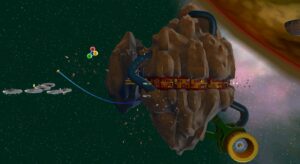 Battlerock GalaxyFountain · opens at 12 · 7 stars · TopmaniacA fortress moon bristling with cannons. Luigi finds a Green Star underneath it.
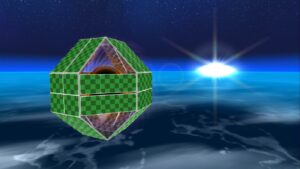 Hurry-Scurry GalaxyFountain · opens at 18 · 1 starCollect the notes while the tiles underfoot shrink away around a black hole.
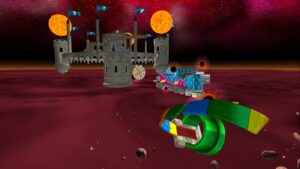 Bowser’s Star ReactorFountain · opens at 15 · Grand Star · BowserA staircase through shifting gravity to the first duel with Bowser.
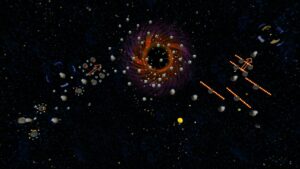 Sling Pod GalaxyFountain · Hungry Luma (400) · 1 starCatapult from one sticky pod to the next across open space.
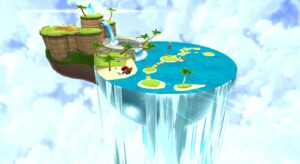 Beach Bowl GalaxyKitchen · opens at 16 · 6 starsA tropical bowl of sea water, a penguin swimming school and the Cyclone Stone.
 Bubble Breeze GalaxyKitchen · opens at 19 · 1 starDrift over a poison swamp inside a bubble, blown along with the pointer.
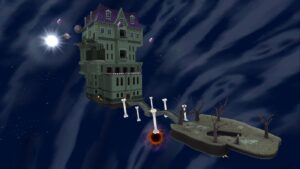 Ghostly GalaxyKitchen · opens at 20 · 6 stars · BouldergeistA haunted mansion with Luigi locked inside, a race against a Boo and a boss made of rocks.
 Buoy Base GalaxyKitchen · opens at 30 · 2 starsA tower raised out of the sea. Its secret mission hides a Green Star.
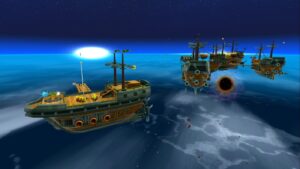 Bowser Jr.’s Airship ArmadaKitchen · opens at 23 · Grand Star · Bowser Jr.Across a fleet of airships to a shell fight with Bowser Jr. himself.
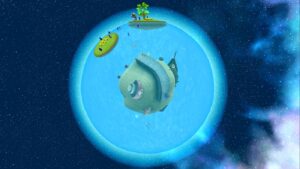 Drip Drop GalaxyKitchen · Hungry Luma (600) · 1 starA ball of water with an eel problem that a few Koopa shells will solve.
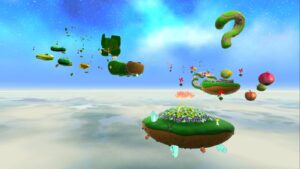 Gusty Garden GalaxyBedroom · opens at 24 · 6 stars · Major BurrowsDandelion fluff on the wind, apple planets, a mole with a helmet and the best-loved tune on the soundtrack.
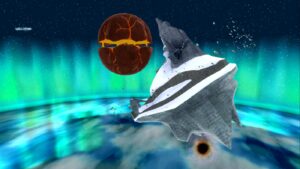 Freezeflame GalaxyBedroom · opens at 26 · 6 stars · Baron BrrrHalf glacier, half volcano; Ice Mario and Fire Mario both earn their keep.
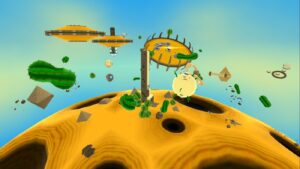 Dusty Dune GalaxyBedroom · opens at 29 · 7 starsRivers of sand, whirlwinds and pyramids, with another Green Star in the treasure room.
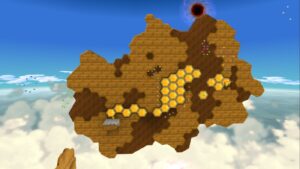 Honeyclimb GalaxyBedroom · opens at 42 · 1 starBee Mario scales walls of honeycomb while meteors fall.
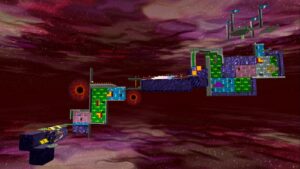 Bowser’s Dark Matter PlantBedroom · opens at 33 · Grand Star · BowserGravity flips and matter-eating darkness on the way to the second Bowser fight.
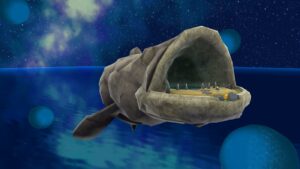 Bigmouth GalaxyBedroom · Hungry Luma (800) · 1 starA planet shaped like a fish, a Gold Shell and the chest it opens.
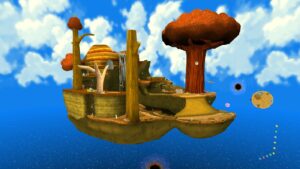 Gold Leaf GalaxyEngine Room · opens at 34 · 6 stars · Undergrunt GunnerHoneyhive turned autumnal and back to front, with Cataquacks and a bell at the top of the tree.
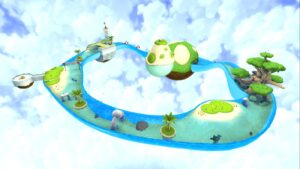 Sea Slide GalaxyEngine Room · opens at 36 · 6 starsA ring of ocean with racing penguins, Guppy the orca and five Silver Stars to find.
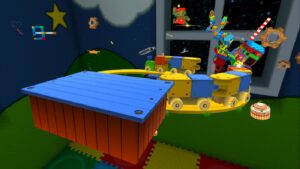 Toy Time GalaxyEngine Room · opens at 40 · 6 stars · Mecha-Bowser, Undergrunt GunnerTrains, cake, a giant clockwork Bowser and a planet built in the shape of 8-bit Mario.
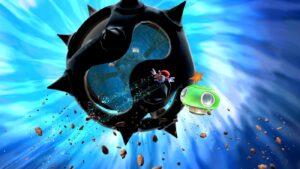 Bonefin GalaxyEngine Room · opens at 55 · 1 star · KingfinA dark undersea duel with a skeleton shark.
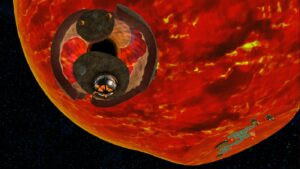 Bowser Jr.’s Lava ReactorEngine Room · opens at 45 · Grand Star · King KalienteA rematch with the lava octopus over sinking platforms.
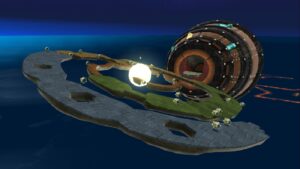 Sand Spiral GalaxyEngine Room · Hungry Luma (1,000) · 1 starA tunnel of spinning sand: pick the Bee or the Boo Mushroom and take your chances.
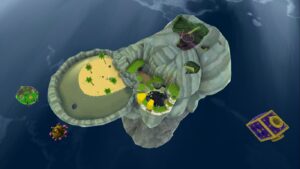 Deep Dark GalaxyGarden · opens at 46 · 6 stars · Kamella, Undergrunt GunnerA beach, a cavern lake and a sunken ghost ship with Kamella aboard.
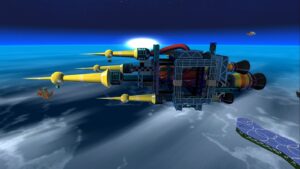 Dreadnought GalaxyGarden · opens at 48 · 6 stars · TopmaniacBowser’s battleship: cannon corridors, moving platforms and gravity that will not sit still.
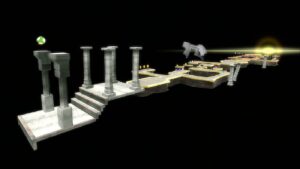 Matter Splatter GalaxyGarden · opens at 50 · 1 starA mansion that exists only where the drifting pools of matter happen to be.
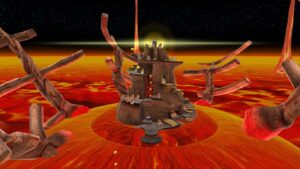 Melty Molten GalaxyGarden · opens at 52 · 6 stars · Fiery Dino PiranhaVolcanoes, lava tides, sinking spires and a Dino Piranha in flames.
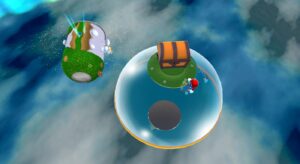 Snow Cap GalaxyGarden · Hungry Luma (1,600) · 1 starStar Bunnies hiding in the drifts on a small snowy planet.
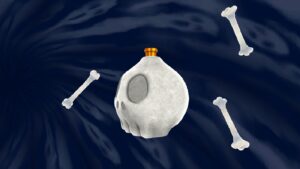 Boo’s Boneyard GalaxyThe Gate · Hungry Luma (1,200) · 1 starA race against the Spooky Speedster, run as Boo Mario.
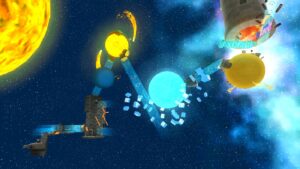 Bowser’s Galaxy ReactorCentre of the universe · opens at 60 · Grand Star · BowserEvery trick in the game in one last gauntlet, and the final battle.
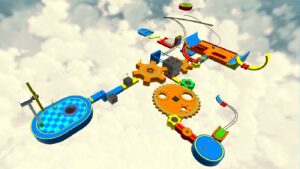 Rolling Gizmo GalaxyPlanet of Trials · 3 Green Stars · 1 starThe Star Ball exam: gears, rails and Bob-ombs.
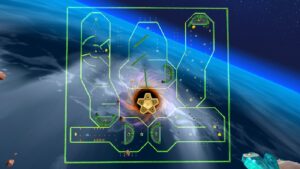 Bubble Blast GalaxyPlanet of Trials · 3 Green Stars · 1 starThe bubble again, this time through an electric maze.
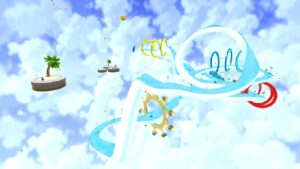 Loopdeeswoop GalaxyPlanet of Trials · 3 Green Stars · 1 starRay surfing’s much nastier second course.
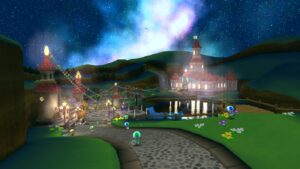 Grand Finale GalaxyPlanet of Trials · 120 stars as Mario and as Luigi · star 121The castle gardens on festival night, and a hundred Purple Coins among the crowd.
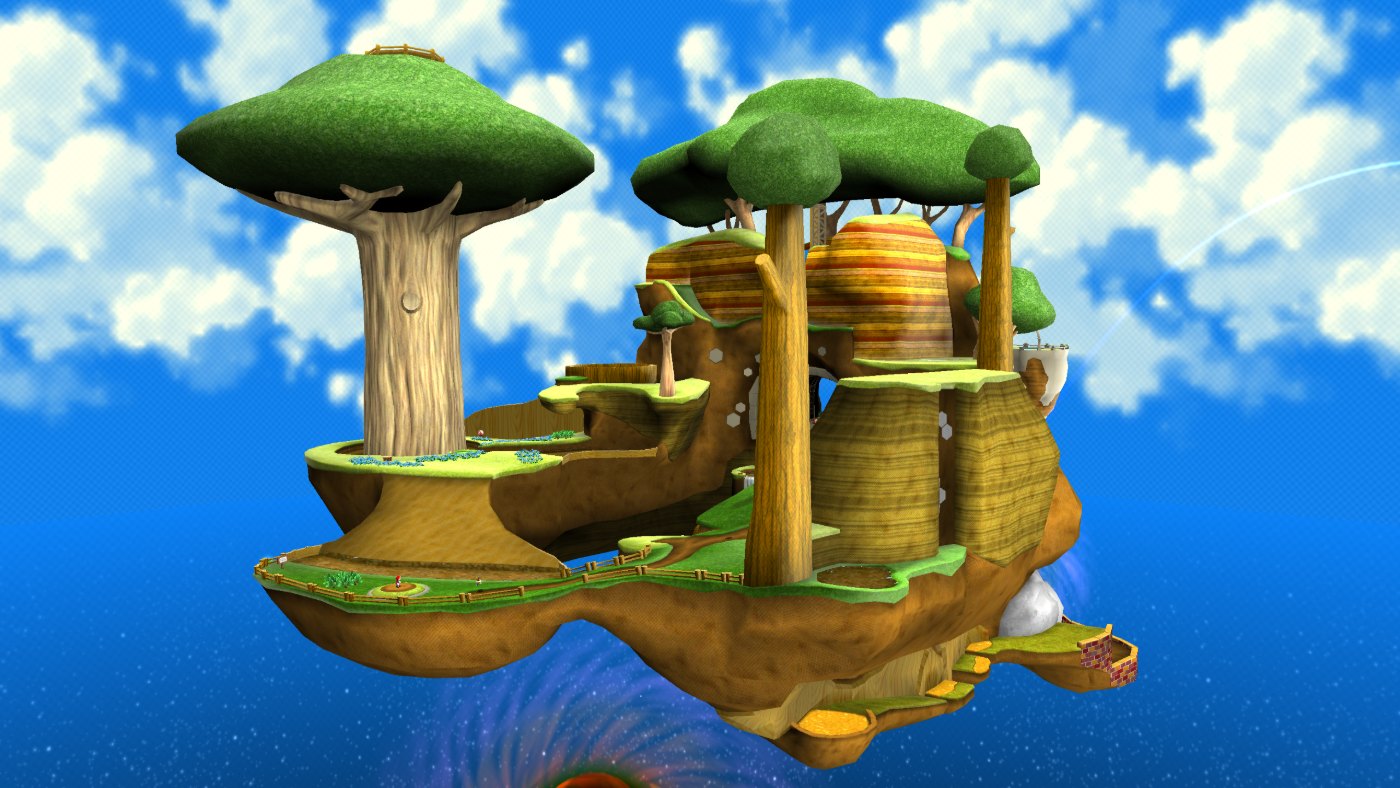
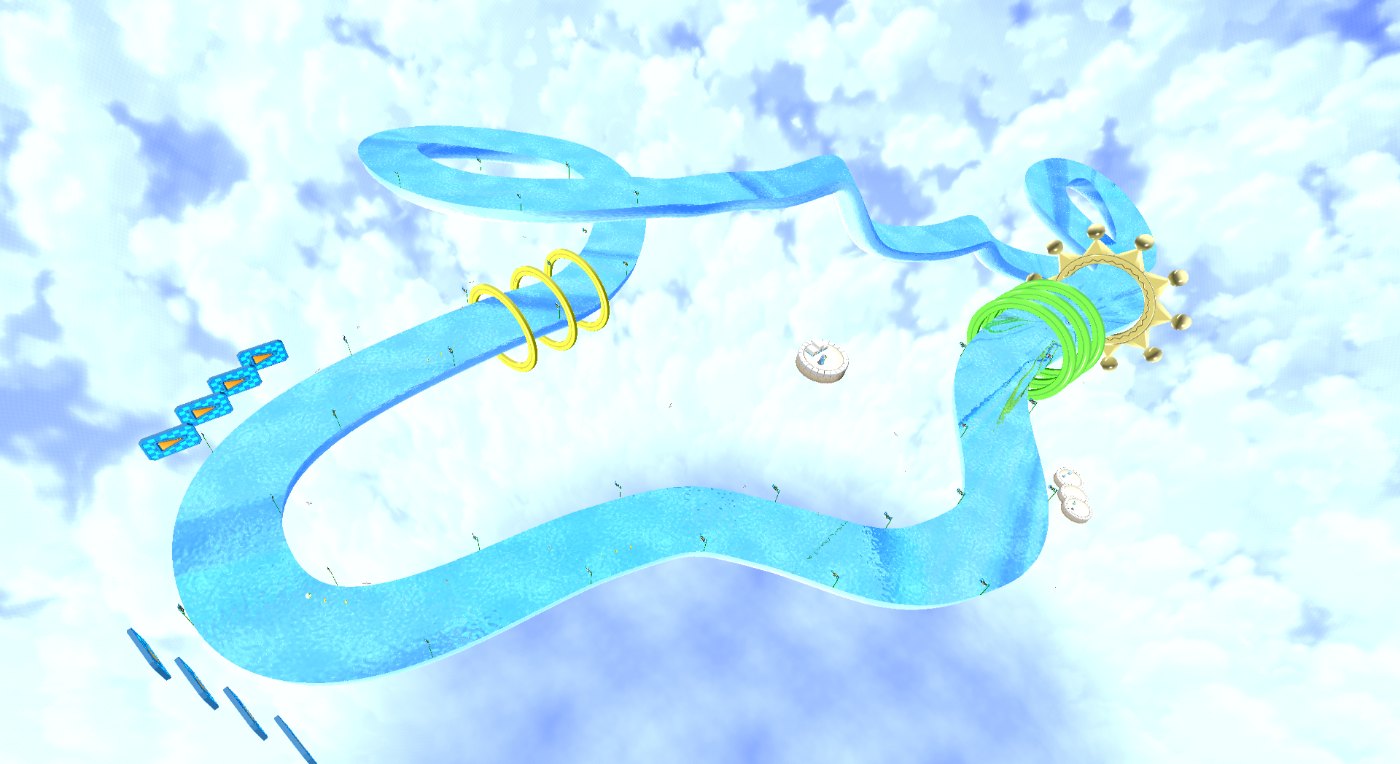
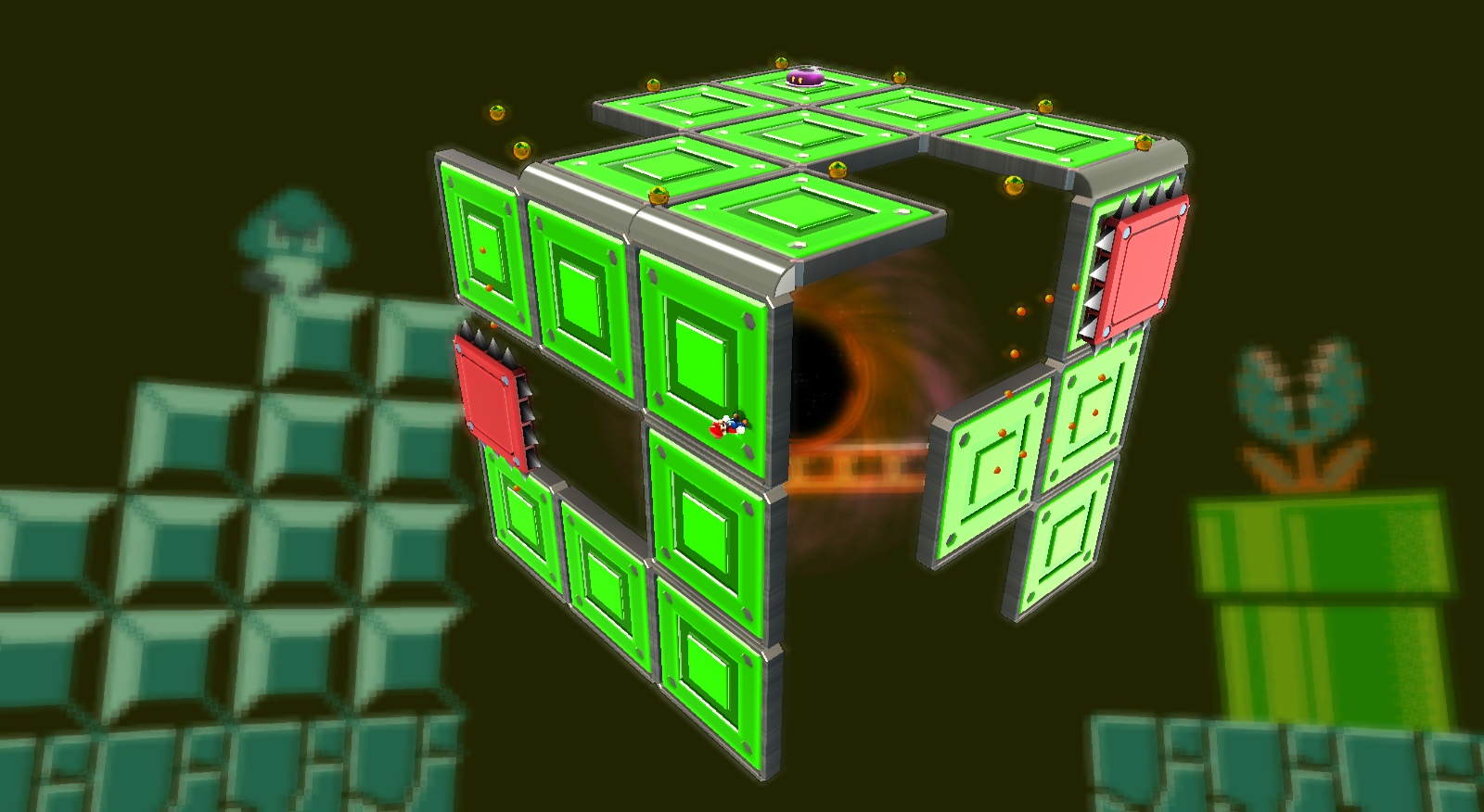
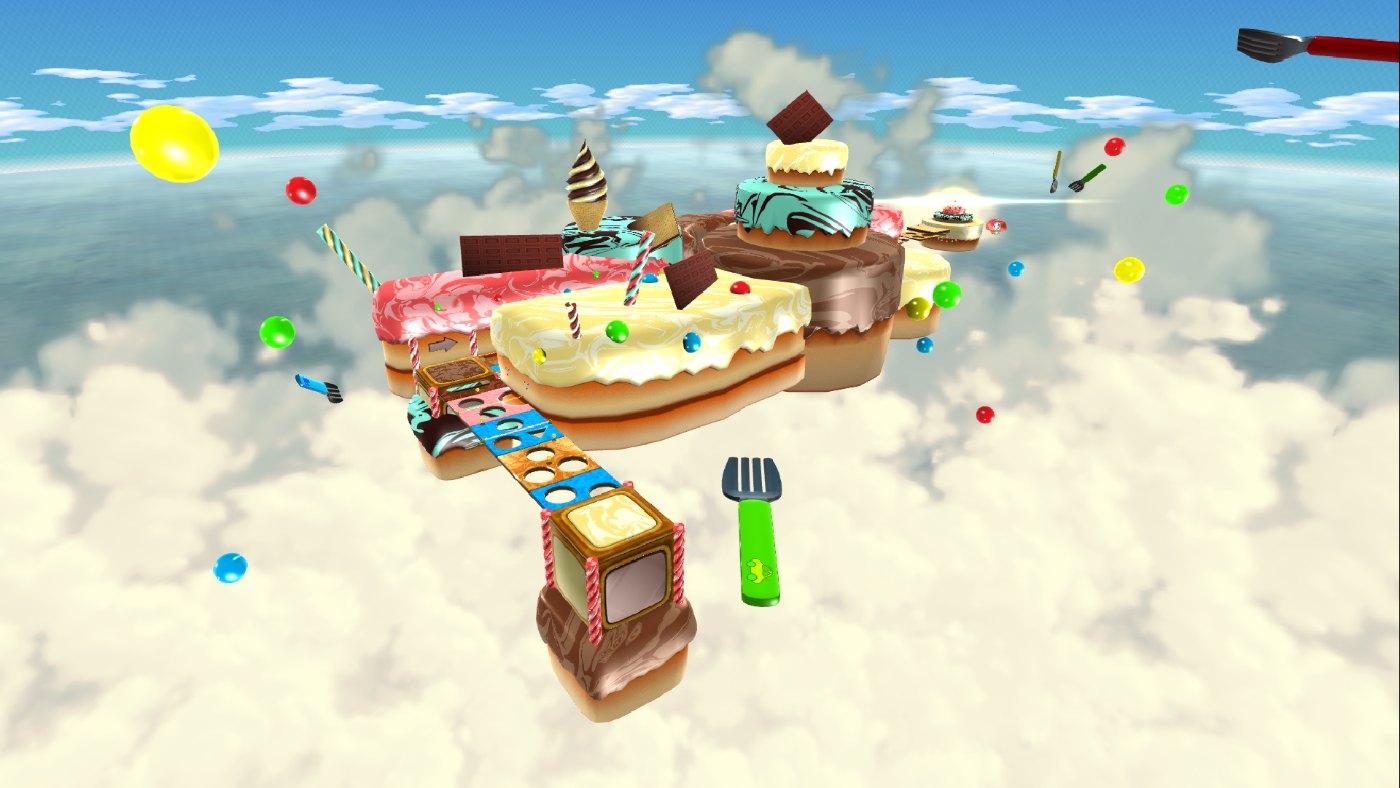
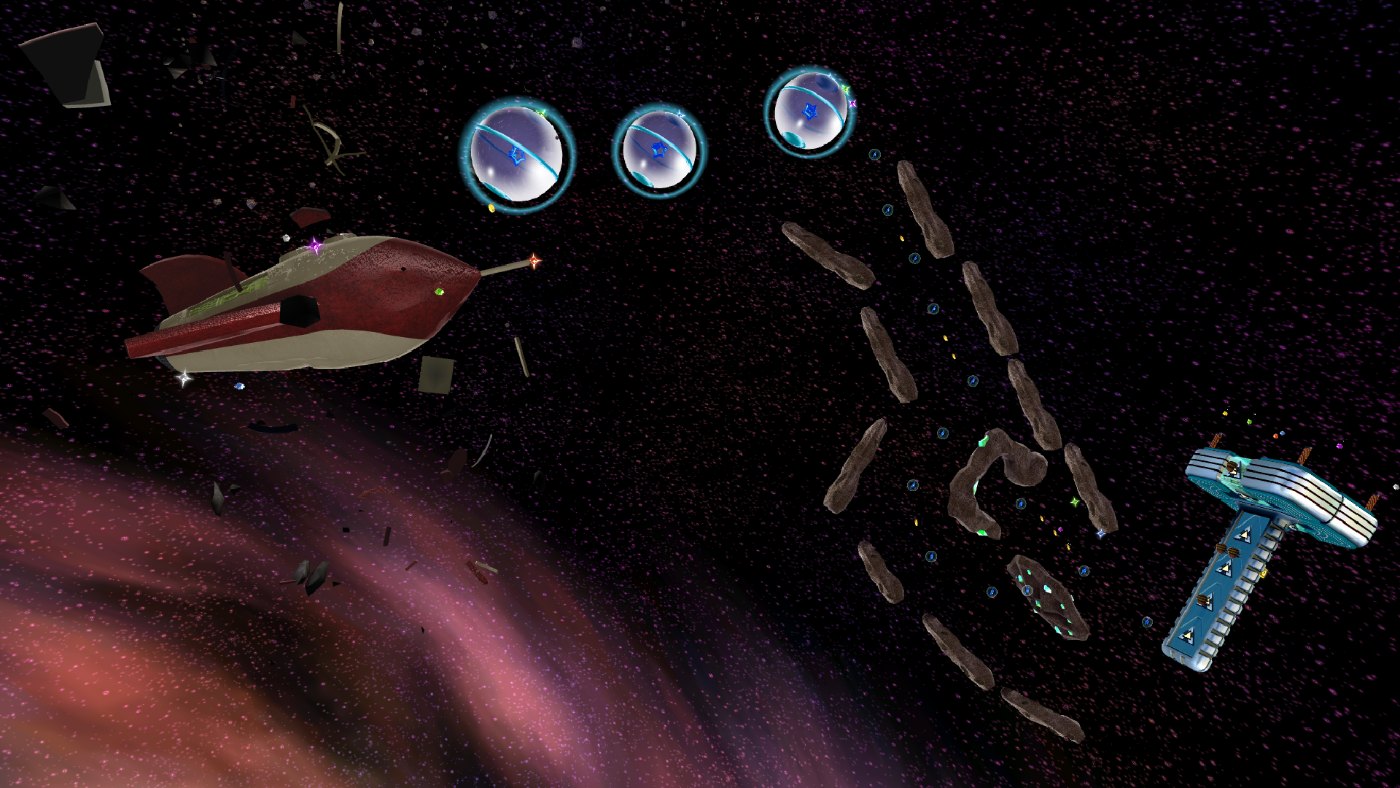
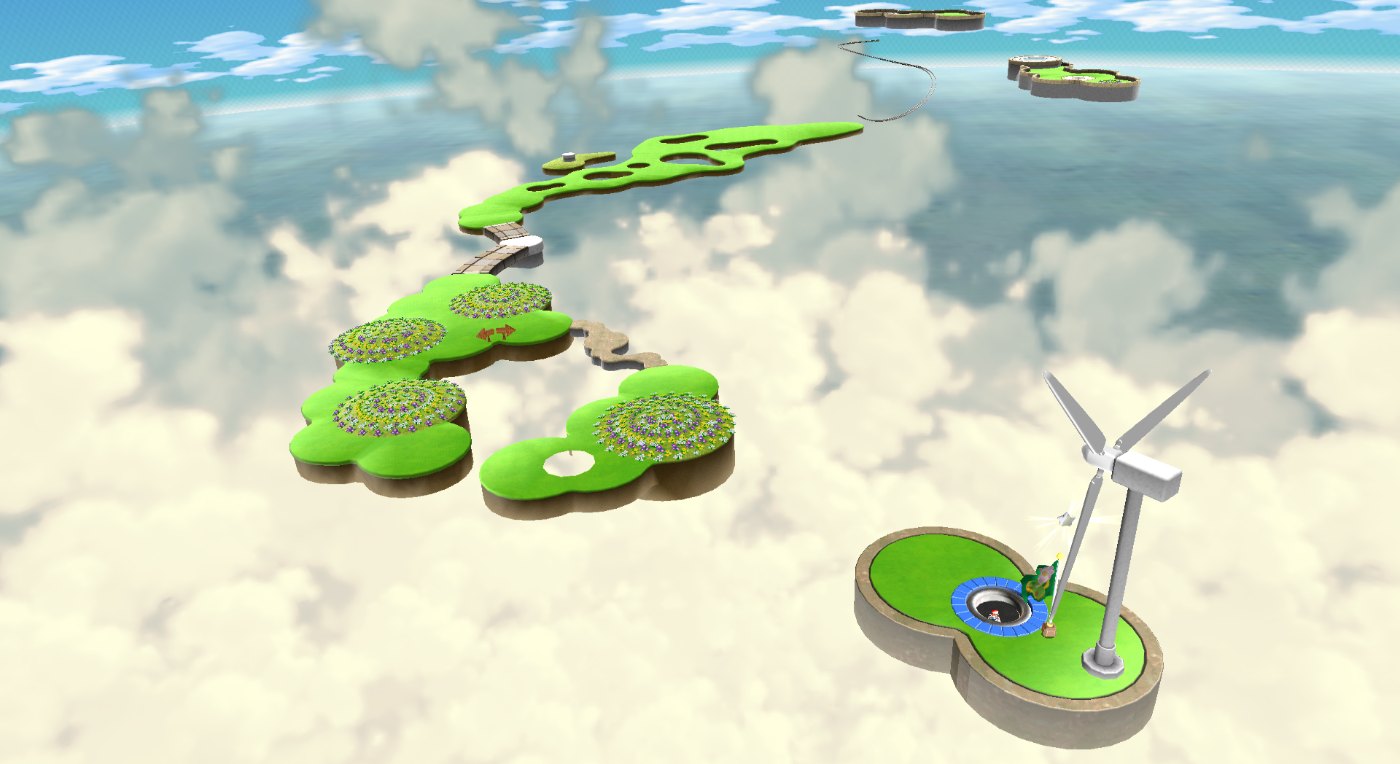
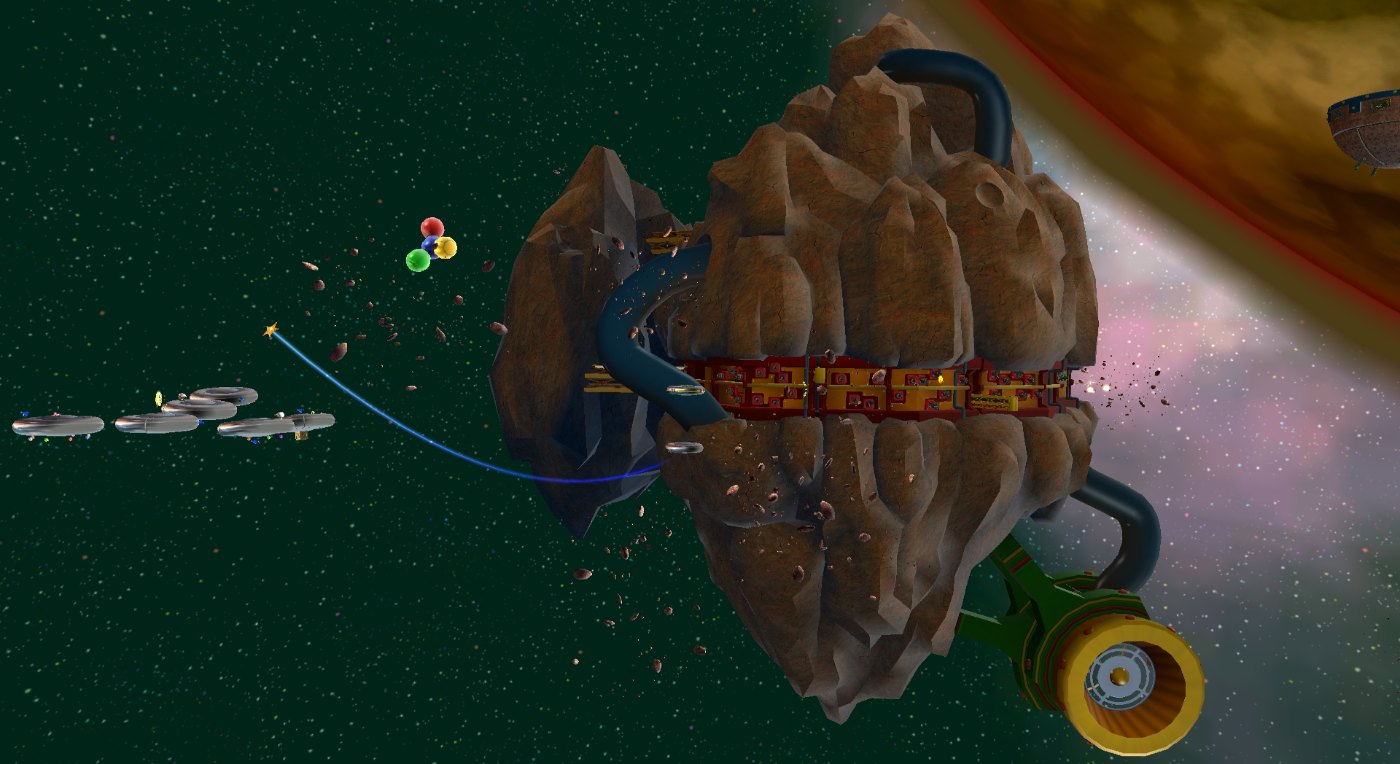
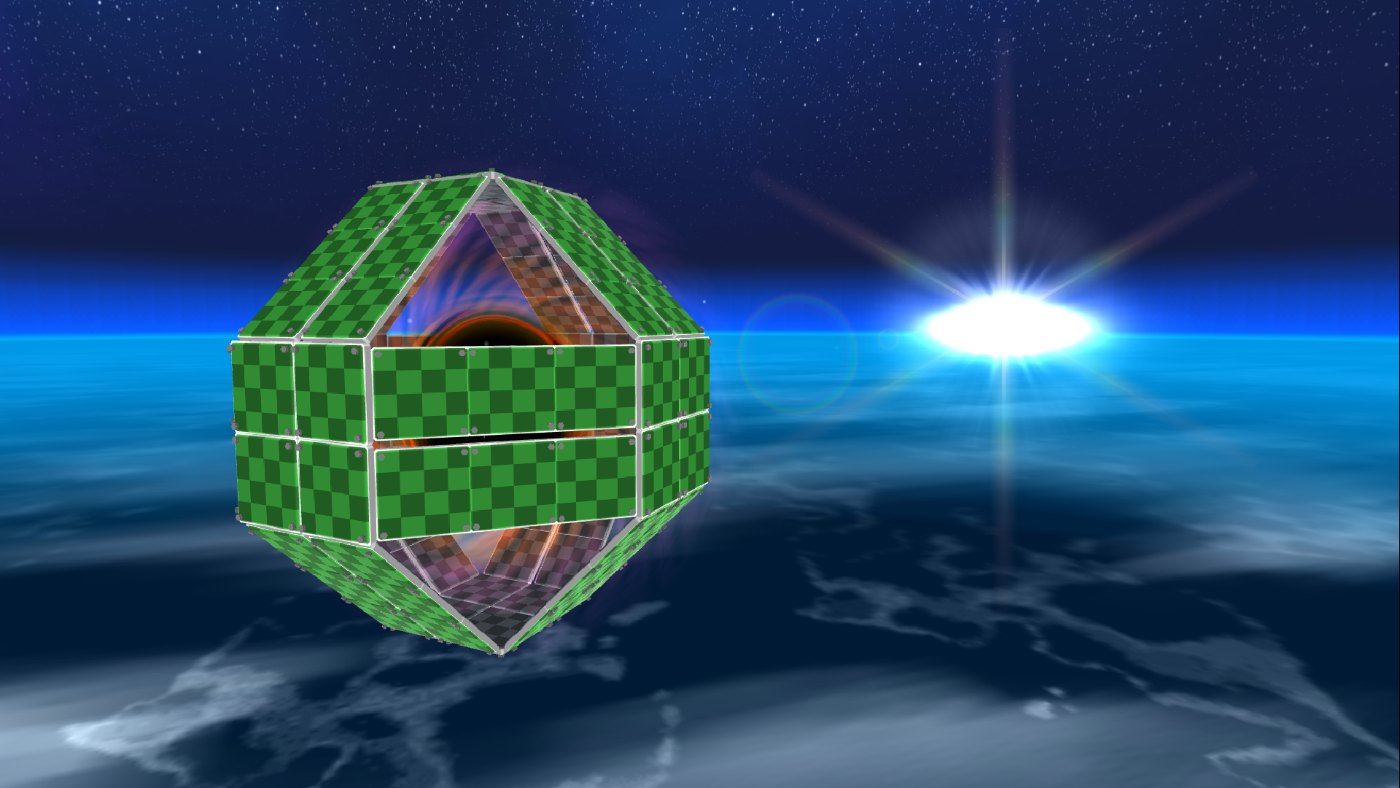
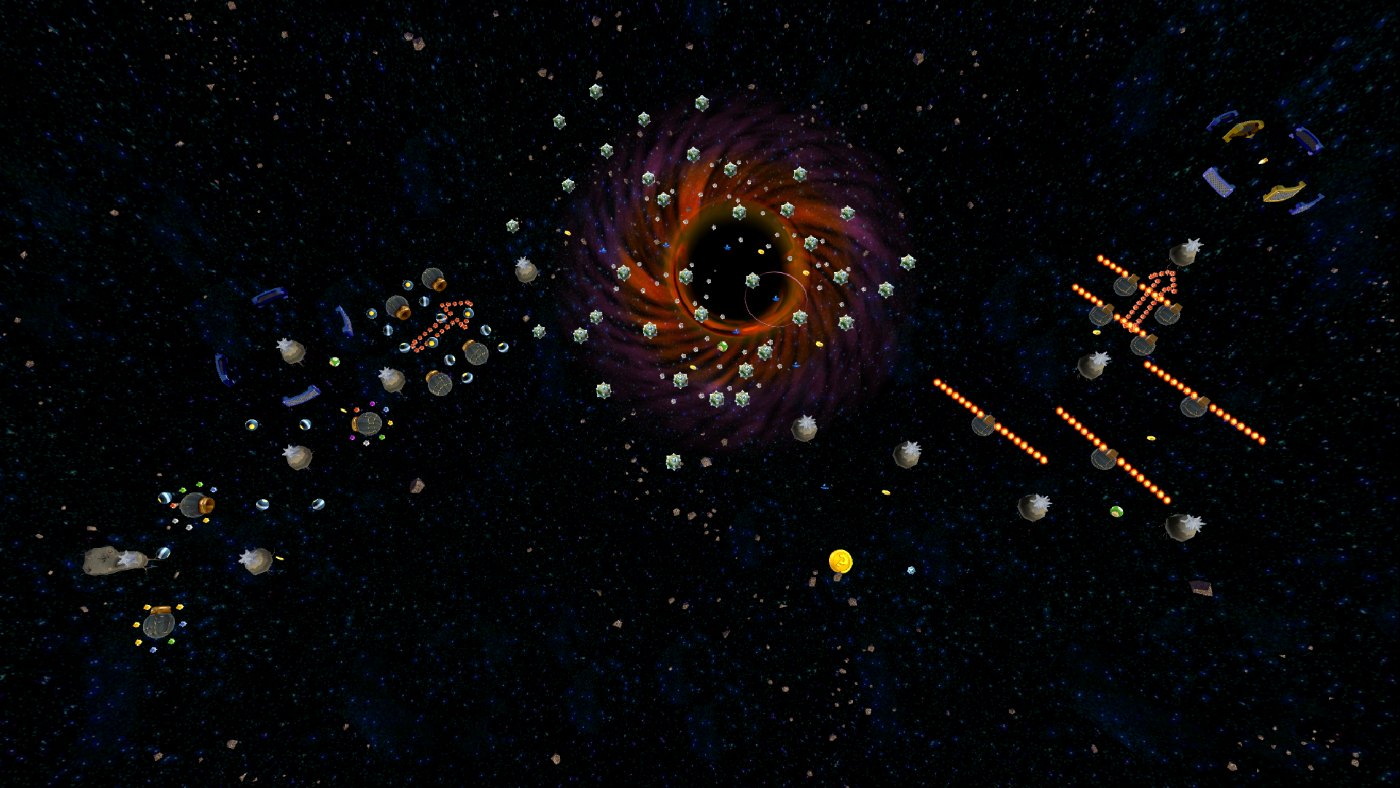
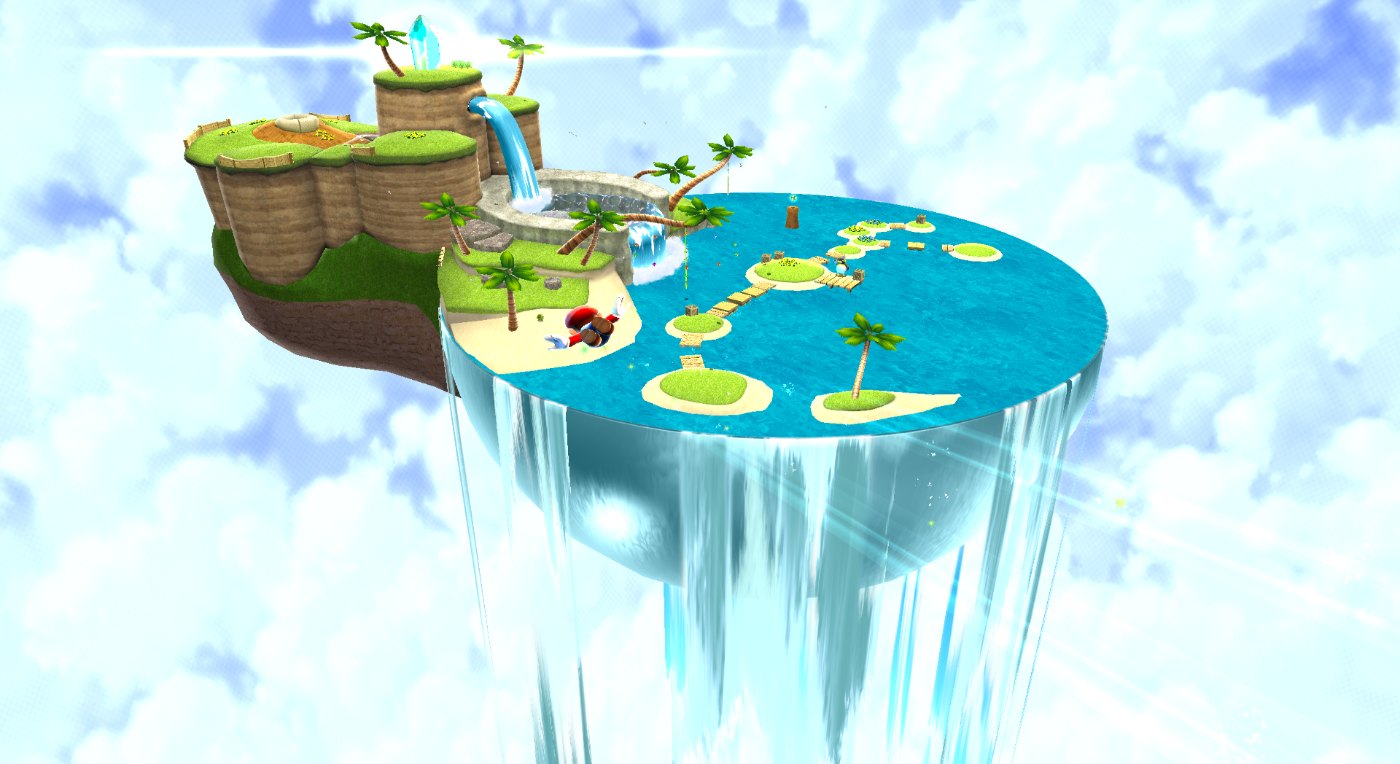
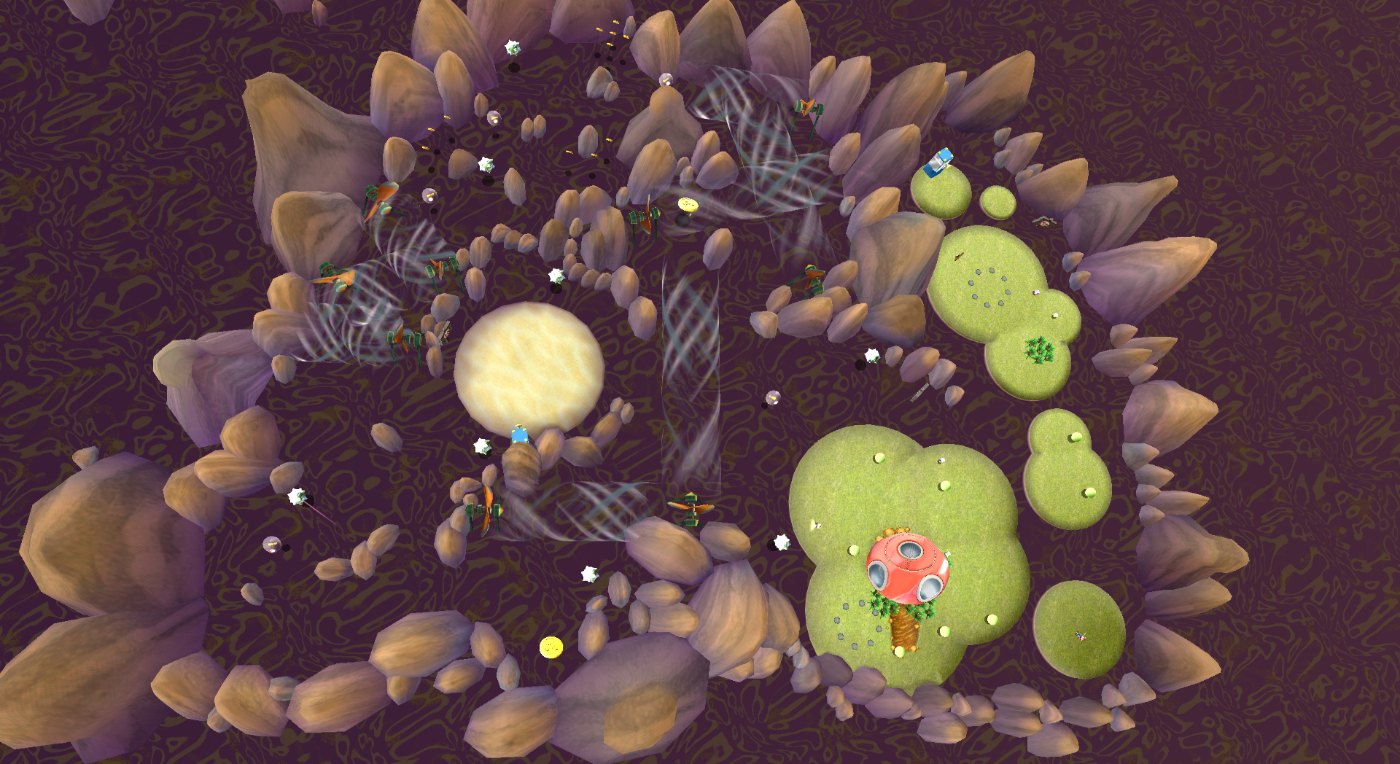
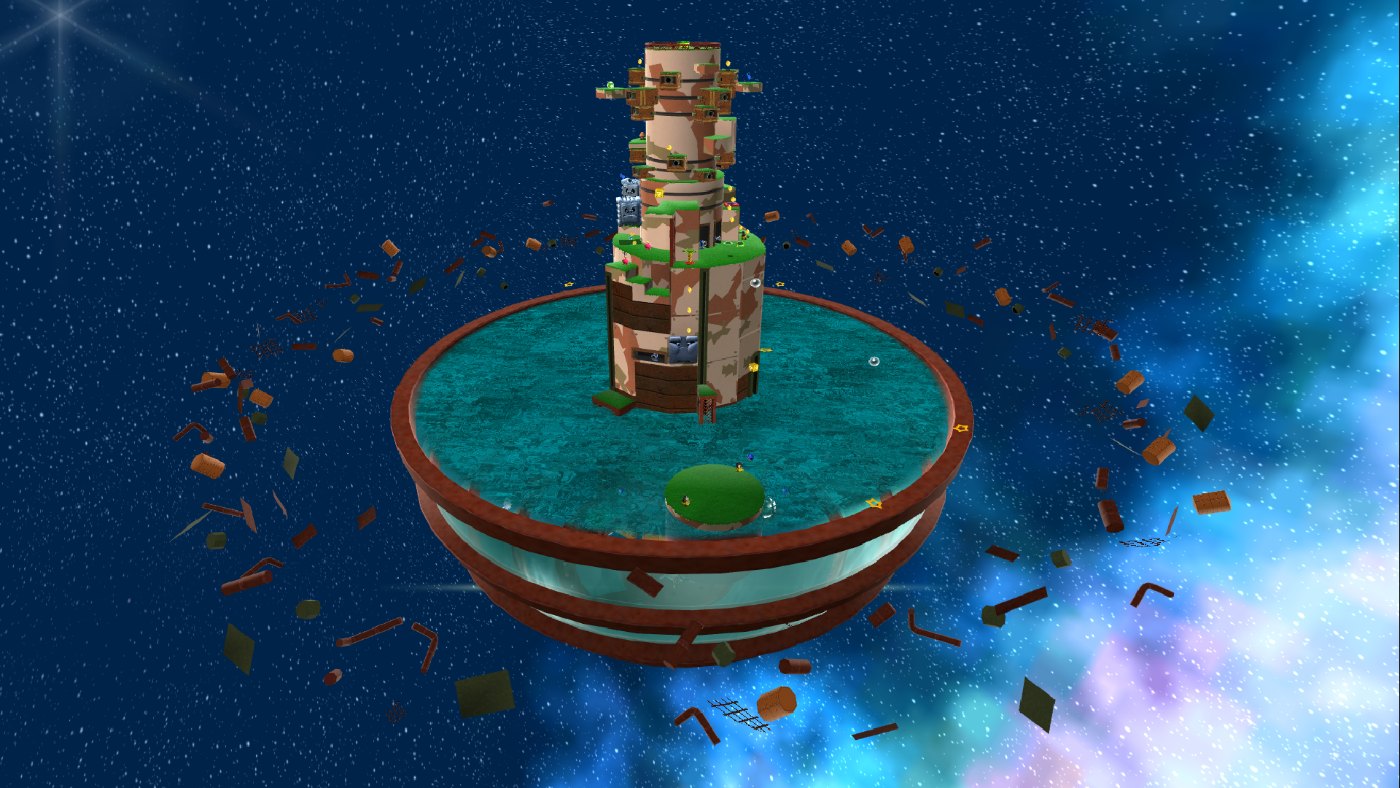
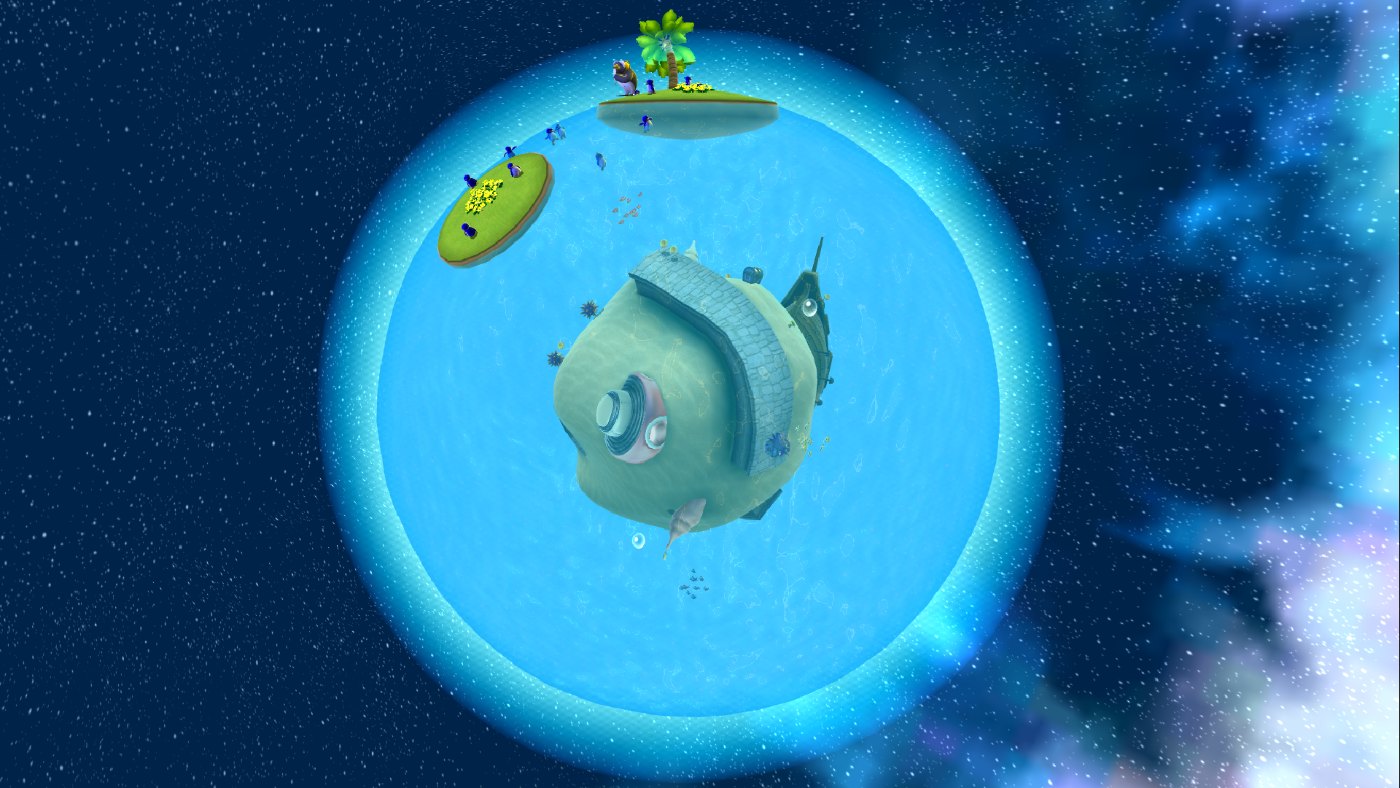
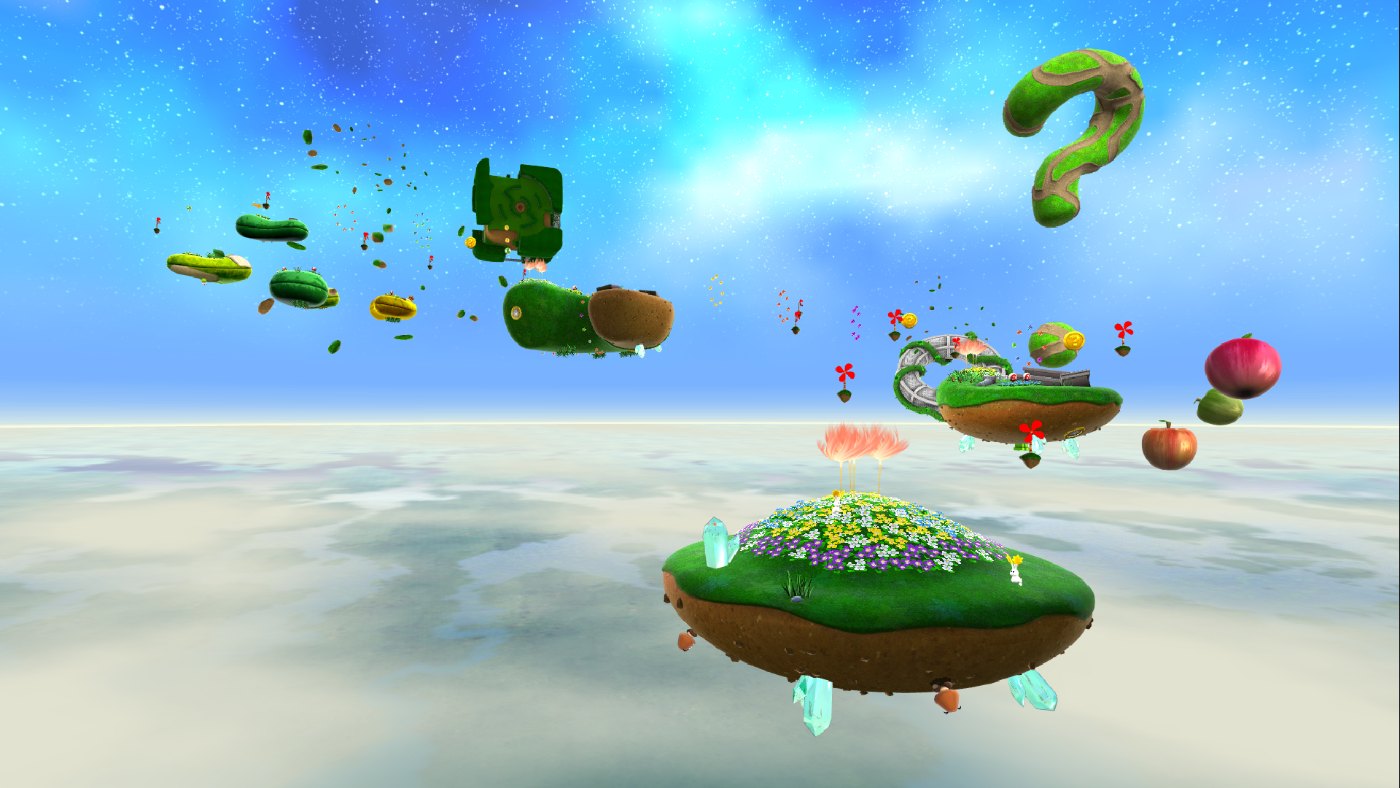
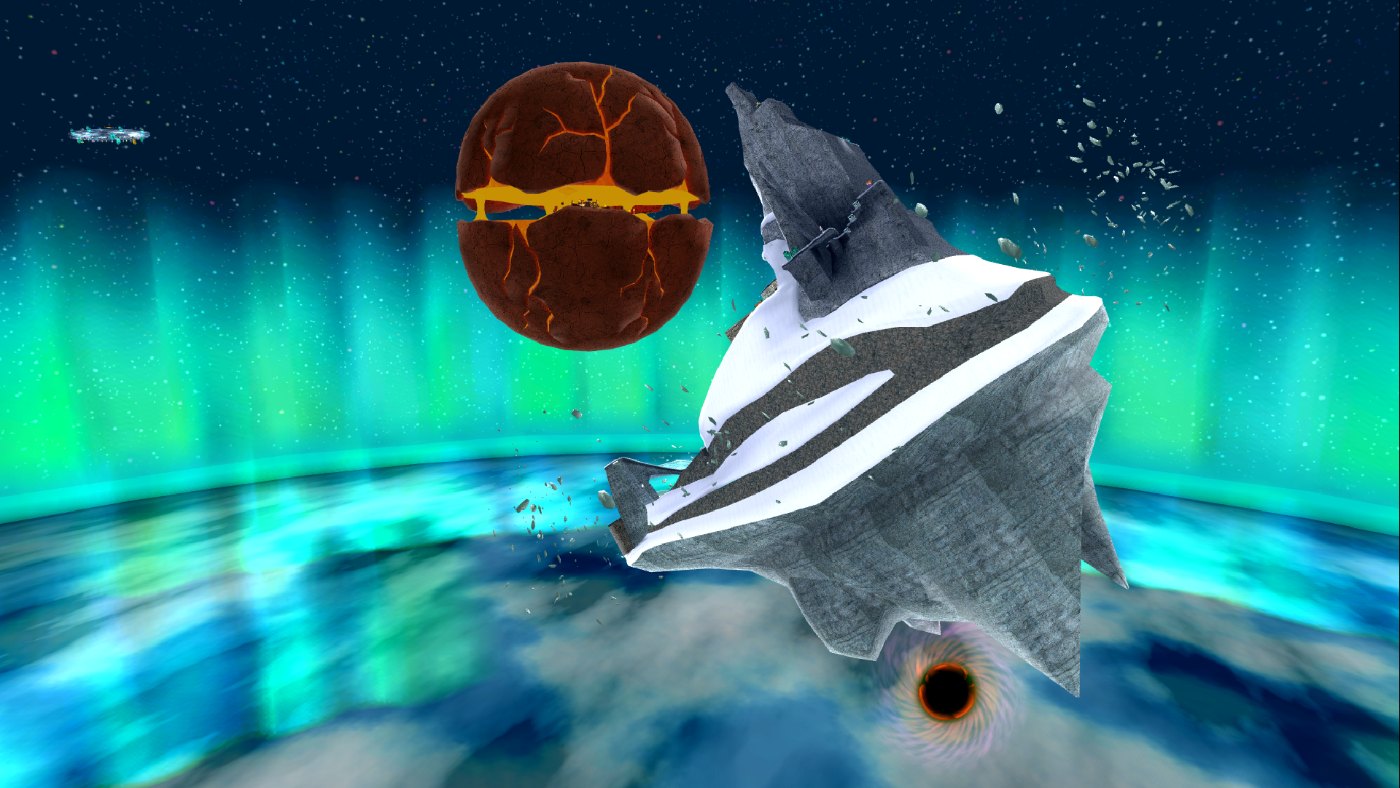
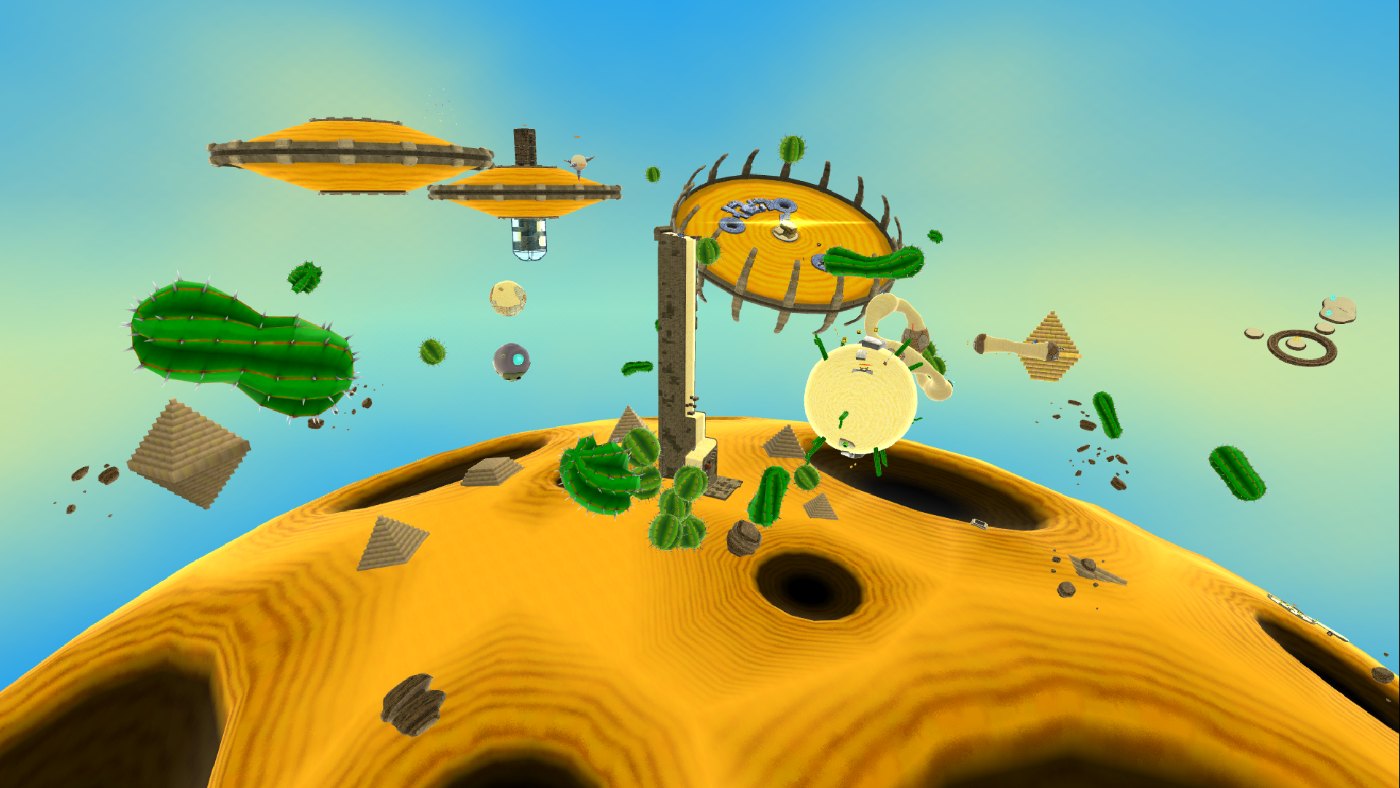
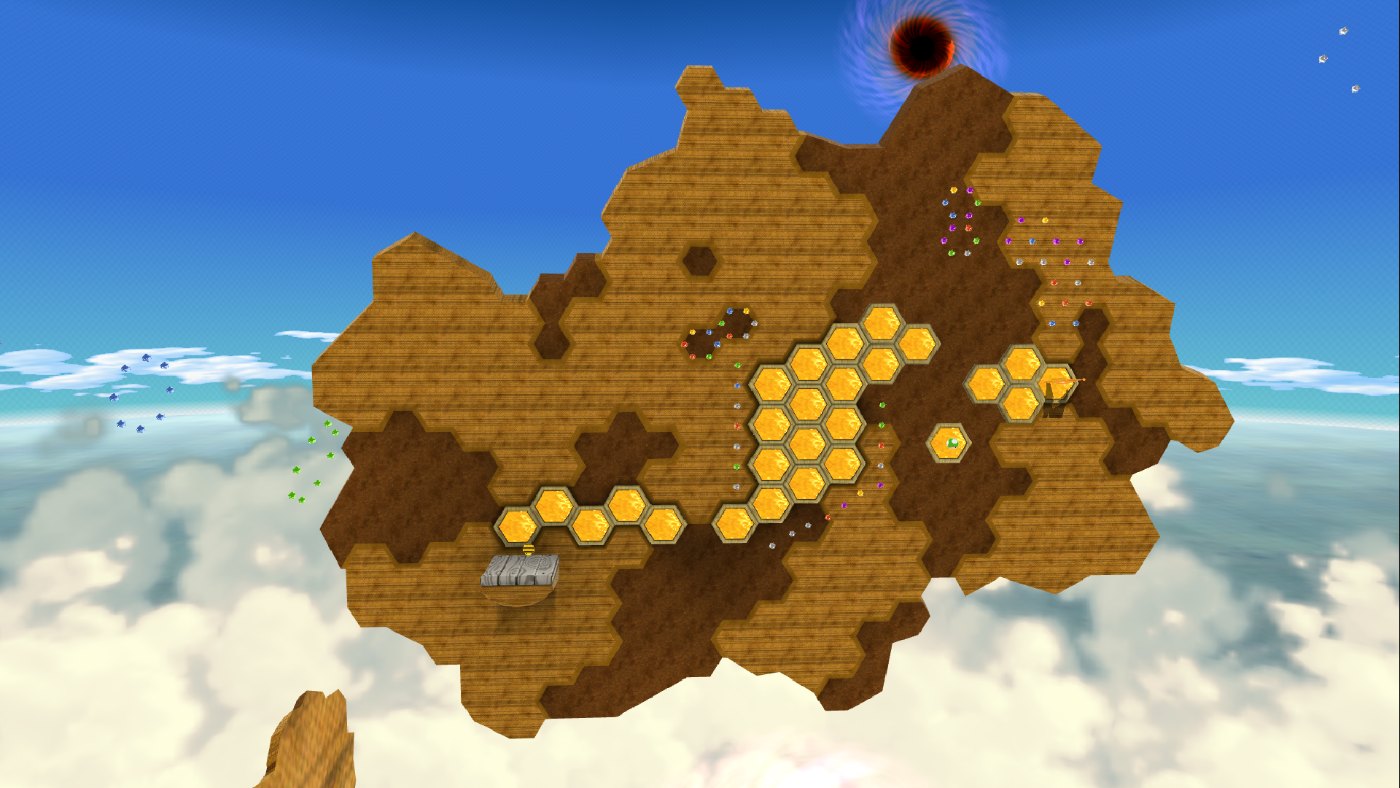
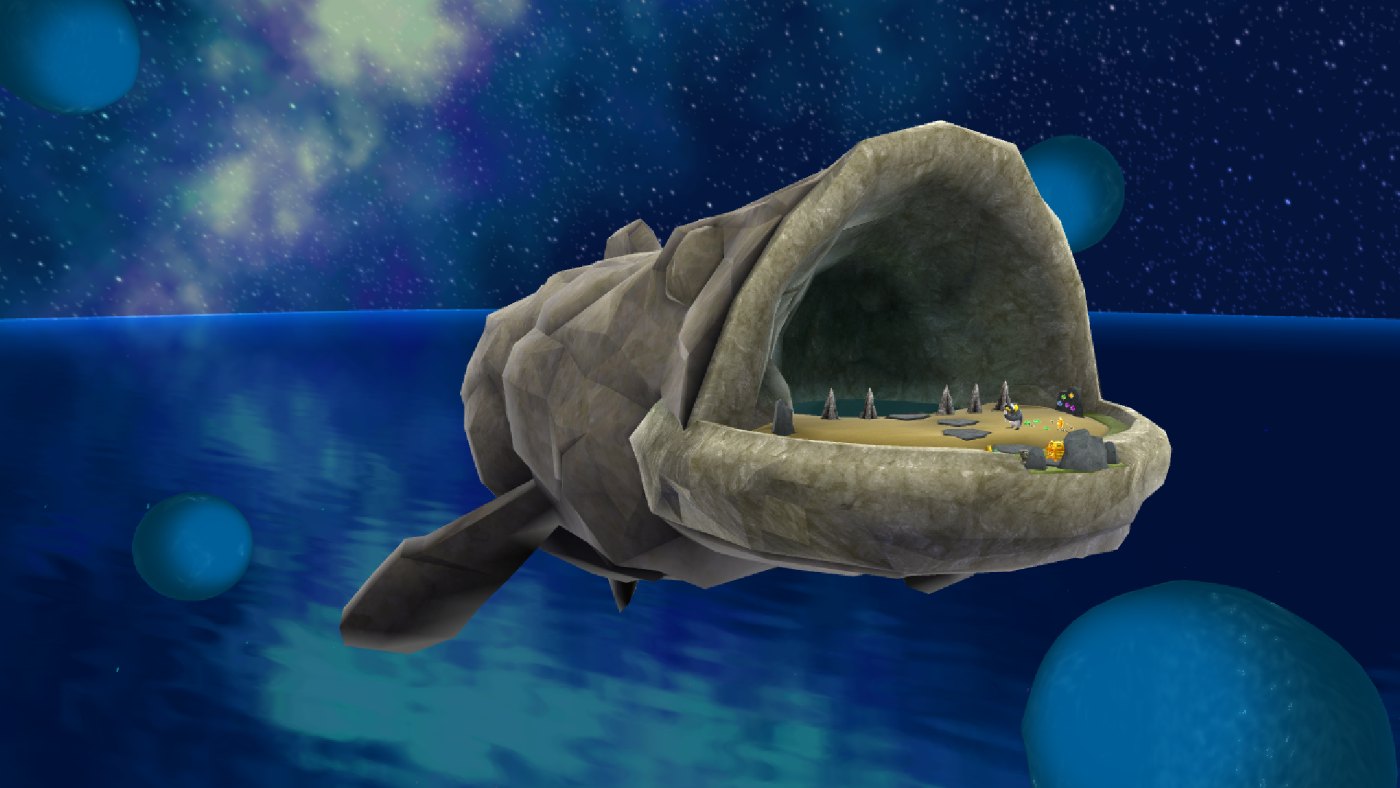
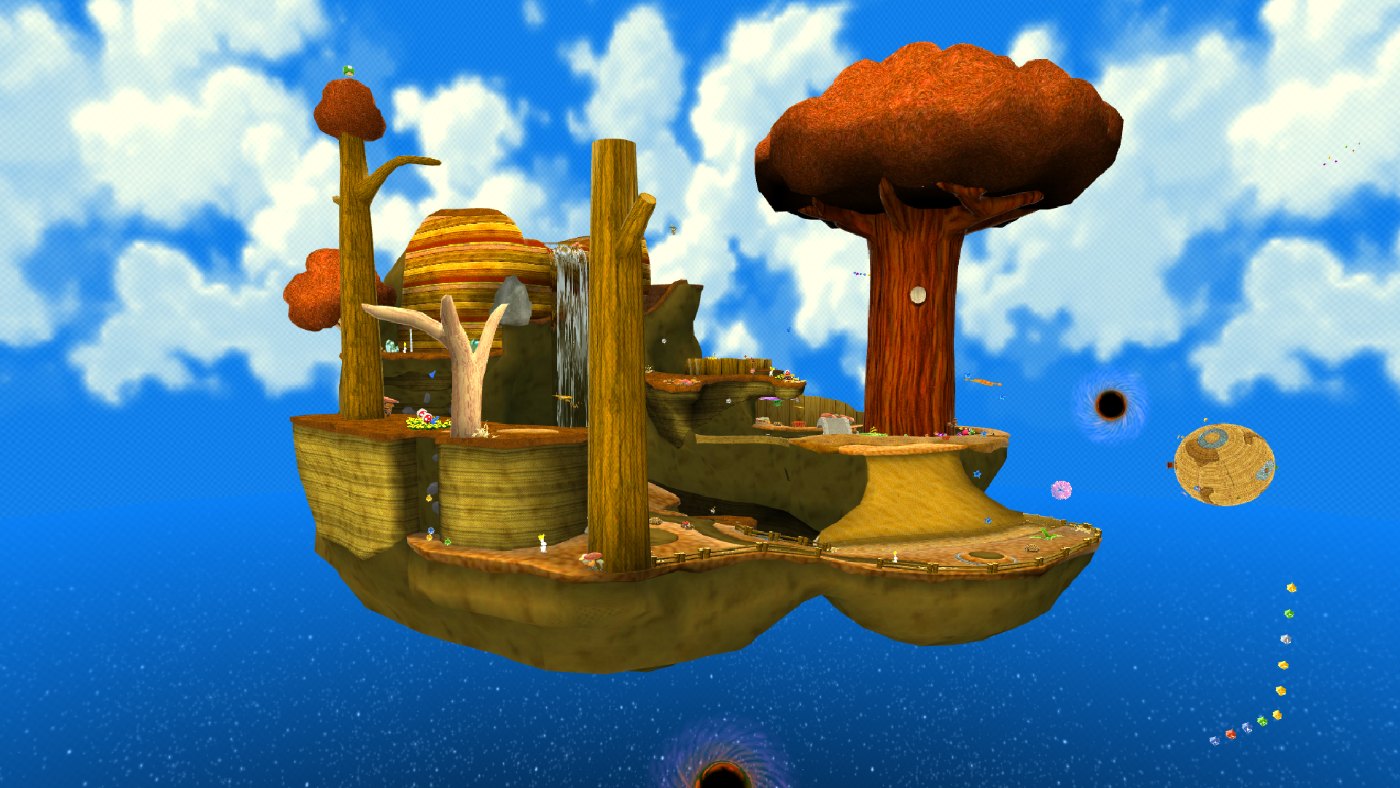
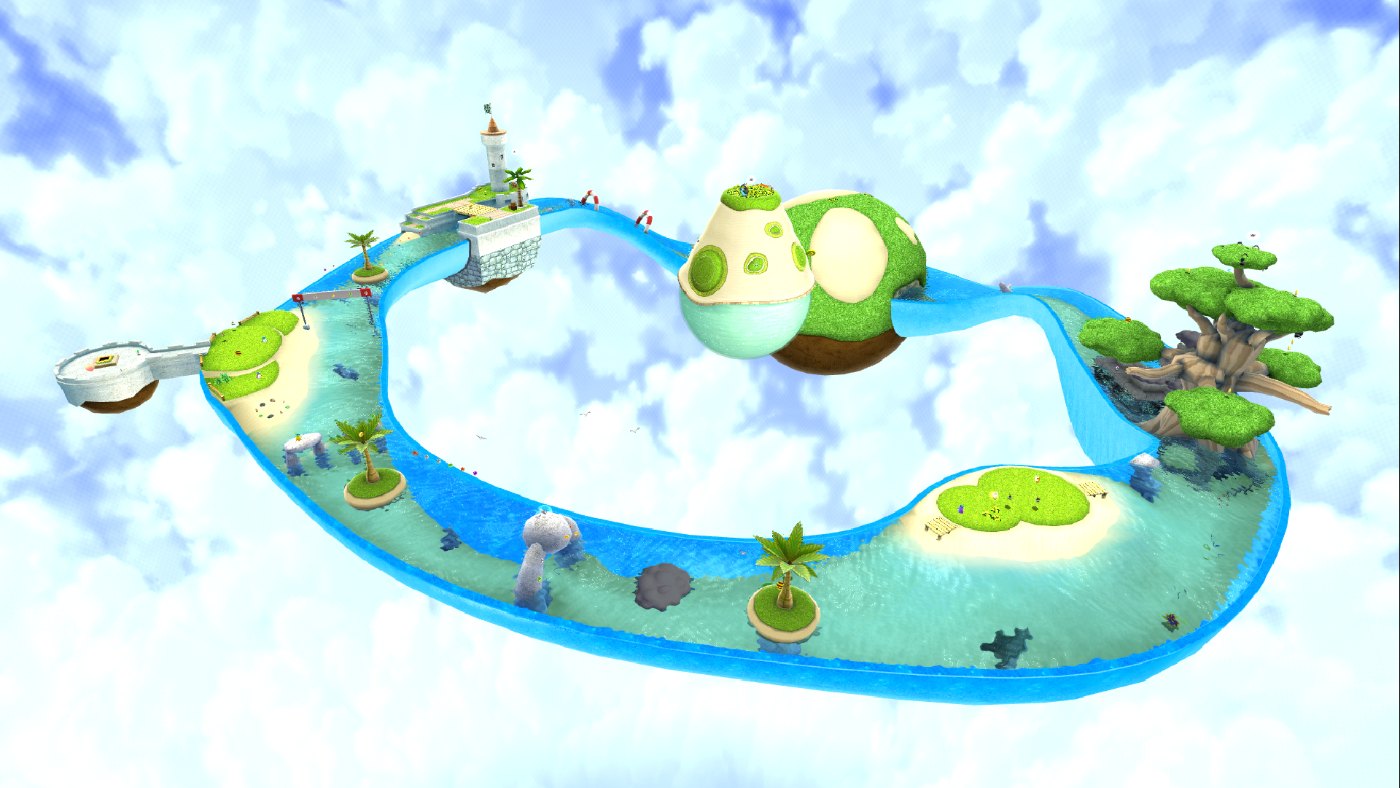
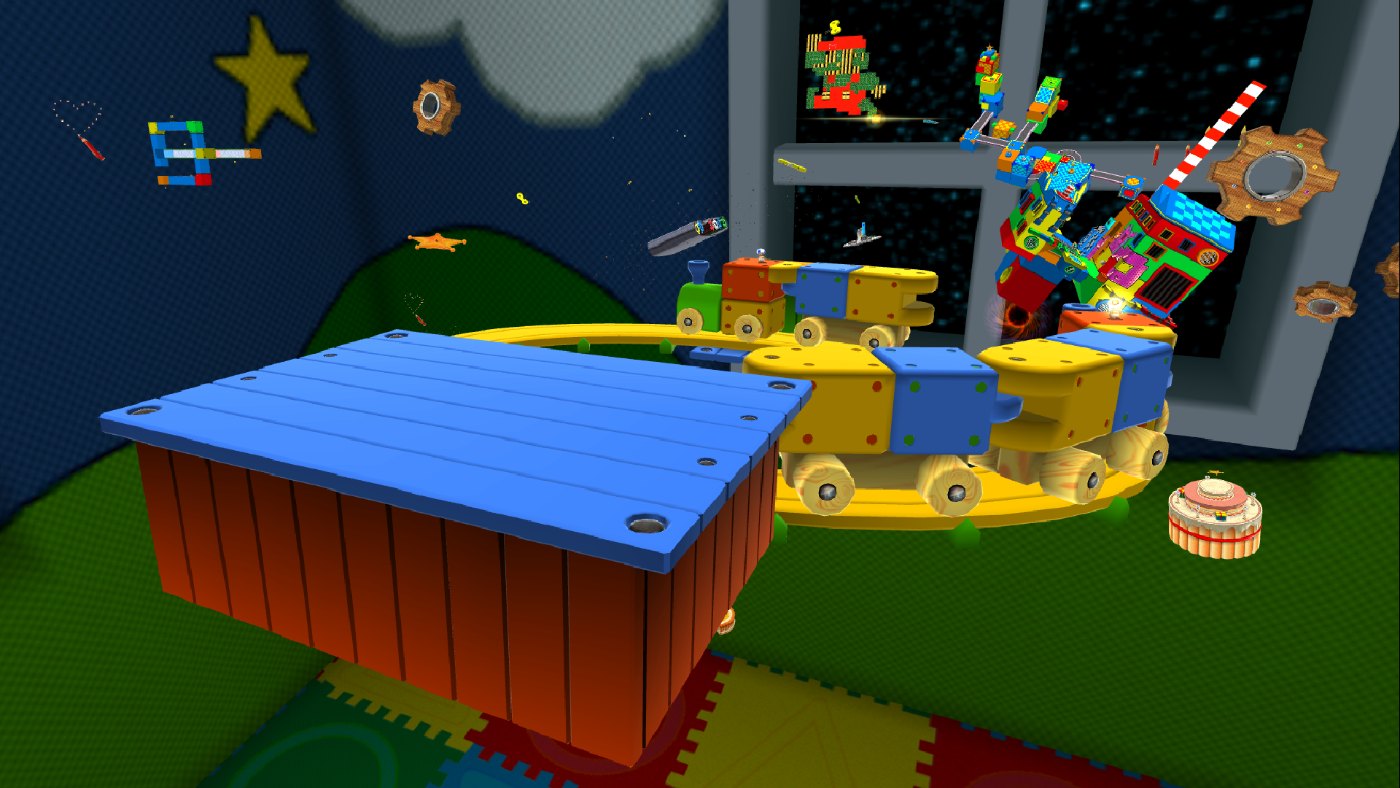
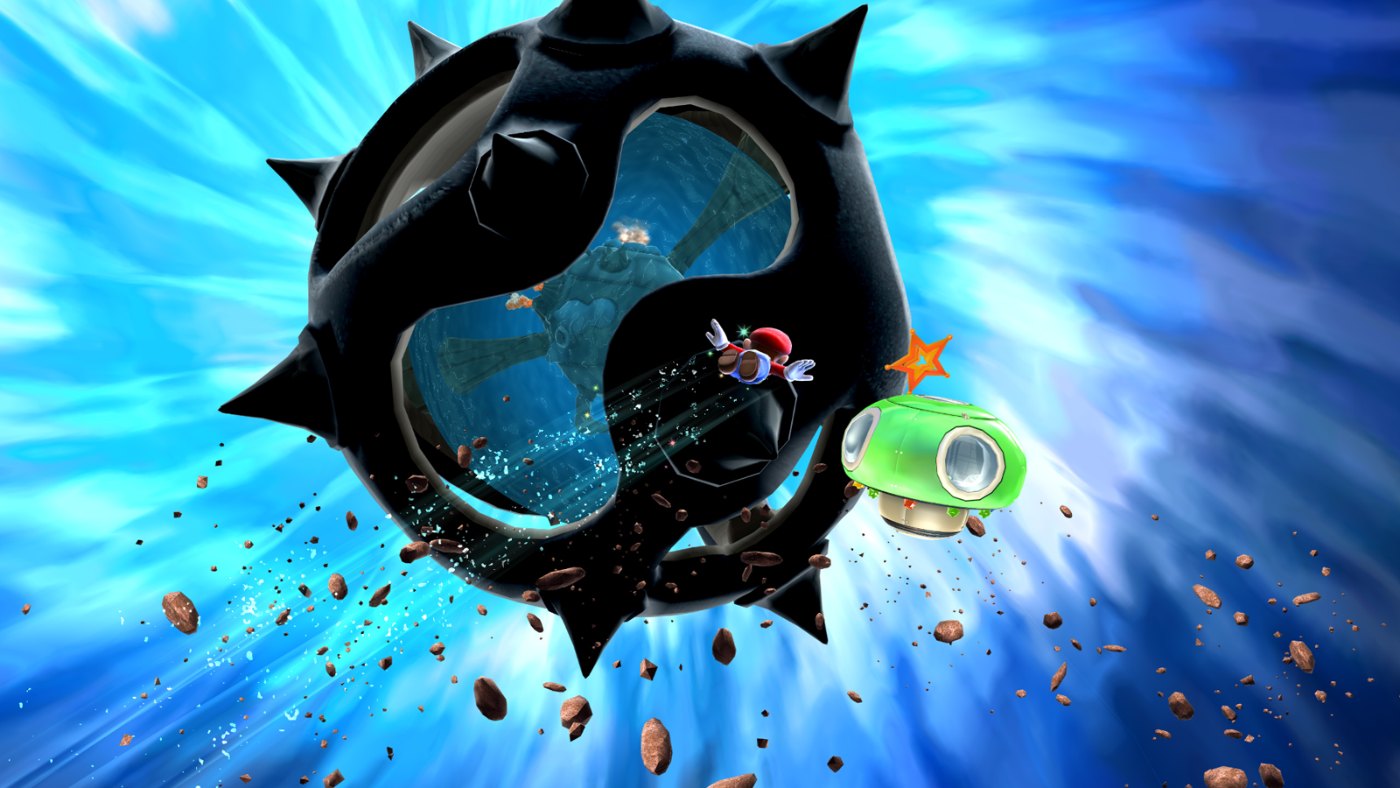
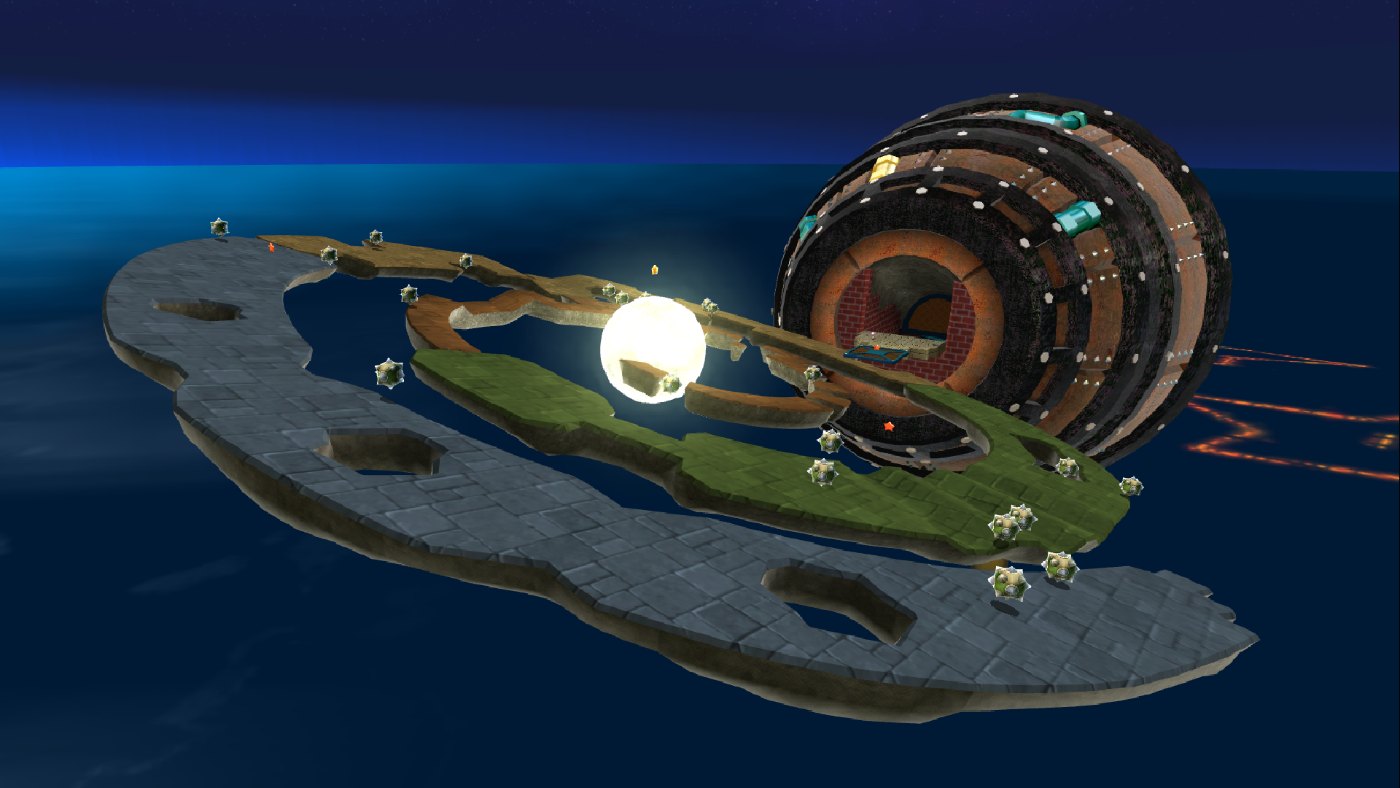
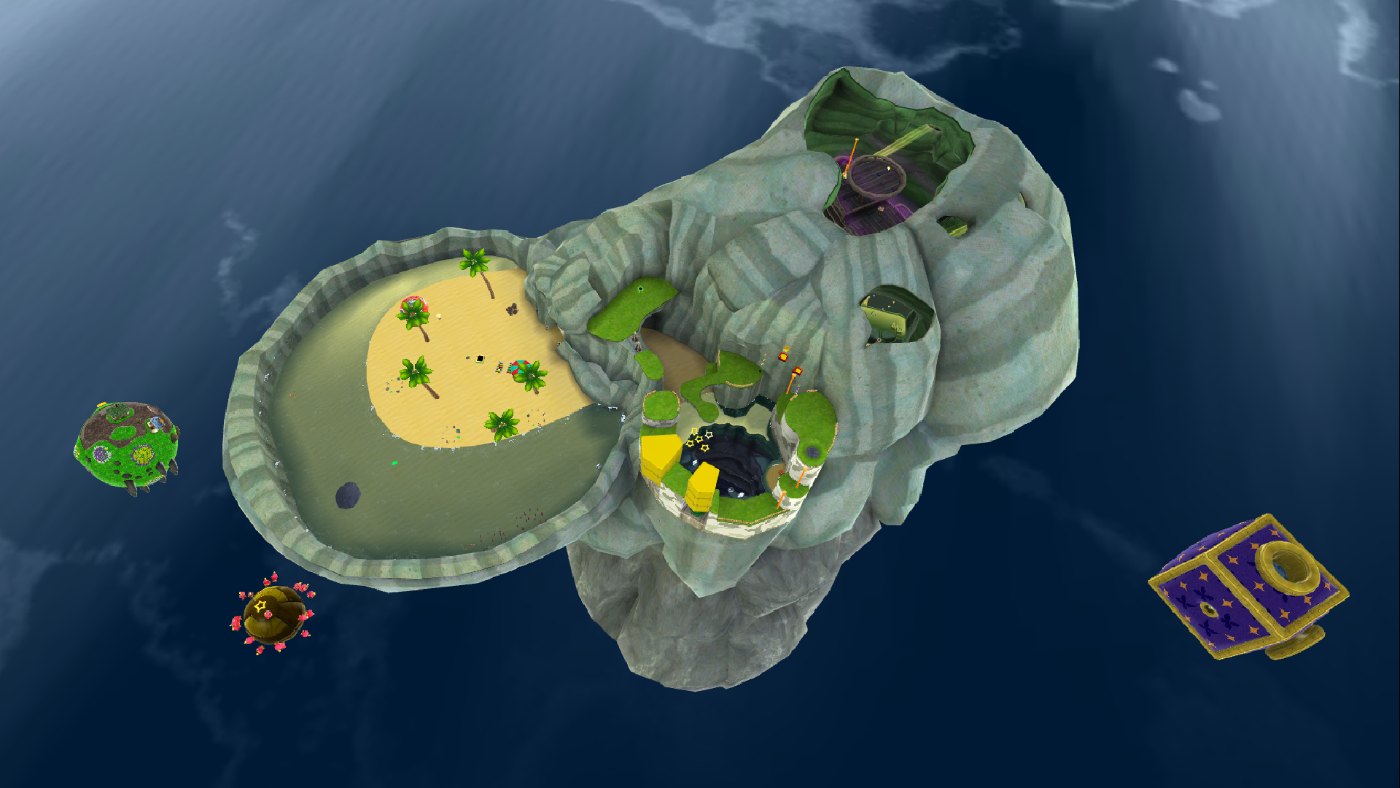
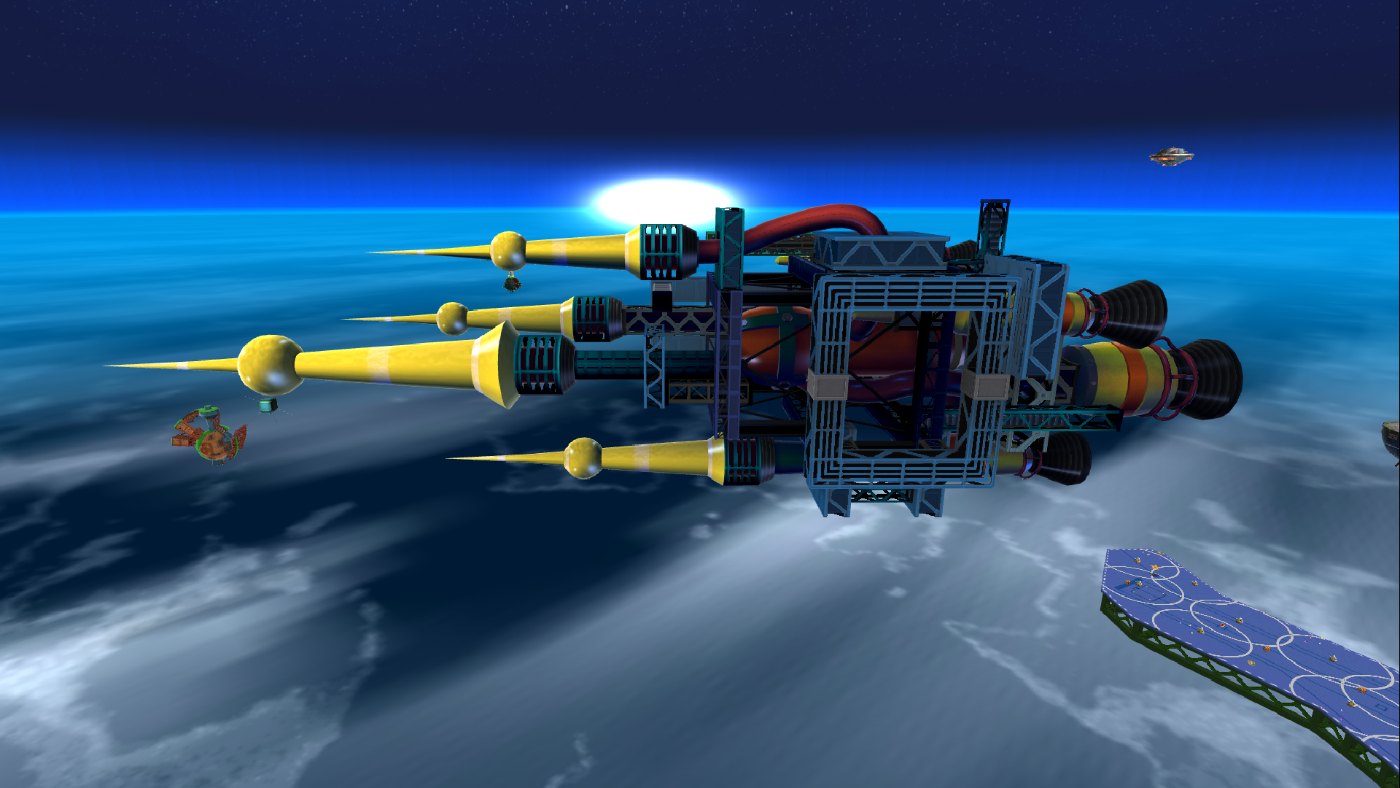
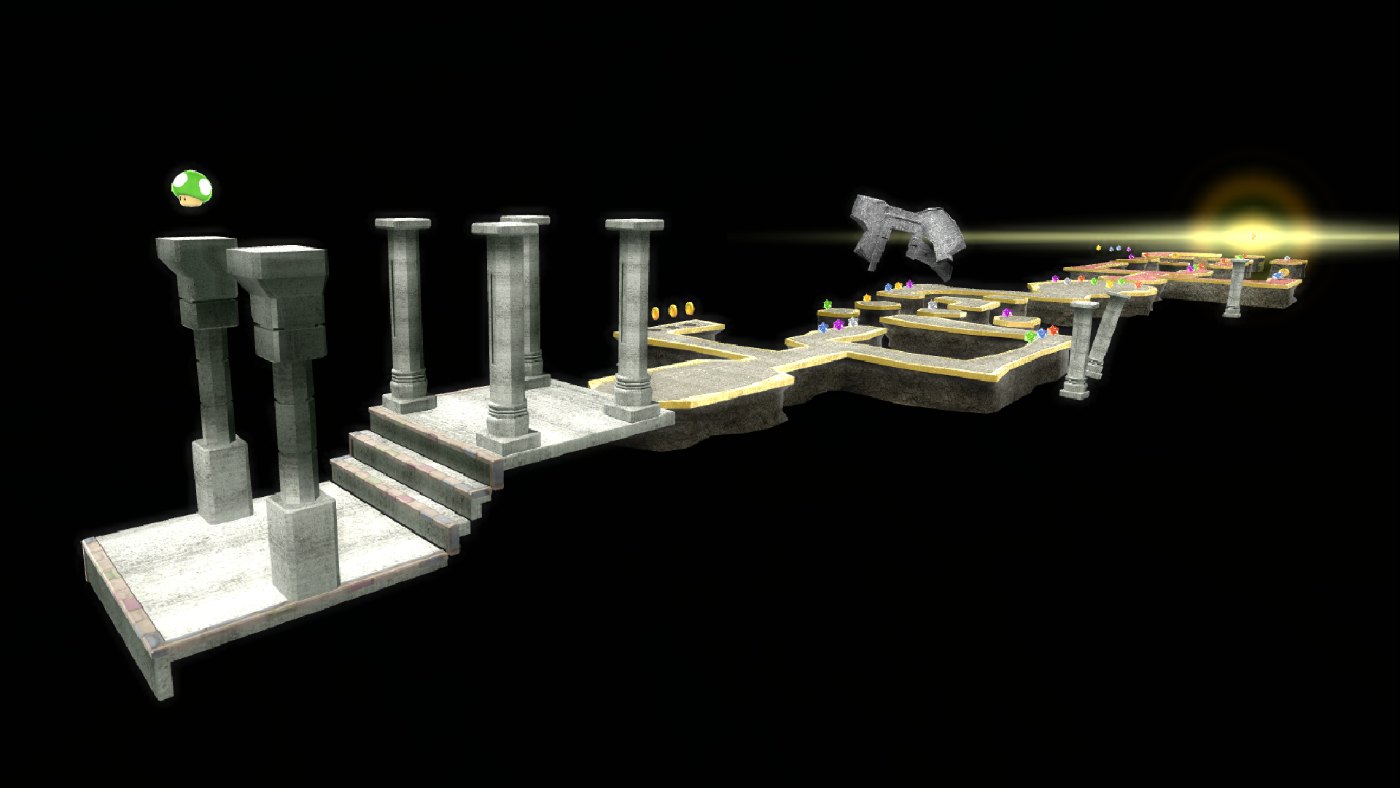
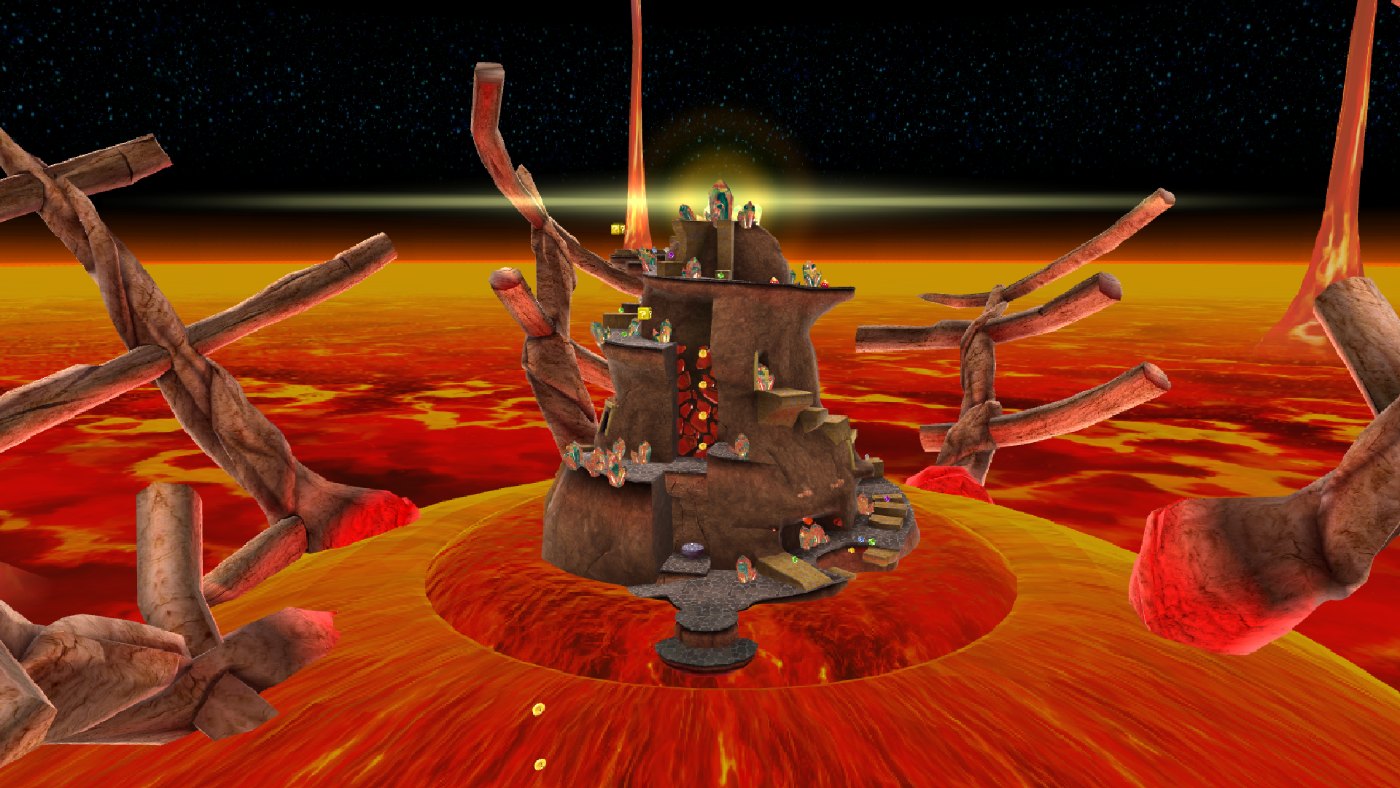
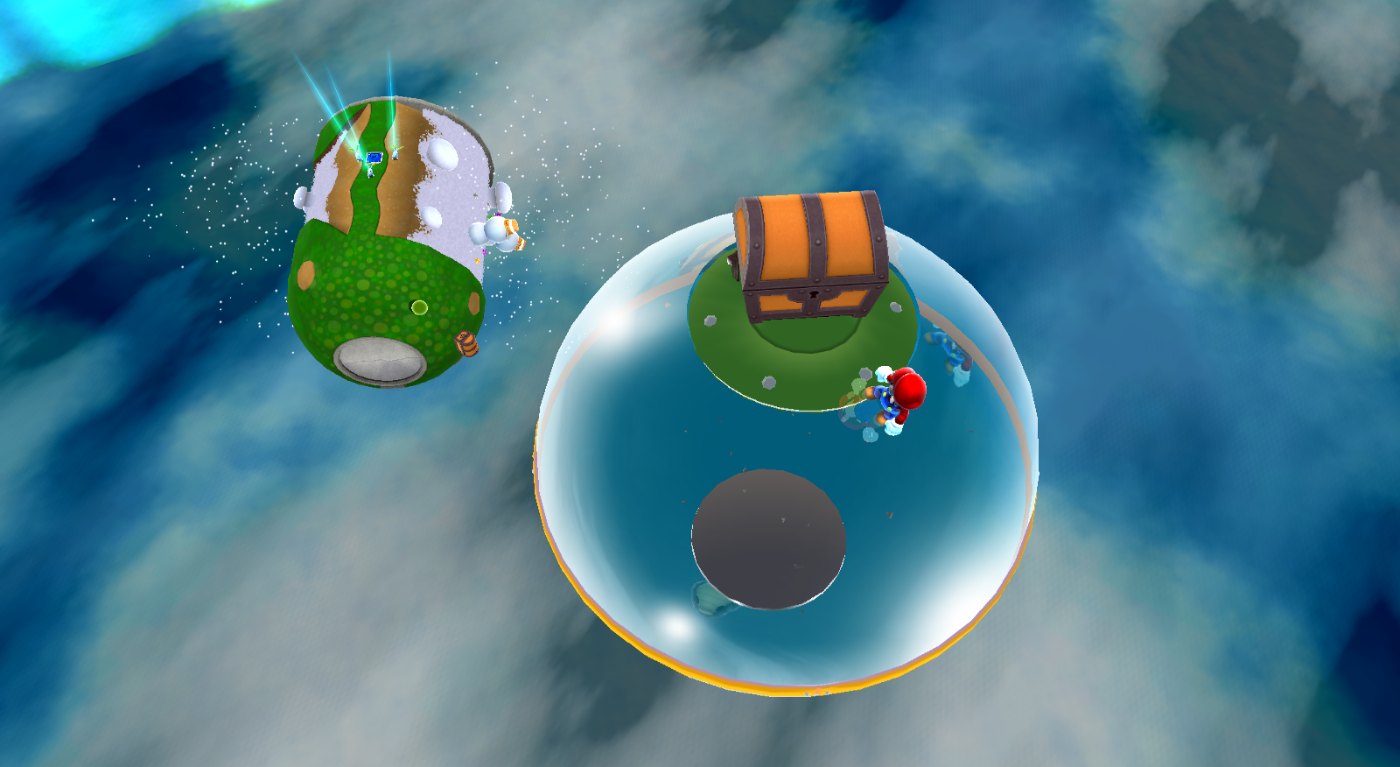
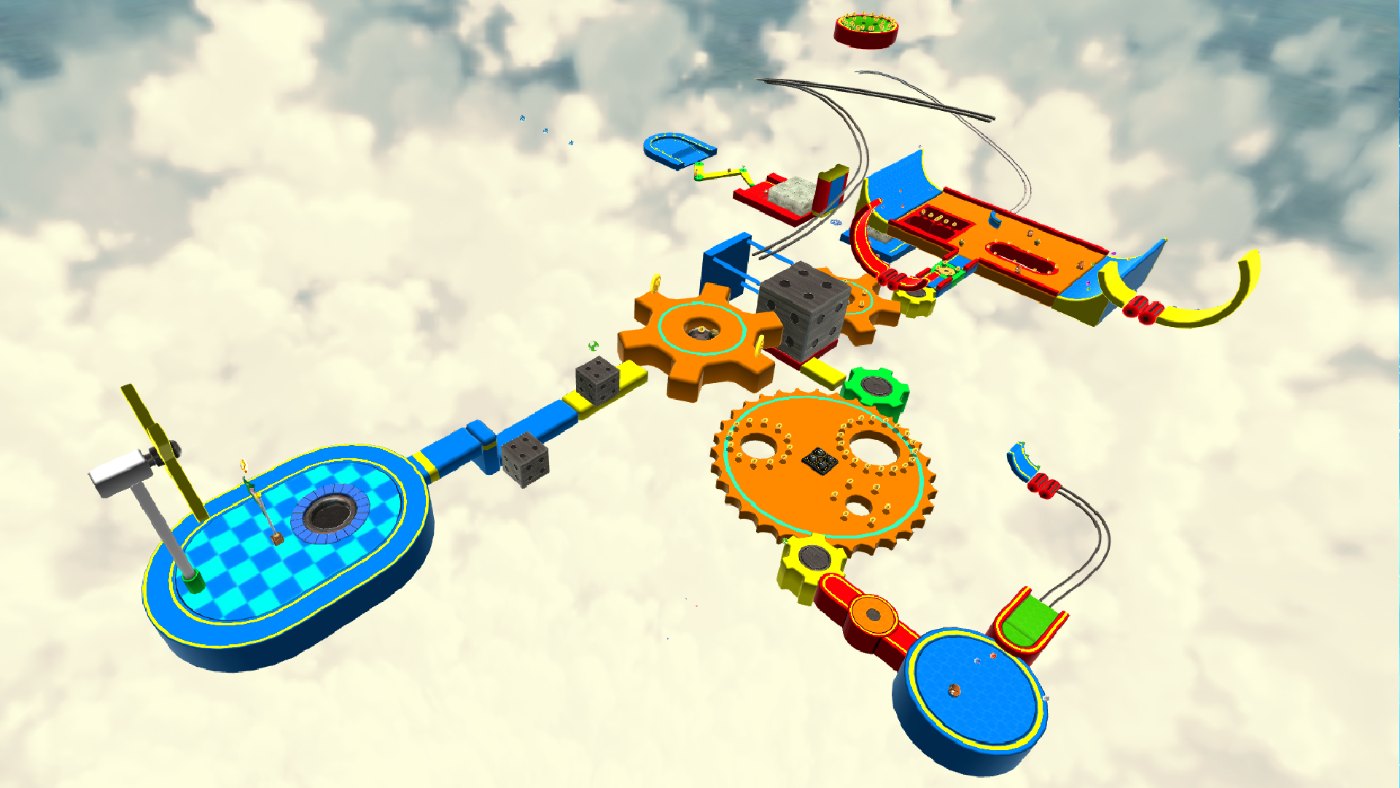
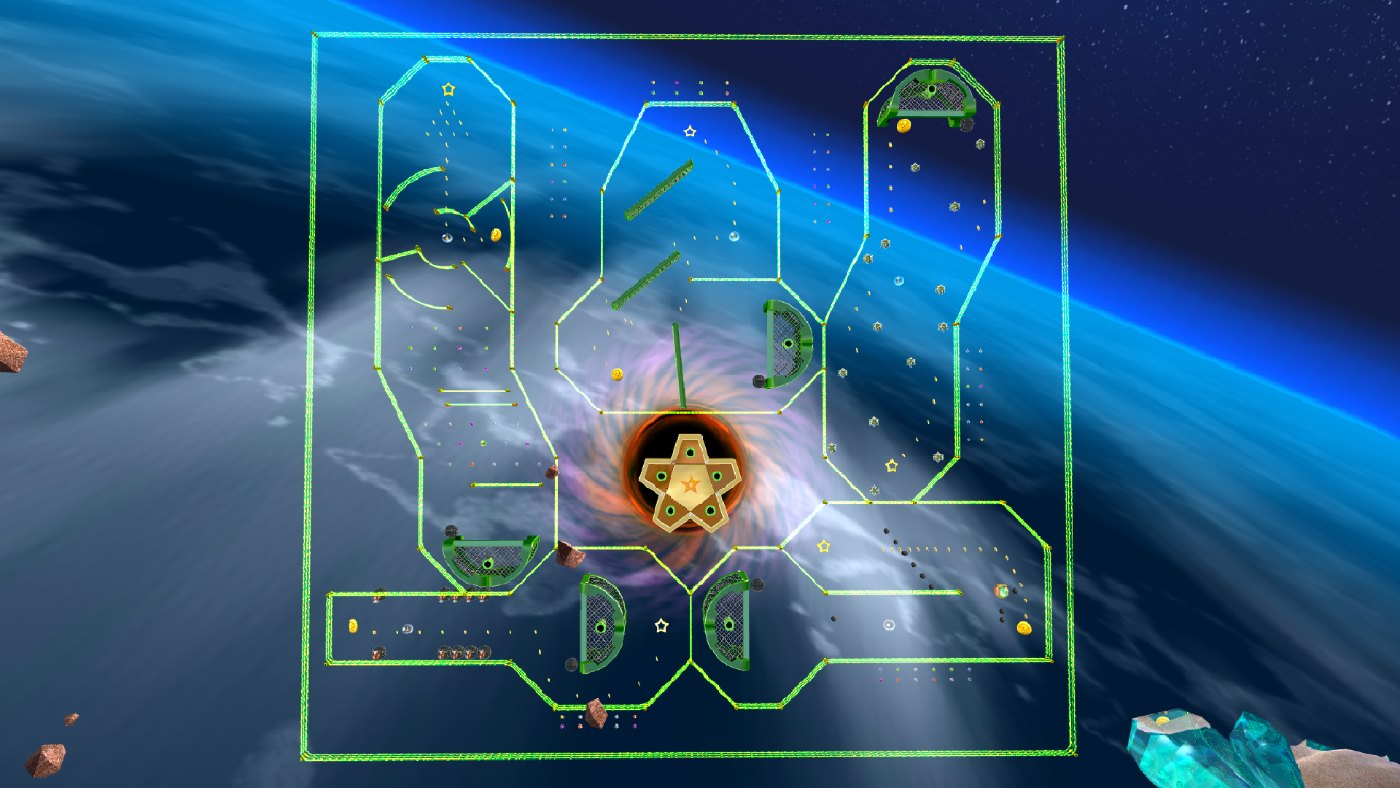
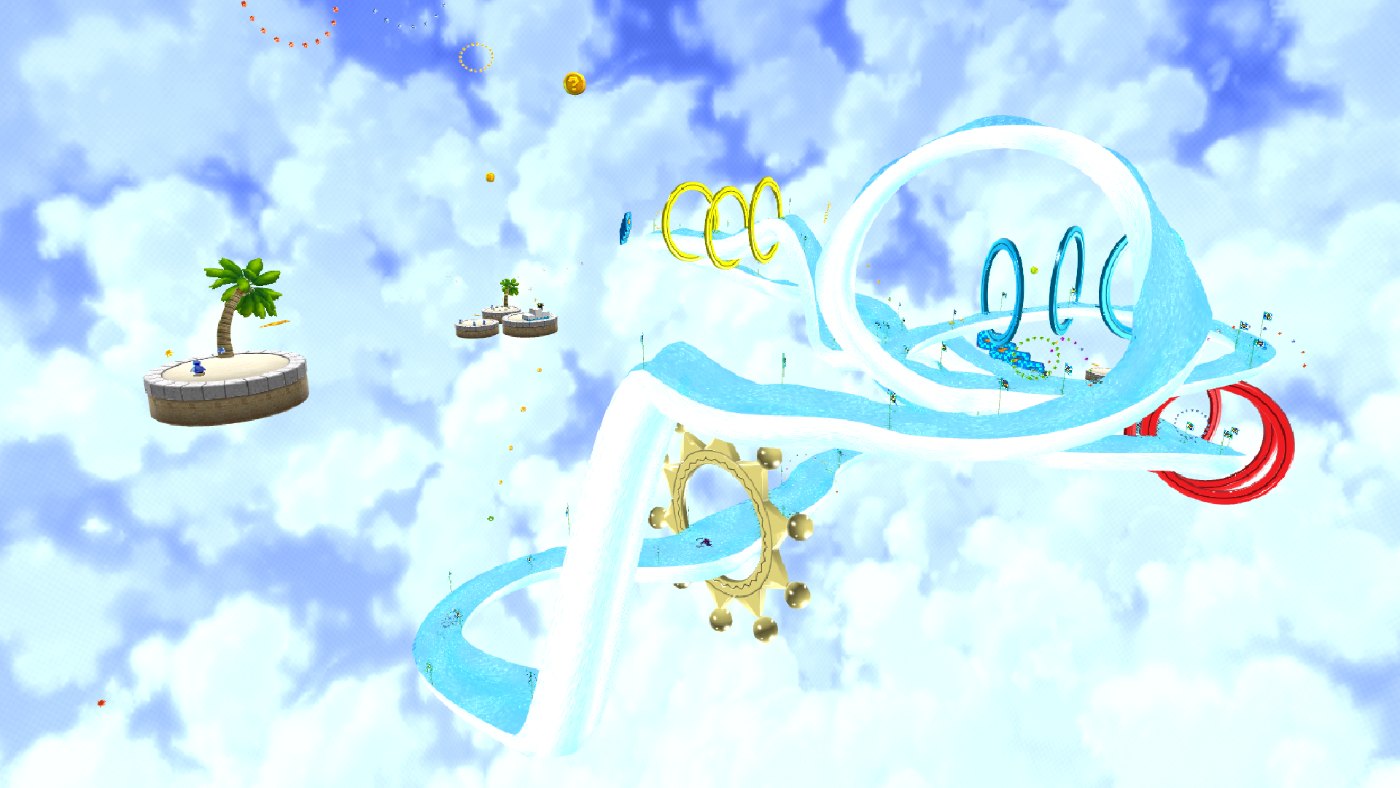
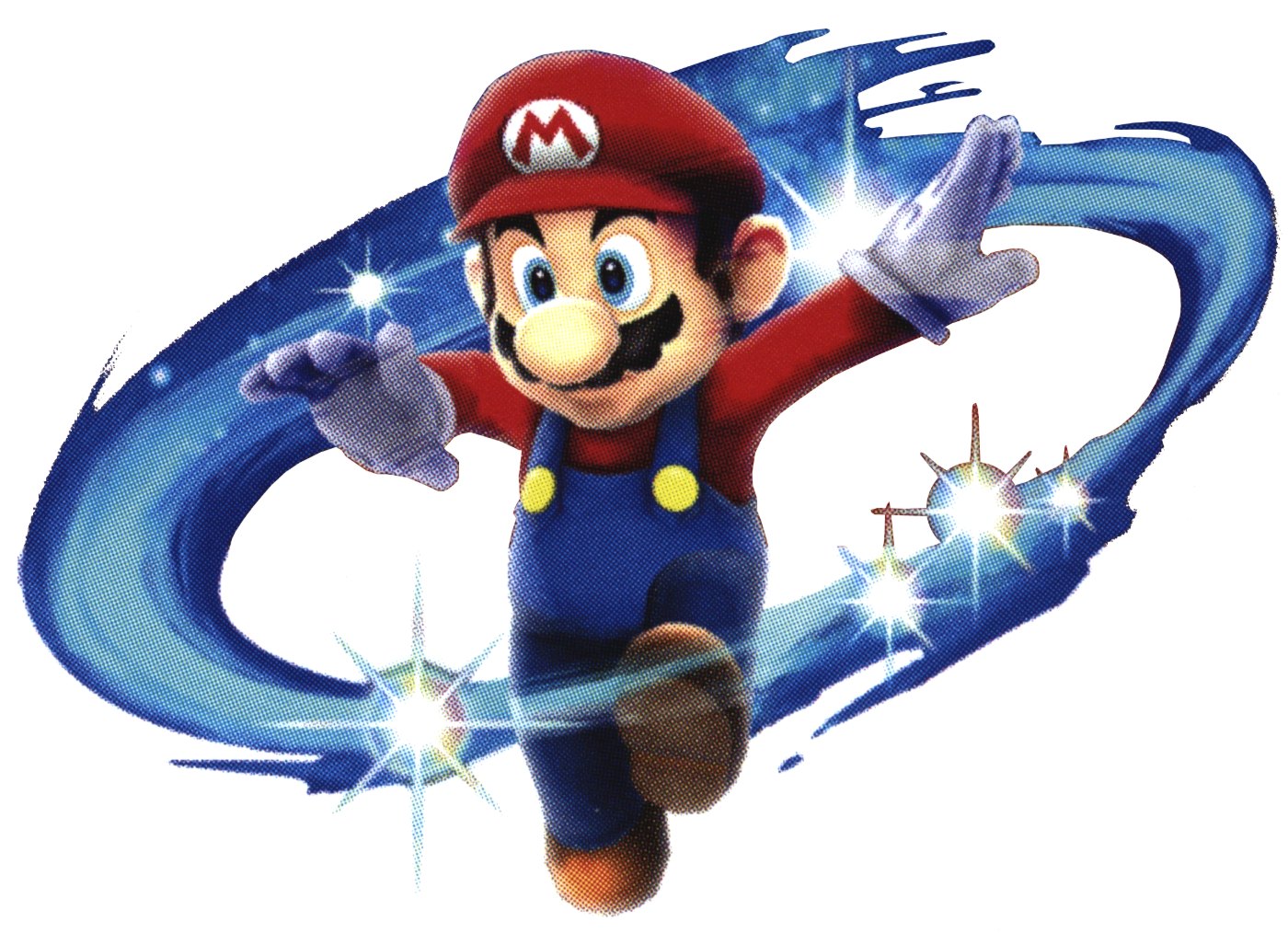
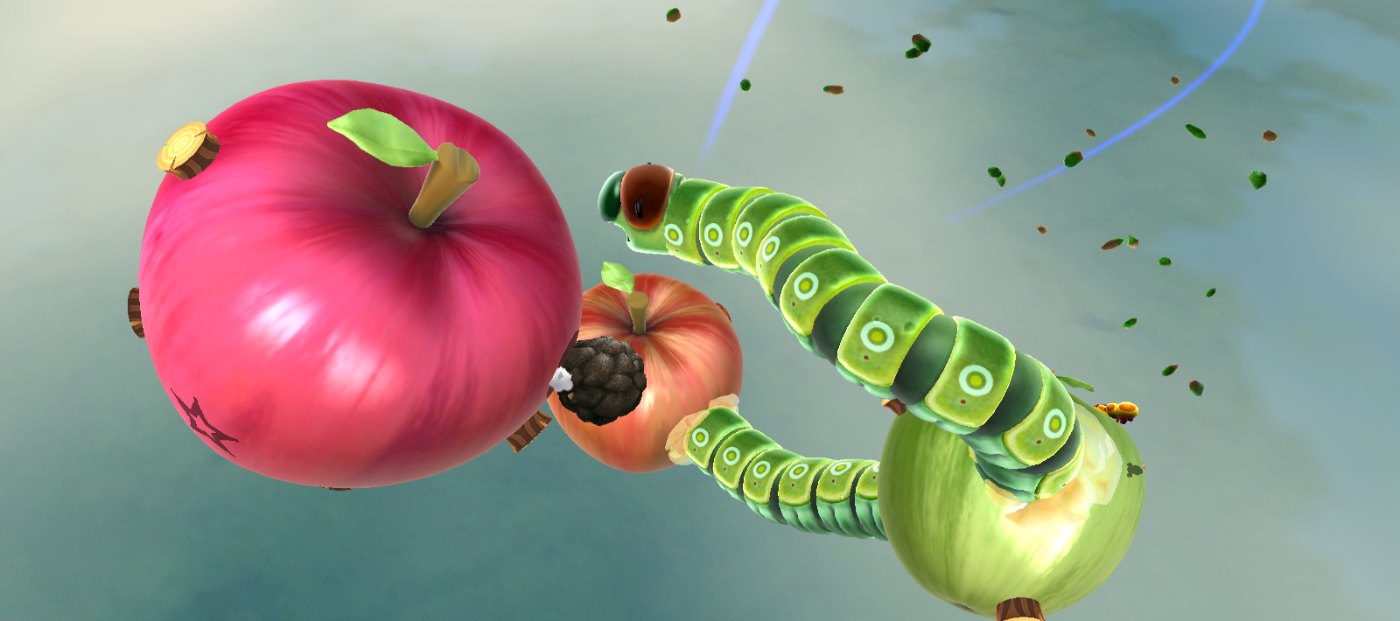
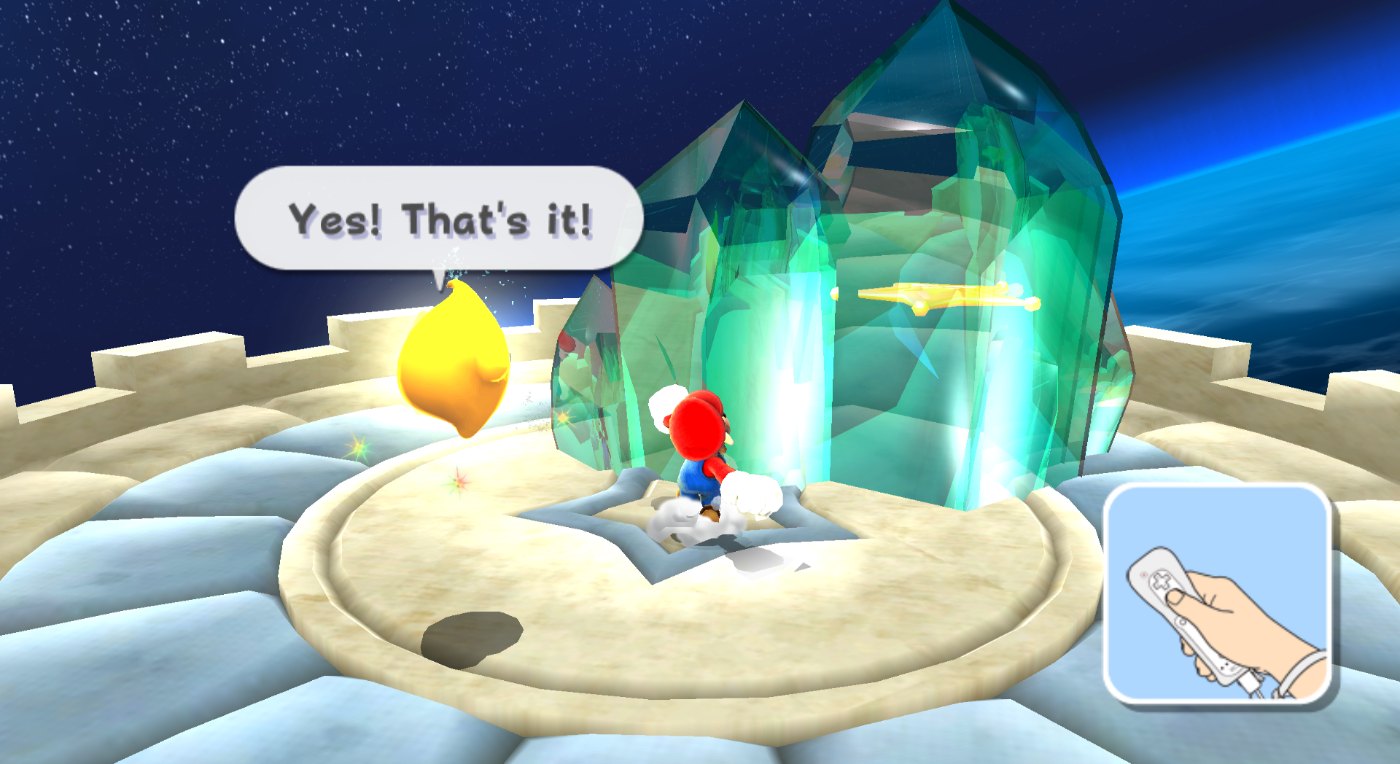
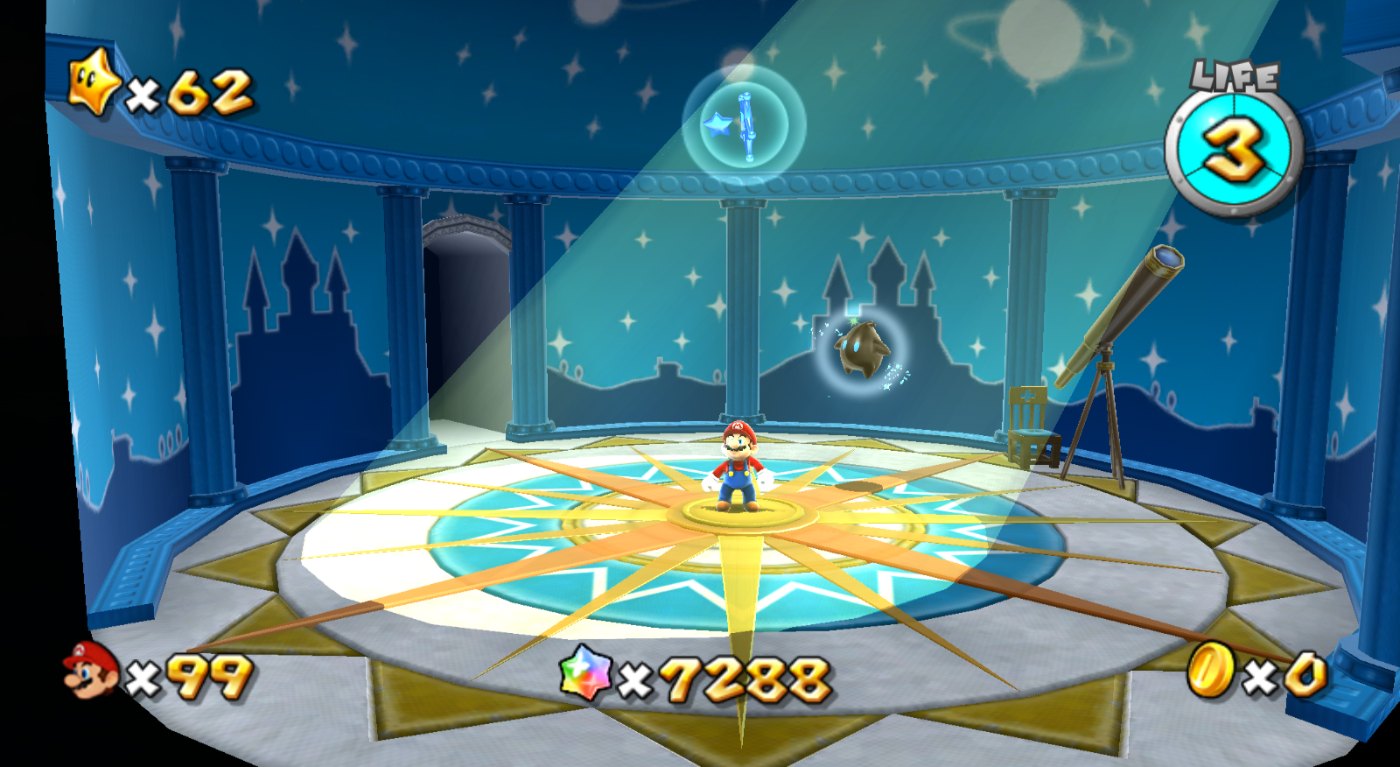
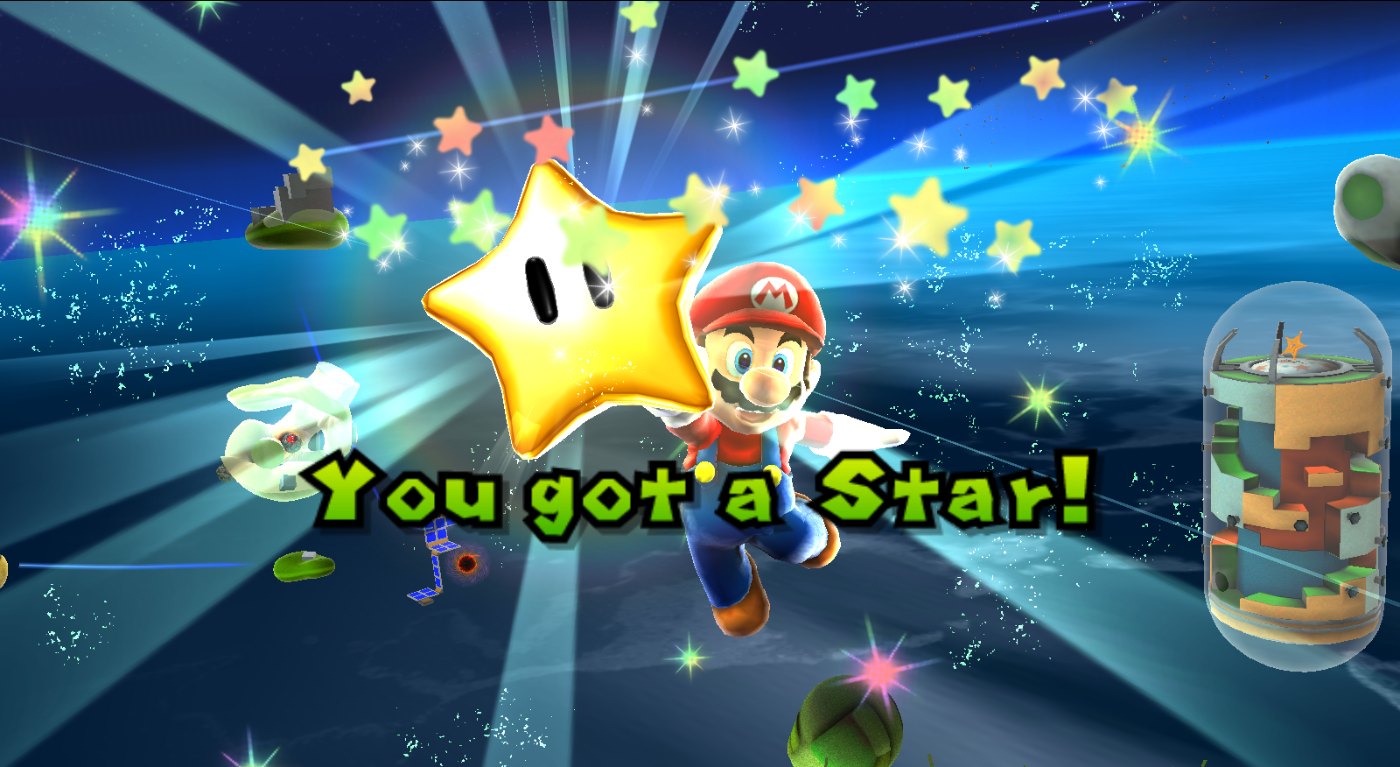

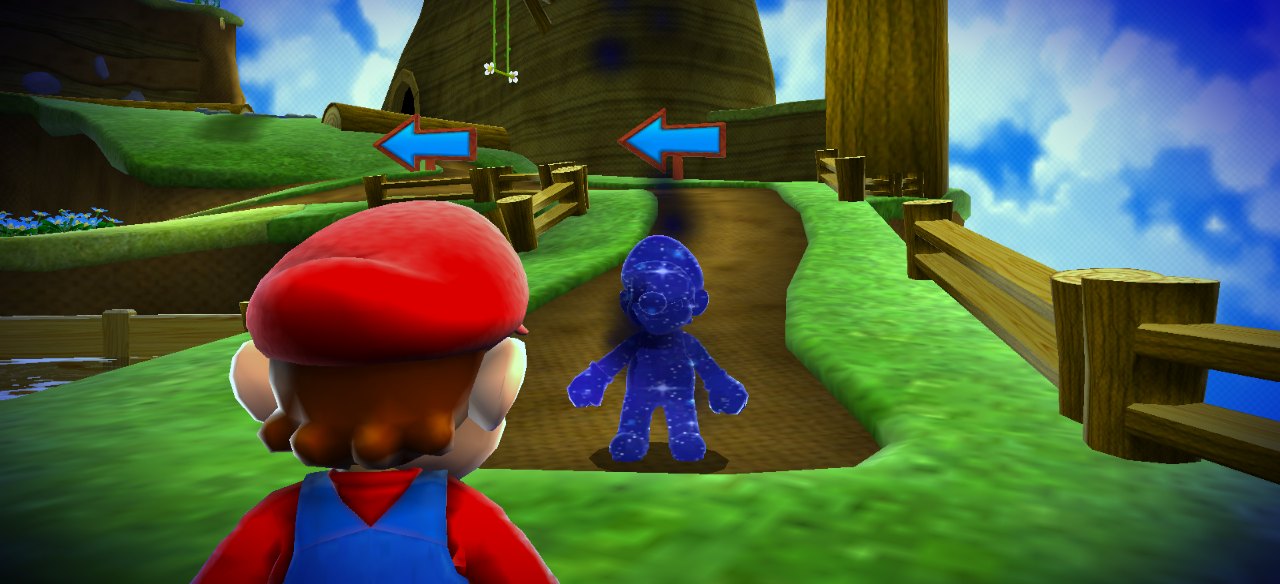

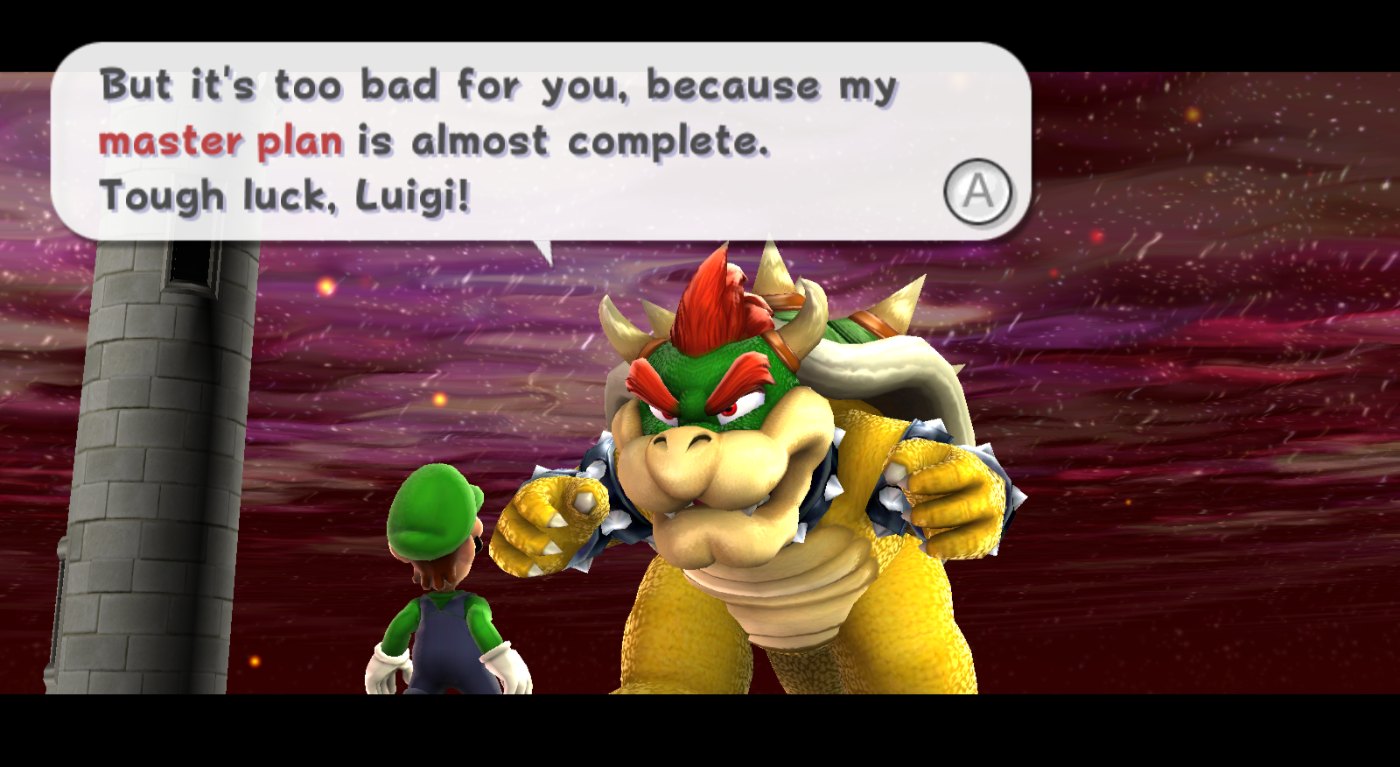
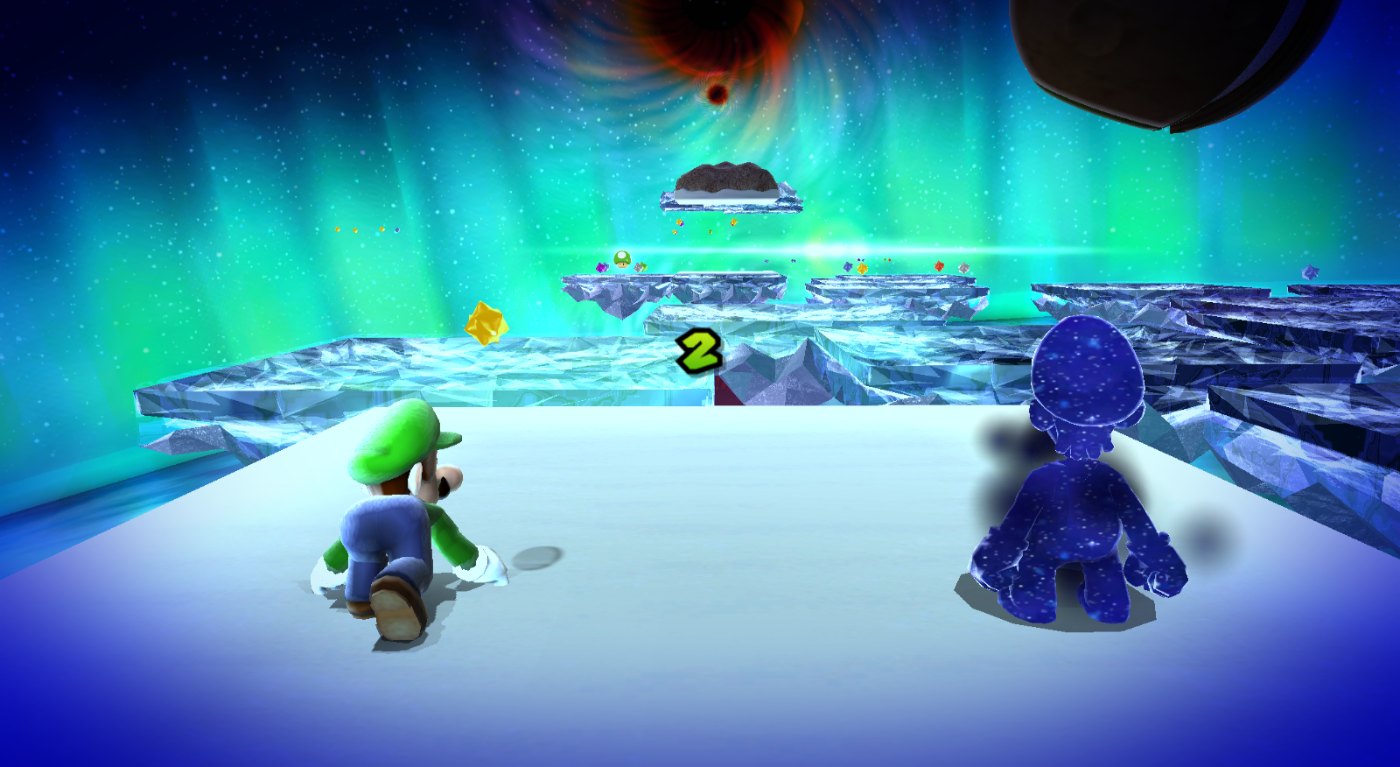
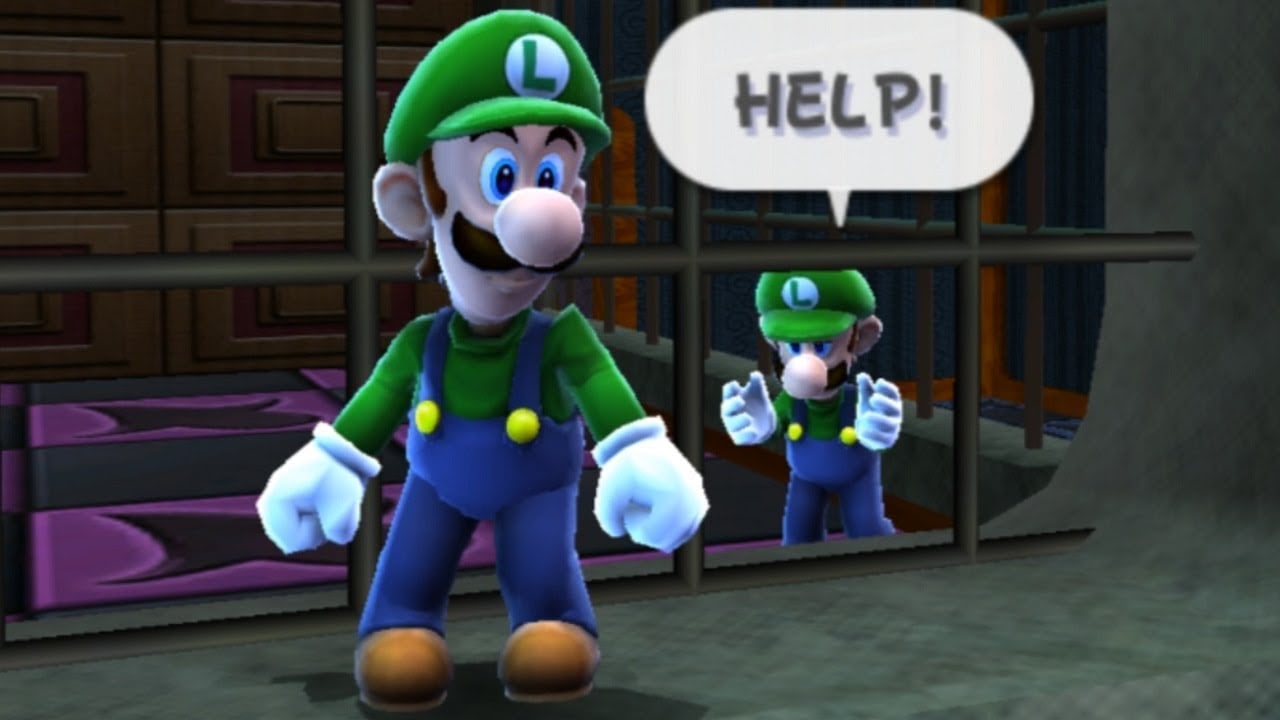
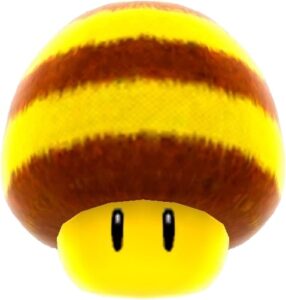 Bee MushroomBee Mario hovers for as long as his flight meter lasts, clings to honeycomb walls and can stand on flowers and clouds. First found in Honeyhive Galaxy.
 Boo MushroomBoo Mario floats upward with A and turns intangible with a shake to pass through bars. Other Boos take a shine to him.
 Spring MushroomMario becomes a coiled spring that never stops bouncing; time a press of A on landing for a huge leap. Taught by the Gearmos of Toy Time Galaxy.
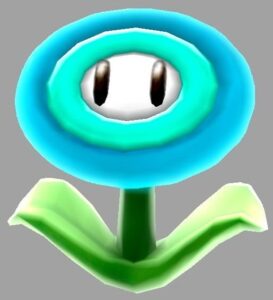 Ice FlowerIce Mario freezes water and lava into hexagonal tiles under his feet, skates across them and can wall-jump up frozen waterfalls.
 Fire FlowerShake to throw fireballs that light torches, melt snow and burn through enemies. Its first appearance in a 3D Mario.
 Rainbow StarInvincibility with a turn of speed; Rainbow Mario flattens everything he touches, including Chomps.
 Red StarFlying Mario in a black and red suit: shake to take off, steer freely, and Purple Coins drift towards him. Earned in Gateway Galaxy and kept on the Observatory.
 Life MushroomDoubles the life meter to six until you fall back to three.
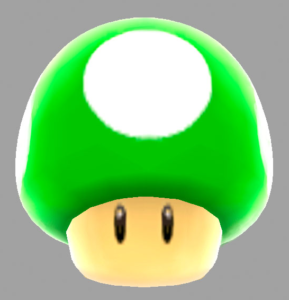 1-Up MushroomAn extra life. Five are hidden around the Observatory itself.
 Power StarThe reward for every mission, and the fuel the Observatory runs on.
 Grand StarSeven of them, held by Bowser and Bowser Jr. Each one relights a dome.
 Green StarThree secret stars in Battlerock, Buoy Base and Dusty Dune. Together they open the Planet of Trials.
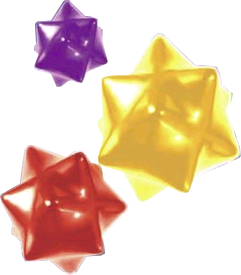 Star BitsCollected with the pointer. Fire them to stun enemies, feed them to Hungry Lumas, or save fifty for a 1-Up.
 ? CoinMakes something happen nearby, most often a trail of musical notes to collect before they fade.
 Launch StarSpin inside to be fired to the next planet. Small ones are Sling Stars.
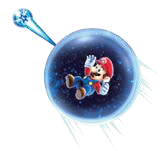 Pull StarPoint and hold A to be drawn towards it through space.
 Star ChipsFive yellow chips build a Launch Star; five blue ones build a Pull Star.
 Silver StarsFind all five in a level and they merge into a Power Star.
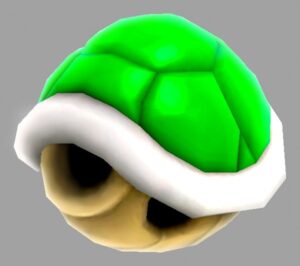 Koopa shellsThrown at enemies and treasure chests on land; held out in front underwater they act as a motor. Red ones home in and Gold ones are fastest.
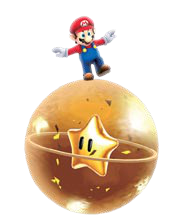 Star BallA ball with a Power Star inside, steered by tilting the Remote. Reach the goal and it cracks open.
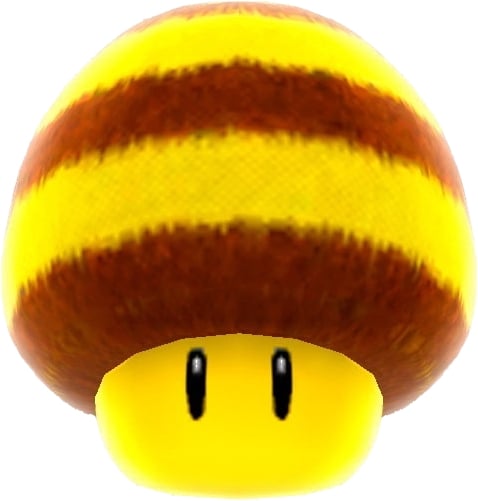

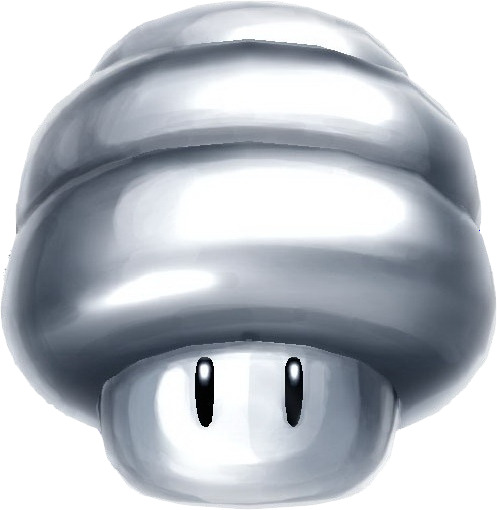
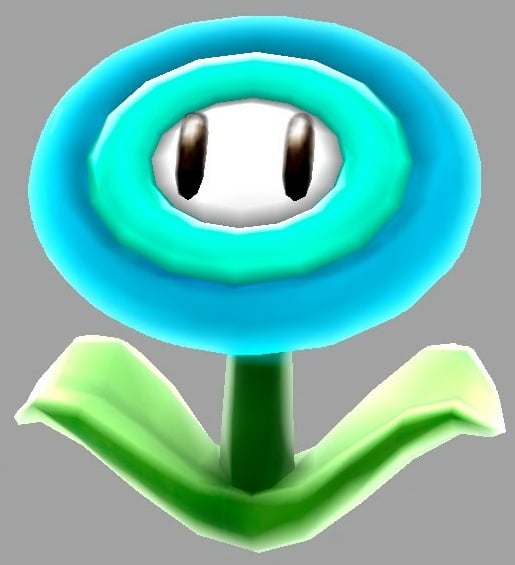

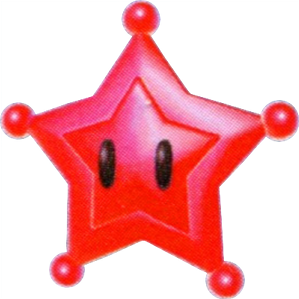
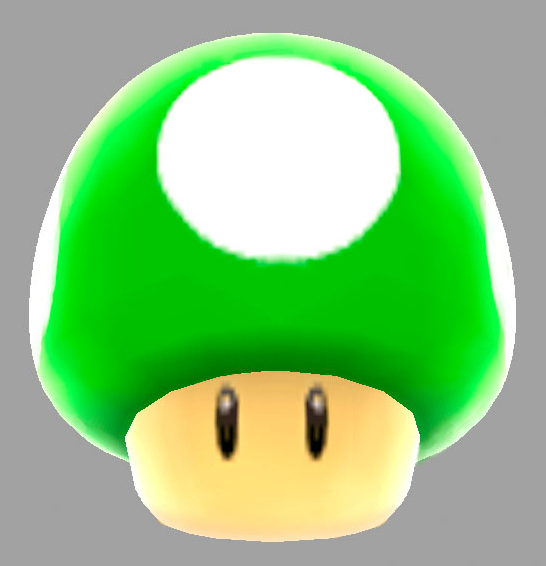




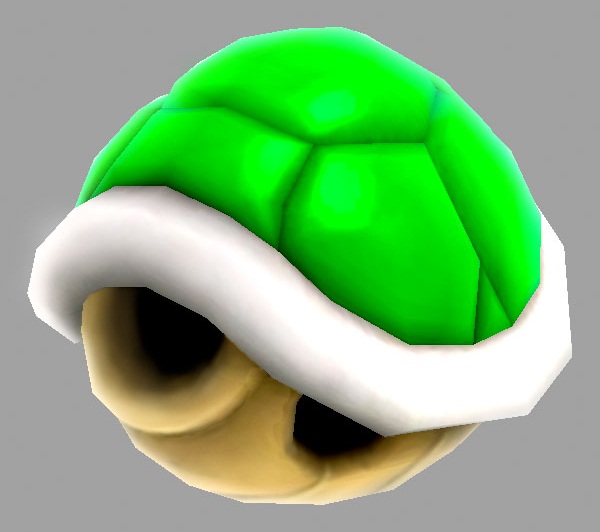
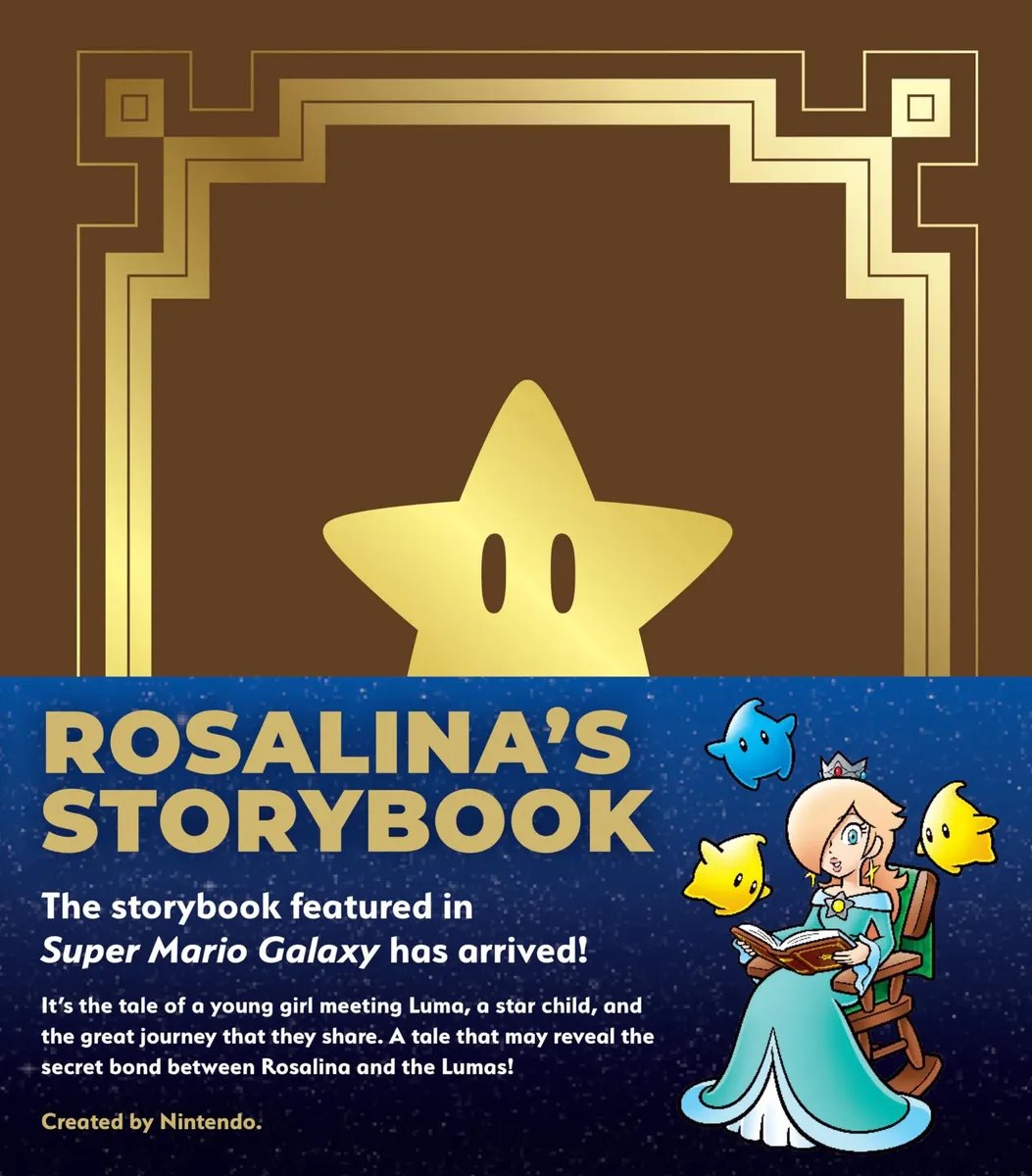 Rosalina’s Storybook, in printShogakukan / Dark Horse · 2025Koizumi once told Nintendo Power he would have liked to see the storybook published as a real children’s book. For Mario’s 40th anniversary it was: a hardcover edition was announced in the September 2025 Nintendo Direct and released in Japan on 2 October 2025 and in the US and UK on 25 November. It contains the nine original Wii chapters, not the new one added on Switch.
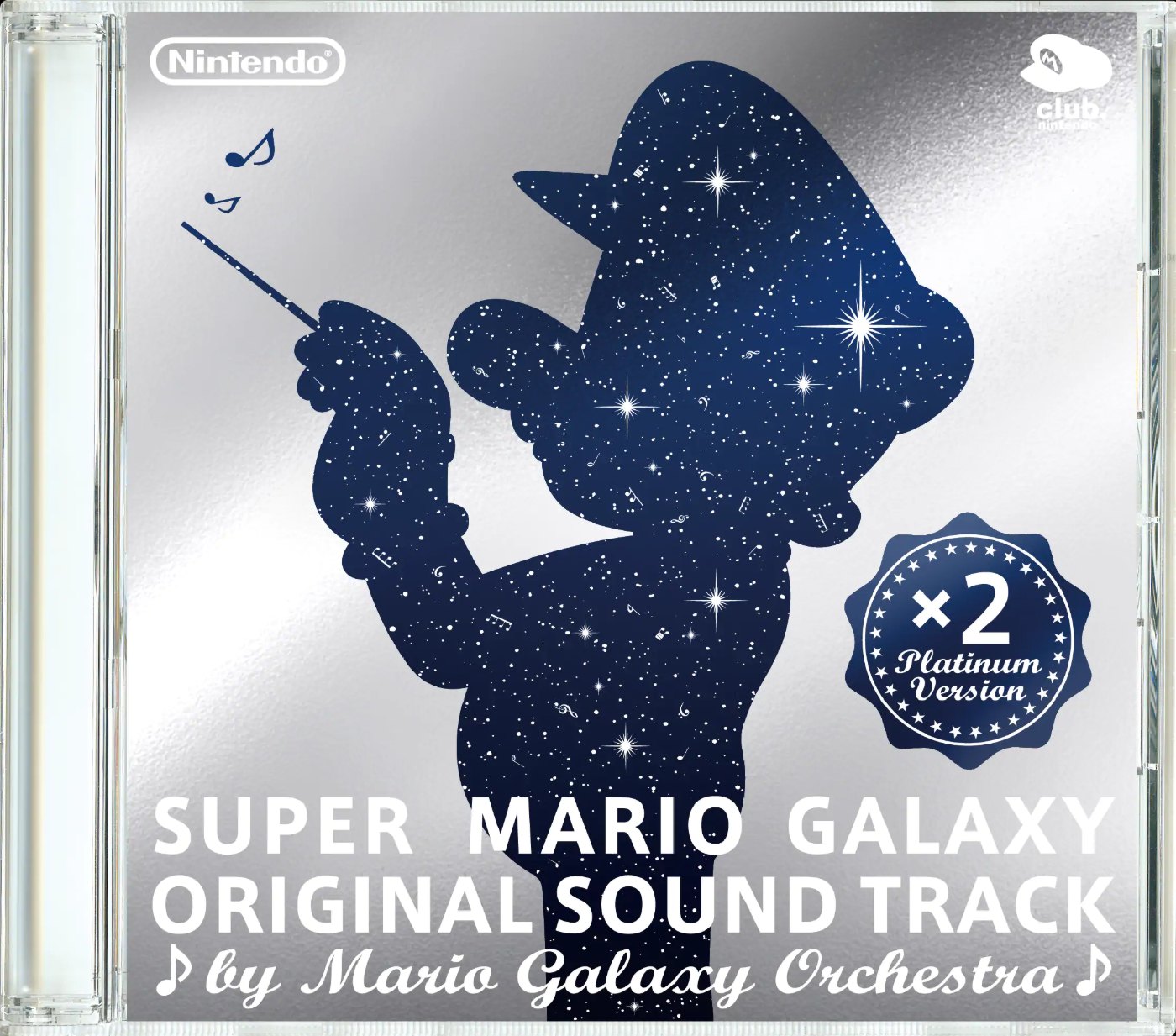 Super Mario Galaxy Original SoundtrackNintendo / Club Nintendo · 31 January 2008A Club Nintendo reward, first offered in Japan in a 28-track standard edition and a two-disc, 81-track Platinum Edition. The single disc was later packed in with a Wii console bundle in North America in October 2011, and all 81 tracks are included in the music player of Super Mario 3D All-Stars. The soundtrack joined the Nintendo Music app at its launch on 30 October 2024.
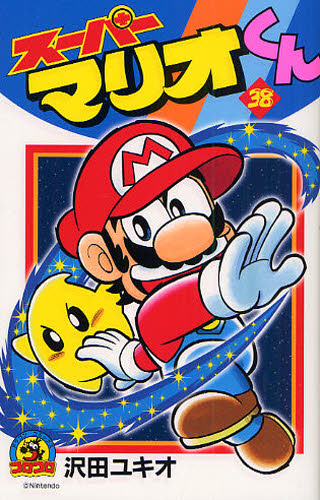 Super Mario-kun, volumes 38–40Yukio Sawada / Shogakukan · 2008–2009CoroCoro’s long-running gag manga spent three volumes in space. Volume 38 (October 2008) opens with a dejected Mario being talked round by Rosalina and the Lumas, volume 39 (March 2009) works through most of the power-ups and a rescue of Luigi, and volume 40 (November 2009) wraps the arc up.
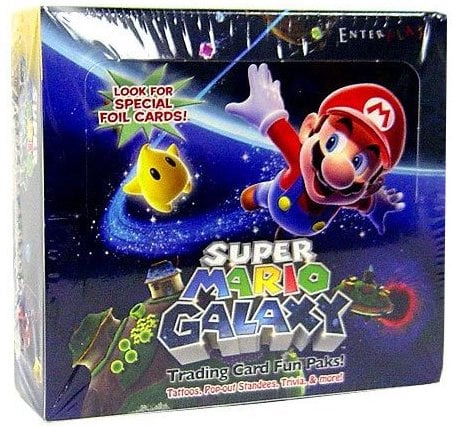 Trading Card Fun PaksEnterplay · 2007A collectable card set sold in “Fun Paks”, each holding two regular cards, a trivia card, a pop-up standee and a temporary tattoo.
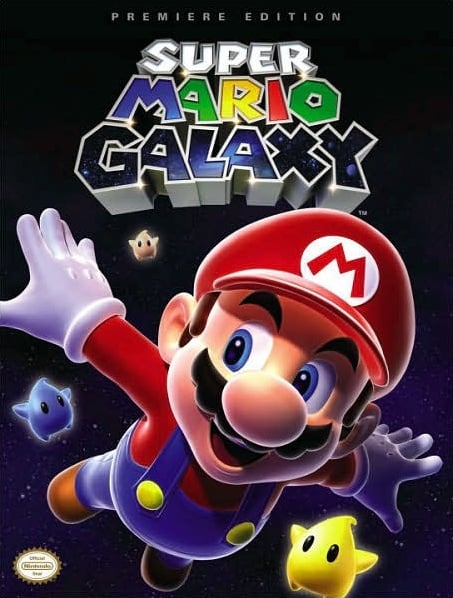 Prima Official Game GuidePrima Games · 2007Published in Premiere and Collector’s editions, with a printed letter to players from Shigeru Miyamoto.
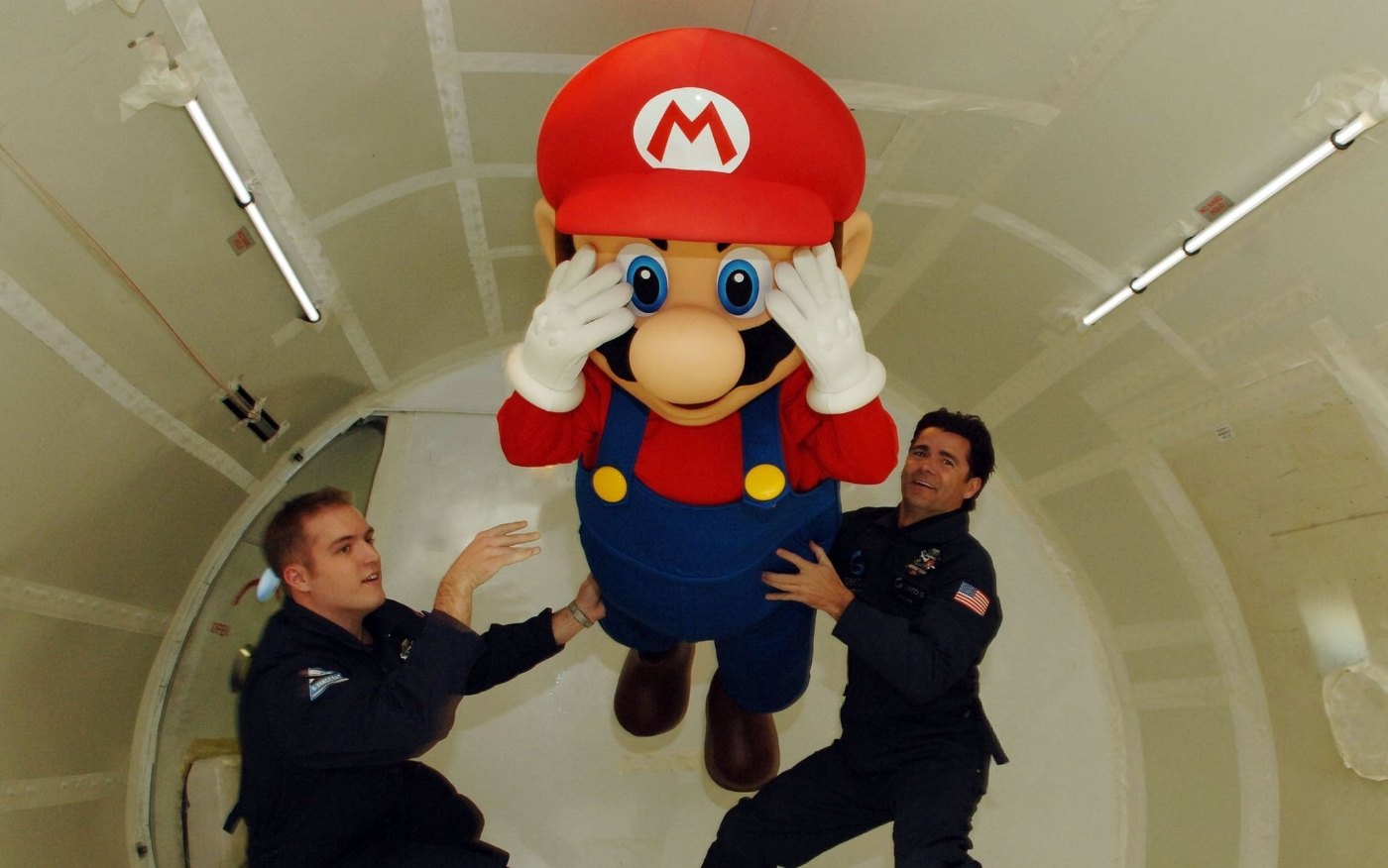 Mario and Buzz Aldrin in zero gravityNintendo of America / MTV · 3 November 2007To launch the game in the US, Nintendo put a costumed Mario aboard G-Force One, the Zero Gravity Corporation’s parabolic-flight aircraft, with Apollo 11 astronaut Buzz Aldrin. The crew wore “Super Mario Galaxy Flight Team” patches. Ten days later Aldrin was in Madrid for Nintendo Ibérica, trying Co-Star Mode in front of the press and admitting that it was quite a challenge for a person who did not play games.
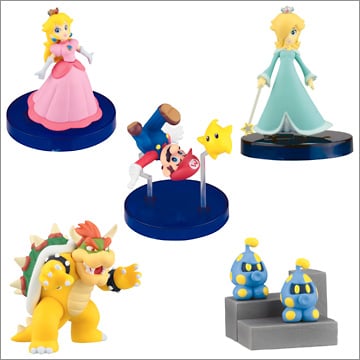 Toys and merchandiseTakara Tomy, San-ei, Banpresto, Bandai, Epoch and others · 2007–2009Japan got desktop figures, plush toys, three volumes of keychains, bean-sized “Mame” figures, light-up keychains and water toys; America got a 550-piece jigsaw and T-shirts; Club Nintendo members in Europe could claim a Galaxy kite.
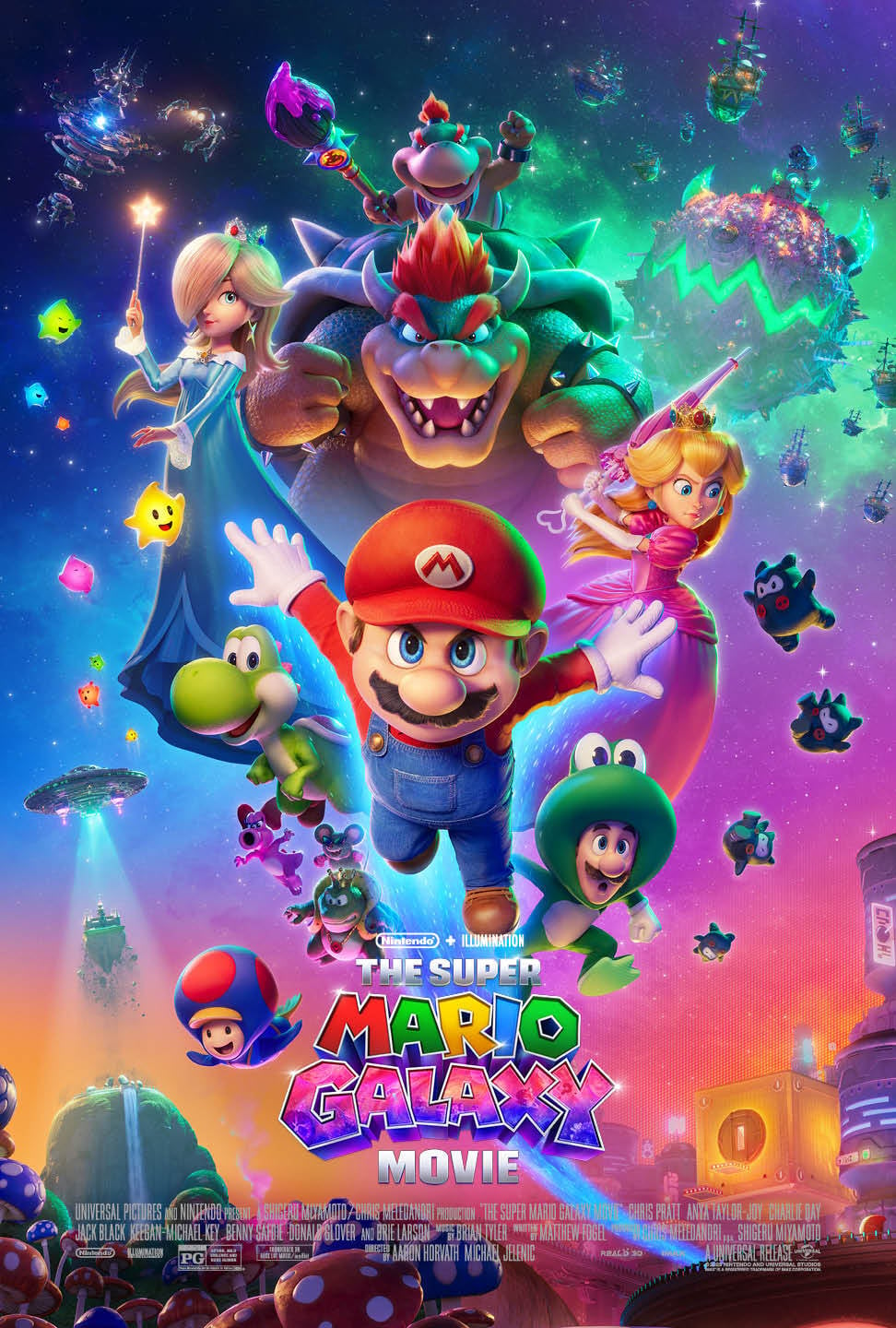 The Super Mario Galaxy MovieIllumination / Nintendo / Universal · April 2026The follow-up to The Super Mario Bros. Movie took the game’s name and its leading lady. Directed again by Aaron Horvath and Michael Jelenic, it opened in the US and UK on 1 April 2026 and in Japan on 24 April, and sends Mario, Luigi and Yoshi into space to stop Bowser Jr. and rescue Rosalina. Brian Tyler had already woven themes from the game into the first film’s score.
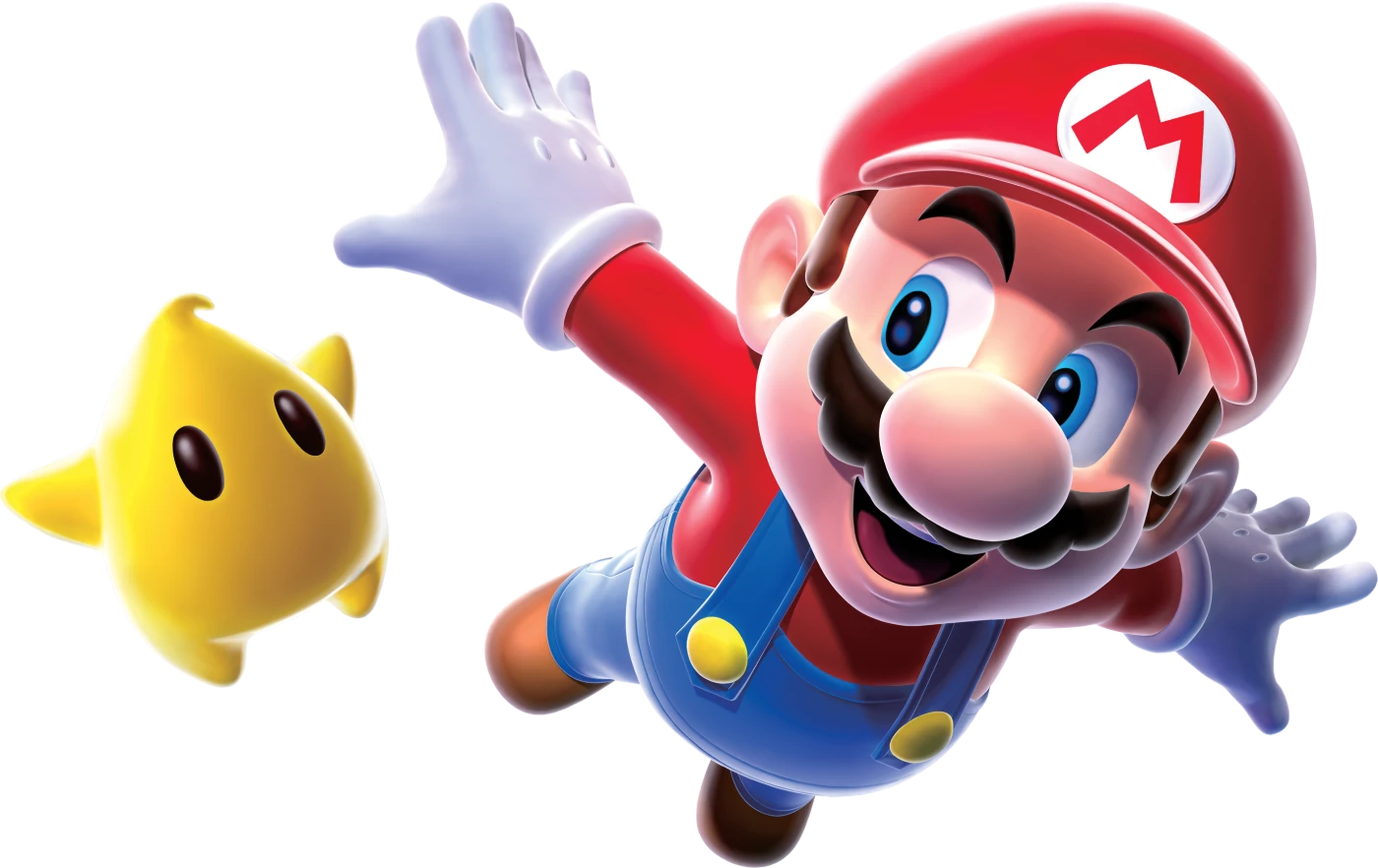 MarioThe hero, and the Luma’s ride
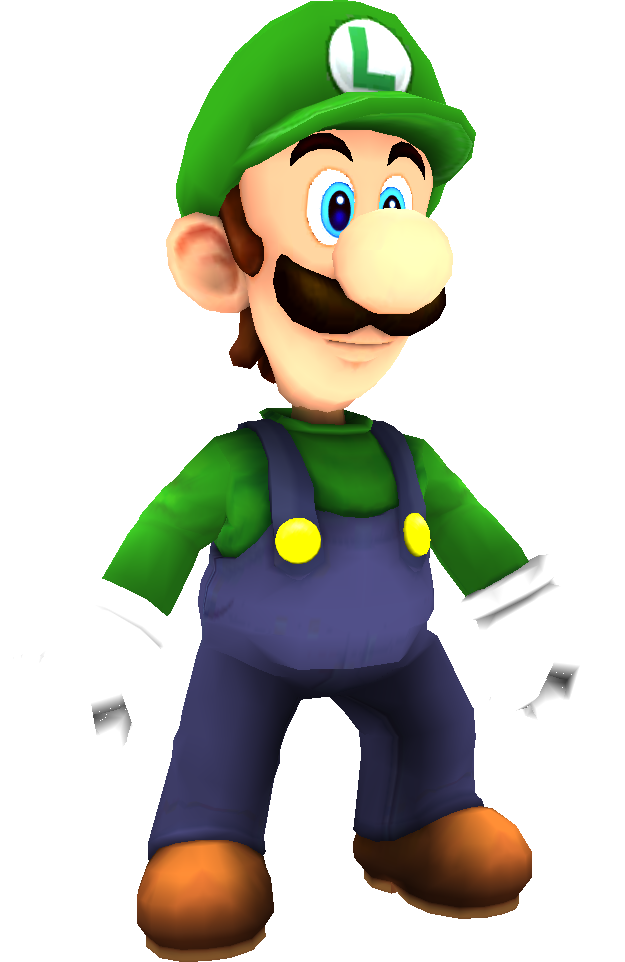 LuigiHelper, then hero
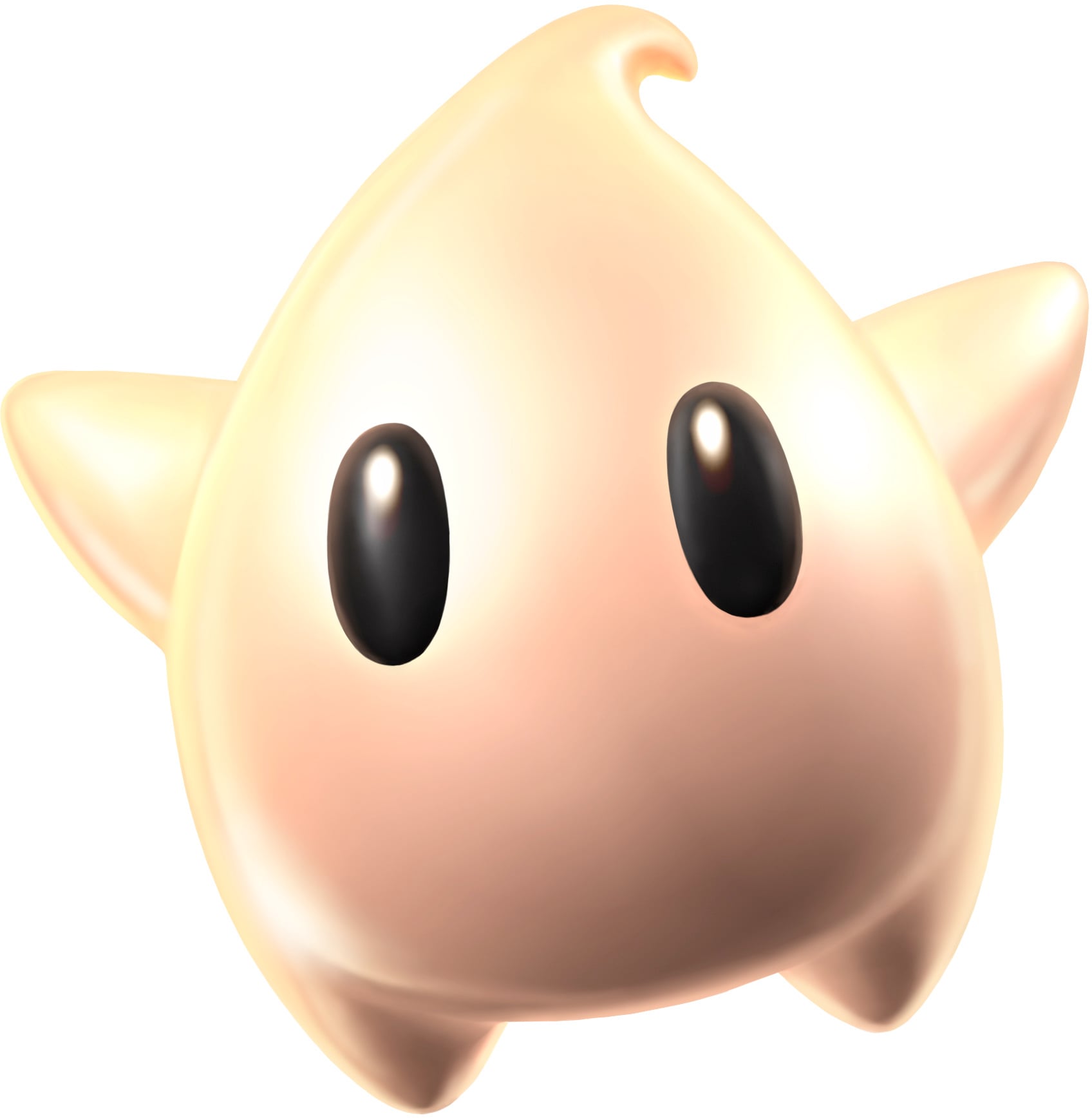 LumaThe star under the cap
 The Lumas and PolariStar children of the Observatory
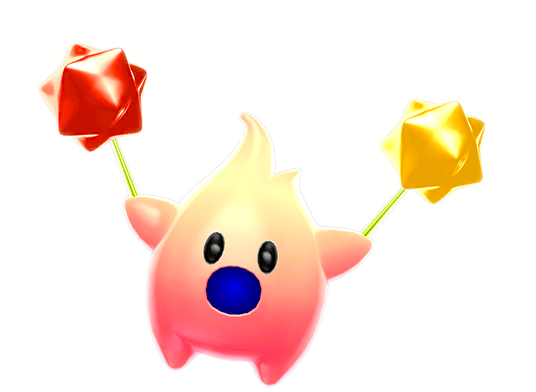 Hungry Lumas, Lumalees and the Comet LumaLumas with appetites
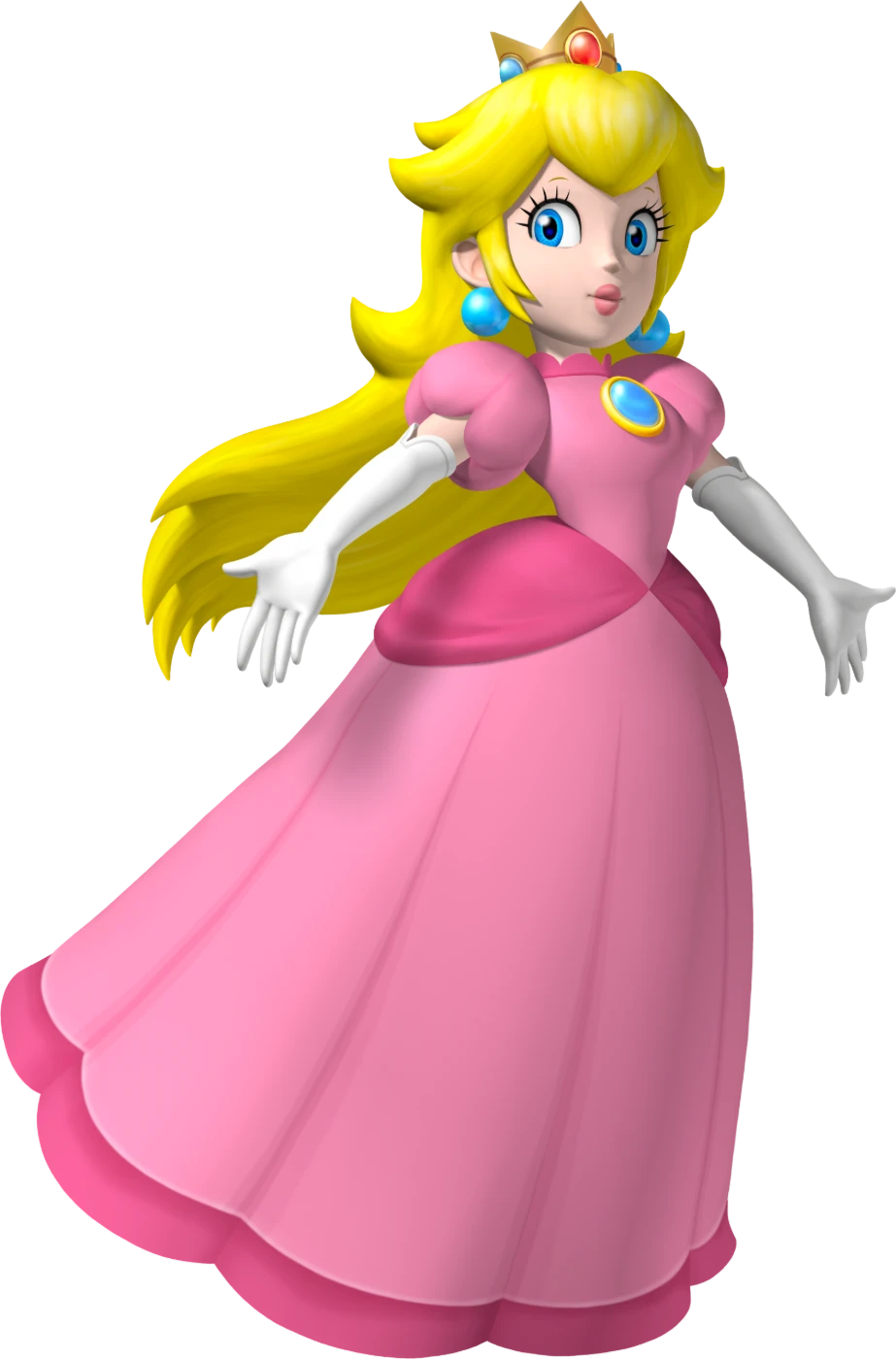 Princess PeachGuest of honour, briefly
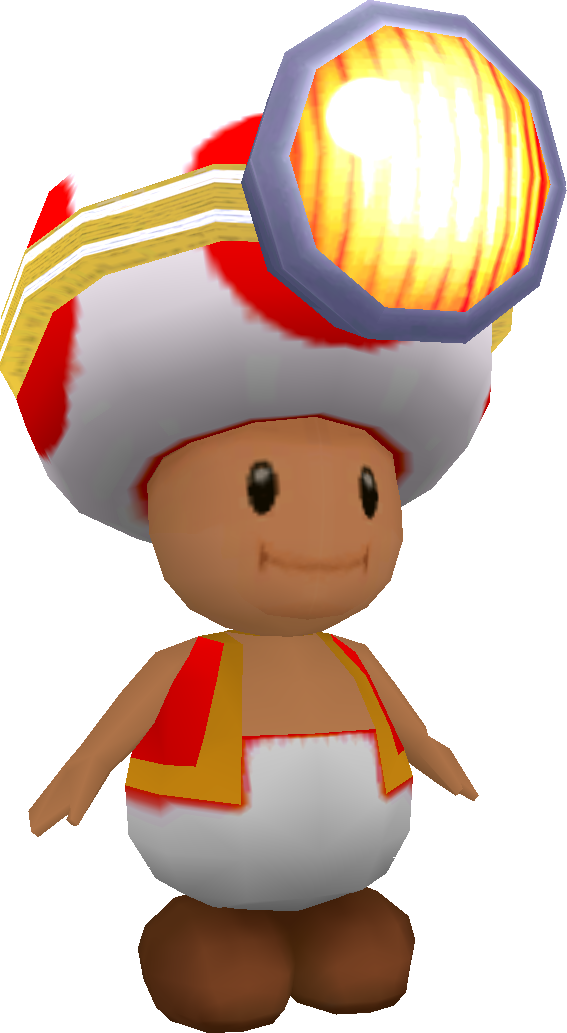 The Toad BrigadeFive Toads and a Starshroom
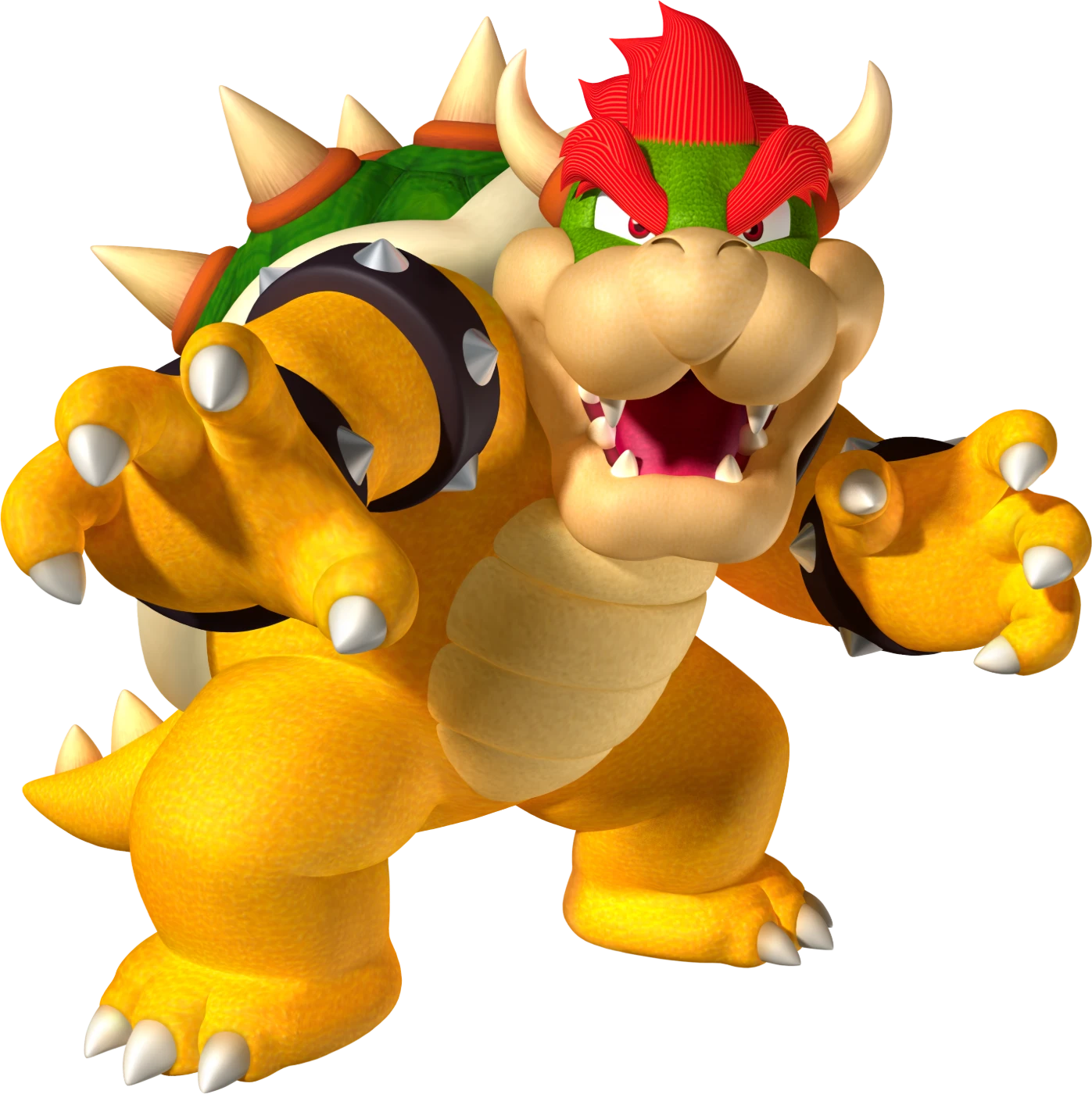 BowserWould-be emperor of the universe
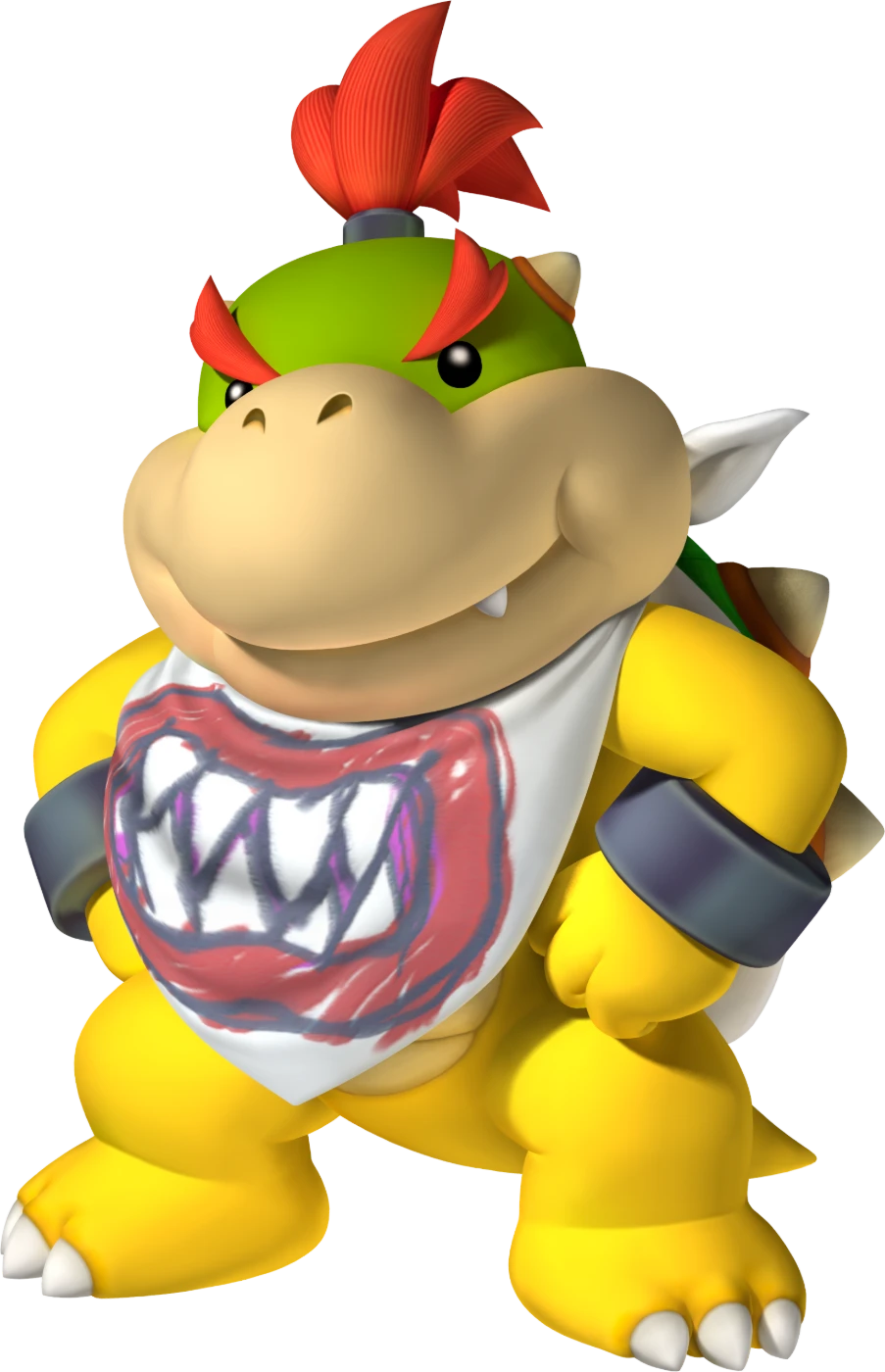 Bowser Jr.Admiral of the airships
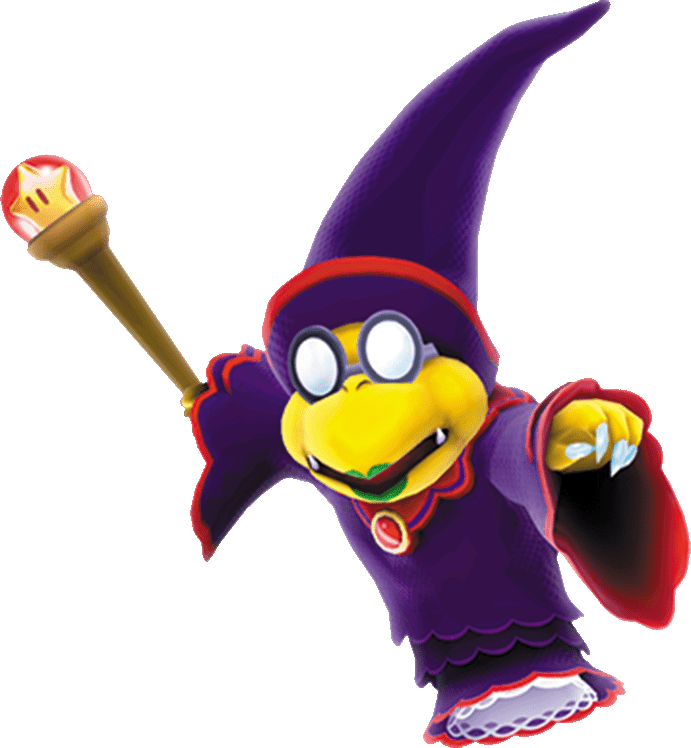 Kamek and KamellaThe Magikoopas
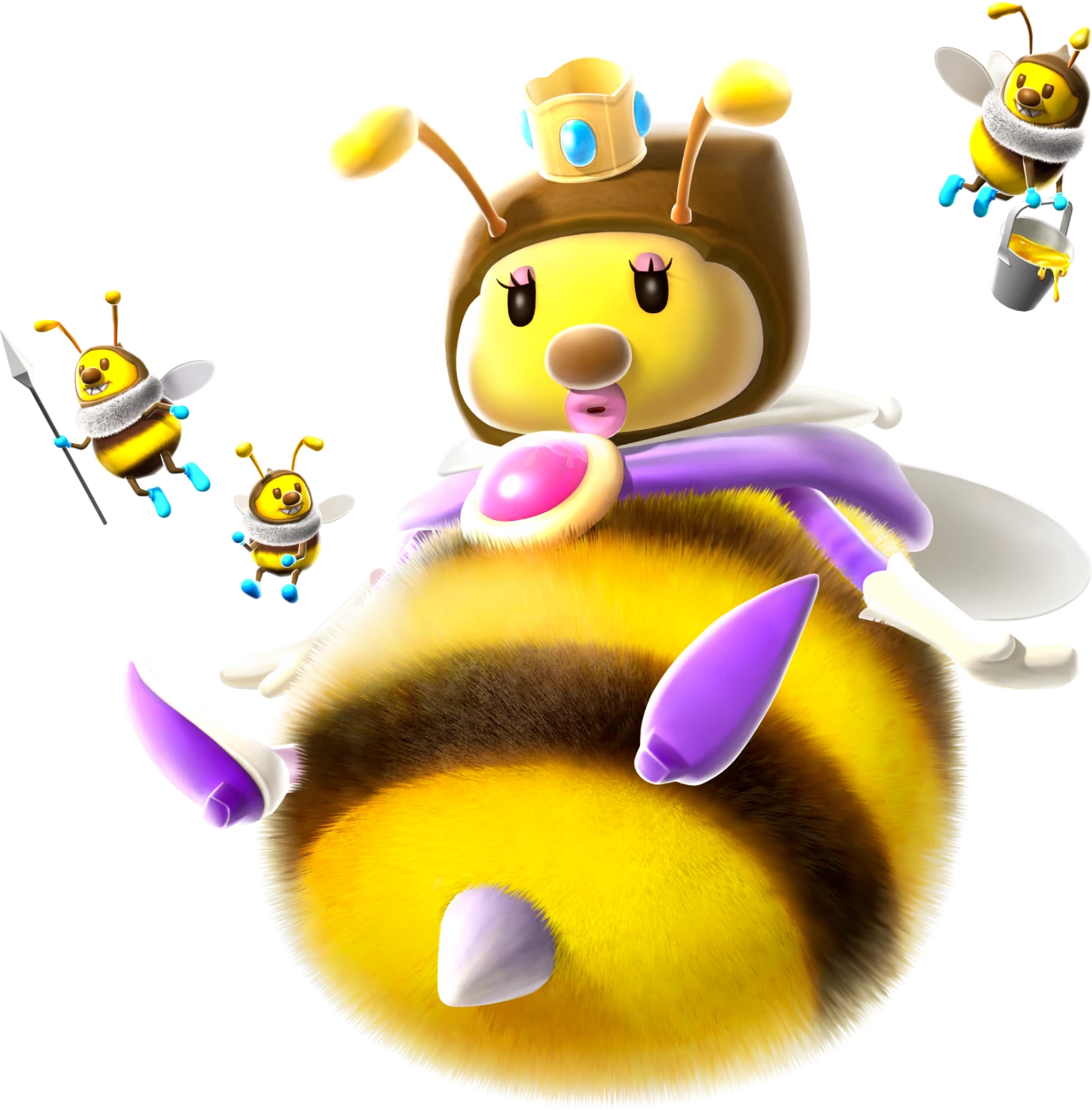 The Queen Bee and the HoneybeesThe Honeyhive Kingdom
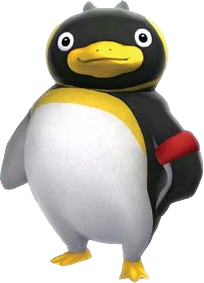 Penguins, Coach and PenguruThe swimmers
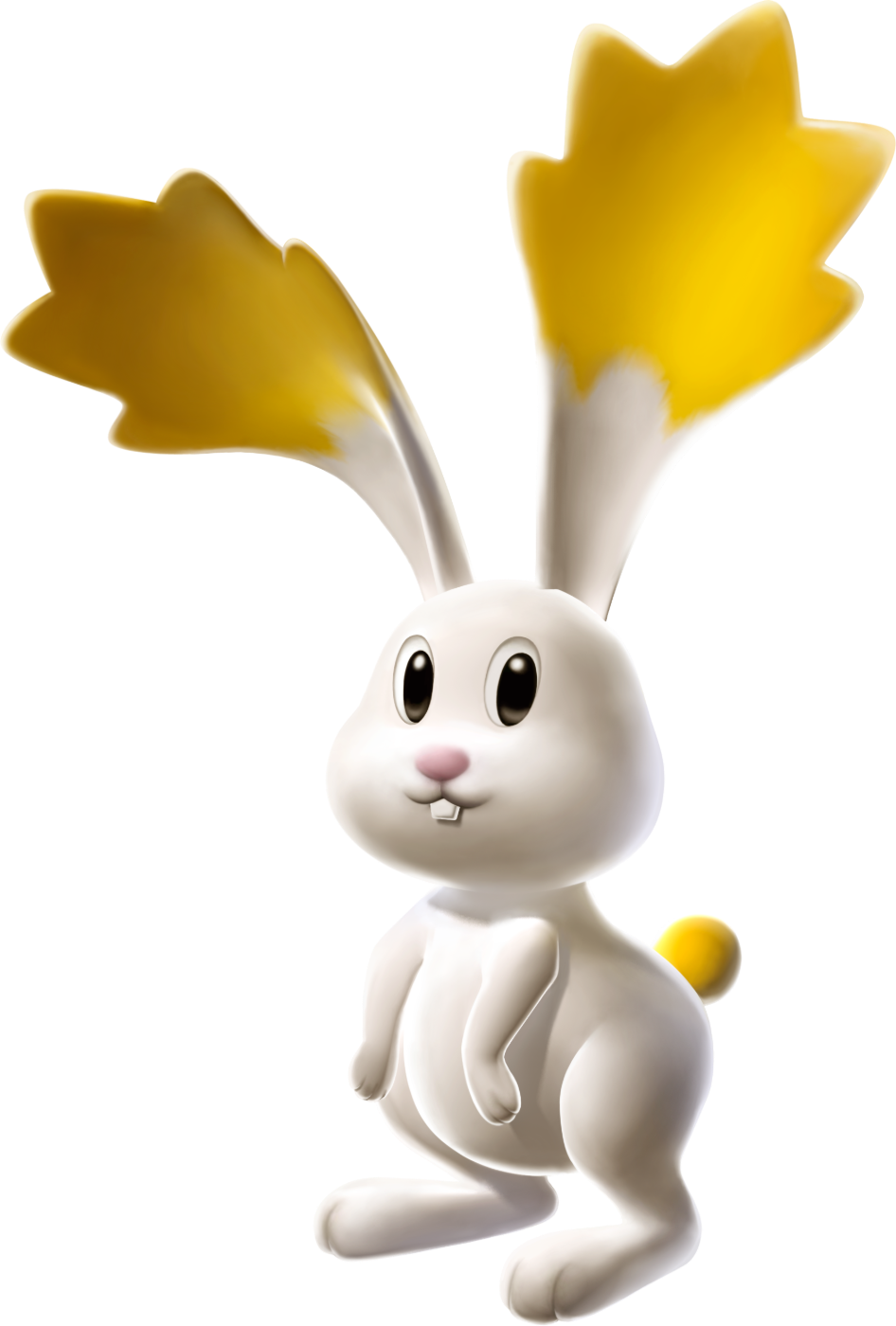 Star BunniesHide-and-seek champions
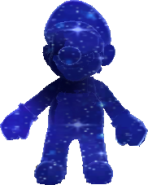 Cosmic MarioThe rival from the comet
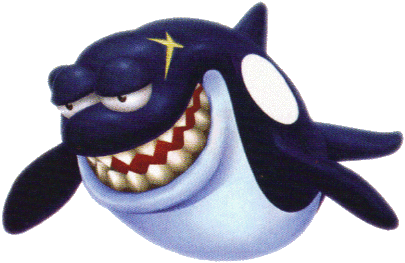 Ray, Guppy and the Spooky SpeedsterRacers and rides
 GearmosMaintenance robots
 Bill Board and familyTalking signs
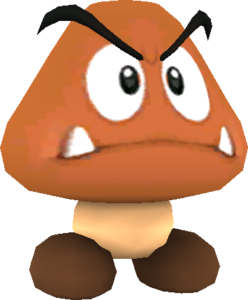 Goomba, Micro Goomba, Grand GoombaGateway GalaxyStomp the regular ones, spin the tiny ones. There is exactly one giant.
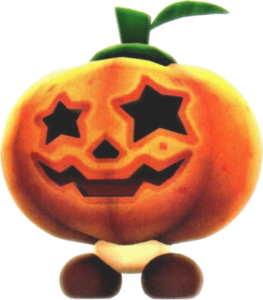 Pumpkinhead Goomba (Jack O’Goomba)Ghostly GalaxyWears a lantern and leaves a trail of blue flame.
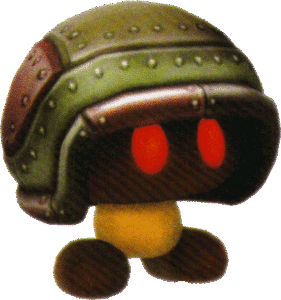 GoombeetleBowser Jr.’s Robot ReactorA Goomba in a spiked helmet. Spin it over first.
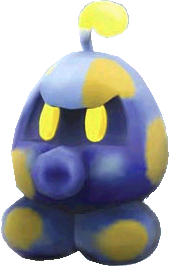 Electrogoomba (Octoomba)Good Egg GalaxyA blue alien cousin of the Goomba with an antenna.
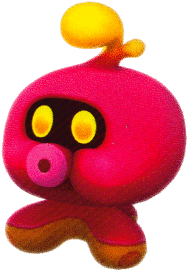 Octoguy and RoctoHoneyhive; Good EggRed octopuses that spit rocks; Roctos sit in barrels and fire coconuts you can spin back.
 SlurpleGood Egg GalaxyClamps onto Mario and drains his health until shaken off.
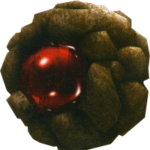 Ruby Rock and Big Ruby RockGood Egg; Dusty DuneRolling boulders with a red jewel for a weak point.
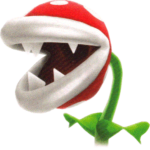 Piranha Plant and Spiny Piranha PlantGood Egg GalaxyThe big thorny ones slam their heads on the ground. Beat one and a Sproutle Vine grows in its place.
 TracksGood Egg GalaxyInvisible but for its footprints. Spin where it stands for a shower of Star Bits.
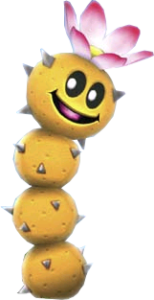 Pokeynut, Pokeyplant and Pokey HeadGood Egg; Dusty Dune; Gusty GardenCactus relatives that topple forwards to squash you.
 Chomp, Mini Chomp and Golden ChompGood Egg; Dreadnought; Gusty GardenThey roll rather than lunge, and only Rainbow Mario can break them. The golden one holds a star.
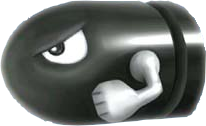 Bullet Bill, Banzai Bill and Torpedo TedGood Egg; Galaxy Reactor; Buoy BaseHoming missiles, useful for smashing cages if you lead them there.
 Lava BubbleGood Egg GalaxyLeaping blobs of fire.
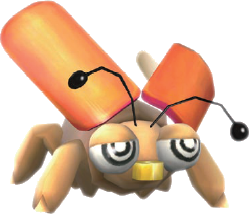 FlipbugHoneyhive GalaxyRuns from Mario, but chases Bee Mario.
 MandibugHoneyhive GalaxyA charging stag beetle. Ground pound its back.
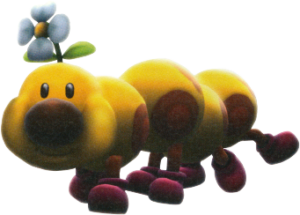 WigglerHoneyhive GalaxyMarches in circles and turns red with rage if flipped.
 Water Shooter and Fire ShooterHoneyhive; Bowser’s Star ReactorTurrets. One traps Mario in a bubble, the other is a flamethrower.
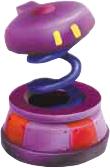 Spring Vault, Sentry Garage, Sentry BeamFlipswitch; Buoy Base; BattlerockRobot sentries that emit rings of electricity or laser fire. Stomp a Spring Vault for a boost.
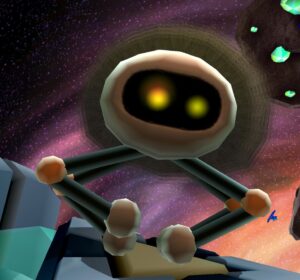 Spoing and SpanglerSpace Junk; GhostlySpiders, hopping and dangling.
 Amp and Zap BallBuoy Base; Space JunkElectric orbs on patrol routes.
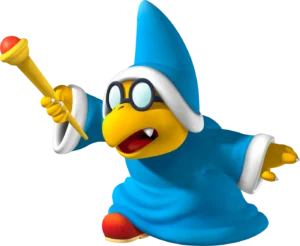 MagikoopaSpace Junk GalaxyTeleports, fires spells and conjures other enemies.
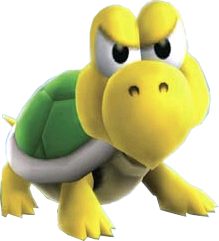 Koopa Troopa (green and red)Space Junk; Sea SlideKnock one out of its shell and the shell is yours.
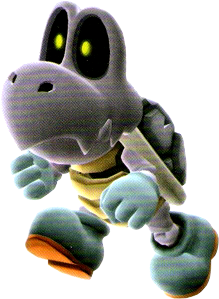 Dry BonesDusty Dune GalaxyFalls apart, pulls itself together.
 Topmini, Spiky Topman, Spring TopmanBattlerock; Buoy BaseThe Topman Tribe: spinning tops that shove, stab or bounce you.
 Space Mine and Mikey MineBattlerock; Deep DarkFloating and tethered explosives.
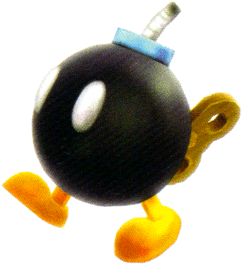 Bob-ombBattlerock GalaxySpin to pick one up and throw it at rubbish heaps and cages.
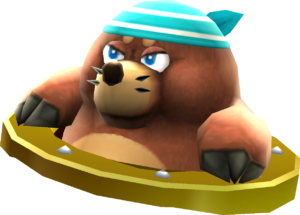 Monty and UndergruntBattlerock; Gusty GardenMoles: one pops up to throw wrenches, the other tunnels in a spiked helmet.
 Thwomp, Bomp and Tox BoxBowser’s Star Reactor; Buoy Base; Beach BowlStone slabs that drop, shove and roll.
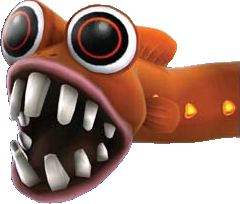 Gringill and Giant GringillBeach Bowl GalaxyEels that lunge out of holes in the rock.
 Urchin and Ground UrchinBeach Bowl; FreezeflameSpiny rollers, wet and dry.
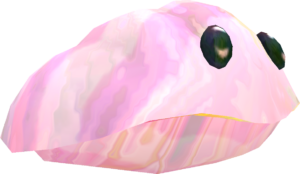 ClampyBeach Bowl GalaxyA giant clam with something shiny inside.
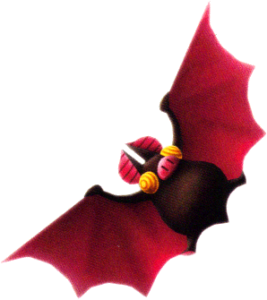 Bat and Ice BatBeach Bowl; FreezeflameCave swoopers. The white ones freeze Mario solid.
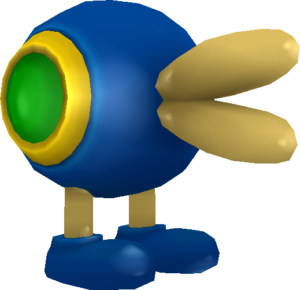 CataquackBeach Bowl GalaxyBack from Sunshine, and still flinging Mario skywards, which is sometimes exactly what you want.
 Boo, Bomb Boo and Atomic BooGhostly; Deep DarkGrab a Bomb Boo by the tongue and whirl it into Bouldergeist. The big one hates light.
 Ball Beamer and Pulse BeamBuoy Base; Toy TimeShockwave generators. Jump the rings.
 Blooper, Cheep Cheep, Spiny Cheep-CheepBuoy Base; Deep Dark; Drip DropThe usual underwater company.
 Ice Bubble (Li’l Brr) and Li’l CinderFreezeflame GalaxyLittle spirits of frost and flame. Spin them out before you touch them.
 CluckboomDusty Dune GalaxyA flying bird that lays bombs.
 Bone TwisterDusty Dune GalaxyA whirlwind with a skull in it.
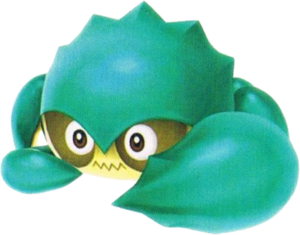 Red and Blue CrabberDusty Dune GalaxyArmoured in front, soft behind.
 Jammyfish and Jam-o’-WarBigmouth GalaxyJellyfish, small in shoals and large with a sting.
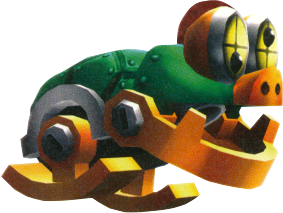 Mecha-Bowser (small)Toy Time GalaxyWind-up Bowsers that breathe real fire.
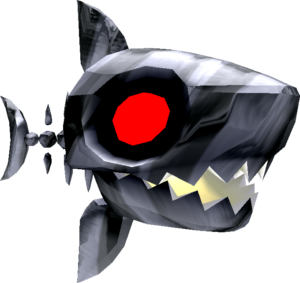 BonefinBonefin GalaxySkeleton fish that Kingfin sends out as torpedoes.
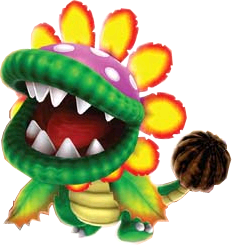 Dino Piranha (boss)Good Egg; fiery rematch in Melty MoltenSpin its clubbed tail so that it swings round into its own head.
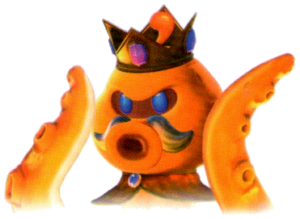 King Kaliente (boss)Good Egg; Bowser Jr.’s Lava ReactorBat his coconuts back at him; he learns to return serve.
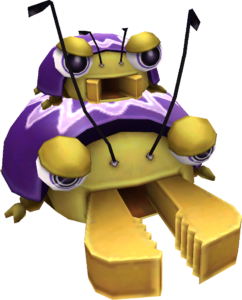 Mandibug Stack and Bugaboom (bosses)Honeyhive GalaxyGround pound the child, then the furious parent. Bugaboom takes off and must be pounded from above as Bee Mario.
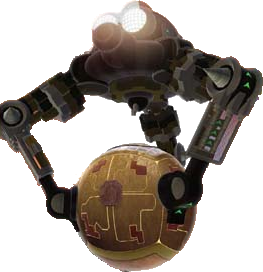 Megaleg (boss)Bowser Jr.’s Robot ReactorClimb a leg to the top and bring a Bullet Bill with you.
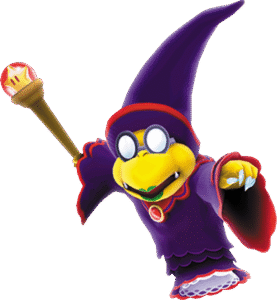 Kamella (boss)Space Junk; Deep DarkThrow her own green shells back.
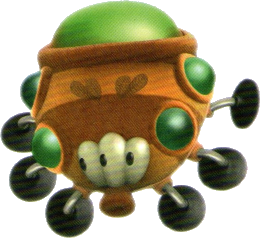 Tarantox (boss)Space Junk GalaxyCatapult from the Sling Pods of its web into the glowing bulbs on its body.
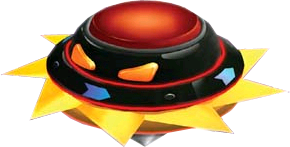 Topmaniac (boss)Battlerock; DreadnoughtStomp to retract the blades, then spin him into the electric fence.
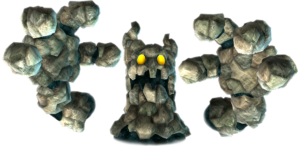 Bouldergeist (boss)Ghostly GalaxySwing Bomb Boos into his rocky shell, then into the core. He grows hands for round two.
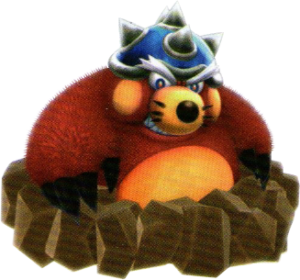 Major Burrows (boss)Gusty Garden GalaxyGround pound near him to pop him out of the soil, then spin.
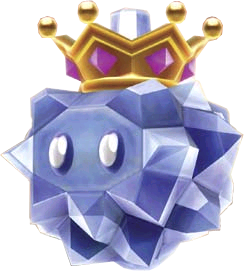 Baron Brrr (boss)Freezeflame GalaxySpin away his icy aura when he lands, then hit him again.
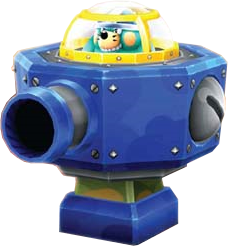 Undergrunt Gunner (boss)Gold Leaf; Deep Dark; Toy TimeA mole in a cannon turret that fires water or electricity. Break the glass cockpit.
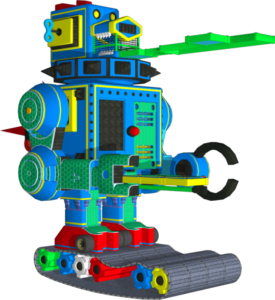 Mecha-Bowser (boss)Toy Time GalaxyA robot Bowser the size of a tower block. Ground pound the stone wheels on top of its head.
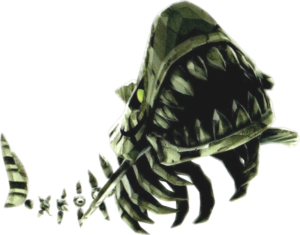 Kingfin (boss)Bonefin GalaxyA skeletal shark, fought entirely underwater with Koopa shells.
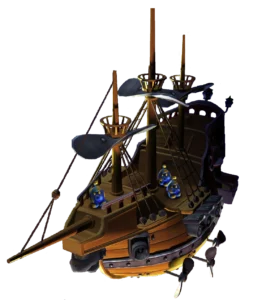 Bowser Jr. (boss)Bowser Jr.’s Airship ArmadaShell his airship until it goes down.
 Bowser (boss)Star Reactor; Dark Matter Plant; Galaxy ReactorLure his jump onto a glass panel so that he burns his tail, then spin into him.